

Uganda–Tanzania SGR Deal Signals Shift in East Africa’s Trade Geography
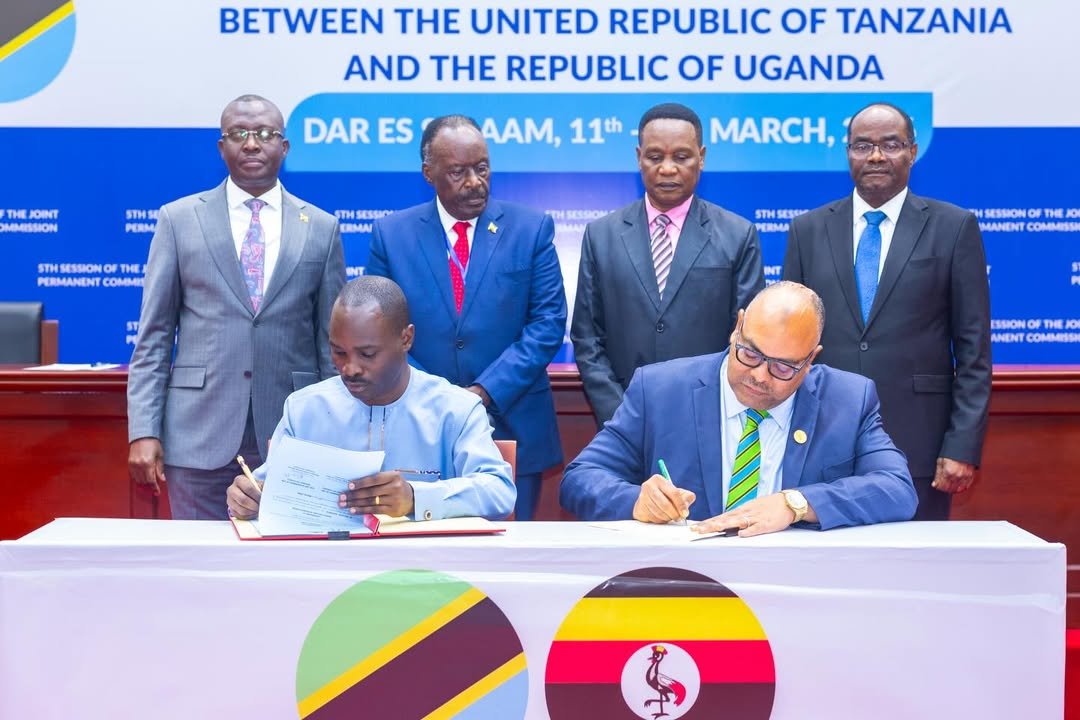
Uganda and Tanzania have signed an agreement to develop a cross border Standard Gauge Railway linking the two countries’ rail networks. The project could reshape trade flows across East Africa, strengthen the Central Corridor through Dar es Salaam and reduce Uganda’s reliance on Kenya’s Northern Corridor.
Uganda and Tanzania have signed a memorandum of understanding to jointly develop a cross-border Standard Gauge Railway, a move that goes beyond a bilateral infrastructure project and reflects a deeper shift in East Africa’s geopolitical and economic logistics map. The agreement commits the two governments to advance the Isaka–Lusahunga–Murongo/Kikagati–Mpondwe railway corridor, which will connect Tanzania’s rapidly expanding SGR network to western Uganda and potentially extend toward eastern Democratic Republic of Congo. Officials say the railway is designed to shift freight movement from roads to rail, reducing logistics costs and improving the movement of goods across the region.
The proposed line is expected to stretch hundreds of kilometers across the two countries and integrate Uganda more directly into Tanzania’s Central Corridor logistics system, linking inland markets to the Port of Dar es Salaam. The project also aligns with a broader East African plan to modernize regional rail infrastructure through standard gauge systems that can move cargo faster and more cheaply than the older colonial-era metre-gauge railways still operating in parts of the region.
Why the Railway Matters for Uganda
For Uganda, the strategic logic behind the project is clear. As a landlocked country, its economic lifeline depends on efficient access to seaports. Historically, most Ugandan exports and imports have moved through Kenya’s port of Mombasa via the Northern Corridor. But that dependency has long been seen in Kampala as a structural vulnerability. The new railway link to Tanzania is part of a deliberate effort to diversify export routes and reduce reliance on a single corridor for access to global markets.
In recent years, Ugandan policymakers have increasingly embraced a multi-corridor strategy that uses both the Northern Corridor through Kenya and the Central Corridor through Tanzania. The SGR connection to Tanzania reflects this approach. Officials in Uganda’s transport sector have argued that linking the country’s railway system to Tanzania would create an alternative export route through Dar es Salaam for minerals such as gold, copper and iron ore while also opening access to eastern Congo’s resource-rich regions.
The Growing Competition Between Trade Corridors
From a regional perspective, the project could significantly strengthen the Central Corridor, the trade route that runs from Dar es Salaam through Tanzania’s interior to the Great Lakes region. If the railway becomes operational and integrates with Tanzania’s existing SGR network, it could shift substantial cargo volumes away from road transport and potentially divert some trade flows that currently move through Kenya’s Northern Corridor.
The competition between these corridors has shaped East African infrastructure politics for decades. Mombasa historically dominated regional trade routes because Kenya invested earlier in road and rail connections linking its coast to Uganda and beyond. But Tanzania has aggressively invested in transport infrastructure over the past decade, including modern railways, port upgrades and inland logistics hubs. The SGR expansion westward toward landlocked neighbors is a central pillar of that strategy.
Why Uganda Increasingly Chooses Tanzania for Strategic Projects
Uganda’s growing alignment with Tanzania on infrastructure projects did not begin with the railway. The most prominent example came in 2016 when Kampala made a landmark decision to export its crude oil through Tanzania rather than Kenya. That choice led to the development of the East African Crude Oil Pipeline, a multibillion-dollar project connecting Uganda’s oil fields in Hoima to the Tanzanian port of Tanga.
The decision surprised many observers at the time because Kenya had long been considered the natural export route for Ugandan oil through the proposed Lamu corridor. However, feasibility assessments found that the Tanzanian option offered several advantages. Analysts pointed to lower costs, stronger investor support and fewer security risks along the Tanzanian route compared with northern Kenya.
Cost and speed of implementation were particularly decisive. Studies showed that routing the pipeline through Tanzania would likely be cheaper and easier to complete, partly because Tanzania offered lower transit fees and fewer land ownership complications along the route.
Kenya’s Railway Delays and Tanzania’s Rapid Expansion
The same economic logic is now shaping rail infrastructure decisions. Tanzania’s SGR program has progressed rapidly, with several sections already operational or under construction, while Kenya’s own SGR expansion stalled after reaching Naivasha due to financing challenges. Uganda’s original railway strategy assumed Kenya would extend its SGR to the border first, allowing Uganda to connect seamlessly to Mombasa. When that extension slowed, Kampala began exploring alternative connections, including a western link to Tanzania’s rail network.
There is also a geopolitical dimension to this shift. By building parallel infrastructure partnerships with both Kenya and Tanzania, Uganda reduces its strategic dependence on any single neighbor. This diversification strengthens Kampala’s bargaining position in regional trade negotiations and helps mitigate the economic risks associated with border disruptions, political tensions or infrastructure bottlenecks.
What This Means for Tanzania
For Tanzania, the implications are potentially transformative. If the SGR network successfully connects Uganda, Rwanda, Burundi and eastern Democratic Republic of Congo to the Port of Dar es Salaam, the country could emerge as the dominant logistics hub for Central and parts of East Africa. Cargo flows from mineral-rich regions of the Great Lakes could increasingly move through Tanzanian ports and railways, reinforcing Dar es Salaam’s role as a gateway to the Indian Ocean.
This emerging infrastructure alignment also reflects a broader regional pattern. In addition to the SGR project and the oil pipeline, Tanzania and Uganda are cooperating on cross-border energy infrastructure, hydropower projects and transport links across Lake Victoria. Together, these projects are gradually building an integrated economic corridor that binds the two countries’ economies more closely together.
A Quiet Reshaping of East Africa’s Trade Architecture
Viewed through this wider lens, the Uganda–Tanzania railway agreement is less about a single rail line and more about the long-term restructuring of East Africa’s trade architecture. As the region’s economies expand and demand for efficient logistics increases, the competition between the Northern and Central Corridors is likely to intensify. The outcome of that rivalry will help determine which ports, railways and infrastructure networks dominate the movement of goods across East and Central Africa in the coming decades.