
Africa Has Enough Gas to Power Itself for Seventy Years. Only 3% of It Ever Reaches Another African Market.
Ready
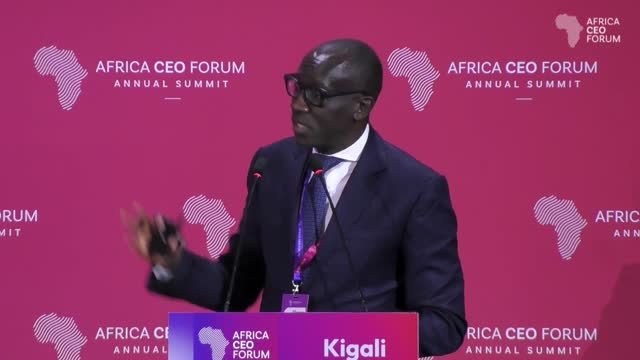
Speaking at the Africa CEO Forum Annual Summit in Kigali, McKinsey Africa Chairman Acha Leke delivered a four-point diagnosis of the continental gas challenge: Africa is the world's fastest-growing gas demand region, holds sufficient reserves for seventy years of production, concentrates 90% of those reserves in seven countries, and moves only 3% of its gas across African borders despite domestic and regional demand being driven overwhelmingly by power generation and industrial activity. The 63% of African gas that stays domestic is itself concentrated in just four countries, Algeria, Nigeria, Egypt, and Libya, leaving the continent's most gas-dependent growth economies structurally underserved. Tanzania holds approximately 57 trillion cubic feet of proven reserves per TPDC data and is advancing a USD 42 billion LNG project with Equinor, ExxonMobil, and Shell whose export orientation reflects the same economic logic Leke identified: European buyers pay USD 13 per mmbtu while African offtakers pay under USD 3. Mozambique's Rovuma Basin, Uganda's Albertine Graben, Cameroon's gas fields, Senegal and Mauritania's joint Greater Tortue Ahmeyim development, and South Africa's offshore blocks all face variants of the same structural choice between export revenue and domestic industrial development. Production costs sit 25% above the global average. Leke's prescription covers five interdependent interventions: domestic and regional infrastructure investment, credible offtaker development, blended finance, regulatory harmonisation under the AfCFTA, and sustained government commitment. This article reports the diagnosis, situates it within the East, Central, and Southern African gas context, and identifies the specific questions the forum's remaining sessions must answer. Africa has the gas. The infrastructure to use it for African development does not yet exist at scale, and the economics actively work against building it. That is the problem Kigali spent this week trying to solve.
KIGALI — Africa holds roughly 10% of the world's proven natural gas reserves and could sustain production at current rates for approximately seventy years. Only 3% of that gas ever crosses an African border to reach another African market.
That contradiction opened the Africa CEO Forum Annual Summit in Kigali this week, delivered from the main stage by Acha Leke, Chairman of McKinsey Africa, in a four-minute diagnosis that reframed the continent's gas conversation from one about resource abundance to one about structural misalignment between supply, infrastructure, and economic incentive.
"We actually have plenty of gas, which is great," Leke told the audience, before immediately turning to the problem. "But if you look at where this gas actually goes: 63% is domestic consumption. That number sounds good, but in reality it's only in four countries, extremely concentrated: Algeria, Nigeria, Egypt, and Libya."
The remaining 34% goes to export, predominantly as liquefied natural gas bound for European and Asian markets. Intra-African gas trade, the movement of gas from one African country to another through pipeline or other infrastructure, accounts for just 3% of the continental total. "You see very few corridors," Leke said, identifying the Nigeria to West Africa pipeline and the Mozambique to South Africa connection as the principal examples. "Very few."
The demand picture and why it matters for East Africa
Africa is the fastest-growing gas demand region in the world, expanding five times faster than the global average, according to the data Leke presented. Power generation and industry together account for 85% of that demand, with the power sector alone responsible for approximately 60%.
That demand profile is directly relevant to the economies across the Uchumi360 coverage region. Tanzania, whose Vision 2050 target of a USD 1 trillion economy by 2050 depends on manufacturing expansion, holds approximately 57 trillion cubic feet of proven natural gas reserves according to Tanzania Petroleum Development Corporation data, placing it among Africa's most significant emerging gas economies. Most of those reserves sit offshore in deepwater blocks operated by Equinor and Shell, and for over a decade commercial negotiations, fiscal disagreements, and global market conditions delayed large-scale development. That phase now appears to be ending. Tanzania is advancing toward final negotiations on a USD 42 billion LNG project with Equinor, ExxonMobil, and Shell that would rank among the largest foreign direct investments ever undertaken in Africa, whose export orientation is not a policy failure but a rational commercial response to the price differential that Leke identified in Kigali.
The domestic dimension of Tanzania's gas story, however, is the one that the LNG export narrative consistently undersells. The Mtwara to Dar es Salaam pipeline, completed in 2016 and documented by TPDC operational records, already delivers domestic gas for power generation and is the physical foundation on which industrial gas utilisation, including fertiliser production, petrochemicals, and industrial heating, could be built at the scale that Tanzania's manufacturing ambitions require. According to the African Fertilizer and Agribusiness Partnership, Africa imports approximately USD 4 billion in nitrogen fertilisers annually. Tanzania's domestic gas feedstock could support local urea and ammonia production that reduces that import bill while creating the industrial chemical engineering capability whose adjacent applications extend to pharmaceuticals and industrial materials. The question Leke's presentation raises for Tanzania specifically is whether the USD 42 billion LNG project accelerates domestic industrial gas utilisation or crowds it out, and whether the commercial architecture of the LNG negotiations embeds processing requirements and domestic supply obligations that serve Tanzania's industrial development alongside its export revenue objectives.
Kenya's position illustrates the energy security consequence of the misalignment from the importing side. Kenya has no significant domestic gas production and relies heavily on imported fossil fuels and hydropower whose rainfall dependence creates generation volatility, according to Kenya Power and Lighting Company operational data. The Northern Corridor's logistics economics, whose competitiveness against Tanzania's Central Corridor depends partly on industrial energy cost structures, would be directly affected by regional gas infrastructure connecting Tanzania's or Uganda's gas resources to Kenyan industrial consumers at the under USD 3 domestic price rather than the import-equivalent cost that Kenya's current energy supply structure imposes.
Mozambique: the continent's clearest case study in the export-versus-domestic tension
Mozambique's Rovuma Basin contains gas reserves whose scale places the country among Africa's most significant emerging energy economies, attracting TotalEnergies, ExxonMobil, and ENI as operators of the offshore blocks whose combined development would make Mozambique a major global LNG supplier. TotalEnergies declared force majeure on its Mozambique LNG project in April 2021 following the Cabo Delgado insurgency, as reported by Reuters, and the project's restart timeline remains subject to the security environment whose stabilisation the Mozambican government and international partners have been working toward. The ENI-operated Coral Sul FLNG vessel began deliveries in 2023, making Mozambique an active LNG exporter for the first time.
The domestic utilisation picture is sharply different. According to Instituto Nacional de Estatística de Moçambique data, Mozambique's electrification rate remains below 30%, with rural areas substantially lower, in one of Africa's most resource-rich gas economies. The pipeline connecting Mozambican gas to South African consumers, the longest existing intra-African gas infrastructure, was built by a consortium including Sasol and serves South African industrial and power generation demand rather than Mozambican domestic needs. That pipeline is the structural expression of the dynamic Leke described in Kigali: African gas infrastructure built to serve external consumers before domestic ones. Mozambique's industrial development potential, whose realisation depends on the cheap and reliable energy that domestic gas access would provide, is constrained by the same infrastructure orientation that makes the Mozambique to South Africa corridor the most visible example of intra-African gas trade while simultaneously demonstrating that the trade serves South African rather than Mozambican industrial development.
Uganda, the DRC, and the Central African dimension
Uganda's gas discoveries in the Albertine Graben, whose development the East African Crude Oil Pipeline is designed to monetise through the Tilenga and Kingfisher projects operated by TotalEnergies and CNOOC respectively, create a domestic utilisation question that Leke's diagnosis frames with precision. The EACOP pipeline is designed to move Ugandan hydrocarbons to Tanga port on the Tanzanian coast for export, a USD 5 billion infrastructure investment whose directional logic replicates the pattern Leke identified in Kigali: infrastructure built to export rather than to circulate within Africa. According to Uganda Bureau of Statistics data, Uganda's manufacturing sector contributes below 10% of GDP, and the industrial energy supply that domestic gas utilisation could provide, reducing dependence on the hydropower generation whose reliability the El Niño-related rainfall deficits of recent years have constrained, would directly improve the commercial viability of manufacturing investment whose scale Uganda's Vision 2040 targets require.
The Democratic Republic of Congo presents the starkest illustration of the consequences of the continental gas infrastructure gap for industrial development. The DRC holds the world's most significant cobalt reserves, approximately 74% of global production according to USGS Mineral Commodity Summaries 2024, alongside major copper, lithium, and rare earth deposits whose processing and manufacturing applications require the industrial energy supply that the DRC's chronic electricity deficit systematically prevents. According to Banque Centrale du Congo economic data, the DRC's electrification rate remains among the lowest in Africa despite its position at the centre of the global technology supply chain's mineral geography. Regional gas infrastructure connecting East and Central African gas producers to DRC industrial consumers would directly address the energy deficit that constrains the mineral processing investment whose development would change the DRC's supply chain position from extraction-stage to processing-stage participation, capturing the manufacturing margin that currently accumulates in Chinese, South Korean, and Japanese processing facilities purchasing DRC raw minerals.
Tanzania's Central Corridor connectivity, whose SGR extension toward Mwanza and Lake Victoria access creates a logistics link to the DRC's eastern provinces, makes the combination of Tanzanian gas infrastructure and Central Corridor logistics the most commercially proximate solution to the DRC's industrial energy access problem. A gas pipeline connecting Tanzania's domestic supply infrastructure to the DRC's eastern industrial zones, combined with the SGR's freight logistics and Dar es Salaam's port access, would create the integrated industrial enabling platform whose absence keeps the DRC at the extraction layer of the global supply chains its mineral endowment feeds.
West Africa: the ECOWAS Gas Pipeline and Greater Tortue Ahmeyim
West Africa's gas infrastructure story includes the most developed example of intra-African gas trade that Leke referenced, the West African Gas Pipeline connecting Nigerian gas to Benin, Togo, and Ghana, and the most recent example of how new African gas discoveries are being developed primarily for export rather than regional consumption. The Greater Tortue Ahmeyim LNG project, jointly developed by Senegal and Mauritania with BP and Kosmos Energy as the principal operators, began first LNG cargo deliveries in early 2024, according to BP operational announcements, making it one of the continent's newest LNG export facilities and one of the clearest examples of how the USD 13 per mmbtu European price versus under USD 3 African domestic price differential shapes project development decisions from the commercial architecture stage onward.
Senegal and Mauritania's decision to develop Greater Tortue as an LNG export project rather than as a regional gas supply infrastructure reflects the economic rationality that Leke described in Kigali rather than any absence of regional demand. West Africa's power sector energy deficit, documented across Nigeria, Ghana, Côte d'Ivoire, and Senegal in the Economic Community of West African States energy commission reporting, represents regional demand whose commercial structure, unreliable offtaker payments and low domestic pricing, cannot compete with European LNG buyer economics on terms that commercial project financing requires. Tanzania's LNG project, whose commercial architecture is being negotiated now with Equinor, ExxonMobil, and Shell, faces identical structural conditions whose resolution requires the policy interventions Leke identified in Kigali rather than simply the commercial negotiation that the LNG project represents.
Cameroon, Ethiopia, and the broader continental picture
Cameroon operates the Kribi LNG facility, one of Africa's smaller LNG export operations, while simultaneously facing domestic gas demand from its industrial and power sectors that the export orientation of its offshore gas development has not historically prioritised. According to Institut National de la Statistique du Cameroun economic data, Cameroon's manufacturing sector contributes below 15% of GDP despite the country's position as Central Africa's most industrially developed economy, a structural limitation that domestic gas access at competitive pricing would directly improve. Ethiopia, despite having no significant domestic gas production, is pursuing LNG import infrastructure to serve its industrial and power sector demand, a commercially counterintuitive position for an African economy whose regional neighbours hold reserves sufficient for seventy years of production but whose infrastructure cannot deliver those reserves to Ethiopian industrial consumers at prices that compete with imported alternatives.
South Africa's offshore gas discoveries, including the Brulpadda and Luiperd blocks operated by TotalEnergies in the Outeniqua Basin, represent a potential domestic gas supply whose development could reduce South Africa's dependence on coal-fired power generation and improve the energy cost structure of its manufacturing sector, whose competitiveness against Asian alternatives is constrained by electricity costs that the Eskom generation crisis has elevated above the levels that export manufacturing viability requires. According to Statistics South Africa economic data, South Africa's manufacturing sector contributes approximately 13% of GDP, below the levels historically associated with middle-income economies whose industrial base is sufficient to sustain broad-based employment and export competitiveness. Domestic gas from the Outeniqua Basin, developed for South African industrial consumers rather than for LNG export, would address the energy cost constraint whose resolution Leke's pricing analysis identifies as requiring deliberate policy intervention rather than market incentives alone.
Why the economics work against Africa and what Kigali is trying to change
Leke was direct about the financial logic driving gas toward export rather than domestic use. European buyers pay approximately USD 13 per million British thermal units. African offtakers pay under USD 3. That price differential, combined with stronger foreign exchange earnings from export markets and more reliable payment from international buyers, creates an investment case for export that domestic African gas utilisation cannot match without deliberate policy intervention.
"As pricing attractiveness, it's much more attractive to export," Leke said. "You get much higher prices — thirteen dollars per mmbtu in Europe versus less than three on the continent — plus FX earnings potential."
The payment reliability dimension compounds the pricing problem. Approximately 60% of African domestic gas demand comes from the power sector, and power sector revenue collection across many African markets has been, in Leke's characterisation, notoriously poor. A gas producer selling to a domestic power utility whose payment reliability is uncertain is accepting both a lower price and a higher collection risk relative to selling to a European buyer whose offtake contract is backed by bankable commercial terms. Production costs add a third constraint. African gas production costs sit approximately 25% above the global average, according to the data Leke presented, further compressing the economics of domestic supply relative to export.
"These are the challenges, and that's why it's much more attractive today to take it to Europe or outside Africa than to do it within the continent," Leke said.
What the forum is being asked to resolve
Leke closed his diagnosis with five interdependent challenges whose resolution the forum's remaining sessions are designed to address. Domestic and regional infrastructure development, covering the cross-border pipelines and in-country distribution networks whose absence concentrates gas benefits in four countries. Credible offtaker development, covering the power sector revenue collection reforms that would make domestic gas supply bankable. Financial architecture, covering the blended finance combinations of development finance institutions, national development banks, private sector capital, and government support whose design determines whether African gas projects can attract long-horizon financing. Regulatory harmonisation, covering the AfCFTA frameworks whose implementation would create the common regulatory environment that cross-border gas infrastructure requires. And government commitment, which Leke described as absolutely critical.
For Tanzania, the specific question is whether the USD 42 billion LNG project's final investment decision embeds domestic gas utilisation obligations, processing requirements, and industrial energy pricing commitments that serve Tanzania's manufacturing development alongside its export revenue objectives. For Mozambique, it is whether the security stabilisation in Cabo Delgado that would allow TotalEnergies to restart its LNG project is accompanied by domestic supply infrastructure investment that connects Mozambican gas to Mozambican industrial consumers. For Uganda, it is whether the EACOP export pipeline is complemented by domestic gas distribution infrastructure that serves Uganda's industrial energy demand. For the DRC, it is whether regional gas infrastructure from Tanzania or Uganda reaches the eastern provinces whose mineral processing potential the energy deficit currently prevents from being realised.
The question that the Africa CEO Forum in Kigali is attempting to answer is whether the political will, financial architecture, and regulatory coordination required to change the continental gas equation can be assembled at the pace that the fastest-growing gas demand region in the world requires. Seven countries hold 90% of Africa's reserves. Fifty-four countries need the energy and industrial feedstock those reserves could provide. The infrastructure connecting the two does not yet exist at scale. And the economics, without deliberate intervention, will continue sending African gas to European power stations before African ones.
FAQ
How much gas does Africa hold and why is it not powering African industries? According to data presented by Acha Leke at the Africa CEO Forum Annual Summit in Kigali, Africa holds roughly 10% of the world's proven natural gas reserves, sufficient for approximately seventy years of production at current rates. The resource base is not the constraint. The combination of a pricing differential of USD 13 per mmbtu in European markets against under USD 3 on the continent, unreliable power sector offtaker payments, production costs 25% above the global average, and infrastructure built to export rather than to circulate within Africa creates an economic logic that consistently sends gas outward before it serves African industrial development.
What is Tanzania's specific position in the continental gas picture? Tanzania holds approximately 57 trillion cubic feet of proven natural gas reserves according to TPDC data, placing it among Africa's most significant emerging gas economies. The Mtwara to Dar es Salaam pipeline already delivers domestic gas for power generation, providing the physical foundation for industrial gas utilisation including fertiliser production and petrochemicals. Tanzania is simultaneously advancing toward final investment decision on a USD 42 billion LNG project with Equinor, ExxonMobil, and Shell whose export orientation reflects the same economic logic Leke identified in Kigali. The critical policy question is whether the LNG project's commercial architecture embeds domestic supply obligations and processing requirements that serve Tanzania's industrial development alongside its export revenue objectives.
Why is Mozambique's gas story relevant to the forum's diagnosis? Mozambique's Rovuma Basin holds gas reserves sufficient to make it a major global LNG supplier, with TotalEnergies, ExxonMobil, and ENI as principal operators. TotalEnergies declared force majeure in April 2021 following the Cabo Delgado insurgency, according to Reuters reporting, and the project restart timeline remains subject to security conditions. ENI's Coral Sul FLNG began deliveries in 2023. Meanwhile, according to Instituto Nacional de Estatística de Moçambique data, Mozambique's electrification rate remains below 30%. The existing Mozambique to South Africa pipeline, the continent's most prominent intra-African gas corridor, serves South African industrial consumers rather than Mozambican domestic development. Mozambique is the clearest regional illustration of Leke's central point: African gas infrastructure built to serve external consumers before domestic ones.
What does the DRC's energy deficit have to do with the continental gas conversation? The DRC holds approximately 74% of global cobalt production according to USGS data and major reserves of copper, lithium, and rare earths whose processing requires industrial energy supply that the DRC's chronic electricity deficit prevents. According to Banque Centrale du Congo data, the DRC's electrification rate remains among Africa's lowest. Regional gas infrastructure connecting Tanzania's or Uganda's gas resources to the DRC's eastern industrial zones would directly address the energy deficit constraining mineral processing investment whose development would move the DRC from extraction-stage to processing-stage participation in the global supply chains its mineral endowment feeds.
What five interventions did Leke identify as necessary? Domestic and regional infrastructure development covering cross-border pipelines and in-country distribution networks. Credible offtaker development covering power sector revenue collection reform. Blended finance combining development finance institutions, national development banks, private capital, and government support. Regulatory harmonisation under the AfCFTA creating the common regulatory environment cross-border gas infrastructure requires. And sustained government commitment, which Leke described as absolutely critical. None of the five works without the others, and the pricing differential between African and European markets means that market incentives alone will not produce the continental gas utilisation that African industrial development requires.
 Uchumi360
Business Intelligence
Uchumi360
Business Intelligence
Acha Leke, Chairman McKinsey Africa, opening remarks at the Africa CEO Forum Annual Summit, Kigali, May 2026. All gas demand growth rate, reserve share, domestic consumption concentration, export share, intra-African trade share, pricing differential, and production cost premium figures cited from this presentation. Video source: Africa CEO Forum official X account, @africaceoforum. Full transcript verified from audio.
Tanzania Petroleum Development Corporation, natural gas reserve data. The 57 trillion cubic feet proven reserve figure requires confirmation against. Available at tpdc.go.tz.
African Fertilizer and Agribusiness Partnership, Africa nitrogen fertiliser import bill data.
Reuters, TotalEnergies Mozambique LNG force majeure declaration, April 2021, and ENI Coral Sul FLNG first cargo reporting, 2023. Available at reuters.com.
BP, Greater Tortue Ahmeyim LNG first cargo announcement, 2024. Available at bp.com.
USGS, Mineral Commodity Summaries 2024. DRC cobalt production share. Available at usgs.gov.
Banque Centrale du Congo, economic data including electrification rate. Available at bcc.cd.
Uganda Bureau of Statistics, manufacturing GDP share and energy data. Available at ubos.org.
Instituto Nacional de Estatística de Moçambique, electrification rate and economic data. Available at ine.gov.mz.
Institut National de la Statistique du Cameroun, manufacturing GDP data. Available at statistics-cameroon.org.
Statistics South Africa, manufacturing GDP share data. Available at statssa.gov.za.
Kenya Power and Lighting Company, generation mix and reliability data. Available at kplc.co.ke.
ECOWAS Energy Commission, West Africa power sector energy deficit reporting. Available at ecowas.int.
TotalEnergies, Brulpadda and Luiperd block South Africa offshore discovery documentation. Available at totalenergies.com.
East African Crude Oil Pipeline project documentation. Tilenga and Kingfisher project operator references cited from publicly available EACOP project records.
AfCFTA Secretariat, regulatory harmonisation framework documentation. Available at au-afcfta.org.
African Development Bank, Africa Energy Outlook data. Available at afdb.org.
International Energy Agency, Africa Energy Outlook 2022. Gas pricing and infrastructure data. Available at iea.org.
DRC Direction Générale des Impôts and Institut National de la Statistique, economic and energy data. Available at ins-rdc.org.
Zambia Statistics Agency, energy and copper processing data. Available at zamstats.gov.zm.
Uchumi360 covers business, investment, and economic policy across East, Central, and Southern Africa.
For the serious reader
You read to the end. That places you in a small group.
Uchumi360 is built for readers who demand precision over speed, structure over sentiment, and analysis that holds uncomfortable conclusions rather than softening them. If this work sharpens how you think about Africa's economy, help us keep building the infrastructure behind it.
Institutional Partners
Commission intelligence. Shape the conversation.
Uchumi360 works with development finance institutions, investment firms, sovereign bodies, and strategic organisations across the coverage region. Institutional partnership unlocks:
- Commissioned sector and country intelligence reports
- Branded research series under your institution's authority
- Exclusive data briefings for internal strategy teams
- Speaking and editorial presence at Uchumi360 events
- Co-published investment outlooks for your markets
Support Our Work
Independent analysis has a cost. Help us bear it.
Uchumi360 does not carry advertising. It does not take editorial direction from sponsors. Every article is produced without commercial compromise. Your contribution funds the reporting, research, and editorial infrastructure that keeps this analysis free from influence.
Secure checkout: One-time and monthly support are processed securely.
Stay Connected
Keep up with every new insight.
Follow our latest analysis, policy coverage, and market intelligence as soon as it is published. If you need something specific, reach out directly and we will point you to the right research.
