
Tanzania's Foreign Aid Dependence Falls to 0.9% of National Budget
Ready
Foreign grants will finance 0.9% of Tanzania's 2026/27 national budget, TZS 563.1 billion of TZS 62.3 trillion, according to figures presented by Minister of State Professor Kitila Mkumbo at the launch of Vision 2050's implementation. That's down from 7.1% in 2020/21 and from a historical range of 30–50% under the country's first four presidents. The budget nearly doubled over the same six years while grant financing fell in absolute terms, meaning the gap has been filled by domestic revenue.
Foreign grants will account for just 0.9% of Tanzania's 2026/27 national budget, the lowest share in the country's history, according to figures presented at the launch of Vision 2050's implementation.
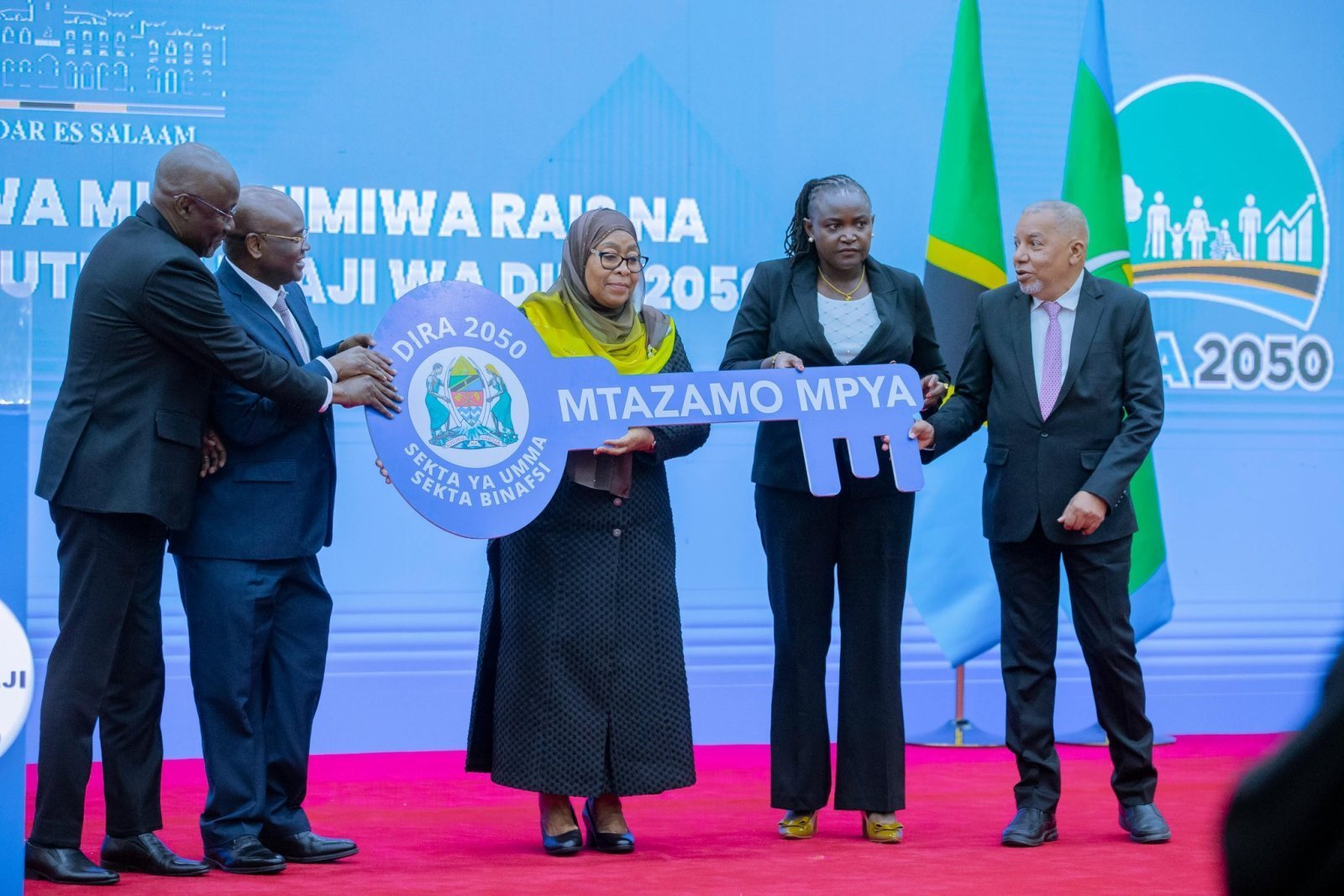
Minister of State for Planning and Investment Professor Kitila Mkumbo presented the figures to President Samia Suluhu Hassan and private sector leaders. Tanzania's 2026/27 budget totals TZS 62.3 trillion, of which TZS 563.1 billion, 0.9%, comes from foreign grants.
The share has fallen steadily over the past six years. In 2020/21, grants totalled TZS 2.5 trillion against a TZS 34.9 trillion budget, a 7.1% share. That fell to 4.1% in 2023/24 and 2.6% in 2025/26, before reaching 0.9% in the 2026/27 budget.
| Financial year | National budget | Grants | Share of budget |
| 2020/21 | TZS 34.9 trillion | TZS 2.5 trillion | 7.1% |
| 2023/24 | TZS 48.4 trillion | TZS 1.4 trillion | 4.1% |
| 2025/26 | TZS 56.4 trillion | TZS 0.9 trillion | 2.6% |
| 2026/27 | TZS 62.3 trillion | TZS 563.1 billion | 0.9% |
A decline spanning six administrations
Mkumbo traced the decline in grant dependence back to Tanzania's independence. Grants financed between 30% and 45% of the national budget under founding president Julius Nyerere, he said, rising to 40–50% under Ali Hassan Mwinyi. The share held between 30% and 40% under Benjamin Mkapa and fell to 20–35% under Jakaya Kikwete.
Grant dependence dropped more sharply under John Magufuli's fifth phase government, to between 7% and 12%, roughly the level at which the current administration began. The figures presented at the Vision 2050 launch show that share falling below 1% for the first time.
Budget growth outpaced grant financing
The national budget expanded by nearly 80% between 2020/21 and 2026/27, from TZS 34.9 trillion to TZS 62.3 trillion. Over the same period, grant financing fell in absolute terms, from TZS 2.5 trillion to TZS 563.1 billion.
Mkumbo attributed the gap to stronger domestic tax collection and non-tax revenue rather than increased borrowing.
Government cites reduced exposure to donor conditions
Mkumbo said Tanzania has factored declining aid into its fiscal planning, citing an international assessment concluding that aid conditionality now carries less strategic influence over government policy because public finances are no longer structured around external grants.
He linked the decline to self-reliance, one of four guiding principles of Vision 2050. Mkumbo said self-reliance does not mean economic isolation, and that Tanzania continues to pursue foreign investment, concessional loans, technology transfer and trade. The change, he said, is specific to the government's reliance on budget support grants to fund routine expenditure.
The decline comes as global official development assistance fell sharply in 2025. OECD data shows overall aid from Development Assistance Committee members dropped 23.1%, the steepest annual decline on record, with bilateral aid to Sub-Saharan Africa falling 26.3%.
What comes next
Mkumbo did not set a target for further reducing grant dependence, framing 0.9% as evidence of a completed transition rather than a work in progress. Sustaining the current budget size without grant financing will depend on continued growth in domestic revenue collection, an area the government has flagged as a Vision 2050 priority alongside private sector expansion and tax base broadening.
FAQ
How much of Tanzania's 2026/27 budget comes from foreign grants? 0.9%, or TZS 563.1 billion of a TZS 62.3 trillion national budget.
Did Tanzania's budget shrink to reduce grant reliance? No. The budget grew nearly 80% between 2020/21 and 2026/27. Grant financing fell in absolute terms over the same period.
What was Tanzania's historical grant dependence? 30–45% under Nyerere, 40–50% under Mwinyi, 30–40% under Mkapa, 20–35% under Kikwete, 7–12% under Magufuli.
Does this mean Tanzania is stepping back from donors? No. Mkumbo said the shift is specific to budget support grants funding routine government spending, and that foreign investment, concessional loans and trade relationships continue.
 Uchumi360
Business Intelligence
Uchumi360
Business Intelligence
- Professor Kitila Mkumbo, Minister of State for Planning and Investment, presentation at the Vision 2050 implementation launch
- OECD, International aid fell sharply in 2025, says OECD (April 2026)
Uchumi360 covers business, investment, and economic policy across East, Central, and Southern Africa.
For the serious reader
You read to the end. That places you in a small group.
Uchumi360 is built for readers who demand precision over speed, structure over sentiment, and analysis that holds uncomfortable conclusions rather than softening them. If this work sharpens how you think about Africa's economy, help us keep building the infrastructure behind it.
Institutional Partners
Commission intelligence. Shape the conversation.
Uchumi360 works with development finance institutions, investment firms, sovereign bodies, and strategic organisations across the coverage region. Institutional partnership unlocks:
- Commissioned sector and country intelligence reports
- Branded research series under your institution's authority
- Exclusive data briefings for internal strategy teams
- Speaking and editorial presence at Uchumi360 events
- Co-published investment outlooks for your markets
Support Our Work
Independent analysis has a cost. Help us bear it.
Uchumi360 does not carry advertising. It does not take editorial direction from sponsors. Every article is produced without commercial compromise. Your contribution funds the reporting, research, and editorial infrastructure that keeps this analysis free from influence.
Secure checkout: One-time and monthly support are processed securely. Add payment credentials to enable checkout here.
Stay Connected
Keep up with every new insight.
Follow our latest analysis, policy coverage, and market intelligence as soon as it is published. If you need something specific, reach out directly and we will point you to the right research.
