
How Tanzania Plans To Compete With Emerging Economies Over The Next 25 Years
Ready
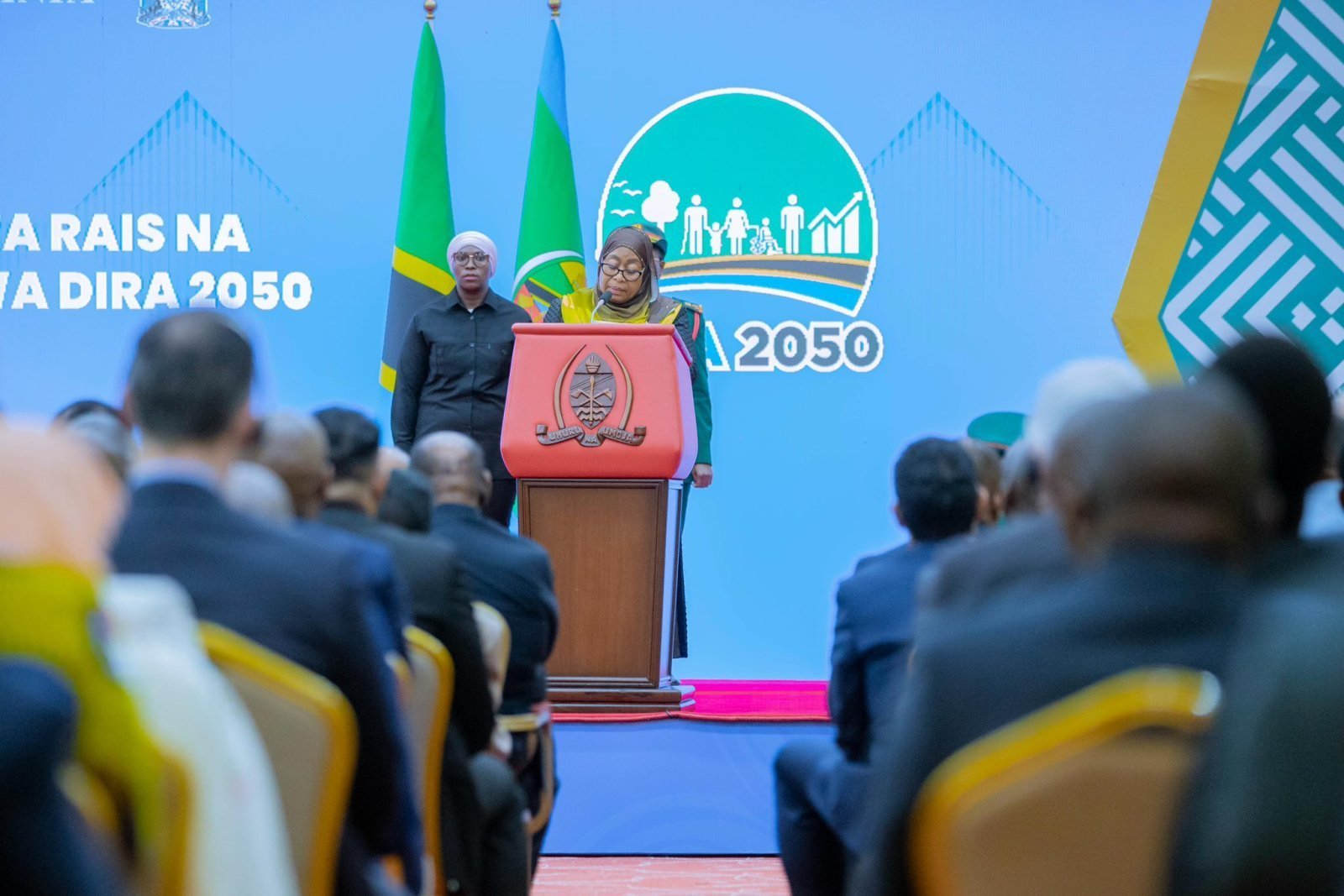
Tanzania's Long Term Perspective Plan 2026/27–2050/51 positions Vision 2050 as a competitiveness strategy, not just a domestic development plan, built for a world where Tanzania is compared directly against Vietnam, Indonesia, Morocco, India, Rwanda, Kenya and Egypt for the same investment capital. The strategy rests on infrastructure as a competitive instrument rather than public works, productivity over population growth, moving up the value chain via the 3I strategy, private capital carrying most financing, and a new delivery framework meant to make execution itself the differentiator. The core argument: other countries are pursuing the same growth simultaneously, so the race is dynamic, and Tanzania's advantage has to come from executing faster, not from writing a better plan.
The competition for economic prosperity isn't between rich and poor countries anymore. It's between countries industrialising at the same time, racing each other for the same investment, the same supply chain positions and the same skilled labour. Tanzania's Long Term Perspective Plan 2026/27–2050/51 reads like it was written with that reality in mind rather than as a purely domestic document. Vision 2050 repeatedly positions Tanzania inside a competitive global economy where productivity, innovation and execution determine outcomes, not ambition alone.
The relevant question isn't whether Tanzania can grow. It's whether it can grow faster and more competitively than the countries it's actually being measured against.
Competing for investment, not sympathy
For decades, many developing countries treated foreign investment as a form of development assistance, arriving because a country needed it rather than because it had earned it. That era is closing. Investors today weigh Tanzania against Vietnam, Indonesia, Morocco, India, Rwanda, Kenya and Egypt as competing destinations for the same capital, and the decision increasingly comes down to logistics, energy costs, labour productivity, regulatory certainty, technology and market access, not geography or need.
Vision 2050 treats competitiveness, investment attractiveness, productivity and innovation as central objectives rather than secondary outcomes. That reframes what government policy is actually for: less about protecting domestic markets, more about making Tanzania a more attractive place to produce, export and innovate than the alternatives an investor is also considering.
Infrastructure as a competitive instrument
Infrastructure runs through the Long Term Perspective Plan as more than a list of public works. Railways, ports, airports, energy systems, industrial parks, digital connectivity and logistics corridors are framed as instruments of economic competition, tools that either widen or close the gap with rival economies.
That tracks a broader global pattern: countries that cut transport costs, improve electricity reliability and strengthen supply chains consistently outperform countries relying on natural resource endowments alone. Tanzania's recent investment in the Standard Gauge Railway, the Julius Nyerere Hydropower Project, the Port of Dar es Salaam expansion, rural electrification and strategic transport corridors reads differently in this light. Individually, these are infrastructure projects. Collectively, the plan treats them as a competitiveness strategy aimed squarely at the countries Tanzania is trying to out-position.
Productivity over population
Vision 2050 projects Tanzania's population exceeding 118 million by 2050, but the plan doesn't treat population growth as the engine of prosperity on its own. It places equal weight on productivity, driven by education, technology, research, innovation and industrial capability.
That distinction matters because it's the one many resource-rich, populous countries get wrong. Countries become wealthier not because they have more workers, but because each worker produces more value, which is why the plan keeps returning to science, technology, digital transformation and human capital alongside manufacturing and infrastructure rather than treating population size as a growth strategy in itself.
Moving up the value chain
Value addition is a recurring thread throughout the document. Rather than exporting raw agricultural products, minerals and other unprocessed resources, Tanzania intends to expand processing, manufacturing and industrial production domestically before goods reach international markets.
This is where the country's Investment, Infusion and Innovation strategy becomes directly relevant to the competitiveness argument. The objective has shifted from simply attracting investors to attracting investors who transfer technology, develop local suppliers and build domestic industrial capability. In competitive terms, Tanzania is trying to compete on capability rather than on cost alone, which is a harder position to build but a more durable one to hold against countries that can always undercut on labour costs.
Private capital, public enabling
Vision 2050's most realistic feature may be its acknowledgment that government can't deliver this transformation alone. The plan expects the private sector to finance most long-term investment, with government focused on creating the enabling environment: infrastructure, institutions and policy. That mirrors the pattern in countries that industrialised successfully over recent decades, which generally combined strong public institutions with private sectors capable of investing, innovating and creating employment at scale, rather than relying on state-led investment to carry the load.
Execution as the actual competitive advantage
Ambition alone doesn't transform economies, and Tanzania appears to have internalised that. Alongside the Long Term Perspective Plan, government launched a National Framework for Delivery and Performance Management of Development Plans, introducing performance indicators, scorecards, digital monitoring and institutional accountability intended to improve implementation across government.
This may end up mattering more than any single sector target in the plan. Plenty of developing countries produce compelling national visions. Far fewer build systems capable of delivering them consistently across successive governments and decades, which is exactly the gap most competing economies also struggle to close.
The race doesn't pause for anyone
Vision 2050 launches at a moment when emerging economies across Africa and Asia are investing aggressively in manufacturing, renewable energy, digital infrastructure, logistics and industrial policy simultaneously. Every year Tanzania improves its competitiveness, competing countries are attempting the same improvements on the same timeline.
That makes this a dynamic competition, not a static one. Success depends not just on implementing Vision 2050, but on implementing it faster and more effectively than the countries Tanzania is actually competing against for the same capital and market access.
The Uchumi360 insight
Vision 2050 gets described as Tanzania's development strategy. It's more accurately Tanzania's competitiveness strategy. The country is preparing for a future where investment, technology, manufacturing and talent move freely between countries, and prosperity belongs to whichever economies execute better than their rivals. Tanzania's hardest challenge over the next 25 years isn't writing a better plan than Vietnam or Kenya. It's becoming a genuinely better place to build, produce, innovate and compete than they are.
FAQ
Which countries is Tanzania positioning itself against under Vision 2050? The plan implicitly benchmarks Tanzania against Vietnam, Indonesia, Morocco, India, Rwanda, Kenya and Egypt as competing destinations for the same investment capital.
Why does infrastructure matter for competitiveness specifically, not just development? Because transport costs, electricity reliability and supply chain efficiency directly determine where investors choose to produce, making infrastructure a competitive variable, not just a public good.
How does population growth factor into the competitiveness strategy? The plan treats productivity, not population size, as the actual driver of prosperity, projecting 118 million people by 2050 while emphasising education, technology and industrial capability as what makes that population economically valuable.
What makes execution a competitive advantage rather than just an internal management issue? Many countries produce ambitious development visions; few sustain the systems needed to implement them across successive governments. The delivery framework launched alongside Vision 2050 is designed specifically to close that gap faster than competing economies close theirs.
 Uchumi360
Business Intelligence
Uchumi360
Business Intelligence
Uchumi360 covers business, investment, and economic policy across East, Central, and Southern Africa.
For the serious reader
You read to the end. That places you in a small group.
Uchumi360 is built for readers who demand precision over speed, structure over sentiment, and analysis that holds uncomfortable conclusions rather than softening them. If this work sharpens how you think about Africa's economy, help us keep building the infrastructure behind it.
Institutional Partners
Commission intelligence. Shape the conversation.
Uchumi360 works with development finance institutions, investment firms, sovereign bodies, and strategic organisations across the coverage region. Institutional partnership unlocks:
- Commissioned sector and country intelligence reports
- Branded research series under your institution's authority
- Exclusive data briefings for internal strategy teams
- Speaking and editorial presence at Uchumi360 events
- Co-published investment outlooks for your markets
Support Our Work
Independent analysis has a cost. Help us bear it.
Uchumi360 does not carry advertising. It does not take editorial direction from sponsors. Every article is produced without commercial compromise. Your contribution funds the reporting, research, and editorial infrastructure that keeps this analysis free from influence.
Secure checkout: One-time and monthly support are processed securely. Add payment credentials to enable checkout here.
Stay Connected
Keep up with every new insight.
Follow our latest analysis, policy coverage, and market intelligence as soon as it is published. If you need something specific, reach out directly and we will point you to the right research.
