

East Africa Is Growing at 6 Percent. So Why Do Many Citizens Feel Poorer? It Is Not a Perception Problem. It Is a Structural One.
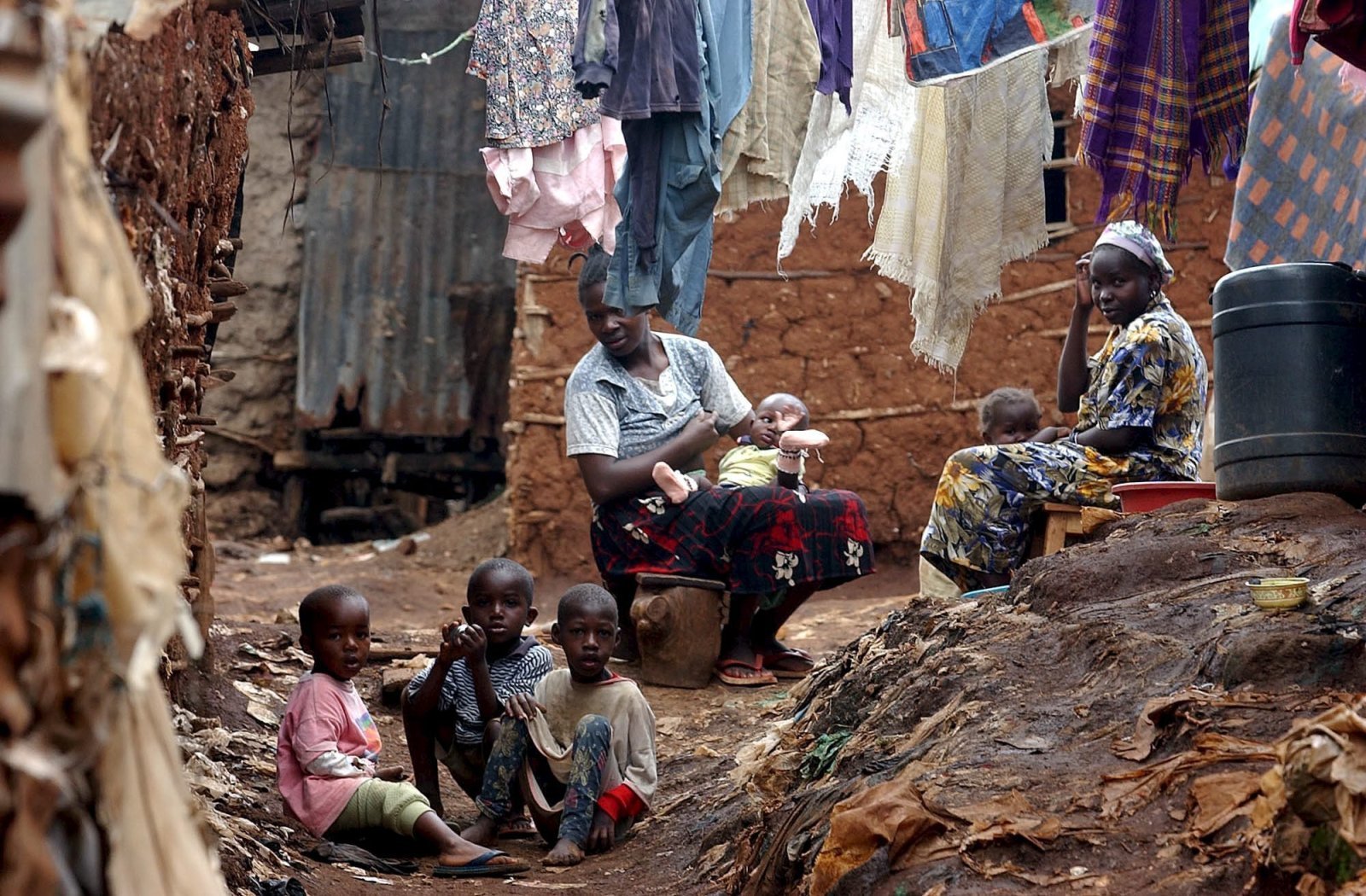
Tanzania registered USD 10.95 billion in approved investment capital in 2025 and ranks 138th in the World Happiness Report 2026. Kenya has the most sophisticated mobile money ecosystem in Sub-Saharan Africa and ranks 110th globally in life satisfaction, below Mozambique. Rwanda is the continent's governance benchmark and its citizens report lower subjective wellbeing than the country's institutional reputation would predict. East Africa's macroeconomic growth story is real, documented, and consistent. The lived experience of the majority of its population is also real, documented, and inconsistent with the headline numbers. Understanding why those two realities coexist is not an academic exercise. It is the most important analytical question in the region's development economics, and the answer determines whether the next decade of investment produces structural transformation or simply more impressive statistics.
The GDP Accounting Problem
The gap between East Africa's GDP growth rates and its population's lived experience of economic progress begins with a measurement problem that is not unique to the region but is particularly acute given the structure of its economies.
GDP measures the total value of output produced within an economy's borders in a given period. It is a production measure, not a welfare measure. A country whose GDP grows at 6 percent has produced 6 percent more output than the previous year. That output growth does not automatically translate into 6 percent more income for the average household, 6 percent better access to housing and healthcare, or 6 percent improvement in the quality of the employment available to working-age adults. The relationship between output growth and welfare improvement depends entirely on who is producing the additional output, who is capturing the income that production generates, and whether the economic structures that connect production to household welfare are functioning efficiently.
In East Africa's current growth model, the sectors driving the headline GDP figures are predominantly capital-intensive rather than labour-intensive, and predominantly formal rather than linked into the informal economy where the majority of the population earns its income. Construction and infrastructure investment generates GDP through the value of the assets being built, but employs a relatively small share of the working population directly and generates employment primarily in the skilled and semi-skilled categories that represent a minority of the labour force. Telecommunications and financial services generate GDP through transaction volumes and service fees, but employ a small professional workforce rather than the broad labour force participation that would distribute growth across households. Extractive industries generate GDP through the value of minerals extracted, but as Uchumi360's critical minerals analysis has documented extensively, the majority of the value creation in mining supply chains occurs in the processing and manufacturing stages that are overwhelmingly located outside Africa.
Tanzania's USD 10.95 billion investment surge generates GDP through approved capital deployment. But if 90 percent of the major project value flows to foreign contractors as the TANROADS local participation data suggests, if processing value in the mining sector leaves the country with the mineral exports, and if the financial structuring fees for major infrastructure projects are earned by advisors in Nairobi, London, and Singapore rather than Dar es Salaam, then the GDP impact of the investment surge is substantially larger than the household income impact of the same investment.
The Population Mathematics That Aggregate Growth Obscures
East Africa has one of the fastest-growing populations in the world. Tanzania's population is growing at approximately 3 percent annually. Uganda's growth rate is higher. Ethiopia's demographic momentum is generating urban population additions that dwarf the employment creation of its industrial development programme. Kenya's population growth, while moderating relative to earlier decades, continues to add working-age adults to a labour market that is not generating formal employment at comparable pace.
The per capita growth arithmetic is the starting point for understanding why 6 percent GDP growth does not feel like 6 percent improvement in individual living standards. If the economy grows at 6 percent and the population grows at 3 percent, real GDP per capita grows at approximately 3 percent. If consumption of public services, health, education, water, transport, is growing to serve a population expanding at 3 percent, much of the per capita income gain is absorbed by maintaining constant service quality per person rather than improving it. The growth that is visible in the infrastructure statistics, in the investment approvals, and in the construction activity across major East African cities is partly the growth required simply to maintain current living standards for a growing population, not the growth that produces visible improvement in individual welfare.
Tanzania's housing deficit analysis that Uchumi360 published makes this arithmetic concrete. An annual housing deficit of 200,000 units in a country whose urban population is growing rapidly means that a significant proportion of housing investment is simply maintaining a constant ratio of housing units to population rather than closing the deficit that already exists. The construction activity is real. The welfare improvement it generates is limited by the population growth that makes the deficit a moving target rather than a gap that can be closed.
The Cost of Living Dimension That GDP Does Not Capture
The gap between GDP growth and lived experience is compounded by the composition of price increases across East Africa's urban economies. Macroeconomic inflation statistics measure the average rate of price increase across a basket of goods and services weighted by their share of consumption. When the basket is weighted to reflect the consumption patterns of the urban middle class or above, it can show moderate inflation while the specific costs that determine the welfare of the majority of urban residents are rising much faster.
Housing costs across Dar es Salaam, Nairobi, Kampala, and Kigali have risen substantially faster than general inflation as urban population growth, infrastructure investment that increases land values along improved corridors, and the formalisation of property markets that follows investment attention have all driven rental and property costs above the income growth of median urban households. A worker whose nominal income increases by 5 percent in a year where their rent increases by 20 percent has experienced a real income decline regardless of what the consumer price index reports. This is the lived experience that the World Happiness Report's Tanzania ranking at 138th globally reflects. Not that Tanzanians are misreading their economic situation. But that the economic situation they are accurately reading is more complex than the GDP growth rate communicates.
The Hormuz crisis dimension adds a specific and current pressure that the structural analysis must incorporate. Uchumi360's Iran war analysis documented that Africa is absorbing fuel price shocks, fertiliser supply disruptions, and aviation corridor disruption from a geopolitical conflict in which it had no role. Fuel price increases transmit directly into transport costs that urban workers pay daily and into food prices that consume the largest share of low-income household budgets. The macroeconomic inflation figure that governments manage and report through monetary policy frameworks may remain within target ranges even as the specific prices that determine the welfare of the poorest urban households are rising at rates that erode real purchasing power in ways that monetary policy cannot easily address without imposing growth costs that damage the employment environment simultaneously.
The Structural Ceiling of Informality
The most consequential structural explanation for the gap between East Africa's GDP growth and its population's welfare experience is the informal economy's role as the absorber of labour that the formal economy's growth is not generating employment for at sufficient pace.
East Africa's workforce is overwhelmingly informal. In Tanzania, Kenya, Uganda, and Ethiopia, the majority of working adults earn their livelihoods through informal self-employment, informal wage employment, or subsistence agricultural activity that does not appear in formal employment statistics. This is not a temporary condition in the process of being resolved by economic growth. It is a structural feature of economies whose formal sector growth is driven by capital-intensive sectors that do not generate proportional labour demand, whose informal economies are large and complex enough to absorb working-age population additions without generating the productivity improvements that formal employment would produce, and whose regulatory and financing environments make the transition from informal to formal economic activity costly enough that many entrepreneurs and workers remain informal even when their activities have become commercially significant.
The informal economy does not scale efficiently. A street trader who doubles her customer base does not double her income in the way that a manufacturing firm that doubles its output generates proportional revenue growth. An informal construction worker who gains experience does not accumulate the skills credentials and professional reputation that would allow him to command higher wages or access better employment opportunities in the way that a formally employed engineer's career progression would generate. An informal financial cooperative that grows its membership does not become a bank, with the capital mobilisation, the lending scale, and the financial intermediation functions that banking provides, without navigating regulatory frameworks that most informal cooperatives cannot access.
Irene Simon Ivambi's Mrembo Naturals, profiled in Uchumi360's Uchumi Faces series, illustrates the frontier between the informal and formal economy where the translation from growth to welfare is most directly at stake. Her company sources from 5,000 women farmers, employs 20 people directly, and supports 1,500 livelihoods indirectly. It earns more revenue from exports than from domestic sales because international markets value the quality of its natural products more than the domestic market does. It is constrained by financing gaps that prevent it from scaling to the capacity that its market demand would justify. The 5,000 women farmers in its supply chain are formal participants in a commercial supply chain, earning more reliable income from that participation than they would from commodity market sales. But they are not formal employees with employment contracts, social security contributions, and the labour market protections that formal employment provides.
Closing the gap between East Africa's GDP growth and its population's welfare requires moving a larger share of economic activity from the informal ceiling into the formal economy's productivity and wage dynamics. That transition does not happen automatically with growth. It requires the financial system accessibility that Uchumi360's sovereign rating analysis identified as a structural gap, the skills alignment that the education articles documented as a policy failure, and the regulatory environment that makes formalisation commercially rational rather than imposing costs that informal operators are rational to avoid.
The Investment Linkage Gap
The most direct explanation for why East Africa's investment surge has not translated proportionally into household welfare improvement is the weakness of the linkages between the sectors receiving investment and the broader economy in which the majority of households earn their incomes.
When a major mining project invests USD 1 billion in Tanzania's mineral sector, the economic multiplier that investment generates for the broader Tanzanian economy depends on how much of that billion circulates within the domestic economy through local procurement, local employment, local financial services, and local supply chain development rather than leaking offshore through imported equipment, expatriate salaries, foreign management fees, and profit repatriation. If local procurement accounts for 10 percent of project value and local employment accounts for 30 percent of the workforce at wages that are competitive with international mining sector standards, the domestic economic multiplier of the investment is substantially smaller than a project where local procurement accounts for 70 percent of value and a majority of the workforce consists of Tanzanians earning wages that circulate within the domestic economy.
The TANROADS data documenting 10 percent local contractor participation is the most precise illustration in Uchumi360's coverage of how investment linkage gaps reduce the domestic multiplier of major expenditure programmes. A six trillion shilling road programme that retains 10 percent of its value within the domestic construction industry and exports 90 percent to foreign contractors generates a domestic economic multiplier of roughly one tenth of what the same programme would generate if local contractor participation were proportional to the construction capability that a mature domestic industry would provide. The physical infrastructure is built in both scenarios. The domestic economic development is not.
The same dynamic applies to every capital-intensive sector in the coverage region. The ferroniobium smelter that Panda Hill is building in Mbeya will generate a domestic multiplier through its 70 percent local procurement commitment, its 600 direct employees, and the 7,000 total direct and indirect beneficiaries the project projects. It will generate a smaller multiplier than a comparable investment with 100 percent local procurement, entirely Tanzanian staffing, and financial structuring that generates advisory fees for Tanzanian financial institutions. The gap between the actual and potential domestic multiplier of major investments is the quantifiable mechanism through which the GDP and welfare figures diverge.
The Manufacturing Gap at the Heart of the Translation Failure
Every economy that has successfully translated rapid GDP growth into broad-based welfare improvement over a sustained period has done so through the same mechanism: the development of a manufacturing sector that employs large numbers of workers at wages above subsistence level, generates export earnings that provide fiscal revenue and foreign exchange, builds supply chain linkages that distribute income through multiple tiers of domestic economic activity, and accumulates technical and management capability that compounds into economic complexity over time.
East Asia's development experience, from Japan's post-war industrialisation through South Korea's electronics and automotive manufacturing to China's extraordinary manufacturing-led growth over three decades, is the most cited but also the most directly relevant precedent for what manufacturing-led growth looks like and what it delivers in welfare terms. In each case, the transition from agricultural and informal economies to manufacturing-led growth produced rapid and sustained improvements in household incomes, reductions in poverty incidence, and the development of the formal employment base from which middle-class consumption and domestic market development could grow.
East Africa has not yet reached this stage at the scale that would make the manufacturing multiplier visible in welfare data. Ethiopia's industrial park model was the most ambitious attempt in the coverage region to create this transition before the political and security disruptions of recent years complicated its trajectory. Tanzania's SEZ strategy and its investment surge are attempting to build the manufacturing base that the structural transformation argument requires. But manufacturing's share of GDP across the coverage region remains below the levels that would generate the broad-based employment and income distribution effects that history suggests are necessary for GDP growth to translate into welfare improvement at scale.
The constraint on manufacturing development is not primarily capital availability. The investment surge demonstrates that capital is available for the right opportunities. The constraints are the energy reliability, the logistics efficiency, the skills alignment, and the regulatory environment that determine whether manufacturing investment can be operated profitably in East African locations against competition from established manufacturing economies with deeper supply chains, more reliable infrastructure, and more experienced workforces. Each of these constraints is the subject of active policy attention across the coverage region. None of them have been resolved at the scale that would shift the manufacturing share of GDP in ways that would change the relationship between growth rates and welfare outcomes.
What the Happiness Data Is Actually Measuring
Tanzania's 138th ranking in the World Happiness Report 2026, alongside Kenya's 110th despite its economic sophistication, and Rwanda's absence from the rankings despite its governance reputation, all reflect the aggregate consequence of the structural gaps this analysis has described.
As Uchumi360's happiness analysis documented, the World Happiness Report's explanatory variables, GDP per capita, social support, healthy life expectancy, freedom to make life choices, generosity, and perceptions of corruption, are the same variables that determine sovereign credit ratings, investment climate quality, and the risk premium that international capital assigns to developing economies. A country that grows at 6 percent but maintains high corruption perception, limited social protection, constrained life choices for the majority of its population, and a healthcare system that cannot provide reliable life expectancy improvement for low-income households will not improve its happiness ranking proportionally with its GDP growth rate.
Tanzania's ranking at 138th is not a statement that Tanzanians are among the world's unhappiest people in an absolute sense. It is a statement that the gap between Tanzania's economic growth rate and the welfare improvement that growth is translating into for the majority of its population is large enough to suppress its happiness score below what its income trajectory would predict for an economy whose structural translation mechanisms were functioning efficiently. That gap is the same gap this entire analysis has been documenting from different analytical angles.
The Translation Mechanisms That Determine Whether Growth Reaches Households
The policy challenge that East Africa's growth-welfare gap defines is not how to grow faster. It is how to build the structural mechanisms that translate growth into welfare improvement more effectively than the current model does.
Local content and procurement requirements in major investment projects are the most direct mechanism for improving the domestic multiplier of capital investment. TANROADS' increase of the procurement threshold for local firms from TZS 10 billion to TZS 50 billion is a step in this direction. The Panda Hill ferroniobium project's 70 percent local procurement commitment is a more ambitious example. Systematising these requirements across all major investment projects and building the enforcement capacity that makes them commercially real rather than nominally stated is the foundational policy intervention that converts investment approval statistics into domestic economic activity that households experience.
Financial system deepening is the mechanism through which the investment that is occurring at the large capital end of the market becomes accessible to the small and medium enterprises, the growing informal businesses, and the agricultural value chain operators whose formalisation and growth would distribute income gains most broadly. Mrembo Naturals cannot scale because affordable growth capital is not available on terms its cash flow can service. Multiplied across the thousands of small and medium enterprises across the coverage region with demonstrated commercial viability and genuine growth potential, the financing gap represents the largest single constraint on the private sector development that distributes growth most broadly.
Manufacturing investment, supported by the energy infrastructure, logistics efficiency, skills development, and regulatory environment that makes East African locations competitive for labour-intensive production, is the structural mechanism that history suggests is most effective at translating GDP growth into broad-based wage improvement and formal employment creation. Each of the investments Uchumi360 has documented across March 2026, the JNHPS energy capacity, the BRT and road infrastructure, the SGR extension, the SEZ development, the skills programmes, is a component of the enabling environment for manufacturing. Their combined effect on manufacturing's share of GDP and employment will be the measure of whether the current investment cycle produces the structural transformation that welfare improvement requires.
The Bottom Line
East Africa is growing. The growth is real, documented, and sustained. It is also structurally disconnected from the welfare experience of the majority of its population in ways that are not temporary imbalances in the process of self-correction but structural features of a growth model that concentrates output in capital-intensive sectors without generating proportional employment, without building strong domestic supply chain linkages, and without yet developing the manufacturing base that history consistently identifies as the mechanism through which rapid growth becomes broad welfare improvement.
The citizens of East Africa who report that they are not feeling the growth their governments report are not misreading their economies. They are reading them accurately. The per capita arithmetic, the cost of living dynamics, the informal economy ceiling, the investment linkage gaps, and the manufacturing deficit are all producing exactly the welfare experience that the structural analysis predicts: growth that is visible in the statistics and invisible in the household budget.
Closing that gap requires the same structural investments that the entire Uchumi360 coverage this month has identified from different analytical angles. Skills development that aligns graduate output with economic demand. Financial system deepening that extends affordable capital to the enterprises that distribute income most broadly. Manufacturing investment that builds the employment base that converts GDP growth into wage income at scale. Local content requirements that increase the domestic multiplier of major investment projects. And the institutional quality that makes all of these interventions deliver on their design rather than being absorbed into the gap between policy intent and economic outcome.
The growth is there. The structural work of connecting it to the people who are supposed to benefit from it is the development challenge that will define East Africa's next decade.
______________________________________________________________________________________
Sources: World Happiness Report 2026, Wellbeing Research Centre University of Oxford. IMF Regional Economic Outlook Sub-Saharan Africa 2025. World Bank Africa Development Indicators 2024 to 2025. Tanzania Investment and Special Economic Zones Authority Tiseza Data 2025. Tanzania National Bureau of Statistics Housing and Population Data 2025. Kenya Economic Survey 2025. TANROADS Programme Report December 2025. Mrembo Naturals Uchumi360 Interview March 2026. African Development Bank Economic Outlook 2024. IEA Iran War Energy Market Impact Analysis March 2026.
_______________________________________________________________________________________
Uchumi360 covers business, investment, and economic policy across East, Central, and Southern Africa.
