
Tanzania Needs to Go From USD 95 Billion to USD 1 Trillion in 25 Years. The Arithmetic Is Straightforward, Everything Else Is Not.
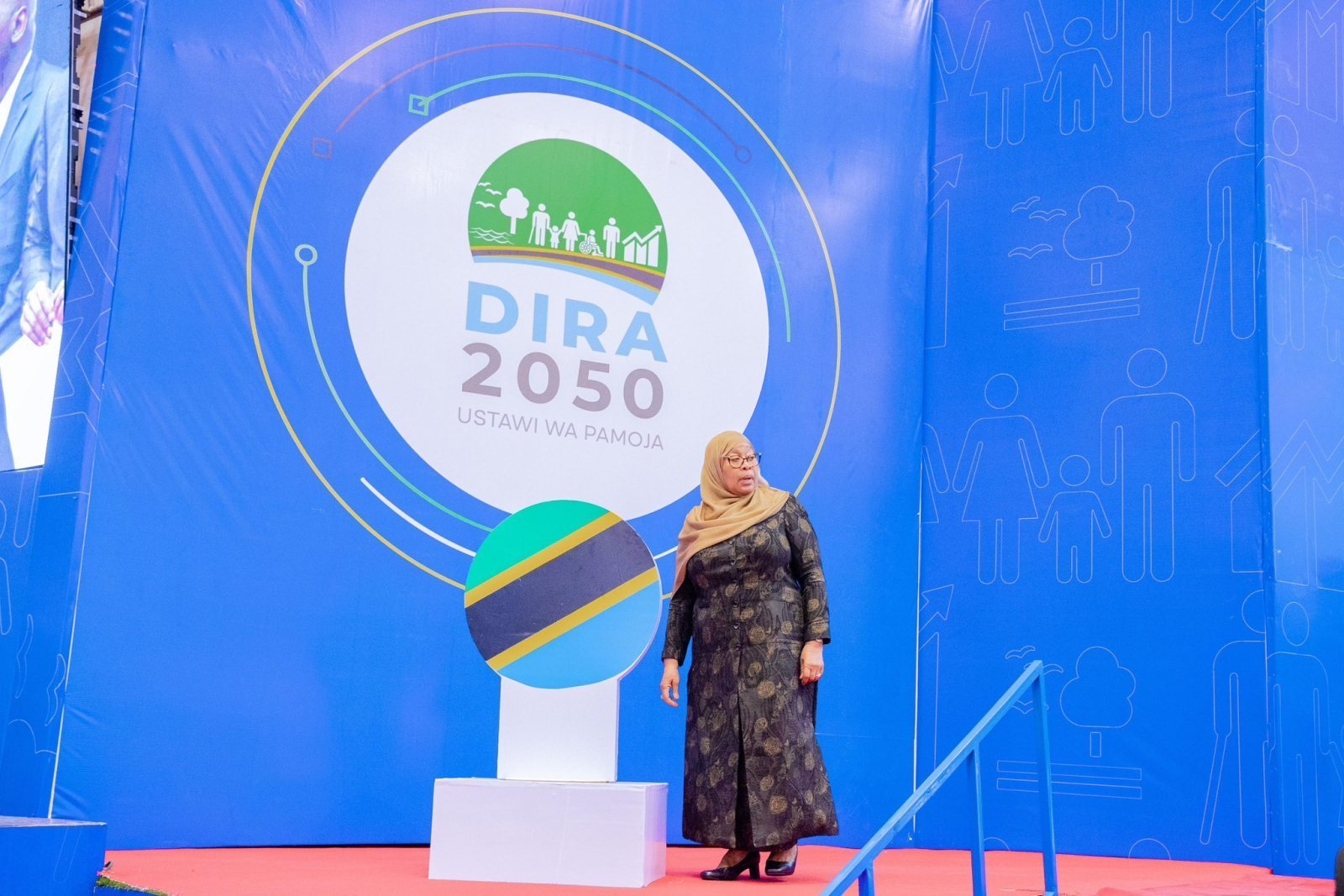
On July 19, 2025, President Samia Suluhu Hassan launched Tanzania's Development Vision 2050 in Dodoma. The document sets a target that is both specific and extraordinary: a national GDP of USD 1 trillion and a per capita income of USD 7,000 by 2050. Implementation begins July 1, 2026. Tanzania's GDP at the time of the launch was approximately USD 95 billion. The gap between those two numbers, USD 95 billion and USD 1 trillion, is not a communications gap or a policy gap. It is a compound annual growth rate calculation that has precise implications for what Tanzania must build, what it must fix, what it must attract, and what structural transformations it cannot defer. This article does that calculation. It then examines, with equal seriousness, what the arithmetic requires and what Tanzania's current institutional reality delivers. Both are part of the same analysis. Neither is sufficient without the other.
The Arithmetic
Tanzania's GDP in 2025 is USD 87.44 billion according to the IMF. By 2026, this places the economy at approximately USD 95 billion. The Vision 2050 target is USD 1 trillion by 2050. The time horizon is 24 years. The calculation is compound annual growth rate applied to that gap.
To grow from USD 95 billion to USD 1 trillion in 24 years requires a compound annual growth rate of approximately 10.6 to 10.8 percent in nominal terms. ODI's analysis, working from Tanzania's 2023 GDP of USD 79.1 billion, concluded that a 10 percent nominal growth rate is the minimum required. Working from the slightly larger 2026 base of USD 95 billion and a shorter time horizon, the required rate is marginally higher at approximately 10.7 percent annually, but the order of magnitude remains the same. Tanzania needs to sustain nominal GDP growth of approximately 10.7 percent every year for 24 consecutive years.
This number requires immediate decomposition into its real and nominal components before its feasibility can be assessed. Tanzania's average annual inflation rate over the decade from 2012 to 2023 was approximately 4.3 percent. Tanzania's average annual real GDP growth over the same period was approximately 6 percent. Nominal GDP growth is approximately the sum of real growth and inflation. At 6 percent real growth plus 4.3 percent inflation, Tanzania was generating approximately 10.3 percent nominal growth through much of the past decade. On this arithmetic, the Vision 2050 target is not theoretically impossible. It is essentially what Tanzania was already doing, but slightly below what is now required under the updated base and time horizon.
The complication begins when you look at what happened more recently. Real GDP growth fell to 2 percent in 2020 during COVID-19, recovered to 4.3 percent in 2021, 4.7 percent in 2022, 5.3 percent in 2023, and 5.5 percent in 2024. The CAG report documents the Bank of Tanzania's assessment of 5.9 percent growth for 2025 Mainland Tanzania. These are solid numbers for an African economy. They are not the 7 to 8 percent real growth rate that Tanzania needs to sustain in order to hit USD 1 trillion by 2050 at historically consistent inflation rates.
The ODI analysis is precise on this point: achieving a trillion-dollar economy by 2050 requires a nominal annual growth rate of 10 percent, and given that inflation averaged 4.3 percent per annum over 2012 to 2023 and real growth averaged 6 percent over the same period, nominal growth of 10 percent per annum seems feasible as long as annual real economic growth of 6 percent can be sustained.
But here is where the analysis requires honest precision. Sustaining 6 percent real growth for 24 consecutive years is not the same as achieving it for a few years. Tanzania's 25-year average from 2000 to 2024 is approximately 6.2 percent, which suggests that 6 percent is achievable as a long-run average. What it does not reveal is that this average includes a period of exceptional infrastructure investment, commodity price tailwinds, and external financing conditions that are not guaranteed to persist. The question is not whether Tanzania can grow at 6 percent. It already has. The question is whether it can grow at 6 percent or above consistently, without the interruptions that have punctuated every multi-decade growth story in development economics, while simultaneously building the structural transformation that Vision 2050's USD 7,000 per capita income target requires.
The Per Capita Complication
The USD 1 trillion headline target is the number that dominates Vision 2050's public narrative. The USD 7,000 per capita income target is the number that determines whether that trillion dollars actually transforms Tanzanian lives.
Tanzania's population is expected to double from 61 million to approximately 140 million by 2050, with over half of the population living in urban areas. A USD 1 trillion economy divided among 140 million people produces a per capita GDP of approximately USD 7,143. The math works, but only if the population projection is accurate and the GDP is distributed with the productivity and inclusivity that per capita measures assume. If population growth runs above projection, the per capita target becomes harder to meet even if the aggregate target is achieved. If GDP growth is unevenly distributed across regions, sectors, and income groups, the aggregate trillion can coexist with widespread poverty in ways that Vision 2050's stated objective of eliminating extreme poverty would not tolerate.
Tanzania's population is expected to double from 61 million to about 140 million by 2050. As population growth is expected to fall from the current 3 percent to under 2.5 percent by 2050, real GDP per capita needs to increase by between 3 and 4 percent annually. Three to four percent annual real per capita growth sustained over 24 years would take GDP per capita from approximately USD 1,200 today to approximately USD 2,500 to USD 3,200 in real terms. To reach USD 7,000 in current dollar terms requires either significantly higher real per capita growth or a substantial exchange rate appreciation that would itself reflect the structural economic transformation the Vision projects. The per capita arithmetic is harder than the aggregate arithmetic, and it is the per capita figure that determines whether Vision 2050 translates into human development outcomes rather than simply GDP statistics.
The Investment Gap
With an investment rate of gross fixed capital formation as a percentage of GDP averaging 35.9 percent over the past decade, estimates suggest that Tanzania requires an estimated USD 3.7 trillion to finance investment between 2025 and 2050. Mobilising this level of investment necessitates a significant increase in private sector financing.
USD 3.7 trillion in investment over 25 years is approximately USD 148 billion per year on average, rising as the economy grows. Tanzania's total approved investment capital from Tiseza in 2025 was USD 10.95 billion. Even if every approved project deployed its full capital on schedule, which the CAG's documented gap between approved and deployed investment suggests is optimistic, Tanzania's current investment trajectory remains significantly below what Vision 2050's arithmetic requires on an annualised basis. The government's first five-year plan under Vision 2050 targets a nominal GDP of USD 118 billion by 2031, requiring a real GDP growth rate of 10.5 percent annually over the five-year period starting 2026/27. That is the opening chapter of the Vision 2050 growth story. It is also the most ambitious five-year growth target Tanzania has ever formally committed to.
The Three Scenarios
Rather than a single growth trajectory, Vision 2050's arithmetic can be understood through three analytically distinct scenarios that bracket the range of plausible outcomes.
Scenario One: The Current Trajectory Extended
Tanzania maintains its 2020 to 2025 average real growth of approximately 5.5 percent. Inflation stays at approximately 4 percent, consistent with the Bank of Tanzania's target range. Nominal growth averages approximately 9.5 percent annually. From a base of USD 87.44 billion in 2025, 25 years of 9.5 percent compound nominal growth produces a 2050 GDP of approximately USD 877 billion. Tanzania comes close to USD 1 trillion but does not reach it. Per capita income with a population of 140 million reaches approximately USD 6,260, short of the USD 7,000 target. On the current trajectory, extended without acceleration, Tanzania arrives at approximately 88 percent of its Vision 2050 target. That is not failure. But it is not the vision.
Scenario Two: The Accelerated Structural Transformation Scenario
Tanzania successfully executes the structural transformation that Vision 2050 requires. Manufacturing's share of GDP rises from the current approximately 8 percent toward the 40 percent target, driven by the LNG project, the critical minerals value chain, the Julius Nyerere Hydropower Station's energy cost reduction, and the SGR's logistics cost reduction. Real growth accelerates to between 7 and 8 percent annually from the late 2020s onward, as the productivity gains from structural transformation compound. Inflation remains anchored at 4 percent. Nominal growth averages 11 to 12 percent from 2028 onward. From USD 87.44 billion in 2025, with three years at 9 percent and then 22 years at 11.5 percent compound nominal growth, Tanzania reaches approximately USD 1.1 trillion by 2050. The target is achieved with modest margin. Per capita income with a population of 138 million reaches approximately USD 7,970. Both headline targets are met.
What this scenario requires is specific: the LNG project must reach final investment decision and come online before 2035. The critical minerals value chain must move from extraction to processing within Tanzania rather than exporting raw ore. The SGR must reduce logistics costs enough to make domestic manufacturing competitive with imports. MKUMBI II must produce the business environment improvements that private investment requires. The CAG report's institutional accountability gaps must narrow materially. None of these conditions is impossible. None is guaranteed.
Scenario Three: The Structural Stall Scenario
Tanzania continues growing but does not execute the structural transformation. The agriculture sector, which currently employs approximately 65 percent of the workforce, remains subsistence-oriented and low-productivity. Manufacturing stays below 15 percent of GDP. The LNG project is further delayed by financing or regulatory uncertainty. The commodity price cycle turns unfavourable in the early 2030s, as it has for every African resource economy in the past four decades at least once during a 25-year horizon. Real growth averages between 4 and 5 percent for the decade from 2030 to 2040, before recovering partially in the 2040s. Nominal growth averages approximately 8 percent over the full period. From USD 87.44 billion in 2025, 25 years at 8 percent compound nominal growth produces a 2050 GDP of approximately USD 598 billion. Per capita income with a population of 142 million reaches approximately USD 4,211. Tanzania has grown significantly and improved materially. It has not reached its Vision 2050 targets.
This scenario is not pessimism for its own sake. It is the documented pattern for a substantial majority of economies that have set ambitious multi-decade growth targets. It is the scenario that Vision 2025's experience cautions against: Tanzania's previous long-term vision set a GDP per capita target of USD 3,000 by 2025. Key targets such as GDP per capita of USD 3,000 were not achieved. Poverty and informality remained high, structural transformation was slow, and implementation was hindered by institutional weaknesses.
The Structural Variables That Determine Which Scenario Materialises
The difference between Scenario Two and Scenario Three is not primarily a macroeconomic variable. It is not the monetary policy framework, the exchange rate regime, or the budget deficit target. It is the quality of the structural transformation that Tanzania executes over the next decade, specifically between now and 2035, when the compounding arithmetic begins to separate the scenarios decisively.
LNG and the natural gas moment. Tanzania has 57 trillion cubic feet of documented natural gas reserves. The LNG project in Lindi, if it reaches commercial production before 2035, will generate export revenue, tax receipts, and technology transfer at a scale that no other single investment in Tanzania's portfolio can match. Prof Muhongo argued that oil and gas should contribute 25 percent of GDP, minerals 20 percent, agriculture 35 percent, and tourism 15 percent if the USD 1 trillion target is to be achieved. That sector composition implies an economy that has fundamentally restructured around its resource endowment rather than simply exported raw commodities. The gas sovereign wealth fund that Parliamentarians have called for is the institutional instrument for converting LNG revenue into long-term development capital rather than recurrent expenditure. Whether Tanzania builds that fund, and builds it before rather than after the revenue begins flowing, is a political economy decision with 25-year compounding consequences.
The manufacturing gap. Industry currently contributes approximately 8 percent of Tanzania's GDP. Vision 2050 targets 40 percent. The distance between 8 and 40 is not a policy statement. It is 32 percentage points of GDP that must be filled by factories, processing facilities, manufacturing employment, and the logistics and energy infrastructure that makes manufacturing competitive. The Julius Nyerere Hydropower Station, at 2,115 megawatts of new capacity, is a necessary condition for manufacturing competitiveness because it reduces energy costs. The SGR is a necessary condition because it reduces logistics costs. The MKUMBI II reform is a necessary condition because it reduces regulatory friction costs. None of these conditions is individually sufficient. All of them are necessary simultaneously. The CAG report's documentation of TANESCO operating at 44 percent of Ubungo I's capacity, with broken generators unrepaired for 1,260 days, is a specific data point about the gap between the energy infrastructure Tanzania is building and the energy infrastructure Tanzania is currently operating.
The skills deficit. Tanzania requires an estimated USD 3.7 trillion in investment between 2025 and 2050, necessitating a significant increase in private sector financing. Private capital at that scale requires a labour force that can operate the investments it finances. Uchumi360's investment surge analysis documented the skills gap as the binding human capital constraint on Tanzania's current investment cycle. Vision 2050's target of 70 percent digital literacy and universal education through tertiary level is the human capital agenda that addresses this constraint. The gap between Vision 2050's human capital targets and Tanzania's current educational outcomes, in enrolment rates, in learning quality, and in the technical and vocational skills that manufacturing employment requires, is the implementation gap that will be most difficult to close because it operates on the longest time horizon. Children entering school in 2026 will be the workforce of 2050. The quality of their education determines whether the investments that Vision 2050 requires find the workers they need.
The population arithmetic. Tanzania's population will grow from approximately 61 million today to approximately 140 million by 2050. This demographic trajectory is simultaneously Vision 2050's greatest asset and its most demanding constraint. A working-age population growing at this scale is the labour force that manufacturing-led growth requires. It is also the population that must be fed, educated, housed, employed, and served by institutions whose current capacity, documented in the CAG's 2024/25 audit, is already under strain at 61 million. The urban population will roughly treble as rural-urban migration accelerates alongside economic growth. Dar es Salaam, already adding 750,000 people annually and projected to reach 10 million by 2030, will be a city of 15 to 20 million by 2050. The infrastructure investment required to make that urban growth productive rather than dysfunctional is a component of the USD 3.7 trillion total investment requirement that is often underestimated because it shows up in housing, water, sanitation, and urban transport rather than in the flagship infrastructure projects that development financing tends to prioritise.
The Institutional Prerequisite
Prof Kitila Mkumbo revealed that initial government projections had placed the size of the economy at between USD 500 billion and USD 700 billion by 2050, but the private sector argued for a more ambitious growth target. After consultations, they resolved to adopt a target of USD 1 trillion.
This is the most analytically important piece of context in the entire Vision 2050 story. The original government projection was USD 500 to 700 billion. Private sector advocacy pushed the target to USD 1 trillion. The implication is that Tanzania's planners, working from the institutional reality they manage daily, believed the achievable range was between USD 500 and 700 billion. The USD 1 trillion target requires approximately 40 to 100 percent more economic output than what Tanzania's own planning institution considered achievable on current trajectories. That gap between the planners' honest assessment and the political commitment is not a reason to dismiss the target. It is the precise specification of what must change structurally for the higher target to be reachable.
What must change is documented with uncomfortable specificity in the CAG's 2024/25 audit. Thirty-four public institutions without boards. Seventy-seven processing transactions outside the government's own accounting system. TZS 5.49 trillion in long-term institutional debt growing 48 percent in a year. TZS 19.32 billion in pension contributions deducted from workers' salaries and not remitted. TZS 18.74 billion in medicines expired in a warehouse. These are not peripheral failures in minor institutions. They are systemic accountability gaps in the institutional architecture that Tanzania's USD 1 trillion economy must be built upon.
Vision 2050 explicitly acknowledges the lesson of Vision 2025. Key targets were not achieved. Poverty and informality remained high, structural transformation was slow, and implementation was hindered by institutional weaknesses. Vision 2050 incorporates lessons by reinforcing monitoring mechanisms, emphasising accountability, and placing private sector-led growth at the centre of the agenda.
The reinforcement of monitoring mechanisms and the emphasis on accountability are precisely the institutional quality improvements that the CAG report's findings demand. The National Vision Delivery Unit that President Samia directed to be established is the institutional vehicle for that accountability. Whether it receives the mandate, the resources, and the independence to hold government institutions to the performance standards that Vision 2050 requires is the first and most consequential institutional question in the entire implementation agenda.
The Honest Verdict
Tanzania can reach USD 1 trillion by 2050. The arithmetic allows it. The natural resource endowment supports it. The demographic profile makes it possible in ways that ageing economies cannot replicate. The geographic position, at the centre of East Africa's fastest-growing investment corridor, provides the trade and logistics foundation that industrial growth requires.
Tanzania will reach USD 1 trillion by 2050 only if three things happen simultaneously and consistently over the next 25 years. Real GDP growth must average at least 6 percent annually without major interruptions. Structural transformation, specifically the transition of manufacturing from 8 to at least 25 percent of GDP, must be executed with the investment, the institutional discipline, and the skills development that it requires. And the institutional accountability gap documented in the CAG's 2024/25 audit must narrow materially, because the compounding losses, the idle assets, the unremitted obligations, and the governance failures that the audit documents are not merely accountability problems. They are economic losses that subtract directly from the GDP that Vision 2050's arithmetic requires Tanzania to build.
The government that launched Vision 2025 in 2000 and the government that launched Vision 2050 in 2025 are operating 25 years apart with the same institutional architecture challenge and a larger population to serve. The Vision 2050 document acknowledges this explicitly. The implementation agenda that begins July 1, 2026 will be judged not by what it says but by whether the institutions that failed Vision 2025's targets have been rebuilt to deliver Vision 2050's more demanding ones.
Tanzania has 24 years to close a USD 913 billion gap. That works out to USD 36.5 billion of additional economic output required every year on average, growing as the base grows. It is the most ambitious national development target in East African history. It is achievable. It is not inevitable. The distance between those two words is institutional quality, consistently applied, over a quarter century.
 Uchumi360
Business Intelligence
Uchumi360
Business Intelligence
Sources: IMF World Economic Outlook 2025. ODI Tanzania USD 1 Trillion Economy Analysis June 2025. Tanzania Investment and Consultant Group Economic Analysis 2025. Tanzania National Development Vision 2050 launched July 2025. TanzaniaInvest Vision 2050 Launch Coverage September 2025. Zawya Vision 2050 Coverage July 2025. The East African Vision 2050 Coverage July 2025. Daily News FYDP IV Parliamentary Debate February 2026. TanzaniaInvest FYDP IV Budget Coverage April 2026. The Citizen Private Sector Vision 2050 Influence February 2026. Bank of Tanzania GDP Growth Data 2025. Ripoti ya Mwaka ya Mdhibiti na Mkaguzi Mkuu wa Hesabu za Serikali 2024/25. Uchumi360 Institutional Conversion Framework Analysis March-April 2026.
Uchumi360 covers business, investment, and economic policy across East, Central, and Southern Africa.
