

Tanzania's Economic Trajectory: Projecting a $180 Billion GDP by 2030
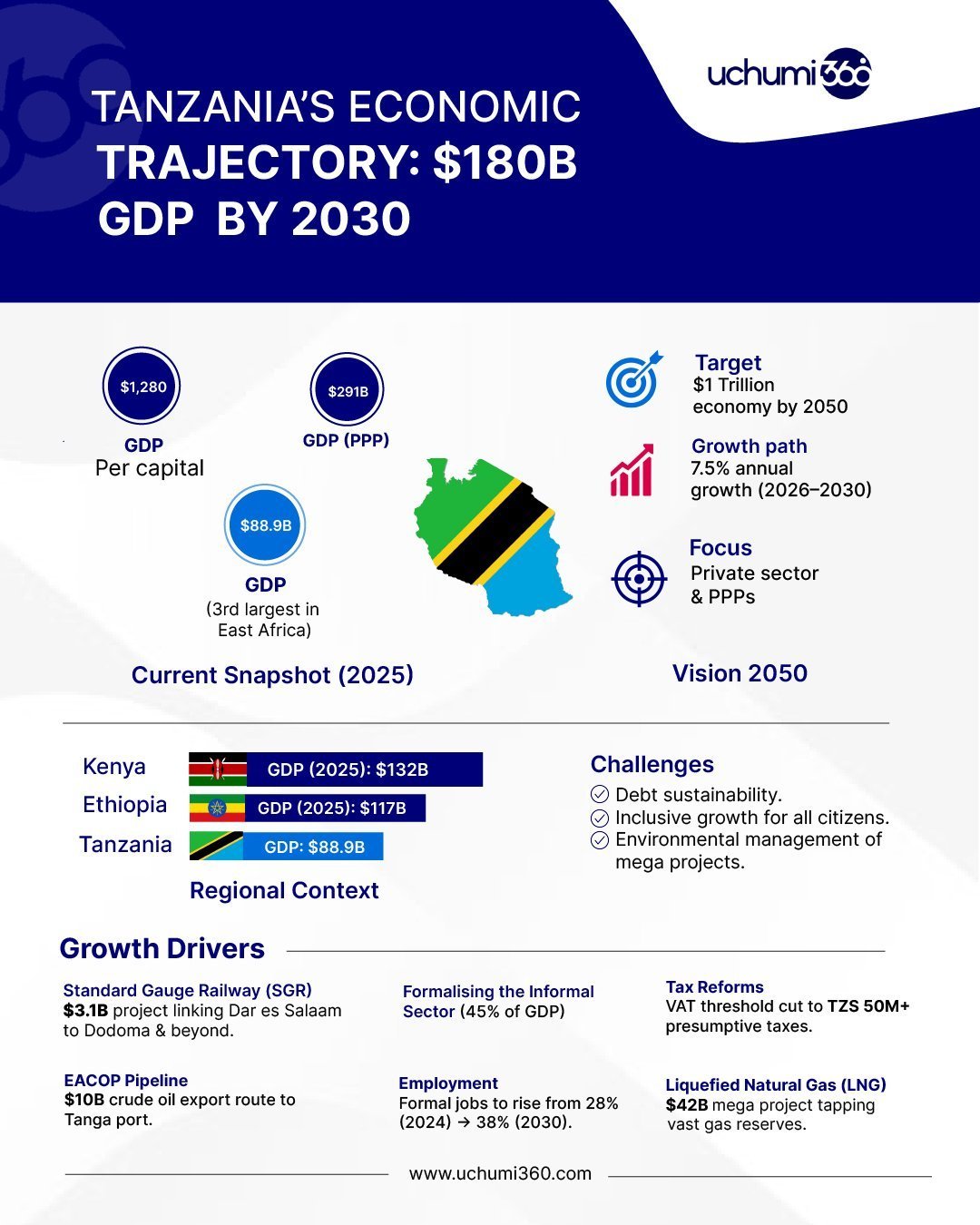
Tanzania stands at a pivotal juncture in its economic evolution. With concerted efforts in infrastructure development and formalisation of its informal sector, the nation is poised to achieve a Gross Domestic Product (GDP) of approximately $180 billion by 2030. This projection aligns with the government's Vision 2050, which sets an ambitious target of transforming Tanzania into a trillion-dollar economy by mid-century.
Current Economic Landscape
As of 2025, Tanzania's nominal Gross Domestic Product (GDP) is estimated at $88.91 billion. This positions Tanzania as the third-largest economy in East Africa, following Kenya and Ethiopia. The country's GDP per capita is approximately $1,280, reflecting its status as a lower-middle-income nation. In terms of purchasing power parity (PPP), Tanzania's GDP is projected to reach $291.05 billion by the end of 2025.
The government's Vision 2050 outlines a roadmap to elevate this figure to $1 trillion by 2050, emphasising the role of private sector investments and public-private partnerships (PPPs) in driving economic growth. The initial phase, from 2026 to 2030, aims for a 7.5% annual growth rate, focusing on enhancing efficiency and reducing government intervention in business operations.
Infrastructure Investments: Catalysts for Growth
Key infrastructure projects are central to Tanzania's economic strategy:
- Standard Gauge Railway (SGR): The $3.1 billion SGR project, connecting Dar es Salaam to Dodoma, is expected to significantly reduce transportation costs and time, enhancing trade efficiency. The railway network is also being extended to Mwanza and Kigoma, facilitating regional trade and access to mineral resources.
- Liquefied Natural Gas (LNG) Project: Negotiations are underway for a $42 billion LNG project, which aims to harness the country's vast natural gas reserves. This initiative is anticipated to position Tanzania as a significant energy exporter, attracting foreign investment and boosting industrialization.
- East African Crude Oil Pipeline (EACOP): The $10 billion EACOP project will transport crude oil from Uganda to Tanzania's port of Tanga, enhancing the country's role in regional energy trade and infrastructure development.
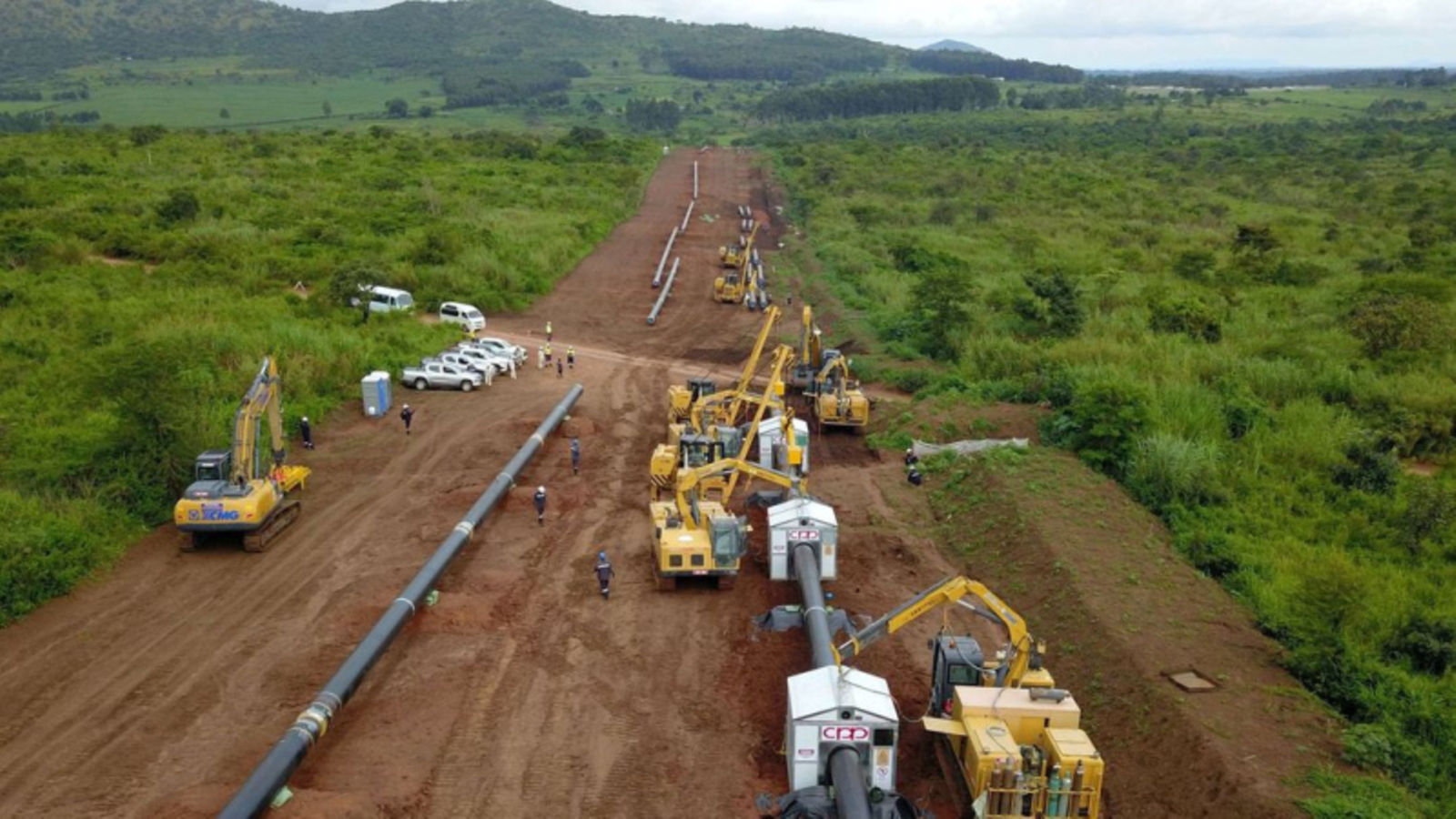
These projects are expected to stimulate economic activity, create jobs, and increase government revenues, contributing to the projected GDP growth.
Formalising the Informal Sector
The informal sector in Tanzania accounts for approximately 45.1% of GDP, representing a substantial portion of economic activity. Formalising this sector is crucial for sustainable economic development. The government has proposed measures to encourage this transition:
- Tax Reforms: Lowering the VAT threshold to TZS 50 million and introducing presumptive taxes for informal businesses aim to ease the tax burden and incentivise registration.
- Employment Formalisation: Policies targeting a rise in formal employment from 28% in 2024 to 38% by 2030 focus on improving labour conditions and expanding the tax base.
By integrating informal businesses into the formal economy, Tanzania can enhance productivity, increase tax revenues, and improve access to social services for workers.
Comparative Analysis: East Africa and Africa
Tanzania's economic trajectory can be contextualised within the broader East African and African landscapes:
- Kenya: Kenya's GDP is projected to reach $132 billion by 2025, surpassing Ethiopia's projected $117 billion. However, Tanzania's focus on infrastructure development and formalisation of the informal sector may enable it to close the gap with Kenya in the coming years.
- Ethiopia: Despite facing economic challenges, Ethiopia is expected to achieve an average GDP growth of around 8% annually between 2025 and 2029, driven by sustained government spending and investment.
- Sub-Saharan Africa: Growth in Sub-Saharan Africa is projected to edge up from 3.3% in 2024 to 3.5% in 2025 and further accelerate to 4.3% in 2026–27, with Tanzania contributing to this regional growth.
Challenges and Considerations
While the $180 billion GDP target is achievable, several challenges must be addressed:
- Debt Management: Balancing infrastructure investments with sustainable debt levels is essential to avoid fiscal strain.
- Inclusive Growth: Ensuring that economic benefits reach all segments of society, particularly marginalised groups, is vital for social stability.
- Environmental Sustainability: Managing the environmental impact of large-scale projects, such as the LNG and oil pipeline initiatives, requires stringent regulations and oversight.
Conclusion
Tanzania's projected $180 billion economy by 2030 is within reach, contingent upon continued investments in infrastructure and the successful formalisation of the informal sector. By addressing the associated challenges, Tanzania can pave the way for a more inclusive and sustainable economic future.