
Tanzania’s Regional Inequality: Why Some Areas Prosper While Others Lag Behind
Ready
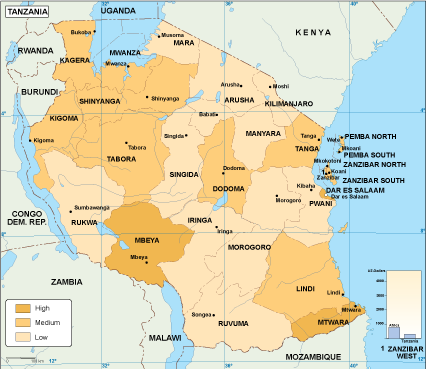
While urban centers and some regions flourish, others remain stuck in stagnation. This unequal growth threatens social cohesion, national productivity, and long-term sustainable development.
Unequal Growth Undercuts National Potential
Tanzania continues to post steady economic growth, driven by sectors like mining, agriculture, services, and infrastructure investments. Yet beneath the overall progress, there is a growing regional divide: while urban centres and some regions flourish, others remain stuck in stagnation. This unequal growth threatens social cohesion, national productivity, and long-term sustainable development. Understanding the dynamics behind regional inequality is crucial for shaping policies that make growth truly inclusive.
1. The Geography of Prosperity: What Determines Success
Not all regions are created equal. Some enjoy concentration of resources, infrastructure, and economic activity:
- Natural endowments or economic sectors: Regions with mining (e.g. gold, minerals), tourism assets, or major trade hubs tend to attract more investment.
- Urbanization and connectivity: Cities such as Dar es Salaam, Mwanza, Arusha (and other regional capitals) benefit from better roads, access to ports, ports of entry, logistics, and services.
- Access to education, healthcare and digital infrastructure: Regions with better schools, hospitals, internet and energy attract more skilled labour and high-value services.
Meanwhile, regions without these advantages, often rural, remote or historically under-invested, struggle to create jobs, generate income, or attract investment.
2. Rural–Urban Divide: A Persistent Fault Line
In rural and remote regions:
- Infrastructure remains weak: roads, power supply, and reliable transport.
- Limited economic diversification means that people depend on subsistence agriculture or small-scale farming with low productivity.
- Education and skills deficits reduce employability and entrepreneurship potential.
- Markets for produce are thin, so farmers receive low prices, and value addition is minimal.
In contrast, urban and peri-urban areas offer better access to formal jobs, better schools, connectivity, and services, giving people there a clear advantage.
3. The Costs of Regional Imbalance
Growing regional inequality carries serious risks:
- Migration pressure: Young people may migrate from poorer regions to cities, straining urban services and creating urban unemployment or underemployment.
- Underuse of human potential: Capable youth in lagging regions remain under-utilized, reducing national productivity.
- Social tensions: Differences in opportunities, services and living standards can fuel resentment and erode social cohesion.
- Uneven national development: Concentrated growth results in “islands of prosperity,” leaving large swathes behind contradicting goals of inclusive growth.
4. What Needs to Change — Policy Directions for Inclusion
To overcome regional disparities, Tanzania should:
- Invest in rural infrastructure: Expand rural roads, electricity, water, and connectivity, making remote areas more accessible.
- Promote agro-industrialization & value chains: Encourage processing plants, storage, market access for agricultural regions, rather than just raw farming.
- Expand vocational & digital training outside major cities: Build regional training centres so youth everywhere get relevant skills.
- Support SMEs and local entrepreneurship: Provide financing, mentorship, and incentives to small businesses in lagging regions.
- Balance investment incentives geographically: Offer incentives for firms that locate in underdeveloped regions rather than stacking benefits only where investors already go.
Conclusion: Toward Balanced Prosperity for All Regions
Tanzania has much to gain if growth is made inclusive and evenly spread. Bridging regional inequality is not only a matter of fairness it is critical for maximizing human potential, raising productivity, and achieving sustainable long-term national development. If policymakers act now, the current growth can translate into prosperity for all Tanzanians, not just those in a few privileged regions.
 Uchumi360
Business Intelligence
Uchumi360
Business Intelligence
Uchumi360 covers business, investment, and economic policy across East, Central, and Southern Africa.
For the serious reader
You read to the end. That places you in a small group.
Uchumi360 is built for readers who demand precision over speed, structure over sentiment, and analysis that holds uncomfortable conclusions rather than softening them. If this work sharpens how you think about Africa's economy, help us keep building the infrastructure behind it.
Institutional Partners
Commission intelligence. Shape the conversation.
Uchumi360 works with development finance institutions, investment firms, sovereign bodies, and strategic organisations across the coverage region. Institutional partnership unlocks:
- Commissioned sector and country intelligence reports
- Branded research series under your institution's authority
- Exclusive data briefings for internal strategy teams
- Speaking and editorial presence at Uchumi360 events
- Co-published investment outlooks for your markets
Support Our Work
Independent analysis has a cost. Help us bear it.
Uchumi360 does not carry advertising. It does not take editorial direction from sponsors. Every article is produced without commercial compromise. Your contribution funds the reporting, research, and editorial infrastructure that keeps this analysis free from influence.
Secure checkout: One-time and monthly support are processed securely.
Stay Connected
Keep up with every new insight.
Follow our latest analysis, policy coverage, and market intelligence as soon as it is published. If you need something specific, reach out directly and we will point you to the right research.
