

How Natural Gas Is Becoming the Engine of Tanzania’s Industrial Future
For most of the past two decades, Tanzania’s economic narrative revolved around gold. Today that story is shifting toward natural gas.
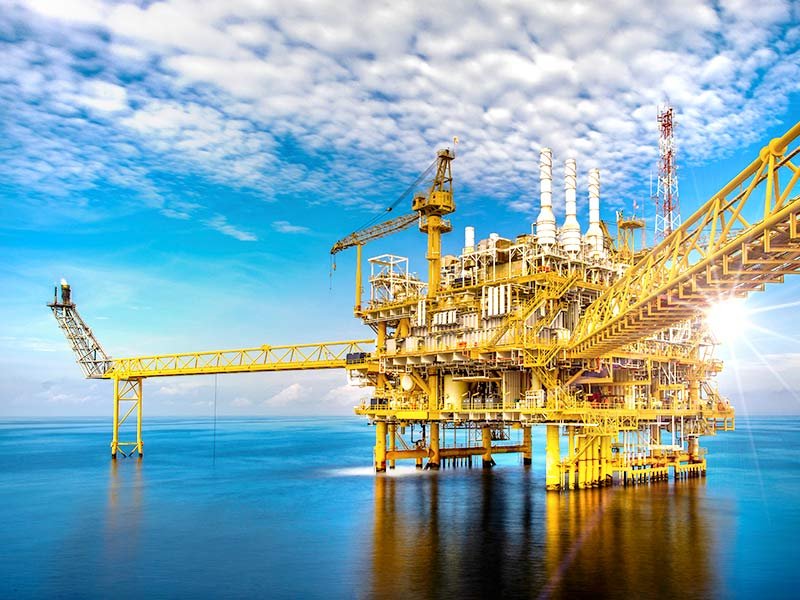
Across southern Tanzania and offshore basins in the Indian Ocean, new exploration projects are expanding the country’s gas frontier. These developments are not isolated resource plays. They are part of a deliberate strategy to build an energy foundation capable of supporting industrialization.
One of the clearest signals comes from the Mnazi Bay North Block project in the offshore Ruvuma Basin. The block lies between existing gas discoveries and is supported by nearby infrastructure including the Madimba gas processing plant and the national pipeline connecting Mtwara to Dar es Salaam. Geological evaluation suggests the block may contain about 0.968 trillion cubic feet of gas in prospective resources, with an estimated project cost of around $787 million.
This project illustrates the logic of Tanzania’s gas strategy. Instead of exporting raw resources immediately, the government is building domestic infrastructure that allows natural gas to power factories, electricity generation and industrial processes.
The gas pipeline linking southern fields to Dar es Salaam is already reshaping the country’s energy landscape. Industries that once depended on expensive imported fuel oil are now switching to domestic gas. Cement plants, fertilizer producers and power stations increasingly rely on gas as their primary energy source.
The implications go far beyond the energy sector. Cheap and reliable energy is one of the most decisive factors in industrial competitiveness. Countries that successfully industrialize almost always do so after securing stable domestic energy supplies.
Tanzania appears to be following that pattern. In addition to offshore exploration, onshore gas prospects are also attracting attention. The Lindi–Mtwara block, located within the highly prospective Ruvuma Basin, sits near the existing Mnazi Bay and Ntorya gas fields. Early seismic studies have identified several exploration leads suggesting hydrocarbon potential beyond currently producing areas.
Further north, the West Songo Songo block lies close to the existing Songo Songo gas field and could be developed using the same processing infrastructure if commercial resources are confirmed. The proximity to existing facilities significantly reduces development costs, improving the economic viability of the project.
These exploration projects indicate that Tanzania is still in the early stages of understanding the full scale of its gas resources.
Current discoveries already exceed 57 trillion cubic feet of natural gas across onshore and offshore basins. Yet geological surveys suggest additional discoveries remain likely, particularly in deep offshore blocks.
For Tanzania’s policymakers, gas offers three strategic advantages.
First, it provides reliable baseload power generation. Unlike solar and wind energy, natural gas can produce electricity continuously, ensuring stability in the national grid.
Second, it lowers the cost of industrial production. Energy-intensive sectors such as cement, steel and fertilizer manufacturing become more competitive when powered by domestic gas rather than imported fuel.
Third, it creates new export potential. Liquefied natural gas projects and regional pipeline networks could allow Tanzania to supply energy to neighboring countries in East and Southern Africa.
But the real significance of natural gas lies in what it enables. Gas allows Tanzania to industrialize. Energy fuels factories. Factories create jobs. Jobs expand incomes and domestic consumption. This chain reaction is how resource wealth becomes economic transformation.
Of course, risks remain. Exploration projects require significant capital investment, and not every drilling program results in commercial discoveries. Infrastructure development must also keep pace with production to ensure gas reaches industries and households efficiently.
Yet the direction is increasingly clear. Natural gas is becoming the foundation of Tanzania’s economic strategy. The country is positioning itself not merely as a resource exporter but as an industrial economy powered by domestic energy.
If the current wave of exploration and infrastructure development continues, Tanzania’s gas fields may prove to be one of the most important catalysts of economic transformation in East Africa.