

Why Geothermal, Solar and Wind Are Becoming Tanzania’s Next Energy Frontier
If natural gas is the backbone of Tanzania’s current energy system, renewable energy is becoming its future. Across the country, a new portfolio of geothermal, solar and wind projects is taking shape. Together they represent one of the most ambitious attempts in East Africa to diversify electricity generation and reduce long-term energy risks.
This transformation is being driven by a simple economic reality. Industrial growth requires stable and abundant electricity. As Tanzania’s economy expands, power demand is expected to rise rapidly, forcing the country to move beyond reliance on hydropower and natural gas alone.
Geothermal energy has emerged as one of the most promising alternatives.
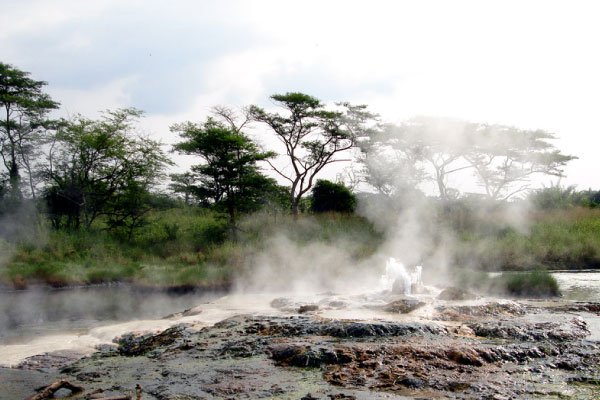
The Ngozi geothermal field in Mbeya Region is among the most advanced projects under development. Geological studies confirm the presence of a high-temperature volcanic geothermal system estimated at around 232 degrees Celsius. At full scale, the site could produce more than 140 megawatts of electricity, enough to power hundreds of thousands of homes and businesses.
Development of the project forms part of Tanzania’s broader plan to expand geothermal capacity across the Rift Valley system. The government aims to generate approximately 70 megawatts from the Ngozi field by 2030 as part of its national energy expansion strategy.
The economics of geothermal energy make it particularly attractive. Unlike solar and wind power, geothermal plants operate continuously, producing electricity around the clock. This reliability makes geothermal energy ideal for supporting national grids where industrial users require stable baseload power.
Tanzania’s geological position within the East African Rift System gives the country significant geothermal potential. Several additional prospects have already been identified across the southern highlands and northern regions.
The Kiejo–Mbaka geothermal field, also located in Mbeya, is another key project moving toward drilling and development. Early technical studies conducted with international partners suggest the prospect could support both electricity generation and direct industrial heat applications. The project is estimated to require roughly 288 million dollars in investment.
Further geothermal exploration is underway at the Songwe, Luhoi, Natron and Meru prospects, each at different stages of technical evaluation. These projects highlight the scale of Tanzania’s untapped geothermal resources.
But geothermal energy is only one piece of the renewable transition. Solar and wind power projects are also beginning to enter Tanzania’s energy pipeline. Several solar projects are under consideration, including a proposed 100 megawatt solar photovoltaic plant in Manyoni District in the central region of Singida.
The project would significantly increase solar capacity in the national grid and take advantage of the region’s high solar radiation levels.
Another planned solar facility is the 60 megawatt Zuzu Solar PV project in Dodoma, which is currently at the concept stage. Once operational, the plant would support electricity supply in the rapidly growing capital city and surrounding areas.
Wind energy is also beginning to enter the national conversation. The Ikungi wind power project in Singida Region is proposed as a 100 megawatt renewable energy development that could harness wind resources across Tanzania’s central plateau.
Together, these renewable projects reflect a broader shift in Tanzania’s energy policy.
For decades the country relied heavily on hydropower dams and, more recently, natural gas. While both sources remain important, climate variability and rising demand have made diversification essential.
Renewable energy provides that diversification. Geothermal offers reliable baseload electricity. Solar and wind provide flexible generation capacity that can be expanded relatively quickly. Combined with natural gas, these sources form a more resilient and balanced power system.
For investors, the renewable energy pipeline represents a growing opportunity.
Many projects are structured under public–private partnership models or independent power producer frameworks. This allows private capital to participate in power generation while the government retains oversight of the national grid.
The financial requirements are substantial. Individual geothermal projects alone require hundreds of millions of dollars in capital investment. Transmission infrastructure must also be expanded to integrate new renewable capacity into the grid.
But the long-term economic logic remains compelling. Reliable electricity is the foundation of industrial development. Factories cannot operate without stable power. Technology industries cannot grow without consistent energy supply. Even agricultural processing requires reliable electricity for storage and production.
Tanzania’s renewable energy expansion is therefore not just about environmental sustainability. It is about economic competitiveness. By diversifying its energy mix, the country is laying the groundwork for a future in which electricity shortages no longer constrain economic growth.
The renewable revolution unfolding across Tanzania may not yet dominate headlines. But in the coming decade it could become one of the most important drivers of the country’s economic transformation.