
The Middle East's Food Crisis Could Become East Africa's Biggest Export Opportunity
Ready
The World Bank projects food demand across the Middle East, North Africa, Afghanistan and Pakistan will rise 67% by 2050, with 18% of the region's population already food insecure and 42% unable to afford a healthy diet, pressures rooted in water scarcity that no amount of domestic investment can fully solve on its own. East Africa sits directly across the Red Sea and Indian Ocean from that market with resources it hasn't converted into industrial-scale agriculture: Tanzania has 29.4 million hectares suitable for irrigation but only about 381,000 hectares actually irrigated, Uganda has used less than 2% of its irrigation potential, Ethiopia is already Sub-Saharan Africa's largest wheat producer but remains a net food importer, and Kenya has already built a competitive horticulture export industry that shows the model works. The argument here is that East Africa's opportunity isn't shipping more raw grain, it's building the processing, cold chain, certification, finance and logistics layers that convert unused land and water into a reliable food-export industry the Gulf will pay a premium for.
The next major food market for East Africa may be forming just across the Red Sea, and it's being created by a crisis rather than an opportunity in the conventional sense.
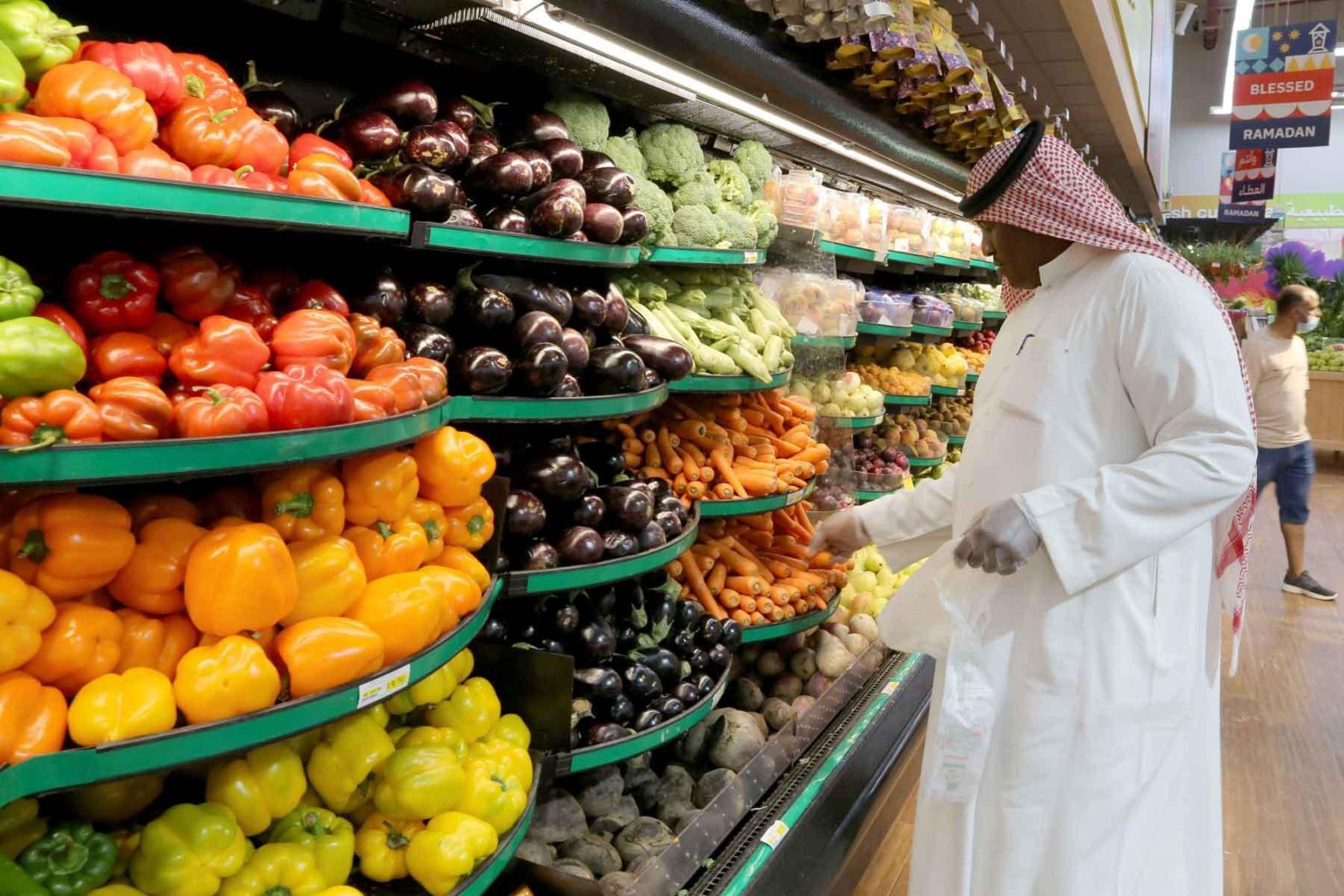
Across the Middle East, North Africa, Afghanistan and Pakistan, population growth, water scarcity, climate stress and rising food demand are reshaping the economics of food production. The World Bank estimates food demand across this region will rise 67% by 2050, in a region where 18% of the population already faces some level of food insecurity, the highest level on record, and 42% cannot afford a healthy diet. The World Bank's own prescription leans heavily on the region investing in itself: an additional $12 billion a year in water-efficient irrigation and agricultural innovation could more than double fruit and vegetable production and raise cereal yields 72% by 2050. But the same report is explicit that "resilient and well-managed trade" has to complement that domestic investment, because no amount of efficiency gains fully substitutes for water and arable land the region simply doesn't have enough of.
That's where East Africa enters the picture. The region sits directly across the Indian Ocean and Red Sea from some of the world's most food-dependent markets, holds large areas of agricultural land, major freshwater systems and several distinct climatic zones, and has a population exceeding 500 million that is itself becoming a significant food market. Yet East Africa has never converted these advantages into industrial-scale agricultural production. It exports commodities while importing food, posts low farm productivity despite substantial land and water resources, and still treats irrigation, storage and agricultural logistics as development projects rather than the foundation of an export industry. The real question facing the region isn't whether it can feed itself. It's whether it can become one of the world's significant food-producing regions at precisely the moment its northern neighbours are becoming less able to feed themselves.
Why the Geography Actually Works
The Arabian Peninsula is extraordinarily wealthy but faces serious natural constraints on conventional agriculture. The UAE imports roughly 80% of its agricultural products, according to USDA data, even as its food processing industry keeps expanding. Saudi Arabia continues importing millions of tonnes of grain despite heavy investment in domestic agriculture, with wheat imports forecast at 3.2 million tonnes and barley at 3.3 million tonnes for the 2025/26 marketing year.
The underlying economics are simple: a country with capital but limited water and arable land can buy the agricultural resources embedded in food it purchases from a country where land and water are relatively abundant. East Africa doesn't need to compete with the Gulf in water-intensive agriculture. It needs to produce efficiently where water and land are available, then move that food toward markets where those resources are scarce, exactly the rebalancing the World Bank's own 2026 global water report argues needs to happen between water-stressed and water-abundant regions, connected by trade.
The Opportunity Is Bigger Than Grain
Reducing this to grain exports would undersell it considerably. The Gulf's food economy spans meat, dairy, poultry, vegetables, fruits, edible oils, pulses and processed foods, and the UAE alone imported $16.2 billion in consumer-oriented agricultural products in 2024, with its food processing sector expanding fast enough to generate demand for ingredients as well as finished products. A container of processed fruit, packaged meat or dairy products generates a fundamentally different economic return than a shipment of raw produce, which means the strategic objective should be building a food industry, not simply increasing output. That means producing the crop, processing it, packaging it, certifying it, storing it and delivering it with predictable quality and timing, turning the farmer into one part of a much larger commercial chain involving irrigation companies, banks, insurers, processors, cold storage operators, transporters, laboratories and exporters.
Five Countries, Five Different Roles
| Country | Core Advantage | Binding Constraint |
| Tanzania | 29.4 million hectares suitable for irrigation; Indian Ocean port access | Only ~381,000 hectares actually irrigated; heavy rainfall dependence |
| Uganda | Abundant freshwater; favourable growing conditions | Less than 2% of irrigation potential used; weak mechanisation and finance |
| Ethiopia | Sub-Saharan Africa's largest wheat producer; proximity to Djibouti and the Red Sea | Still a net food importer despite scale |
| Kenya | Established tea, coffee, flower and vegetable export infrastructure | Model proven but not yet extended to new Gulf-facing product categories |
| Rwanda | High-value crops (coffee, avocado, macadamia) and agro-processing focus | Cannot compete on land or water scale with the other four |
Tanzania may hold the largest untapped opportunity in the region. It has an estimated 29.4 million hectares of land suitable for irrigation, yet a World Bank assessment found only around 381,000 hectares actually irrigated, with just 76,000 of those using more productive methods, even though agriculture already consumes more than 80% of the country's water. Agriculture contributes roughly 27% of Tanzania's GDP and employs nearly 75% of its workforce, but productivity remains modest and heavily rainfall-dependent. Closing even part of the gap between what Tanzania's geography permits and what it currently produces would raise rural incomes, expand agro-processing and reduce the foreign exchange currently spent importing food, while the Port of Dar es Salaam, already a transport corridor for Tanzania and several landlocked neighbours, gives the country a direct route to move that output toward the Gulf.
Uganda's constraint is productive capacity rather than resource scarcity. Less than 2% of the country's irrigation potential is currently being used, and the World Bank has identified irrigation expansion as a priority pathway for growing production for both domestic and regional markets. Weak mechanisation, limited irrigation, expensive finance and inadequate infrastructure remain the binding constraints rather than any shortage of land or freshwater, meaning Uganda doesn't need to discover a new agricultural industry, it needs to raise the productivity of an existing one and connect it to larger markets. Its landlocked geography raises transport costs, but doesn't eliminate the opportunity for products whose value justifies the distance.
Ethiopia sits geographically between East Africa's agricultural systems and the Red Sea and Gulf food markets, and is already one of Africa's largest agricultural producers with substantial arable land and one of the continent's largest livestock populations, yet remains a net importer of agricultural products. Wheat illustrates the gap clearly: Ethiopia is Sub-Saharan Africa's largest wheat producer, but domestic output has historically fallen short of consumption. The government has been expanding irrigated wheat production specifically to reduce imports and eventually build export capacity, with USDA forecasting 6.5 million tonnes of production for 2025/26 on higher yields and expanded irrigated farmland, alongside declining import forecasts. If Ethiopia manages the shift from recurrent wheat imports to sufficiency and eventual export, it would demonstrate that the wider Horn of Africa can become a genuinely larger agricultural production zone, with its proximity to Djibouti offering a direct commercial route to Red Sea and Gulf markets.
Kenya already demonstrates that the model works. The country has built genuinely competitive export industries in tea, coffee, cut flowers and vegetables, with agriculture contributing roughly a third of GDP, and its high-rainfall areas, only about 10% of arable land, producing around 70% of commercial agricultural output, clear evidence of how strongly productivity responds to favourable conditions paired with commercial investment. What Kenya's experience also exposes is how much more export agriculture requires beyond fertile soil: standards, aggregation, cold chains, air cargo, financing, market information, certification and buyer relationships, capabilities Kenya has already built and that give it a head start extending an existing commercial model into the product categories growing fastest around the Gulf.
Rwanda cannot compete with Tanzania or Uganda on land, so its role in a regional food strategy is different by design: a shift toward commercial agriculture, higher-value crops, irrigation, mechanisation and agro-processing, already visible in exports of coffee, tea, avocados, passion fruit, flowers, macadamia nuts and other higher-value products. A regional food industry becomes considerably more powerful if these five countries specialise according to comparative advantage, Tanzania and Uganda pursuing scale, Kenya building on export and logistics capability, Ethiopia developing large-scale grain and livestock production, Rwanda concentrating on high-value crops and processing, rather than each trying to produce everything independently.
East Africa's Own Water Problem Can't Be Ignored
There's a serious qualification to this entire argument: East Africa is already experiencing significant drought and climate pressure of its own. The European Commission's Joint Research Centre found that 2021 to 2025 was the warmest five-year period on record since 1981 across East Africa, the Middle East and Central Asia, with severe drought impacts across Somalia, Ethiopia and Kenya already affecting crop production and food security. East Africa cannot assume today's water availability will automatically translate into tomorrow's food surplus. The region needs to become substantially more productive with each unit of land and water it already has, through irrigation systems designed around actual hydrology, groundwater monitoring, watershed protection, drought-resistant crops, better soil management and agricultural insurance, rather than simply expanding the footprint of existing farming methods.
The scale of the underlying gap is stark: the World Bank estimates only about 6% of agricultural land in Sub-Saharan Africa is irrigated, compared with 20% globally, even though irrigated agriculture produces a disproportionately large share of global food output. East Africa doesn't need to reproduce the water-intensive mistakes that have contributed to agricultural crises elsewhere. It has the chance to build a more efficient system from the outset.
What's Actually Missing Is Capital, Organised Correctly
East Africa has land, farmers, markets, ports and freshwater in many areas. What it lacks is sufficient capital organised specifically around agricultural production, and irrigation is the obvious starting point because it changes farming's basic economics, supporting multiple production cycles and higher-value crops instead of one rainfall-dependent season. But irrigation alone doesn't create a commercial agricultural industry; a farmer who receives water but can't access fertiliser, machinery, finance, storage or a buyer remains just as constrained as before.
The infrastructure needs to be developed around complete production corridors, an agricultural zone connected to reliable irrigation, a nearby processing facility, warehouse capacity, a road or rail link, agricultural finance, crop insurance and a guaranteed export buyer, not simply distributing irrigation pumps to individual farmers. That principle applies as much to Uganda, Ethiopia and Kenya as it does to Tanzania.
Gulf Capital and East African Resources Are a Natural Fit, if Structured Right
The Gulf states have enormous financial resources and increasingly sophisticated food security strategies, but capital cannot manufacture fertile land or renewable water. East Africa has the resources but remains undercapitalised, a natural complementary relationship if it's structured around long-term food supply agreements rather than speculative land acquisition. Gulf investors can finance farms, irrigation, processing plants, cold storage, logistics and distribution; East African countries can provide land under appropriate legal arrangements, water, labour and market access, with the commercial relationship extending from raw production into processing and distribution rather than stopping at the farm gate.
That distinction matters because African governments shouldn't measure success by how many hectares get leased to foreign investors. The relevant questions are how much additional food gets produced, how much processing happens locally, how many jobs are created, how much export revenue is generated, and whether the investment actually improves national productive capacity. That's what turns food security into industrial policy rather than a resource giveaway.
The Mistake East Africa Has Already Made Once
The region has lived through this pattern before across coffee, tea, cotton and cashews: farmers produce the commodity, someone else processes it, someone else packages it, someone else owns the brand and controls the retail relationship. If East Africa responds to growing Gulf food demand simply by exporting more raw maize, wheat, livestock and vegetables, it captures only a fraction of the available economic value. The larger opportunity sits further up the chain: Tanzania exporting processed grains, edible oils, meat and dairy rather than raw commodities; Uganda developing large-scale dairy, grain and horticultural processing; Kenya expanding fresh produce and processed food exports; Ethiopia building around wheat, livestock, oilseeds and horticulture; Rwanda specialising in higher-value crops and processing. The region should be competing for the consumer, not merely for the commodity buyer.
The Corridor Is There. The Ambition Isn't Guaranteed.
The strategic geography is becoming hard to ignore: water-stressed, food-importing economies on one side of the Red Sea and Indian Ocean, underused agricultural capacity on the other, and an existing trading system, through Djibouti, Mombasa, Dar es Salaam and other regional gateways, already connecting the two. The World Bank's own water and food research provides the economic logic directly: some regions should reduce water-intensive production because their resources are under severe pressure, others should increase production because their water and agricultural resources remain underused, and trade connects the two. The Bank separately estimates smarter agricultural water management globally could support up to 245 million long-term jobs, with a substantial share of that potential concentrated in Sub-Saharan Africa.
None of this requires East Africa to abandon domestic food security in pursuit of export markets; the two reinforce each other once productivity rises enough, since a country producing more food per hectare has more available for both domestic consumption and export. What it requires is treating water policy, agricultural policy, industrial policy, trade policy and transport policy as one interconnected question rather than five separate ones, and building the processing plants, cold chains, financing structures and logistics networks now, while the Gulf is still working out how it plans to solve its own water constraint over the coming decades.
East Africa does not have to become the world's cheapest food producer. It needs to become one of its most reliable.
FAQ
Why could East Africa become an important food supplier to the Middle East? East Africa has substantial agricultural land, freshwater resources, multiple climatic zones and geographic proximity to Middle Eastern markets across the Red Sea and Indian Ocean, alongside significant unused irrigation and agricultural production potential that has never been converted into industrial-scale output.
Why is Middle Eastern food demand expected to rise so sharply? The World Bank projects food demand across the Middle East, North Africa, Afghanistan and Pakistan region will increase 67% by 2050, driven by population growth and higher incomes, compounding existing pressure from water scarcity and climate stress that already leaves 18% of the region's population food insecure.
Which East African countries have the greatest agricultural potential? Tanzania, Uganda and Ethiopia have the largest opportunities to expand production given their land and water resources, Kenya already has a more established commercial agricultural export sector, and Rwanda holds potential in high-value agriculture and processing rather than scale.
What is the main constraint holding East Africa back from becoming a larger food exporter? Limited irrigation, low productivity, inadequate storage and cold chains, weak agricultural finance, underdeveloped processing capacity, logistics costs and inconsistent market access, not a shortage of land or water.
Could Gulf investment accelerate East African agriculture? Yes, particularly investment in irrigation, machinery, processing, storage, logistics and agricultural finance, provided it's tied to long-term production and market arrangements rather than land acquisition alone, so that value creation and jobs remain concentrated in the producing country.
What is the strategic idea behind an East African food corridor? Connecting East African agricultural production zones to ports and then to food-importing Gulf and wider Middle Eastern markets, linking regions with comparatively greater agricultural and water potential to regions facing severe resource constraints, echoing the rebalancing the World Bank's own global water research recommends.
 Uchumi360
Business Intelligence
Uchumi360
Business Intelligence
- World Bank, "Building Food Security, Creating Jobs: Policy Pathways for the Middle East, North Africa, Afghanistan and Pakistan," 29 June 2026
- Primary source for the 67% food demand increase by 2050, current food insecurity figures (18% food insecure, 42% unable to afford a healthy diet), and the $12 billion annual investment and 72% cereal yield estimates
- World Bank, "Smarter Water Use Could Feed 10 Billion and Create Nearly 250 Million Jobs," 19 March 2026
- Global framework for rebalancing agricultural water use between water-stressed and water-abundant regions, and the 245-million-job estimate
- USDA Foreign Agricultural Service, "Retail Foods Annual: United Arab Emirates," Market Fact Sheet, 2025
- UAE's 80% agricultural import dependency and $16.2 billion in 2024 consumer-oriented agricultural imports
- USDA Foreign Agricultural Service, Ethiopia Grain and Feed Annual
- Ethiopia's 2025/26 wheat production forecast (6.5 million tonnes) and import trend
- World Bank, "Uganda Economic Update: Cultivating Prosperity Through Agro-Industrialization," 26th Edition
- Uganda's structural constraints on agro-industrialisation and irrigation potential
- World Bank, irrigation micro-assessment for Uganda, cited via World Bank Documents
- Less than 2% irrigation potential utilisation figure
- World Bank Document, Tanzania irrigation assessment, curated series
- Tanzania's 29.4 million hectares of irrigable land and approximately 381,000 hectares currently irrigated
- Trade.gov Country Commercial Guides, Tanzania, Kenya, Ethiopia and Rwanda agriculture sector profiles
- Sector GDP and employment contribution figures, and each country's stated agricultural priorities
- European Commission Joint Research Centre, "East Africa, the Middle East and Central Asia hit by repeated droughts since 2021." 2021-2025 regional drought severity assessment
- World Bank, "Water for Food," topic page
- Sub-Saharan Africa's 6% irrigated agricultural land share against the 20% global average
Uchumi360 covers business, investment, and economic policy across East, Central, and Southern Africa.
For the serious reader
You read to the end. That places you in a small group.
Uchumi360 is built for readers who demand precision over speed, structure over sentiment, and analysis that holds uncomfortable conclusions rather than softening them. If this work sharpens how you think about Africa's economy, help us keep building the infrastructure behind it.
Institutional Partners
Commission intelligence. Shape the conversation.
Uchumi360 works with development finance institutions, investment firms, sovereign bodies, and strategic organisations across the coverage region. Institutional partnership unlocks:
- Commissioned sector and country intelligence reports
- Branded research series under your institution's authority
- Exclusive data briefings for internal strategy teams
- Speaking and editorial presence at Uchumi360 events
- Co-published investment outlooks for your markets
Support Our Work
Independent analysis has a cost. Help us bear it.
Uchumi360 does not carry advertising. It does not take editorial direction from sponsors. Every article is produced without commercial compromise. Your contribution funds the reporting, research, and editorial infrastructure that keeps this analysis free from influence.
Secure checkout: One-time and monthly support are processed securely. Add payment credentials to enable checkout here.
Stay Connected
Keep up with every new insight.
Follow our latest analysis, policy coverage, and market intelligence as soon as it is published. If you need something specific, reach out directly and we will point you to the right research.
