
Tanzania’s Coffee Production Rises 43% in 15 Years as Kagera, Ruvuma and Songwe Dominate Output
Ready
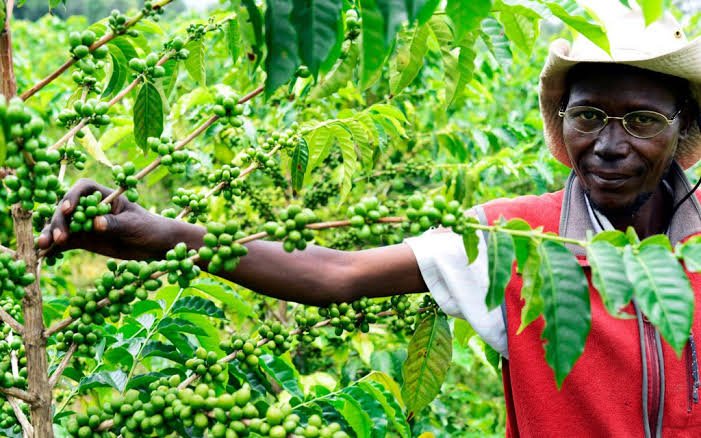
Tanzania's coffee production increased 43.3% from 56,790 tonnes in 2010/11 to 81,366 tonnes in 2024/25, with Kagera, Ruvuma and Songwe accounting for nearly 87% of the latest recorded output. The fifteen year regional dataset reveals substantial production fluctuations, the rapid expansion of Southern Highlands coffee cultivation and Kagera's continued dominance in Robusta production. However, a new National Bureau of Statistics survey reports 125,381 tonnes for 2024/25, significantly above the Ministry of Agriculture's figures, raising questions about statistical comparability as the Tanzania Coffee Board targets at least 100,000 tonnes and exporters seek to benefit from stronger global prices.
Tanzania's coffee production increased by 43.3% over the fifteen agricultural seasons between 2010/11 and 2024/25, reaching 81,366 tonnes from 56,790 tonnes, according to a regional production dataset covering the country's main coffee growing areas. The figures show an industry increasingly concentrated in Kagera, Ruvuma and Songwe, which together accounted for approximately 70,696 tonnes, equivalent to 86.9% of the national total in 2024/25.
The data also reveal substantial changes within Tanzania's coffee-producing regions. Kagera remained the country's largest source of coffee, recording 33,286 tonnes in 2024/25, while Ruvuma contributed 20,777 tonnes and Songwe 16,633 tonnes. The three regions have become central to the country's coffee production, although their economic characteristics differ. Kagera predominantly grows Robusta coffee, while Ruvuma and Songwe form part of Tanzania's Southern Highlands Arabica production belt.
The fifteen-year record shows that national production has been volatile despite its overall increase. Output declined to 33,087 tonnes in 2011/12, recovered to 71,319 tonnes the following season, weakened again during the middle of the decade and reached a series high of approximately 82,492 tonnes in 2022/23. Production then fell to 74,137 tonnes in 2023/24 before recovering by 9.8% to 81,366 tonnes in 2024/25.
The expansion comes as Tanzania seeks to strengthen its position in international coffee markets. On November 11, 2026, Tanzania Coffee Board (TCB) chairperson Professor Aurelia Kamuzora told The Citizen that production had increased from approximately 50,000 tonnes in 2021 to 85,000 tonnes in 2025, with the board projecting at least 100,000 tonnes in the current season. She attributed the growth to government interventions, improved trading conditions and efforts to strengthen farmers' participation in the market.
The historical dataset broadly supports the direction of growth described by industry officials, but the specific production totals require careful interpretation. Tanzania's latest Annual Agricultural Sample Survey, published by the National Bureau of Statistics (NBS) in October 2026, estimates coffee production of 125,381 tonnes during 2024/25, substantially above the 81,366 tonnes recorded in the regional series.
The difference is too large to ignore. It indicates that Tanzania's published coffee statistics are drawing on different measurement and reporting systems, potentially including variations in crop form, survey methodology and the distinction between farm production and marketed output. The official publications reviewed do not provide a reconciliation sufficient to establish that the figures measure precisely the same product at the same stage of processing.
That uncertainty matters commercially. Coffee production statistics influence assessments of farmer productivity, processing capacity, export supply, government agricultural targets and investment opportunities. As Tanzania seeks to expand its coffee industry, the ability to distinguish harvested quantities from marketable green coffee will become increasingly relevant to producers, exporters, lenders and policymakers.
Fifteen Years of Coffee Production Reveal Growth Interrupted by Sharp Fluctuations
The supplied regional dataset provides an annual record covering 2010/11 through 2024/25. Its national totals show that Tanzania's coffee production did not increase steadily. Several years of growth were followed by substantial declines, suggesting that climatic conditions, crop cycles, farm productivity and changes in the composition of regional production have all influenced annual output.
Tanzania Coffee Production, 2010/11 to 2024/25
Annual production in tonnes from the supplied 15 season regional series. Source: Tanzania Coffee Production Series Report, 2010/11 to 2024/25, by the Tanzania Coffee Board.
The national figures suggest that Tanzania's coffee industry has struggled to sustain production increases from one season to the next. Following the exceptionally weak 2011/12 season, production more than doubled in 2012/13 before falling again in 2013/14. Another recovery occurred in 2015/16, but volumes declined during the following two seasons.
The more recent period has generally delivered higher output. Between 2018/19 and 2024/25, five of the seven seasons recorded production above 60,000 tonnes, while the 2022/23 and 2024/25 seasons both exceeded 80,000 tonnes.
These fluctuations are consistent with an agricultural industry exposed to rainfall variability, tree age, farm maintenance, input availability and international prices. Coffee is a perennial crop whose productivity depends on investments made over several seasons, including pruning, fertilisation, pest management and the replacement of ageing trees.
The United States Department of Agriculture (USDA), in its June 2025 Tanzania Coffee Annual report, identified limited fertiliser use and the time required for rehabilitated coffee plants to reach maturity as constraints on production growth. The report noted that average fertiliser application had historically been low, partly because of affordability, while government interventions had prioritised rehabilitating existing farms and distributing improved seedlings.
These are important considerations when interpreting production figures. A temporary increase resulting from favourable weather or the recovery of previously neglected farms does not necessarily indicate a lasting improvement in productivity. Sustained increases require productive trees, regular farm management, access to inputs and predictable incentives for growers to reinvest in their plantations.
Kagera Remains Tanzania’s Largest Coffee Producer, While Ruvuma Has Doubled Output
Kagera accounted for 40.9% of the coffee recorded in the regional production series during 2024/25, maintaining its position as Tanzania's largest producing region. Its output rose from 23,966 tonnes in 2010/11 to 33,286 tonnes in 2024/25, an increase of 38.9%. The region's performance has nevertheless been inconsistent. Production reached approximately 46,887 tonnes in 2022/23 before declining to 33,922 tonnes in 2023/24 and 33,286 tonnes the following year. The latest reported level was approximately 29% below its 2022/23 peak.
Kagera's production is dominated by Robusta coffee, which is cultivated in districts including Karagwe, Kyerwa, Muleba and Bukoba. Unlike the high altitude Arabica growing areas of northern and southern Tanzania, Kagera's climate and agricultural conditions support Robusta cultivation, giving the region a distinct position in the country's coffee industry.
In May 2025, Kagera Regional Commissioner Fatma Mwassa outlined a three-year programme to expand coffee production through improved varieties, additional cultivated land and better agricultural practices. According to Daily News, the regional government aimed to increase production and address ageing coffee trees while supporting new commercial farming areas and access to improved planting materials.
Mwassa attributed earlier production improvements to stronger international prices, access to agricultural credit and the development of cooperative systems. The regional programme sought to expand cultivation by 10,000 hectares and increase future output through more productive coffee varieties.
There is evidence of investment at the farm level. In its 2024 annual report, Café Africa reported that its Robusta rehabilitation programme in Kagera had reached 32,267 smallholder farmers, supported the production and distribution of 686,726 seedlings and assisted with rejuvenating more than 70,000 ageing coffee trees.
The organisation reported that production measured in dried coffee cherries increased from 27,060 tonnes in 2019/20 to 52,099 tonnes in 2024/25. Those dried cherry figures should not be directly compared with the national regional series without accounting for processing and measurement differences. They nevertheless illustrate the scale of rehabilitation activities and their reported contribution to Kagera's coffee industry.
Ruvuma presents a different long-term pattern. Its production increased from 10,333 tonnes in 2010/11 to 20,777 tonnes in 2024/25, an increase of approximately 101%. That means the region has doubled its recorded output over the period, although it experienced several declines along the way.
The region's importance is closely associated with Arabica production around Mbinga and other highland growing areas, where coffee farming supports households, cooperatives and processing businesses. Its output of 20,777 tonnes in 2024/25 represented 25.5% of the national series, making it the second largest producing region.
Ruvuma's performance also demonstrates that Tanzania's coffee industry has expanded beyond the traditional northern production centres. Kilimanjaro and Arusha remain commercially recognised coffee origins, but the Southern Highlands have acquired a much larger share of recorded national production.
Songwe Has Become Central to Tanzania’s Arabica Industry
Songwe recorded 16,633 tonnes of coffee in 2024/25, accounting for 20.4% of Tanzania's reported production. The region was established in 2016 after being separated from Mbeya, making direct comparison of historical Mbeya and Songwe production particularly sensitive to administrative boundary changes.
The regional series lists Songwe separately from 2015/16, when it recorded approximately 11,950 tonnes. On that basis, production increased by about 39% by 2024/25.
Songwe's emergence is particularly important because the original data show Mbeya's production falling from 11,915 tonnes in 2010/11 to 1,993 tonnes in 2024/25. Interpreting this as an 83% collapse in coffee farming would be misleading because Songwe contains areas previously administered as part of Mbeya. Historical comparisons must therefore adjust for the boundary change before drawing conclusions about the physical location of production.
The Tanzania Coffee Board identifies the Southern Highlands, including Songwe, Mbeya and Ruvuma, as important Arabica producing areas. Farmers grow coffee through smallholder arrangements, including cultivation alongside bananas and other crops, while cooperative societies and private businesses handle processing, aggregation and marketing.
Regional coffee production, 2024/25
| Region | Production (tonnes) | National share |
| Kagera | 33,286 | 40.9% |
| Ruvuma | 20,777 | 25.5% |
| Songwe | 16,633 | 20.4% |
| Arusha | 2,683 | 3.3% |
| Njombe | 2,351 | 2.9% |
| Kilimanjaro | 2,227 | 2.7% |
| Mbeya | 1,993 | 2.4% |
| Kigoma | 766 | 0.9% |
| Mara | 490 | 0.6% |
| Tanga | 112 | 0.1% |
| Manyara | 23 | <0.1% |
| Iringa | 19 | <0.1% |
| Morogoro | 4 | <0.1% |
| Katavi | 4 | <0.1% |
| Mwanza | Not reported | — |
| Total | 81,366 | 100% |
Source: Supplied regional coffee production table. Figures are rounded, and the total reflects the original national series. Songwe's administrative separation from Mbeya affects historical comparisons.
Three Regions Account for Nearly 87% of Output
Share of the 2024/25 national production series. The concentration of production creates both commercial advantages and vulnerabilities. Large producing regions can support specialised processing facilities, organised cooperative marketing, extension services and transport networks. At the same time, disease outbreaks, adverse rainfall or disruptions in only a few regions can have a disproportionate effect on national output.
This is particularly relevant for Kagera, whose production is closely associated with Robusta, and the Southern Highlands, where Arabica farmers face different climatic, agronomic and market conditions.
For investors, the regional concentration also identifies where additional processing, storage, agricultural finance and logistics services may find sufficient volumes to operate economically. A processing facility serving established producing districts can draw on more predictable supply than one located far from the main coffee belt, although commercial viability still depends on seasonal utilisation, transport costs and access to buyers.
Tanzania’s Latest Agricultural Survey Reports 125,381 Tonnes, Creating a Major Statistical Difference
The most consequential new evidence comes from the National Bureau of Statistics' Annual Agricultural Sample Survey 2024/25, published in October 2026. The survey estimates that Tanzania produced 125,381 tonnes of coffee during the 2024/25 agricultural year, approximately 54% more than the 81,366 tonnes recorded in the Ministry of Agriculture's production series.
The NBS reported 379,733 agricultural households engaged in coffee cultivation, alongside 80 large farms. Its estimates indicate that households produced 118,351 tonnes, accounting for 94.4% of total production, while large farms contributed 7,030 tonnes.
The survey recorded approximately 291,227 hectares planted with coffee, with an average reported yield of 0.4 tonnes per hectare. Kagera accounted for approximately 79,331 tonnes in the survey, equivalent to 63.3% of national production, followed by Ruvuma with 15,765 tonnes and Songwe with 12,837 tonnes. These regional estimates differ materially from the production series used in the Ministry of Agriculture's reporting.
| Indicator | Ministry series | NBS survey |
| National production, 2024/25 | 81,366 tonnes | 125,381 tonnes |
| Kagera | 33,286 tonnes | 79,331 tonnes |
| Ruvuma | 20,777 tonnes | 15,765 tonnes |
| Songwe | 16,633 tonnes | 12,837 tonnes |
The Ministry of Agriculture independently confirmed the 81,366 tonne figure in its 2025/26 budget statement, presenting it as 95.7% of the 85,000 tonne production target for 2024/25. The same statement set a further target of 85,000 tonnes for 2025/26.
There are plausible reasons why the figures may differ. Agricultural household surveys can estimate quantities harvested directly from farmers, while commodity boards and ministries may rely on marketed, processed or administratively reported production. Coffee also loses weight during processing as cherries are converted into dry beans and green coffee. Different definitions and timing can therefore produce substantially different totals.
However, the publicly available information does not establish a definitive conversion between the two specific datasets. It would be premature to describe either figure as incorrect or to assume that one represents raw cherries and the other clean coffee without confirmation from NBS and TCB.
The discrepancy also affects regional rankings and productivity assessments. Under the Ministry series, Kagera accounts for approximately 41% of national output, whereas the NBS survey places its contribution above 63%. That is a material difference for anyone assessing the size of regional markets, the requirements of coffee processing facilities or the contribution of different growing areas to national production.
Both institutions' data deserve consideration, but a reconciled statistical framework would make Tanzania's coffee production estimates more useful for public policy and commercial investment.
Rising Global Coffee Prices Are Increasing the Value of Tanzania's Harvest
Coffee production growth has coincided with stronger international prices, creating an opportunity for Tanzania to earn more from its exports even in seasons when physical output increases modestly.
According to the Bank of Tanzania's Annual Report 2024/25, average producer prices for Arabica coffee increased from TZS 7,608 per kilogramme in 2023/24 to TZS 15,954 in 2024/25, more than doubling within one financial year. Average Robusta producer prices rose from TZS 6,870 to TZS 13,493 per kilogramme over the same period.
The increase reflects the impact of international market conditions on domestic coffee prices. Supply disruptions, weather problems in major producing countries and global demand have contributed to elevated prices, creating stronger incentives for farmers to maintain their trees, purchase inputs and expand production.
In June 2026, Tanzania Coffee Board Director General Primus Kimaryo described the opportunities created by higher prices in reporting published by The Citizen. The report identified increases in both Arabica and Robusta prices and noted the potential for growers to benefit from improved export market conditions.
The latest TCB market price bulletin for November 11, 2026 lists indicative New York Arabica prices of $6.00 per kilogramme and London Robusta prices of $3.30. Domestically, the board reports farmgate prices of TZS 4,500 per kilogramme for Arabica in cherry form, TZS 12,000 for Arabica processed through central pulperies and TZS 3,800 for Robusta cherries. These quotations refer to different coffee forms and trading stages, so direct price comparisons require adjustment for processing yields and costs.
The stronger price environment has also supported export earnings. The Bank of Tanzania's March 2026 Monthly Economic Review reported coffee export receipts of $403.8 million in the twelve months ending February 2026, compared with $323.5 million in the previous corresponding period, an increase of approximately 24.8%.
More recent figures cited by The Citizen in October placed coffee export earnings at $269.3 million for the twelve months ending August 2026. These are separate reporting windows, and the difference should not be interpreted as a direct measure of the change in one crop season's production.
For coffee farmers, higher prices can improve the ability to finance fertiliser, pruning, harvesting labour and the replacement of old trees. Yet sustained production growth will depend on whether higher earnings are reinvested in farm productivity.
Government Targets 100,000 Tonnes, but Productivity Remains a Constraint
Tanzania's ambition to increase coffee production has received support through seedling distribution, farmer training, agricultural extension and initiatives to improve access to markets.
In its 2025/26 agricultural budget, the Ministry of Agriculture proposed distributing 30 million coffee seedlings across 17 producing regions, training 20,000 farmers and 500 extension officers, and developing 4,000 hectares of new coffee cultivation. The interventions were intended to increase production and address longstanding problems associated with ageing trees and inadequate farm management.
Speaking to The Citizen on November 5, 2026, Professor Kamuzora said government support and improvements in market transparency had strengthened the industry. She also identified faster payments to farmers as an important change in coffee marketing, explaining that payment delays had previously affected growers' ability to finance their activities.
The board's plan to distribute 20 million seedlings annually reflects the emphasis placed on replacing old trees and increasing productive capacity. However, the effects of these interventions cannot be measured simply by counting seedlings distributed. Survival rates, adoption of appropriate farming practices, disease resistance and the time required for trees to mature determine how much additional coffee ultimately reaches the market.
The industry's dependence on smallholder farmers makes these considerations especially important. Approximately 90% of coffee sold through the sector is produced by smallholders, according to TCB figures reported by The Citizen. Many cultivate relatively small plots and depend on seasonal income to finance farm maintenance and household expenses.
An investment programme that distributes planting materials without ensuring adequate extension support, fertiliser access and commercial incentives may increase the number of coffee trees without producing a corresponding improvement in yields.
There is also growing pressure to improve traceability. In April 2026, the Tanzania Coffee Board announced that its Central Coffee Registry had already collected geolocation information for more than 200,000 coffee plots in Kagera and Songwe. Supported through cooperation with the European Union and other partners, the registry is intended to improve farm identification, regulatory oversight and compliance with international market requirements.
The board's April 21 statement said the next phase would expand coverage into Kilimanjaro and Ruvuma. The commercial relevance of traceability is increasing as major importing markets demand more information about where agricultural products originate and whether their production complies with environmental requirements.
In comments published by The Citizen on November 5, Juma Ngomuo, Commercial Director for Trade, Investment and Innovation at the Tanzania Federation of Cooperatives, identified traceability as a weakness in the coffee supply chain. He explained that international buyers increasingly require information about where coffee is grown, the farmers supplying it and the agricultural practices involved. For Tanzania, investment in farm registration and traceability could therefore support market access alongside improvements in production.
Tanzania Still Trails Uganda and Ethiopia Despite Its Production Recovery
Tanzania's production growth has strengthened its position among East African coffee producers, but the country remains substantially smaller than Ethiopia and Uganda in production volume.
According to USDA estimates cited by The Citizen on November 11, Ethiopia produced approximately 693,600 tonnes in the 2025/26 marketing year, while Uganda produced about 426,000 tonnes. These volumes substantially exceed Tanzania's current production estimates, even allowing for differences between the country's reporting systems and international agricultural statistics.
Uganda has also achieved considerable export growth. Its Ministry of Agriculture reported coffee exports valued at approximately $2.3 billion in the twelve months ending May 2026, supported by shipments equivalent to 8.6 million 60 kilogramme bags.
The comparison identifies the scale of Tanzania's opportunity, but production volume alone does not determine how much value a country captures from coffee. Quality, processing methods, certification, origin recognition, trade relationships and domestic consumption also influence the earnings generated from each kilogramme.
Alejandro Galante, a Tanzania based coffee estate operator, told The Citizen on November 11 that the country has the conditions needed to develop a more competitive industry, but requires investment in agricultural practices, processing and consistent quality.
Galante argued that expansion requires a longer investment horizon because new coffee trees take time to become productive. He advocated a national development plan extending over ten to twenty years, recognising that farm establishment, processing investment and market development cannot be achieved within a single growing season.
Tanzania's comparative advantage may therefore depend on a combination of higher production and stronger positioning of its coffee origins. Kagera Robusta, Southern Highlands Arabica and northern highland coffees have different market characteristics and can serve different buyer requirements.
The country also has opportunities to expand processing and domestic consumption. In October 2026, coffee entrepreneur and TCB board member Muntazir Hussein told The Citizen that approximately 85% to 90% of Tanzania's coffee was exported, while domestic consumption remained around 7%. The industry aims to increase the domestic share towards 15%.
Hussein, who operates Kaffé Koffee, made the comments during Trade Expo Indonesia, where he discussed the economic potential of local coffee consumption and the development of businesses involved in roasting, packaging and retail distribution.
A larger domestic coffee market would create opportunities for processors, distributors and hospitality businesses. Nevertheless, domestic roasting and branding require investment in equipment, packaging, distribution and consumer demand. Exporting higher value finished products also involves competition with established international roasters and brands.
The Next Stage of Growth Depends on Farm Productivity and Better Data
The fifteen year production record demonstrates that Tanzania has expanded its coffee industry despite considerable annual volatility. Output increased by more than 24,500 tonnes between 2010/11 and 2024/25, while Kagera, Ruvuma and Songwe emerged as the principal producing regions.
The latest period has also brought higher prices, increased attention to farmer payments, government investment in seedlings and new initiatives to improve traceability. These developments provide a foundation for further expansion, particularly if farmers can convert higher earnings into improved productivity.
However, the differences between the Ministry of Agriculture's production series and the National Bureau of Statistics' latest survey complicate assessments of the industry's actual size.
The Ministry's 81,366 tonne figure provides continuity with an established annual production series, while the NBS estimate of 125,381 tonnes reflects a separately conducted agricultural survey. Both are official sources, but the figures should be reconciled before being used interchangeably in production targets, investment projections or assessments of farm productivity.
Greater consistency would also help policymakers evaluate whether programmes involving improved seedlings, extension services and new production areas are delivering measurable increases in output.
For investors, the regional data already identify areas where production is concentrated and where commercial services may find demand. For farmers, the immediate priorities remain improved yields, access to productive inputs, reliable payments and the ability to reach markets that reward quality.
The Tanzania Coffee Board's target of at least 100,000 tonnes in the current season is ambitious relative to the historical Ministry series, but the scale of additional production required depends on which statistical measurement is used.
Tanzania's coffee industry has demonstrated that it can grow. The next stage will depend on whether the country can reduce production volatility, improve yields and capture more commercial value from the coffee it already produces.
 Uchumi360
Business Intelligence
Uchumi360 covers business, investment, and economic policy across East, Central, and Southern Africa.
For the serious reader
You read to the end. That places you in a small group.
Uchumi360 is built for readers who demand precision over speed, structure over sentiment, and analysis that holds uncomfortable conclusions rather than softening them. If this work sharpens how you think about Africa's economy, help us keep building the infrastructure behind it.
Institutional Partners
Commission intelligence. Shape the conversation.
Uchumi360 works with development finance institutions, investment firms, sovereign bodies, and strategic organisations across the coverage region. Institutional partnership unlocks:
- Commissioned sector and country intelligence reports
- Branded research series under your institution's authority
- Exclusive data briefings for internal strategy teams
- Speaking and editorial presence at Uchumi360 events
- Co-published investment outlooks for your markets
Support Our Work
Independent analysis has a cost. Help us bear it.
Uchumi360 does not carry advertising. It does not take editorial direction from sponsors. Every article is produced without commercial compromise. Your contribution funds the reporting, research, and editorial infrastructure that keeps this analysis free from influence.
Secure checkout: One-time and monthly support are processed securely. Add payment credentials to enable checkout here.
Stay Connected
Keep up with every new insight.
Follow our latest analysis, policy coverage, and market intelligence as soon as it is published. If you need something specific, reach out directly and we will point you to the right research.
