
Tanzania Reached 130% Food Self-Sufficiency in 2024/2025 Season. It Needs a Manufacturing Industry
Ready
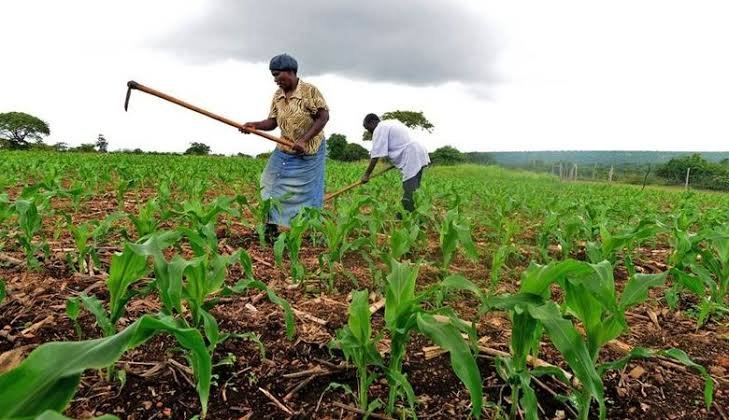
Tanzania’s Minister of Agriculture, Daniel Chongolo, told Parliament on 28 April 2026 that the country reached 130% food self-sufficiency in the 2024/2025 farming season, producing 23.78 million tonnes of food crops against an estimated national requirement of 18.28 million tonnes, a surplus of roughly 5.5 million tonnes. That’s a genuine achievement, and not a one-year anomaly; Tanzania has held food self-sufficiency above 100% for a decade. It’s also not the same achievement as building a food manufacturing industry, and the two get conflated more often than they should. A country can grow more maize, sunflower and cassava than it needs while still importing the flour, cooking oil and packaged foods made from those same crops elsewhere. That’s the gap Tanzania’s surplus now exposes, and it’s compounded by an inconvenient detail: much of the fertiliser that helped produce this surplus was imported in the first place.
DODOMA — Tanzania has reached a position many African countries are still working toward: it is producing significantly more food than it needs. Minister of Agriculture Daniel Chongolo told Parliament on 28 April 2026, while presenting the ministry’s budget proposals for the 2026/2027 financial year, that the country attained a 130% food self-sufficiency rate for the 2024/2025 farming season.
That’s a genuine and measurable achievement. It’s also not the end of the story, and treating it as one risks missing the bigger economic question the surplus actually raises.
The Numbers Behind the Milestone
Total food crop production rose 4.3% to 23,783,128 tonnes in 2024/2025, up from 22,803,316 tonnes the previous season. Cereal production reached 14,924,582 tonnes, up 2.3%, while non-cereal food crops grew faster, rising 7.8% to 8,858,546 tonnes. Against an estimated national food requirement of 18,279,054 tonnes for the 2025/2026 consumption period, that left a surplus of 5,504,074 tonnes, pushing the self-sufficiency ratio to 130%, up from 126% the year before.
| Metric | 2023/2024 | 2024/2025 | Change |
| Total food crop production | 22.80 million tonnes | 23.78 million tonnes | +4.3% |
| Cereal production | — | 14.92 million tonnes | +2.3% |
| Non-cereal food crop production | — | 8.86 million tonnes | +7.8% |
| National food requirement (following period) | — | 18.28 million tonnes | — |
| Surplus | — | 5.50 million tonnes | — |
| Food self-sufficiency ratio | 126% | 130% | +4 points |
Source: Tanzania Ministry of Agriculture, parliamentary budget presentation, 28 April 2026.
This isn’t a one-year statistical accident. Tanzania’s National Food Security Bulletin shows the country has maintained food self-sufficiency above 100% for a decade, with the ratio ranging between 114% and 128% over the preceding ten years before this latest jump. That changes what the real policy question should be. It’s no longer primarily about whether Tanzania produces enough food. It’s about what Tanzania does with the surplus, because tonnes alone don’t create an industrial economy. Value does.
Producing Food and Manufacturing Food Are Different Achievements
Consider maize. A tonne sold as raw grain generates one level of income. The same maize converted into flour, starch, animal feed, breakfast cereals or snacks passes through processing, machinery, labour, packaging, distribution and branding at each stage, and each stage adds income that raw grain sales never capture. The same logic runs across Tanzania’s entire agricultural base: sunflower into cooking oil, milk into UHT products and cheese, cassava into flour and industrial starch, fruit into juice and concentrate, tomatoes into sauces, coffee into roasted, branded consumer products. In the first model, Tanzania sells agricultural commodities. In the second, it manufactures products, and the difference in economic value between the two is not marginal.
Tanzania’s own Investment Centre effectively concedes the gap in its own sector assessment, noting that manufacturing remains at an early stage and that unprocessed agricultural commodities have dominated major exports, while simultaneously identifying agro-industries and agro-processing, grain milling, starch, prepared animal feed, dairy, edible oils, and fruit and vegetable processing, as major investment opportunities. The raw material problem isn’t the constraint. The industrial structure needed to convert that raw material into higher-value products hasn’t developed at the same pace as production itself.
The Bottleneck Has Moved Off the Farm
For years, Tanzanian agricultural policy has understandably focused on production: better seeds, fertiliser, irrigation, extension services, machinery, finance. Those remain necessary. But once production exceeds domestic requirements, a different set of constraints becomes decisive: warehousing, cold storage, processing plants, packaging factories, reliable electricity, efficient transport, quality control labs, financing for processors who need to buy thousands of tonnes at harvest and hold them for months, and regional distribution networks capable of moving Tanzanian food products into Kenya, Uganda, Rwanda, Burundi and the DRC.
Tanzania could add another million tonnes of maize production, and if that additional maize simply enters an already-saturated market at harvest, the economic impact will be considerably smaller than if part of that production instead feeds a competitive animal feed, starch or packaged food industry. The objective isn’t simply to produce more. It’s to increase the value generated by every tonne already being produced, since a food surplus functions as valuable industrial feedstock only once the industrial capacity to use it actually exists.
The Fertiliser Problem Complicates the Surplus Itself
There’s a structural detail that complicates any straightforward celebration of Tanzania’s 130% figure: much of the fertiliser that helped produce this surplus was imported. Government data for 2020-2023 shows roughly 87-90% of fertiliser used in Tanzania is imported, with only about 10% produced domestically. That dependence exposes farmers directly to international prices, exchange rate movements, transport costs and global supply disruptions, exactly the kind of foreign exchange vulnerability this publication has separately covered in the context of the 2026 Strait of Hormuz disruption, which pushed urea prices from around $400 to more than $850 per tonne before settling near $453.
Tanzania has begun addressing this: domestic fertiliser production rose from 32,239 tonnes in 2020/21 to 123,203 tonnes in 2025/26, with the government targeting 400,000 tonnes annually, still well short of estimated national requirements of 1.5 million tonnes, and full fertiliser self-sufficiency by 2030. Until that gap closes, Tanzania’s food production surplus carries an embedded import cost that complicates the foreign-exchange argument for food self-sufficiency: the country isn’t spending foreign currency importing finished food, but it is spending foreign currency importing a critical input required to grow the food that makes it self-sufficient. That’s a genuinely different, and arguably more solvable, problem than food import dependence, but it belongs in the same conversation.
Where the Opportunity Is Most Visible
Edible oil illustrates the paradox clearly. Tanzania has real potential here, it already produces the underlying oilseed, sunflower output more than doubled from 478,900 tonnes in 2020/21 to 1.22 million tonnes in 2023/24, yet edible oil remains an area of persistent import dependence. The Tanzania Investment Centre identifies increased domestic edible oil production as a way to reduce that dependence and estimates the food and beverage investment opportunity at between $100 million and $1 billion. Producing the crop is only the first part of the business; the country still needs crushing capacity, refining capacity, packaging, distribution and competitive financing before that oilseed becomes cooking oil on a shelf rather than raw material shipped elsewhere for processing.
The same dynamic applies to fruit and vegetables, where the economic stakes of processing are arguably sharper because fresh produce has a limited shelf life before quality deteriorates. Without nearby sorting, grading, drying, juicing or freezing facilities, a bumper harvest can create pressure on farmers rather than relief, since everyone tries to sell the same perishable commodity into the same market at the same time. What looks like agricultural overproduction is often actually a processing deficit in disguise.
Electricity Is Agricultural Policy, Not a Separate Question
Food manufacturing cannot be built around agriculture if electricity is treated as an unrelated infrastructure issue. The World Bank has documented how improved electricity access in Tanzanian villages lowered transport costs for rice milling and supported the expansion of a sunflower processing plant, concrete evidence that reliable power directly determines whether local processing capacity can actually develop. A rice mill, cold store, dairy processor, grain dryer, packaging plant and animal feed factory all require the same basic input, meaning agricultural industrialisation genuinely requires energy policy, transport policy, financial policy and industrial policy to operate around the same production corridors rather than as separate government functions.
The Regional Market Is the Bigger Prize
Tanzania doesn’t need to build food manufacturing capacity solely to replace imports in Dar es Salaam. The East African Community already provides an integrated market where agriculture occupies a central economic position, and Tanzania can build factories designed from the outset to serve that regional market rather than the domestic one alone. A processor could source maize from one region, package products in another, move them through the central transport corridor, and sell across East Africa and into the wider African market, a fundamentally different scale of opportunity than serving Tanzanian consumers alone. Tanzania is already Africa’s second-largest maize producer, with output up 91% since 2021/22 to 12.26 million tonnes, giving it a genuine raw material base large enough to support that regional ambition if the processing capacity catches up.
What the Government Is Already Building Around This
Tanzania isn’t starting from zero on the infrastructure this transition requires. Irrigation projects expanded from just 13 in 2020/21 to 780 by 2024/25, covering 543,366 hectares at a cost of roughly Sh1.34 trillion, with a target of expanding irrigated area to 1.27 million hectares. The ministry is also finalising the National Agricultural Extension Services Agency (NAESA), expected to begin operations in July 2026, aimed at strengthening the farmer-support systems that connect production planning to actual market demand. Agricultural exports have grown substantially alongside production, from $2.1 billion in 2021/22 to $3.73 billion in 2024/25, though the government’s own investment authority assessment makes clear that growth has been driven predominantly by raw and lightly processed commodities rather than manufactured food products.
The Question Tanzania’s Agricultural Policy Should Ask Next
For years, the operative question has been how to produce more food. Tanzania has made real, measurable progress on that question, culminating in this month’s 130% figure. The next question is different: how to create more economic value from every tonne already being produced. That requires connecting irrigation to production planning, production to processors, processors to reliable energy, factories to warehouses and transport corridors, banks to agricultural inventory financing, and regional trade policy to the specific industries Tanzania is trying to build, treating agriculture and manufacturing as one production system rather than two separate sectors sitting at opposite ends of the economy.
Tanzania has already demonstrated it can generate a substantial, structural food surplus. The country doesn’t need another decade of treating agriculture primarily as a source of raw commodities for someone else to process. The next test isn’t whether Tanzania can grow enough food, that question has been answered. It’s whether the country can turn that food into enough industry, and whether it can do so without the surplus itself remaining dependent on imported fertiliser to sustain year after year.
FAQ
Is Tanzania food self-sufficient? Yes. The Ministry of Agriculture reported a 130% food self-sufficiency ratio for the 2024/2025 farming season, with food crop production of 23.78 million tonnes against an estimated national requirement of 18.28 million tonnes, a surplus of roughly 5.5 million tonnes.
Does 130% food self-sufficiency mean Tanzania produces everything it consumes? No. The ratio compares aggregate food production against estimated national requirements. Tanzania can run an overall food surplus while still importing specific commodities, ingredients or processed food products, edible oil among them.
Why does food manufacturing matter if Tanzania already produces enough food? Manufacturing captures additional economic value from agricultural production, processing raw commodities into edible oils, packaged foods, dairy products, animal feed and other goods generates further industrial output, employment, tax revenue and export opportunities beyond what raw commodity sales alone provide.
Does Tanzania’s food surplus come at a hidden cost? Partly. Roughly 87-90% of the fertiliser used to grow Tanzania’s crops is imported, exposing the country’s agricultural output to international price volatility and foreign exchange pressure even as it achieves food self-sufficiency, though domestic fertiliser production is expanding toward a 2030 self-sufficiency target.
What are Tanzania’s biggest food manufacturing opportunities? Edible oils, grain milling, animal feed, dairy products, fruit and vegetable processing, and starch, areas the Tanzania Investment Centre has specifically identified as underdeveloped given the country’s existing agricultural raw material base.
What should Tanzania prioritise next in agricultural policy? Connecting irrigation, processing, energy, storage, finance and regional trade into one coordinated system rather than treating agriculture and manufacturing as separate policy areas, shifting the central question from how to produce more food toward how to capture more value from the food Tanzania already produces.
 Uchumi360
Business Intelligence
Uchumi360
Business Intelligence
Uchumi360 covers business, investment, and economic policy across East, Central, and Southern Africa.
For the serious reader
You read to the end. That places you in a small group.
Uchumi360 is built for readers who demand precision over speed, structure over sentiment, and analysis that holds uncomfortable conclusions rather than softening them. If this work sharpens how you think about Africa's economy, help us keep building the infrastructure behind it.
Institutional Partners
Commission intelligence. Shape the conversation.
Uchumi360 works with development finance institutions, investment firms, sovereign bodies, and strategic organisations across the coverage region. Institutional partnership unlocks:
- Commissioned sector and country intelligence reports
- Branded research series under your institution's authority
- Exclusive data briefings for internal strategy teams
- Speaking and editorial presence at Uchumi360 events
- Co-published investment outlooks for your markets
Support Our Work
Independent analysis has a cost. Help us bear it.
Uchumi360 does not carry advertising. It does not take editorial direction from sponsors. Every article is produced without commercial compromise. Your contribution funds the reporting, research, and editorial infrastructure that keeps this analysis free from influence.
Secure checkout: One-time and monthly support are processed securely. Add payment credentials to enable checkout here.
Stay Connected
Keep up with every new insight.
Follow our latest analysis, policy coverage, and market intelligence as soon as it is published. If you need something specific, reach out directly and we will point you to the right research.
