
Africa Should Have Been Driving the EV Mobility Agenda. Fuel Dependency Made the Case Before Climate Did.
Ready
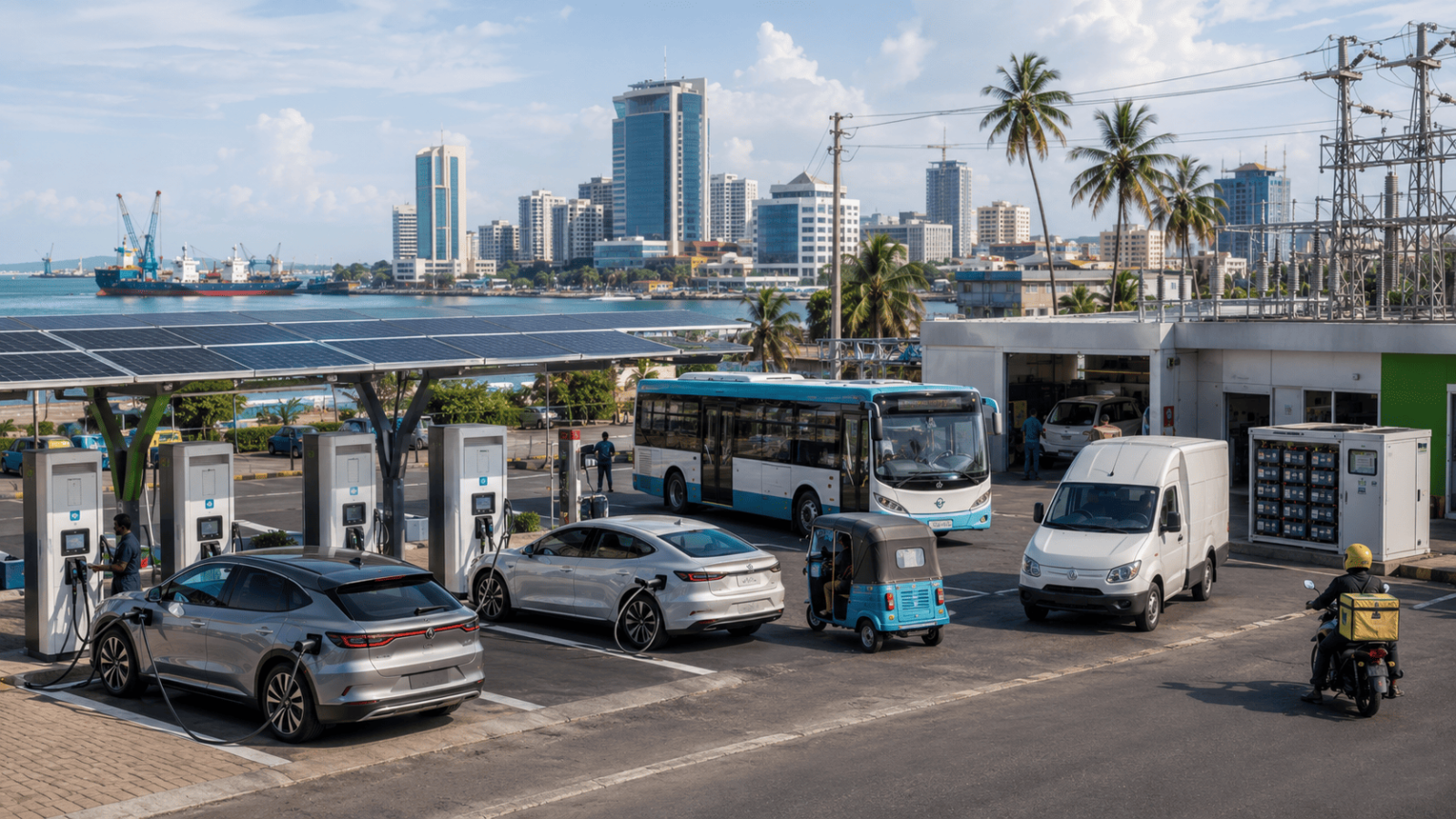
The mistake was allowing electric vehicles to be framed mainly as a rich-country climate solution. For Africa, the stronger case has always been economic. Electric mobility is about replacing part of an imported fuel bill with locally generated electricity. It is about shifting from price-taking in global oil markets to investing in domestic power systems, charging networks, technicians, fleet operators, battery services and local assembly.
Africa did not need the rest of the world to discover electric vehicles before recognising their strategic value. The continent had economic reasons first.
For decades, many African economies have lived with the same transport vulnerability: imported refined fuel, volatile global oil prices, weak refining capacity, foreign-exchange pressure, expensive logistics and public transport costs that rise whenever petroleum markets move. Long before electric vehicles became a climate-policy priority in Europe, China, or the United States, Africa already had the strongest practical argument for transport electrification.
It was not only about emissions. It was about sovereignty.
The African Union and United Nations Environment Programme recently put the continental problem in direct terms: Africa’s transport sector accounts for 31% of carbon dioxide emissions, and more than 70% of the continent’s refined fuel demand is still met through imports. At the same time, around 132,000 electric vehicles are already operating in Africa, about half of African countries are engaged in assembling or manufacturing electric vehicles and charging equipment, and 31 African countries now mention electric mobility in their nationally determined contributions under the Paris Agreement.
That is the centre of the issue. A continent that imports most of the refined fuel that powers its buses, motorcycles, trucks, taxis, delivery vans and private cars cannot treat mobility as a neutral sector. It is a balance-of-payments sector, an inflation sector, a fiscal sector and a national-security sector.
Every petrol and diesel shock moves through African economies quickly. It raises commuter fares. It raises food distribution costs. It raises construction costs. It raises school transport costs. It pressures government subsidies. It drains foreign exchange. It weakens small businesses. It leaves governments reacting to oil markets they do not control.
That is why Africa should have been the natural driver of the electric mobility agenda.
The mistake was allowing electric vehicles to be framed mainly as a rich-country climate solution. For Africa, the stronger case has always been economic. Electric mobility is about replacing part of an imported fuel bill with locally generated electricity. It is about shifting from price-taking in global oil markets to investing in domestic power systems, charging networks, technicians, fleet operators, battery services and local assembly.
The global market is already moving. The International Energy Agency says electric car sales exceeded 20 million globally in 2025, representing one-quarter of all new cars sold. It expects sales to reach 23 million in 2026, or 28% of total car sales. Electric vehicles also displaced around 1.2 million barrels of oil per day in 2025.
That last figure should matter deeply to Africa. Oil displacement is not an abstract climate statistic. For fuel-importing African countries, it is a development strategy hiding in plain sight. Every kilometre travelled on domestically generated electricity instead of imported petrol or diesel is a small transfer of economic power from external fuel markets to the domestic energy system.
The tragedy is that Africa had all the warning signs before the rest of the world had mass electric vehicle adoption. Fuel queues, price shocks, subsidy burdens, weak currencies, transport inflation and imported petroleum exposure have been routine across the continent. Yet electric mobility was often treated as futuristic, elite, or environmentally symbolic rather than as a hard economic instrument.
Tanzania’s 2026/27 Budget Speech shows why the argument is becoming impossible to ignore. The government says geopolitical tensions affected Tanzania through international trade and investment, and that retail prices for petrol and diesel in Dar es Salaam rose by 44% and 49%, respectively, between March and May 2026. The government responded by monitoring fuel prices, providing diesel subsidies for May and June 2026, and committing in the medium term to accelerate investment in alternative energy sources, including renewable energy, to reduce dependence on imported fuel.
That is the African electric mobility argument in one paragraph. Fuel dependency is not only an energy issue. It is a fiscal issue. It is a transport-cost issue. It is a household-income issue. It is a macroeconomic stability issue.
Tanzania’s next move also shows what a more serious policy response looks like. The same Budget Speech proposes a value-added tax exemption on imported equipment used in electric vehicle charging stations under HS Code 8504.40.00. The measure is expected to reduce government revenue by 5.97 billion shillings, meaning the state is deliberately giving up short-term tax revenue to lower the cost of charging infrastructure.
The budget also shows that Tanzania’s electricity base is becoming more relevant to transport policy. The government reports that it spent 1.59 trillion shillings on electricity generation, transmission and distribution projects, and that completion and launch of the Julius Nyerere Hydropower Project, generating 2,115 megawatts, raised national power generation capacity to 4,522.54 megawatts. It also reports 521.3 billion shillings disbursed through the Rural Energy Agency, enabling 39,003 hamlets to gain access to electricity.
That is the foundation of a real electric mobility argument. Electric vehicles are only as strategic as the electricity system behind them. If Tanzania can convert power-generation gains into reliable charging infrastructure, it can begin shifting part of transport demand away from imported fuel and toward domestic electricity.
Kenya has reached a similar conclusion, but with a more explicit national policy framework. In 2026, Kenya launched its National Electric Mobility Policy. The Ministry of Roads and Transport said the policy marked a major milestone in the transition toward a cleaner, more efficient, and low-carbon transport system. More importantly, the ministry tied the policy directly to fuel-import vulnerability, noting that electric vehicle adoption would reduce Kenya’s annual petroleum import bill, estimated at USD 5 billion, which strains foreign-exchange reserves, undermines energy security and exposes the economy to global fuel-price volatility.
That is not climate rhetoric. It is balance-of-payments language.
Kenya’s direction matters because it shows that electric mobility is moving from environmental advocacy into economic management. The same ministry’s earlier public notice for the development of the national electric mobility policy said Kenya’s transport sector is heavily reliant on fossil fuel and that the country’s Paris Agreement target of reducing emissions by 32% by 2030 could be supported by a transition to zero-emission vehicles across road, air, rail and maritime transport.
Kenya’s policy trajectory adds three lessons to the African story. First, electric mobility needs a national policy, not scattered pilots. Second, transport electrification must include motorcycles, buses, fleets, and non-road modes, not only private cars. Third, fuel imports are now a macroeconomic argument for electrification, not a side issue.
Rwanda offers a different but equally important case: fiscal and non-fiscal incentives can make a small market a serious policy laboratory. Rwanda’s Ministry of Infrastructure has said the country is developing a sustainable mobility policy to support the transition to electric mobility, attract investment, promote innovation and strengthen non-motorised transport as part of transit-oriented development. The ministry estimated the cost of Rwanda’s e-mobility transition at USD 900 million, but also said transitioning electric motorcycles alone could save the Rwandan economy Rwf 23 billion, or about USD 22 million, in fuel imports every year.
Rwanda’s strategic paper for e-mobility adaptation sets out incentives that show how deliberate policy can shape a market. These include rent-free government land for charging stations, charging-station provisions in building codes and city-planning rules, green licence plates for preferential treatment, free licences and authorisations for commercial electric vehicles, access to dedicated bus lanes, preference for electric vehicles in government-hired vehicles, and tighter treatment of polluting vehicle imports. It also notes incentives under the investment code, including a 15% corporate income tax rate and tax holidays for companies manufacturing and assembling electric vehicles in Rwanda.
The Rwanda case is important because it shows that electric mobility is not only about vehicles. It is about land policy, city planning, public procurement, building codes, road access, tax design and investment promotion. That is what African countries need: not speeches about electric vehicles, but a regulatory ecosystem that makes electric mobility practical.
Ethiopia has taken the most aggressive route. According to the International Energy Agency, in January 2024, the Government of Ethiopia prohibited the import of gasoline and diesel vehicles as part of a strategy to promote electric mobility and reduce fuel imports.
The Ethiopian case proves both the power and the risk of bold policy. It directly recognises fuel imports as an economic vulnerability and tries to stop the old dependency at the border. But it also shows that banning internal-combustion imports without enough charging stations, spare parts, technicians and reliable electricity can create adoption friction. The policy is strategically logical, but execution determines whether it becomes a model or a warning.
South Africa’s case is different again because it is an industrial-policy story. Cabinet approved a White Paper on electric vehicles in 2023 to ensure South Africa becomes part of the global shift from internal-combustion engines to new technology vehicles. The policy supports investment in new and existing manufacturing plants for electric vehicle production, while recognising the automobile industry’s role in economic growth and South Africa’s mineral position in electric vehicle value chains.
South Africa understands something the rest of the continent must take seriously: electric mobility is not only a consumer transition. It is a manufacturing transition. If Africa only imports electric vehicles, it will exchange one dependency for another. If it builds assembly, parts supply, charging equipment, battery services, software and maintenance capabilities, electric mobility can become an industrial opportunity.
This is especially important because Africa is not marginal to the global electric vehicle supply chain. The International Energy Agency says Africa supplies around 75% of global manganese, 70% of cobalt and nearly 20% of copper, all important inputs for clean energy technologies and components. Yet Africa captures less than 1% of the value generated from manufacturing clean-energy technologies and their components.
That contradiction should define Africa’s electric mobility debate. The continent supplies minerals used in the global transition, imports refined fuel to run its own transport systems, and captures little of the manufacturing value in the technologies reshaping mobility. If Africa does not move carefully, electric mobility will repeat the commodity pattern: export raw minerals, import finished vehicles, import charging equipment, import batteries, import software and remain a consumer of other people’s industrial strategy.
The World Bank’s long-running work on fuel subsidies adds another reason for urgency. It has noted that more than half of the countries in Sub-Saharan Africa have subsidised fuel to protect consumers from high and volatile prices, but that fuel subsidies are costly and often unsustainable. In 2010–11, fuel-price subsidies consumed an average of 1.4% of gross domestic product in public resources across the region.
That historical pattern matters. Fuel dependency is not only about the import bill. It is also about what governments do after fuel arrives. When prices rise, governments face pressure to subsidise. When they subsidise, budgets come under stress. When they do not subsidise, transport costs rise and citizens protest. Electric mobility will not eliminate this problem overnight, but it gives countries a way to reduce part of the exposure structurally rather than endlessly manage symptoms.
The International Energy Agency also confirms the long-term energy pattern. Oil demand in Africa has grown over time, boosted by transport consumption, and oil has become the continent’s second-largest fuel in total energy supply.
This makes transport electrification one of the most strategic energy reforms on the continent. Transport is where imported refined fuels directly meet households, food prices, business costs, city congestion and public budgets.
But Africa must design its own electric mobility pathway. Copying Europe, China or the United States would be a mistake.
Europe’s pathway is heavily shaped by emissions regulation, high incomes, domestic automakers and dense charging networks. China’s pathway is shaped by industrial policy, battery manufacturing, state coordination and huge domestic scale. The United States’ pathway is shaped by consumer incentives, domestic manufacturing and private-car culture. Africa’s pathway must be shaped by fuel-import vulnerability, high-use transport, motorcycles, three-wheelers, buses, taxis, delivery fleets, public procurement, local assembly and power-system realities.
That means the first serious African electric mobility opportunity is not the private electric car. It is a high-use vehicle. Motorcycles. Three-wheelers. Taxis. Ride-hailing fleets. Delivery vans. Buses. Government fleets. School transport. Municipal vehicles. These are the vehicles that move every day, consume fuel constantly and can turn lower operating costs into real savings. They are also easier to charge through depots, battery swapping, workplace charging, institutional parking and route-based infrastructure.
This is where Kenya, Rwanda and Tanzania converge. Kenya’s policy points to national coordination and reduced fuel-import pressure. Rwanda’s incentives show how planning, procurement and land policy can support adoption. Tanzania’s tax exemption for charging infrastructure shows how the cost of early market infrastructure can be lowered. Ethiopia’s import ban shows the danger of moving faster than infrastructure. South Africa’s White Paper shows why manufacturing value must be part of the strategy.
The African Union’s continental framework is therefore essential. Electric mobility cannot be built purely country by country. Charging standards, battery safety, vehicle import rules, used electric vehicle standards, recycling, public procurement, road-user charges, electricity tariffs, charging-payment interoperability and regional corridors all require coordination. A fragmented African electric mobility market would be expensive, confusing and vulnerable to low-quality imports.
The risks are real.
The first is creating a new import dependency. If African countries import electric vehicles, batteries, chargers, software, diagnostic tools and spare parts without building local capability, they will simply replace petroleum dependency with technology dependency.
The second is grid stress. Electric vehicles require electricity that is reliable at the point of charging. The national generation capacity is not enough. Distribution networks, transformer capacity, smart charging, maintenance and tariffs will determine whether charging is reliable.
The third is fiscal adjustment. Fuel taxes are important to many governments. As electric mobility grows, governments will eventually need new road-use revenue models. If they fail to plan early, they may resist adoption later because it erodes fuel-tax income.
The fourth is inequality. If incentives mainly benefit wealthy private-car owners, the policy will lose legitimacy. Africa’s first incentives should target productive and shared mobility: buses, motorcycles, three-wheelers, taxis, delivery fleets, public-sector fleets and locally assembled vehicles.
The fifth is standards and safety. Poor-quality chargers, unsafe battery swapping, weak conversions and unregulated imports could damage consumer confidence. Early regulation must protect the market from bad products without choking innovation.
The opportunity is larger than the risks if the policy is intelligent.
Electric mobility gives Africa a chance to build new businesses around charging infrastructure, battery swapping, fleet finance, vehicle leasing, electric motorcycle assembly, bus depots, software, technician training, solar charging, power electronics, diagnostics, recycling and data services. These are not abstract opportunities. They are practical sectors that can employ electricians, mechanics, software developers, drivers, financiers, insurers, installers and manufacturers.
This is why electric mobility should be framed as productive infrastructure. It is not about wealthy drivers owning cleaner cars. It is about lowering the cost of movement across African economies.
If a motorcycle taxi operator spends less on energy, household income improves. If a delivery company lowers its cost per kilometre, urban commerce becomes cheaper. If a bus operator reduces fuel consumption, public transport becomes more stable. If a government fleet uses domestic electricity, the public sector reduces operating costs. If charging infrastructure is locally installed and maintained, jobs are created. If minerals are processed and linked to manufacturing, Africa captures more of the value chain.
Africa should have led this agenda because Africa had the pain points first.
The continent knew fuel volatility before electric vehicles became mainstream. It knew import dependency before global climate summits turned transport into a headline. It knew inefficient urban mobility before automakers discovered the electric future. It knew the cost of running economies on imported petroleum while sitting on renewable energy potential and transition minerals.
The next phase should be about correction.
Africa should stop treating electric mobility as a technology arriving from elsewhere and start treating it as a strategic response to its own economic structure. The continent does not need to electrify everything overnight. It needs to electrify intelligently: the right vehicles, the right corridors, the right fleets, the right cities and the right value chains.
If Africa gets this right, electric mobility will not simply mean cleaner vehicles. It will mean lower fuel exposure, stronger local energy use, new industrial activity, better urban transport, more resilient public finances and a stronger claim over the technologies built from African minerals.
If Africa gets it wrong, it will import electric vehicles the same way it imported fuel-driven vehicles: late, expensively and with little control over the value chain.
The opportunity is still open. But the lesson is already clear.
Africa should not be a passenger in the electric mobility transition. It should be one of its drivers.
 Uchumi360
Business Intelligence
Uchumi360
Business Intelligence
Uchumi360 covers business, investment, and economic policy across East, Central, and Southern Africa.
For the serious reader
You read to the end. That places you in a small group.
Uchumi360 is built for readers who demand precision over speed, structure over sentiment, and analysis that holds uncomfortable conclusions rather than softening them. If this work sharpens how you think about Africa's economy, help us keep building the infrastructure behind it.
Institutional Partners
Commission intelligence. Shape the conversation.
Uchumi360 works with development finance institutions, investment firms, sovereign bodies, and strategic organisations across the coverage region. Institutional partnership unlocks:
- Commissioned sector and country intelligence reports
- Branded research series under your institution's authority
- Exclusive data briefings for internal strategy teams
- Speaking and editorial presence at Uchumi360 events
- Co-published investment outlooks for your markets
Support Our Work
Independent analysis has a cost. Help us bear it.
Uchumi360 does not carry advertising. It does not take editorial direction from sponsors. Every article is produced without commercial compromise. Your contribution funds the reporting, research, and editorial infrastructure that keeps this analysis free from influence.
Secure checkout: One-time and monthly support are processed securely. Add payment credentials to enable checkout here.
Stay Connected
Keep up with every new insight.
Follow our latest analysis, policy coverage, and market intelligence as soon as it is published. If you need something specific, reach out directly and we will point you to the right research.
