
DRC Orders Grand Inga Agreements Finalized Within 60 Days
Ready
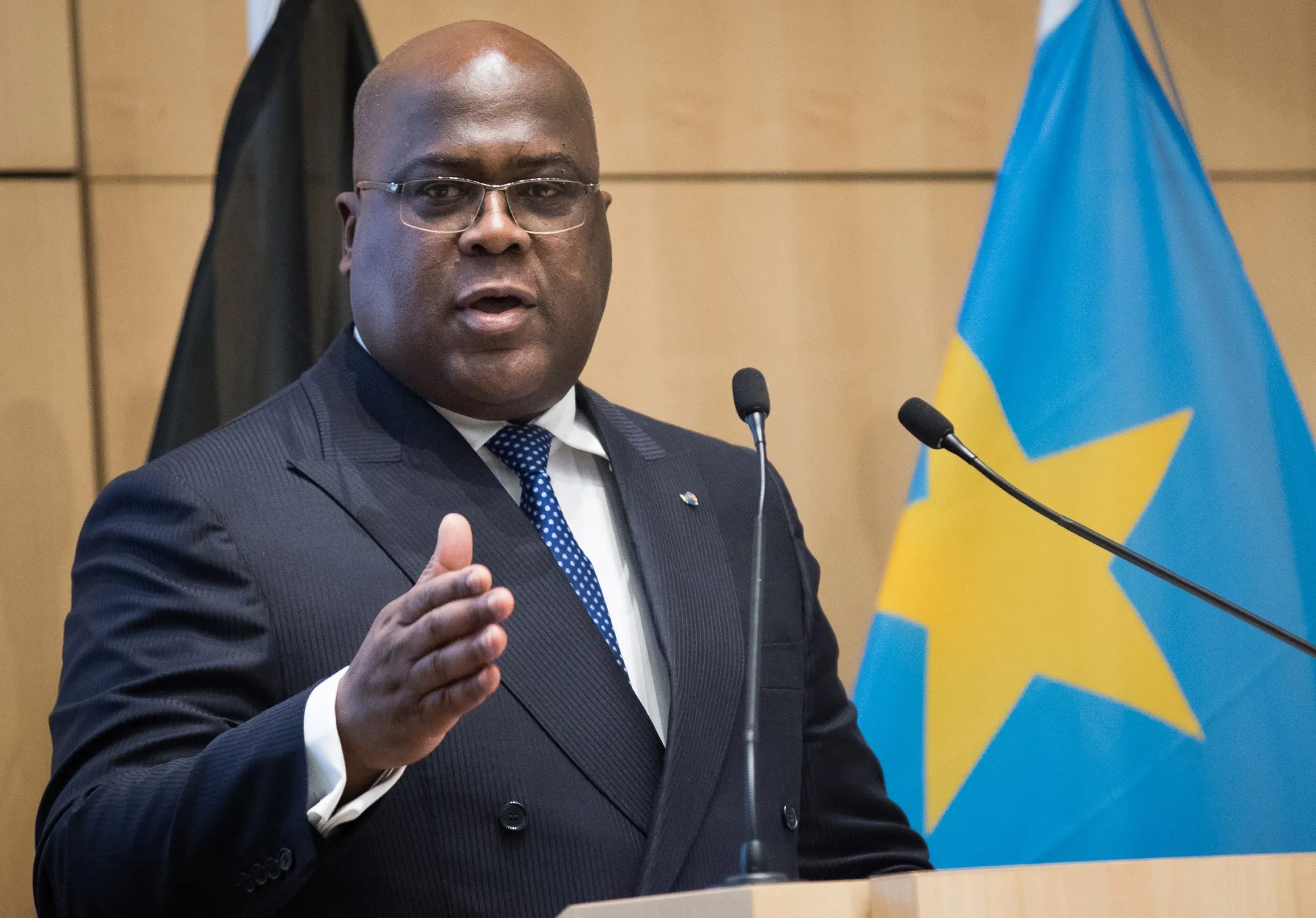
President Félix Tshisekedi ordered DRC government ministries to finalize Grand Inga cooperation agreements within 60 days at a Council of Ministers meeting on 20 March 2026, pushing a project that has survived decades of false starts toward what officials hope is a genuinely different phase. The directive followed World Bank financing agreements taking effect on 2 February 2026, and came alongside a separate memorandum of understanding the DRC signed with France's development agency the same day, covering a project now estimated at approximately $14 billion for an 11,000 MW first phase. The Congo River's hydropower potential, estimated at 40,000 to 70,000 MW for the full Grand Inga concept, was never in question. Whether the DRC can convert political urgency into a genuinely bankable project, after previous developers including Fortescue Energy and a China Three Gorges-led consortium both walked away, is the question this latest push will actually have to answer.
KINSHASA — Grand Inga has occupied an unusual position in Africa's economic imagination for decades: simultaneously one of the continent's greatest infrastructure opportunities and one of its most persistent unfinished projects. On paper, the numbers are extraordinary. The Inga site on the Congo River has an estimated hydropower potential of roughly 42,000 MW, and the full Grand Inga concept has historically been described in the range of 40,000 to 70,000 MW, a scale that would make it the largest power generation complex in the world if ever built out completely.
What's changed in the past year is the political pressure now attached to actually moving it forward.
The Directive That Changes the Tempo
President Félix Tshisekedi instructed sector ministries and the provincial government of Kongo Central to finalize cooperation agreements with the Agency for the Development and Promotion of the Grand Inga Project (ADPI-RDC) within 60 days, a directive issued during a Council of Ministers meeting on 20 March 2026. The relevant ministers must sign the agreements under the Prime Minister's supervision, with copies sent to financial partners by 3 April 2026 and a progress report due within five days of that deadline. Tshisekedi separately ordered an urgent review of the draft Grand Inga law, targeting Council of Ministers adoption by 27 March and parliamentary submission by 31 March, describing the legislation as a requirement for mobilizing the financial support already agreed with the World Bank.
That level of specific, dated presidential pressure is not something Grand Inga's history has featured often, and it followed a concrete trigger: World Bank financing agreements for the Inga 3 Development Program took effect on 2 February 2026, giving the DRC government an actual deadline-driven reason to move its own institutional machinery into gear rather than simply continuing decades of preparatory discussion.
What Grand Inga Actually Is
Grand Inga is not a single dam awaiting construction. It's a long-term concept for a sequence of hydropower stations at the Inga site, roughly 150 kilometres upstream from the Atlantic Ocean. Two stations already exist: Inga 1 (351 MW) and Inga 2 (1,424 MW). The next major stage, Inga 3, has no fixed final configuration. As of March 2026, the World Bank described potential capacity ranging from 3,000 MW to 11,000 MW depending on the technical and commercial design ultimately selected, with total costs estimated at more than $10 billion. A separate memorandum of understanding the DRC signed with France's development agency in early February 2026 described Inga 3 more specifically, at an installed capacity around 11,000 MW and an estimated cost of approximately $14 billion, suggesting the project's planning has been converging toward the upper end of that range even as the World Bank's own public figures retain wider bounds. The wider Grand Inga complex could eventually contain up to eight hydropower projects, developed progressively as electricity demand and the DRC's ability to absorb the power actually materialise.

That phased structure is economically rational rather than merely cautious. Building tens of thousands of megawatts before transmission networks and paying customers exist would be financially reckless regardless of how much water the Congo River can move.
A Country With Enormous Power Potential and Almost None of It Delivered
The extraordinary irony of Inga is that it sits inside one of the world's most electricity-poor countries. The World Bank estimates only about 21% of the Congolese population has electricity access, with rural access considerably lower, even though the DRC holds enormous hydropower resources, vast mineral deposits and one of the world's largest tropical forests.
That's part of why the current World Bank programme looks different from earlier iterations of Inga financing. The Bank approved a $250 million IDA credit in June 2025 as the first phase of a programme that could eventually reach $1 billion, covering local infrastructure, institutional strengthening, technical studies, skills development and community investment around the Inga site. Roughly 1.2 million people across about 100 communities in Kongo Central are expected to benefit from that first phase, reflecting a lesson the international financing community has learned repeatedly from African megaprojects: roads, water, electricity, skills, local procurement and functioning public institutions determine whether a project becomes a genuine economic asset or an enclave disconnected from the people living around it.
AECOM's Return Tells Its Own Story About the Project's History
In June 2026, ADPI selected AECOM, at a contract value of $4.7 million, to update Inga 3's preparatory studies, work that includes reviewing technical development scenarios, assessing the electricity demand needed to underpin the project's bankability, and conducting new geological surveys at the site, expected to take 24 months. The circumstances of that selection are worth knowing: the contract had originally been designed for the AECOM-EDF consortium that carried out Inga 3's original feasibility studies, but EDF reportedly declined to continue, leaving AECOM as the only participant willing to proceed. Excluding AECOM at that point would have required restarting the entire process from scratch, with no guarantee any comparably qualified firm would step in.
AECOM's involvement is not new. The firm, together with EDF, won a $13.4 million contract back in 2011 to conduct Inga 3's first feasibility study, meaning AECOM's June 2026 selection represents a return to a project it first began studying fifteen years earlier, a timeline that itself illustrates how long Grand Inga has moved between preparation, negotiation and stalled implementation without reaching construction.
Why the DRC Has the Strongest Immediate Reason to Build It
If Inga 3 eventually delivers several gigawatts of reliable electricity, its greatest economic impact may come less from powering households than from making electricity-intensive industrial activity commercially viable for the first time. The DRC is one of the world's most important sources of copper and cobalt, but mining operations frequently face electricity constraints that add directly to extraction and processing costs. The World Bank specifically identifies Inga 3's potential to support increased domestic value addition in mining, meaning cheap, reliable electricity could let the DRC move up the value chain, refining, processing, and manufacturing around its own minerals, rather than continuing to export concentrate while importing increasingly sophisticated finished products. Given how central DRC copper and cobalt have become to global battery and electric vehicle supply chains, that combination, abundant domestic electricity plus globally strategic minerals, is a considerably larger economic proposition than electricity sales alone.
The Regional Opportunity, and Africa's Transmission Gap
The DRC cannot consume all the electricity Grand Inga could eventually generate, and that's precisely why the project carries continental significance rather than only national importance. Earlier planning envisaged approximately 2,500 MW being transmitted to South Africa alongside 2,300 MW retained domestically, and the African Development Bank has described the project as one capable of improving electricity access across Central and Southern Africa through regional transmission networks connecting to the Southern African Power Pool and Central African Power Pool.
That's where the discussion around Grand Inga becomes too simplistic if it stops at generation capacity. Electricity has to be transmitted over very long distances, transformed at substations, distributed to customers, and supported by institutions capable of actually collecting revenue, meaning Grand Inga has to be understood as a transmission project as much as a hydropower one. If African countries invest in the transmission architecture Grand Inga requires, that infrastructure could subsequently connect other hydro, solar, wind and thermal projects to regional markets, letting countries with temporary surpluses sell to neighbours facing shortages and reducing the need for every country to maintain expensive standalone reserve capacity. Grand Inga could become an anchor for a considerably larger African electricity market than the project's own generation alone would represent.
A Project That Has Already Survived Several False Starts
The reason caution remains warranted is that Grand Inga has been discussed for decades without reaching construction at anything close to its originally envisaged scale. The World Bank previously supported Inga 3 preparation and withdrew in 2016 after disagreements with the DRC government, having disbursed only a small proportion of its earlier grant. The project subsequently cycled through prospective private developers: Australian company Fortescue Energy secured development rights in 2021 but withdrew in 2024, and a Chinese consortium led by China Three Gorges also stepped away.
Those withdrawals reveal a problem that predates any engineering question. Investors need confidence that the electricity will have credible buyers, that tariffs will support debt repayment, that transmission arrangements will function, that government institutions will honour contracts, and that the project won't become trapped in disputes over ownership and revenue. Grand Inga has, in that specific sense, a credibility problem that has consistently preceded and outlasted its construction problem.
Why the Current Phase Looks Different
There are real reasons to treat this latest push as more serious than previous iterations, precisely because it's less focused on announcing construction and more focused on establishing bankability first. The updated AECOM studies are explicitly meant to determine what configuration of Inga 3 can actually be financed based on credible electricity demand and technical conditions, rather than assuming demand and investors will simply appear once a design is announced. The World Bank estimates preparing and constructing Inga 3 could take around a decade given its technical and stakeholder complexity, meaning anyone presenting Grand Inga as an imminent 40,000 MW project is overstating where things currently stand. The project is being prepared for development; construction of the full Grand Inga complex remains a considerably longer-term proposition than Inga 3 alone.
The international architecture around the project has also shifted meaningfully. The DRC's ADPI signed a memorandum of understanding with France's development agency AFD on 2 February 2026 in Kinshasa, aimed at strengthening technical, institutional and strategic support for Inga 3 ahead of its implementation phase, with explicit attention to local community ownership and the socio-economic impact of the eventual infrastructure. That agreement arrived the same week the World Bank's own financing agreements took effect, giving the DRC two major international partners moving in parallel rather than the single, often abruptly discontinued relationships that characterised earlier phases of the project's history.
The Climate Case Is Real But Not Sufficient on Its Own
Hydropower gives Grand Inga an obvious place in Africa's energy transition, and the World Bank argues an appropriately developed Inga could support a cleaner electricity system, reduce reliance on charcoal, and enable cleaner industrial development including mining. But the environmental case shouldn't be reduced to the simple fact that hydropower is renewable. Large infrastructure changes river systems, landscapes and local livelihoods, and communities around Inga have already raised concerns about hydrological impacts, infrastructure access and how economic benefits get distributed. The World Bank's own consultations found nearby communities want electricity, roads, markets, water, health facilities and jobs, a reminder that Grand Inga needs a genuine social contract: communities living beside the project cannot reasonably be asked to absorb its local consequences while its principal economic beneficiaries live hundreds or thousands of kilometres away.
The DRC Must Capture the Value Itself
There's a real risk in framing Grand Inga purely as a pan-African project that should benefit everyone equally. The DRC owns the resource and bears the local political, environmental and social consequences directly, which means it has to capture a substantial share of the economic value the project creates. Selling electricity cheaply to neighbouring countries while Congolese households and industries remain poorly connected would be an economic failure even if the underlying project turns a profit. The more defensible sequence runs the other way: sufficient domestic power to support electrification and industrialisation first, regional exports generating foreign exchange and strengthening the system's financial viability second, and electricity-intensive industries encouraged to locate inside the DRC specifically because doing so creates employment, tax revenue and domestic supply chains. Cheap electricity combined with the DRC's copper and cobalt wealth is potentially worth considerably more than either resource on its own, but only if the country's own institutions are positioned to capture that combined value rather than exporting the electricity as readily as it currently exports the minerals.
The Prospect Is Real. The Project Is Not Yet Built.
Grand Inga has reached a more credible stage than many of its earlier iterations, and the developments of the past year are genuinely tangible: a $250 million World Bank commitment as the first phase of a programme that could reach $1 billion, AECOM back under contract updating technical and commercial studies, a fresh memorandum of understanding with France's development agency, and a Congolese president personally setting 60-day deadlines for his own government's institutional machinery. None of that means the full Grand Inga complex is financed or under construction. The immediate project remains Inga 3 preparation, its eventual capacity is still under evaluation between 3,000 and 11,000 MW, transmission architecture still has to be built out, long-term electricity buyers still have to be secured, and DRC institutions still have to demonstrate they can manage a project extending across decades and multiple political administrations.
Africa doesn't lack ambitious projects. It lacks projects that successfully move from natural resource potential to bankable infrastructure, from infrastructure to industrial activity, and from industrial activity to broad-based economic growth. Grand Inga's fifteen-year relationship with a single engineering firm, and a president now attaching specific calendar deadlines to his own ministries, suggests the DRC understands exactly what that transition actually requires. Whether the next decade delivers it is still, honestly, an open question.
FAQ
What did President Tshisekedi order in March 2026? At a Council of Ministers meeting on 20 March 2026, he instructed sector ministries and the Kongo Central provincial government to finalize Grand Inga cooperation agreements within 60 days, with copies sent to financial partners by 3 April, and ordered urgent parliamentary review of the draft Grand Inga law.
How much electricity could Grand Inga generate? The full Grand Inga concept has historically been estimated at 40,000 to 70,000 MW. The immediate Inga 3 phase's capacity remains under evaluation, with the World Bank citing a range of 3,000 to 11,000 MW as of March 2026, while a February 2026 DRC-France agreement described a more specific estimate of approximately 11,000 MW at a cost of roughly $14 billion.
Is Grand Inga under construction? No. The project remains in a preparation and studies phase. AECOM was contracted in June 2026 to update technical and commercial studies over 24 months, and the World Bank estimates full preparation and construction of Inga 3 could take around a decade.
Why did AECOM return to the project in 2026? ADPI selected AECOM after its original 2011 feasibility partner, France's EDF, declined to continue the assignment, leaving AECOM as the sole participant willing to proceed rather than restarting the entire preparatory process from scratch.
What has the World Bank actually committed? A $250 million IDA credit approved in June 2025 as the first phase of a programme that could reach $1 billion, focused on local infrastructure, institutional strengthening and community investment benefiting an estimated 1.2 million people in Kongo Central.
Why has Grand Inga struggled to move forward for so long? Previous developers have repeatedly withdrawn, the World Bank itself pulled out in 2016, Australia's Fortescue Energy left in 2024, and a China Three Gorges-led consortium also stepped away, reflecting persistent difficulty establishing credible electricity buyers, viable tariffs, functioning transmission arrangements and durable government institutions capable of honouring decades-long contracts.
 Uchumi360
Business Intelligence
Uchumi360
Business Intelligence
Uchumi360 covers business, investment, and economic policy across East, Central, and Southern Africa.
For the serious reader
You read to the end. That places you in a small group.
Uchumi360 is built for readers who demand precision over speed, structure over sentiment, and analysis that holds uncomfortable conclusions rather than softening them. If this work sharpens how you think about Africa's economy, help us keep building the infrastructure behind it.
Institutional Partners
Commission intelligence. Shape the conversation.
Uchumi360 works with development finance institutions, investment firms, sovereign bodies, and strategic organisations across the coverage region. Institutional partnership unlocks:
- Commissioned sector and country intelligence reports
- Branded research series under your institution's authority
- Exclusive data briefings for internal strategy teams
- Speaking and editorial presence at Uchumi360 events
- Co-published investment outlooks for your markets
Support Our Work
Independent analysis has a cost. Help us bear it.
Uchumi360 does not carry advertising. It does not take editorial direction from sponsors. Every article is produced without commercial compromise. Your contribution funds the reporting, research, and editorial infrastructure that keeps this analysis free from influence.
Secure checkout: One-time and monthly support are processed securely. Add payment credentials to enable checkout here.
Stay Connected
Keep up with every new insight.
Follow our latest analysis, policy coverage, and market intelligence as soon as it is published. If you need something specific, reach out directly and we will point you to the right research.
