
Tanzania Blocks Rostam Aziz’s Songo Songo Deal as Orca Energy Prepares Exit
Ready
PanAfrican Energy Tanzania has rejected the government’s proposed Songo Songo licence terms and plans to stop operating the facilities by November 29, while Tanzania’s competition regulator has blocked the proposed acquisition of Orca Energy’s Tanzanian business by Taifa Gas and Amber Energy.
Tanzania’s attempt to determine the future of the Songo Songo natural gas field has entered its most difficult phase in years after PanAfrican Energy Tanzania rejected the commercial and fiscal terms proposed by the Ministry of Energy for extending its development licence, while the Fair Competition Commission separately prohibited the transaction that would have transferred Orca Energy Group’s Tanzanian business to Taifa Gas Tanzania and Amber Energy Investment. The two developments have disrupted both of the clearest routes through which continuity could have been maintained under the existing commercial structure. Orca could have remained through a negotiated extension of the licence, or its Tanzanian business could have passed to new owners while PanAfrican Energy continued operating the field. PAET has now rejected the extension terms, while the proposed acquisition has been stopped by the competition regulator, leaving Tanzania to prepare for the possibility that the company which has operated Songo Songo for more than two decades will withdraw from that role before the end of November.
Orca said on October 9 that PAET considered the proposed extension terms “uneconomic and unacceptable” and had formally advised Tanzania Petroleum Development Corporation that it would not accept them. The company nevertheless separated its commercial disagreement with the government from the immediate requirement to keep gas flowing. PAET has offered to continue operating the Songo Songo facilities temporarily during the statutory period created by the Ministry’s extension notice and has proposed a transition working group involving itself, TPDC and Songas to prepare for the transfer of operational responsibilities. Under the current position communicated by Orca, PAET intends to cease operating the facilities by November 29, 2026, or earlier if TPDC and Songas confirm that they are ready to assume those functions.
That timeline gives the dispute a much wider economic significance than the future ownership of a petroleum company. Songo Songo has supplied natural gas to Tanzania since commercial production began in 2004 and is connected to electricity generation, industrial consumption and gas infrastructure serving the country’s largest commercial market. The field is therefore part of the operating infrastructure behind factories, power generation and industrial energy consumption rather than a standalone upstream asset whose ownership can change without consequences elsewhere in the economy. Tanzania now has a more diversified energy system than it did when Songo Songo entered production, including additional gas production, the National Natural Gas Infrastructure and substantial new hydropower capacity, but the immediate challenge remains whether operational responsibility can move from PAET to Tanzanian institutions without disturbing customers that continue to depend on gas from the field.
The Licence Dispute Has Shifted From October Expiry To November Handover
The initial pressure point had been October 10, 2026, when PAET’s Songo Songo Development Licence and certain associated gas supply contracts were scheduled to expire. By late September, Orca was already preparing Tanzania for the possibility that its proposed sale might not receive the approvals required to close before that date and had urged TPDC, customers and regulators to begin operational familiarisation and asset mapping. At that stage the company described two principal outcomes: completion of the transaction followed by continued operations under new ownership, or cessation of PAET’s operations after licence expiry followed by a transition undertaken with TPDC and the relevant authorities. The September announcement made clear that the corporate transaction and the operational future of the field had become inseparable because failure to close the sale would leave Tanzania confronting the expiry of an operating framework that had been in place for decades.
The Ministry of Energy changed the immediate timetable on October 1 when it issued a notice of intention to grant an extension of the Development Licence to TPDC and PAET. According to Orca, the notice created a statutory process requiring a response within 60 days while allowing rights and obligations under the existing Development Licence and Production Sharing Agreement to continue during that period. This prevented October 10 from becoming an automatic operational cut off and created room for negotiations to continue, but PAET’s response eight days later showed that the central disagreement was no longer whether an extension could legally be granted. The government had offered one, but the operator did not accept the economics attached to it.
PAET’s rejection now creates a more difficult transition because the company is willing to operate temporarily but does not presently intend to remain under the conditions offered by the government. November 29 therefore represents something different from the original licence expiry date. It is the date by which the existing operator says it expects to stop managing the Songo Songo facilities unless another arrangement is reached. That distinction matters because an upstream licence can be amended or reassigned through legal instruments, but daily operation of a mature gas field depends on accumulated knowledge of wells, reservoir behaviour, processing equipment, maintenance schedules, safety systems, personnel, contracts and the interaction between field infrastructure and downstream customers. The technical transfer is therefore likely to be considerably more demanding than the formal transfer of rights.
Rostam Aziz’s Bid For Songo Songo Hits A Regulatory Wall
The regulatory decision has also interrupted what would have been one of the most consequential recent expansions of Tanzanian private capital into domestic natural gas. Orca entered into a Sale and Purchase Agreement on April 10 with Taifa Gas Tanzania and Amber Energy Investment under which the purchasers agreed to acquire all outstanding shares of PAE PanAfrican Energy Corporation, Orca’s Mauritian holding company through which it indirectly owns PAET. Under the disclosed structure, Taifa Gas was expected to acquire 49 percent of PAEM while Amber Energy would take 51 percent, giving the buyers indirect control over the company operating Songo Songo.
For Taifa Gas, which is associated with Tanzanian businessman Rostam Aziz and is best known for its position in the liquefied petroleum gas market, the acquisition would have represented a substantial expansion into a different part of the energy value chain. Rather than supplying LPG to consumers and businesses, the company would have become a shareholder in a business directly connected to upstream natural gas production, gas processing and long established infrastructure supplying Tanzania’s domestic market. The transaction therefore carried more significance than a conventional corporate acquisition because it would have increased Tanzanian private sector participation in an producing gas asset that has historically depended on foreign capital and technical operators, even though Amber Energy would have held the larger 51 percent stake in the acquiring structure.
That expansion has now collided with the Fair Competition Commission. On October 5, the FCC issued a notice prohibiting the merger application, according to Orca, without providing additional information explaining why the regulator had reached that decision. Orca has not terminated the transaction and says it is seeking further information while assessing its options, but the prohibition fundamentally changes the commercial position because the sale cannot proceed on the original timetable and structure while the regulatory decision remains in force. For Rostam Aziz and Taifa Gas, what could have become an entry into one of Tanzania’s most strategic producing energy assets has turned into an unresolved regulatory contest; for Orca, the decision removes the most developed route through which it had expected to exit its Tanzanian business.
The timing makes the FCC decision particularly consequential. The ownership dispute and operational transition are now moving on different clocks. Orca can continue examining whether the transaction with Taifa Gas and Amber Energy can be restructured, challenged or otherwise revived, but PAET has already indicated that its operational role could end by November 29. Tanzania may therefore have to establish a functioning operational arrangement before the question of who ultimately owns PAET is resolved. This separates two issues that had previously appeared likely to move together: control of the company and responsibility for keeping Songo Songo producing.
Songo Songo Remains Embedded In Tanzania’s Energy Economy
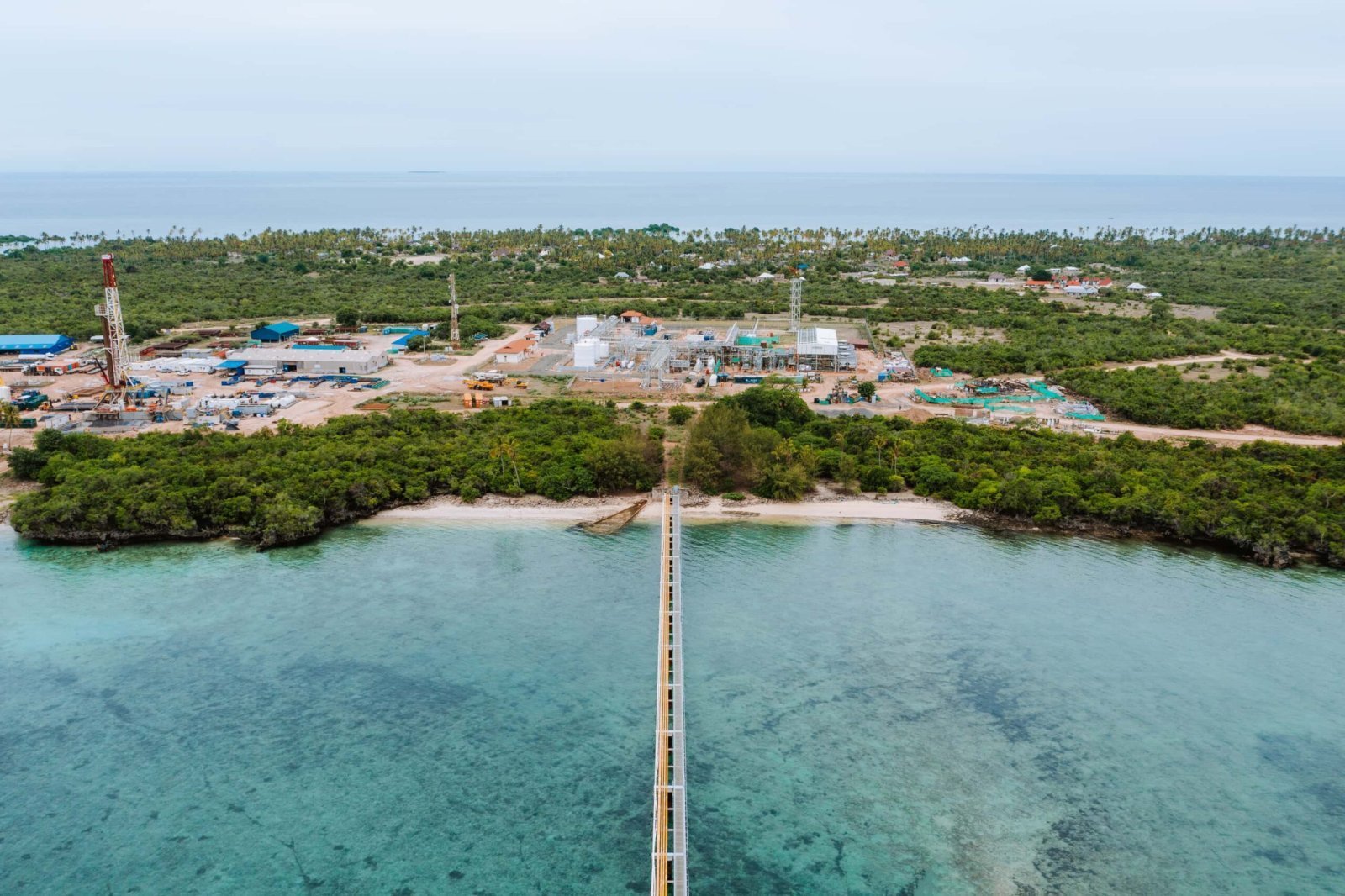
Songo Songo has economic importance because the gas does not remain within the petroleum sector once it leaves the reservoir. Commercial production began in 2004 and the field became one of the foundations of Tanzania’s shift towards domestic natural gas for electricity generation and industrial energy. Gas from Songo Songo is processed on the island and moved through pipeline infrastructure towards Dar es Salaam, where it has supported electricity generation and supplied manufacturers and other industrial consumers. Its economic impact therefore appears in factory energy costs, electricity production and the ability of businesses to substitute domestic natural gas for more expensive imported petroleum products.
Tanzania’s exposure to the field has nevertheless changed materially over the past two decades. Additional production from Mnazi Bay expanded domestic gas supply, the government developed the National Natural Gas Infrastructure through state institutions, and the commissioning of the Julius Nyerere Hydropower Project altered the country’s generation mix by adding a major source of hydroelectric capacity. That diversification means a problem at Songo Songo today does not have the same system wide consequences it might have carried when the field represented a much larger share of available domestic energy infrastructure. Greater hydropower generation has already reduced gas demand from some electricity producers, illustrating how the relative role of Songo Songo changes as new capacity enters the system.
The diversification of supply should not, however, be confused with the disappearance of dependence. Industrial customers connected to natural gas systems cannot necessarily switch fuels without cost, equipment changes or operational disruption, while gas fired generation continues to provide characteristics that differ from hydropower and can support the electricity system when hydrological or demand conditions change. The relevant economic risk is therefore narrower than a national energy shortage but still material: whether the transition can preserve reliable gas supply for customers whose operating models continue to depend on Songo Songo.
The Core Disagreement Is Over Who Captures The Remaining Economics Of The Field
The most consequential information remains undisclosed. PAET has described the commercial and fiscal terms proposed by the Ministry of Energy as uneconomic and unacceptable, but neither Orca nor the Tanzanian government has publicly set out the provisions in enough detail to establish precisely where the disagreement lies. The dispute could involve production sharing, taxation, cost recovery, gas pricing, investment commitments, asset ownership, extension duration or a combination of these issues, but without the underlying terms it would be speculative to assign the disagreement to any particular fiscal instrument or to determine whether PAET’s position reflects an excessive government demand or simply a commercial return below the company’s threshold.
That question becomes more complicated because Songo Songo is a mature producing asset rather than an undeveloped discovery. More than two decades of production change the economics of a field. Reservoir pressure falls, wells may require interventions, processing facilities age and maintaining production can require additional capital even as the remaining recoverable resource declines. An investor evaluating an extension therefore looks not only at the amount of gas expected to remain underground but at the future expenditure required to extract it, the price at which that gas can be sold, the fiscal share taken by government and the length of time available to recover additional investment.
The Tanzanian state approaches the same equation from a different position. The resource belongs to Tanzania, Songo Songo has been producing for more than twenty years, and government has an interest in ensuring that a mature asset continues delivering an appropriate public return through taxes, production sharing, domestic energy supply and other fiscal mechanisms. The resulting negotiation is therefore not simply a confrontation between a government seeking more revenue and a company seeking lower taxes. It is an attempt to determine how the remaining economic value of a mature gas field should be divided while maintaining enough commercial incentive for someone to continue investing in safe and reliable production.
The absence of detailed public terms matters because both sides can make economically plausible arguments. PAET may conclude that future capital commitments and operating liabilities cannot generate an acceptable return under the proposed terms. Government may conclude that extending a licence under the previous fiscal arrangement would surrender too much value from a producing national resource. Until the commercial conditions are disclosed, the public record supports only one firm conclusion: the parties have not agreed on a structure under which PAET considers continued operation commercially viable.
Orca’s Exit Strategy Has Been Narrowing For Years
The October confrontation is the culmination of uncertainty that has been developing well before the final weeks of the licence. PAET had sought an extension of the Development Licence years before expiry, while Orca repeatedly warned investors that there was no certainty over the timing, conditions or outcome of that process. For an upstream operator, this uncertainty directly affects investment decisions because capital committed to wells, processing infrastructure and field maintenance can only be justified if the company expects to operate the asset long enough to recover those costs and earn an acceptable return.
The proposed sale announced in April 2026 should therefore be understood within that broader context. Orca had reached the point where disposing of its Tanzanian business offered an alternative to remaining exposed indefinitely to uncertainty surrounding the licence, operating conditions, regulatory approvals and other liabilities attached to the business. The agreement with Taifa Gas and Amber Energy provided a route through which Orca could leave Tanzania while the local operating company continued under new shareholders, but completion depended on approvals that had still not been obtained when the licence entered its final weeks.
By September, Orca was no longer discussing transition as a remote contingency. Its September 28 announcement explicitly asked TPDC and other stakeholders to advance operational familiarisation and asset mapping because the sale might not be completed before October 10. The company was therefore already preparing Tanzania for the possibility that PAET could stop operating Songo Songo even before the FCC issued its prohibition and before PAET rejected the proposed licence extension.
October has compressed several years of uncertainty into a short operational timetable. The acquisition has been prohibited, the licence terms have been rejected, and PAET has now attached November 29 to its planned withdrawal from operations. What had previously been a question about Orca’s long term presence in Tanzania has therefore become a question about who will be responsible for an operating gas field within weeks.
TPDC And Songas Now Face The Test Of Operating Capacity
The transition puts TPDC and Songas in a position that goes beyond their existing roles as stakeholders in Tanzania’s gas industry. PAET has proposed that the three organisations establish a working group to coordinate the handover, which would require transferring much more than contractual authority. Technical records, maintenance schedules, operating procedures, reservoir data, safety systems, staffing arrangements, processing responsibilities and customer supply obligations all have to remain functional while responsibility moves from one institutional structure to another.
The challenge is compounded by the way Songo Songo infrastructure is organised. Production from the field interacts with processing facilities, pipeline networks, power generators and industrial customers whose operations are governed by different contracts and institutional responsibilities. A successful transition therefore requires coordination across several organisations rather than the replacement of one management team at a single facility. Any weakness in that coordination can appear downstream as lower gas availability, delayed maintenance or uncertainty among customers even if production wells themselves remain technically capable of delivering gas.
For Tanzania, this makes the handover a practical measure of the institutional capacity built during years of increasing state participation in the gas sector. TPDC has expanded its role while the government has invested heavily in publicly controlled gas processing and transportation infrastructure through the National Natural Gas Infrastructure. Those investments have increased national ownership and physical capacity, but infrastructure ownership and operational capability are not identical. The transfer of Songo Songo will test whether the institutional, technical and organisational capacity surrounding that infrastructure has matured enough to absorb responsibilities previously performed by an experienced private operator without reducing reliability.
A successful handover would carry implications beyond Songo Songo itself. Tanzania is attempting to increase domestic participation across extractive industries while preparing for much larger energy investments, including potential liquefied natural gas development. Demonstrating that Tanzanian institutions can assume greater operational responsibility for an existing producing asset would strengthen the case that localisation can extend beyond ownership percentages and procurement into technical control. An unstable transition would expose where further capacity still has to be developed.
Orca Is Now Caught Between A Blocked Sale And A Licence It Does Not Want
The corporate position facing Orca is increasingly unusual. The company entered 2026 with a Tanzanian business approaching the end of its Development Licence and negotiated an agreement to sell that business. The transaction provided a mechanism for Orca to exit while preserving PAET as an operating company under different ownership, but regulatory approval did not arrive before the licence entered its final days. The FCC has now prohibited the merger application, while the alternative route of remaining under an extended licence has produced commercial terms that PAET says it cannot accept.
Orca therefore continues to own the Tanzanian business without having completed its planned exit, while PAET simultaneously prepares to stop performing the operating function that gives that business much of its economic purpose. The company can continue considering its options in relation to the FCC decision, and the licence negotiations could still change, but neither process currently provides a settled long term structure for Songo Songo. This creates uncertainty for Orca shareholders over liabilities and transaction value, but Tanzania’s interest is more immediate because the state has to ensure that unresolved corporate negotiations do not interfere with physical gas production.
The separation between those interests will become more pronounced as November approaches. Orca may spend months resolving the fate of the sale agreement or negotiating its remaining legal and financial exposure in Tanzania, but TPDC, Songas and gas customers cannot wait for the entire corporate dispute to conclude before determining who will operate wells and facilities after PAET leaves. The operational timetable is therefore beginning to outrun the corporate one.
The Outcome Will Be Measured In Gas Supply, Not Corporate Announcements
Several possible outcomes remain available before November 29. The Ministry and PAET could negotiate different commercial terms. The proposed acquisition could be restructured or subjected to further regulatory processes. TPDC and Songas could assume operational responsibility under a transitional arrangement while the ownership issues remain unresolved. Other contractual structures could also emerge as government, Orca and the relevant institutions attempt to avoid disruption.
The common requirement across all of those scenarios is continuity. Songo Songo has spent more than twenty years becoming part of Tanzania’s industrial and electricity infrastructure, and customers will judge the transition through gas availability rather than the legal form eventually adopted by government, Orca or the buyers. An orderly handover would allow Tanzania to change the institutional structure around the field without imposing costs on downstream users. A poorly managed one could convert what is currently a commercial and regulatory disagreement into an operational problem for companies that had no role in negotiating the licence.
The significance of the coming weeks therefore lies in execution. Tanzania has more domestic gas infrastructure, greater state participation and a more diversified electricity system than when Songo Songo began producing in 2004. The transition will show whether those gains have also produced the institutional depth required to absorb a mature gas operation when the longstanding private operator decides that the economics no longer justify remaining.
FAQ
What is happening at the Songo Songo gas field? PanAfrican Energy Tanzania has rejected commercial and fiscal terms proposed by the Ministry of Energy for extending the Songo Songo Development Licence. The company has offered to continue operating temporarily while TPDC and Songas prepare for a possible transition and says it currently intends to cease operating by November 29, 2026.
What happened to the proposed Taifa Gas acquisition? Taifa Gas Tanzania and Amber Energy Investment agreed to acquire Orca Energy’s Tanzanian holding company, with Taifa expected to own 49 percent and Amber 51 percent. Tanzania’s Fair Competition Commission prohibited the merger application on October 5. Orca says the sale agreement has not been terminated and that it is assessing its options.
How is Rostam Aziz connected to Songo Songo? Taifa Gas is associated with Tanzanian businessman Rostam Aziz. The transaction would have expanded the company’s involvement beyond LPG distribution into a business connected directly to upstream natural gas production and the operation of Songo Songo.
Why did PAET reject the licence extension? PAET says the proposed commercial and fiscal conditions are uneconomic and unacceptable. The detailed terms have not been publicly disclosed, so the specific fiscal or commercial provisions responsible for the disagreement cannot yet be independently established.
Could gas production at Songo Songo stop? PAET has offered to continue operating during the transition period, while TPDC and Songas prepare for a possible handover. The principal risk is therefore whether operational responsibilities can be transferred without disrupting production and deliveries to existing customers.
Why is Songo Songo important to Tanzania? Songo Songo has produced natural gas since 2004 and is connected to electricity generation and industrial energy supply. Tanzania has since developed additional gas sources and greater hydropower capacity, but Songo Songo remains embedded in the country’s domestic gas and industrial infrastructure.
 Uchumi360
Business Intelligence
Uchumi360
Business Intelligence
Uchumi360 covers business, investment, and economic policy across East, Central, and Southern Africa.
For the serious reader
You read to the end. That places you in a small group.
Uchumi360 is built for readers who demand precision over speed, structure over sentiment, and analysis that holds uncomfortable conclusions rather than softening them. If this work sharpens how you think about Africa's economy, help us keep building the infrastructure behind it.
Institutional Partners
Commission intelligence. Shape the conversation.
Uchumi360 works with development finance institutions, investment firms, sovereign bodies, and strategic organisations across the coverage region. Institutional partnership unlocks:
- Commissioned sector and country intelligence reports
- Branded research series under your institution's authority
- Exclusive data briefings for internal strategy teams
- Speaking and editorial presence at Uchumi360 events
- Co-published investment outlooks for your markets
Support Our Work
Independent analysis has a cost. Help us bear it.
Uchumi360 does not carry advertising. It does not take editorial direction from sponsors. Every article is produced without commercial compromise. Your contribution funds the reporting, research, and editorial infrastructure that keeps this analysis free from influence.
Secure checkout: One-time and monthly support are processed securely. Add payment credentials to enable checkout here.
Stay Connected
Keep up with every new insight.
Follow our latest analysis, policy coverage, and market intelligence as soon as it is published. If you need something specific, reach out directly and we will point you to the right research.
