
Tanzania Has Built an Energy Surplus for the First Time in Its Modern History. East Africa's Industrial Geography Is About to Shift Around It.
Ready
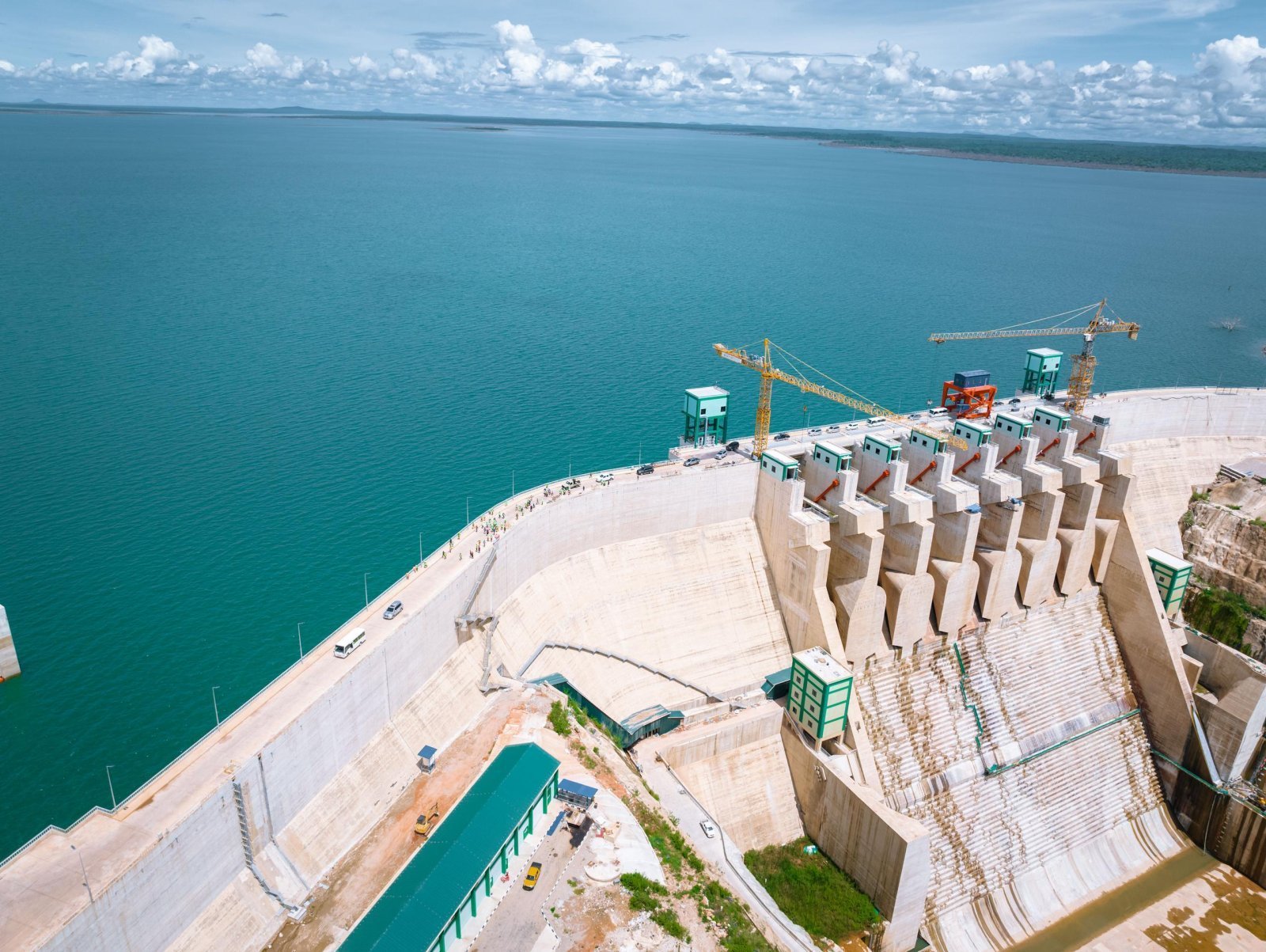
Tanzania's installed electricity generation capacity has crossed approximately 4,000 megawatts following the Julius Nyerere Hydropower Project commissioning and natural gas generation expansion, according to Tanzania Electric Supply Company operational records, creating an energy surplus whose significance for East African industrial geography extends beyond Tanzania's own manufacturing development to reshape the regional competitive landscape for industrial investment. The combination of large-scale natural gas reserves confirmed at 57 trillion cubic feet by Tanzania Petroleum Development Corporation data, rapidly expanding electricity generation, Indian Ocean port access, SGR regional connectivity, critical minerals linked to the energy transition economy, and relative political stability gives Tanzania a structural convergence of industrial enabling conditions that very few regional economies hold simultaneously. This article argues that Tanzania is approaching the threshold of industrial energy anchor status in East and Central Africa, identifies the specific mechanisms through which energy surplus changes manufacturing investment viability, examines the regional competitive landscape to situate Tanzania's energy position against Kenya, Rwanda, Uganda, the DRC, and Zambia, and assesses what deliberate industrial strategy must deliver alongside the energy infrastructure to convert abundance from an impressive numerical achievement into the productive transformation that regional anchor status requires. The most strategically underappreciated development in East Africa's current economic cycle is not a mining deal, a trade agreement, or a startup ecosystem. It is that one of the region's largest economies has quietly crossed the threshold from energy scarcity to energy surplus, and what gets built on that foundation over the next decade will determine which economy shapes the region's industrial centre of gravity.
For decades, East African economies shared a structural limitation whose consequences shaped every manufacturing investment decision across the region: they were trying to industrialise without enough power. Factories struggled with unreliable electricity that increased operating costs and made industrial planning across multi-year investment horizons commercially irrational in an environment where power interruptions of unpredictable frequency and duration made production scheduling impossible and export commitments commercially risky. Manufacturers relied heavily on diesel generators whose capital cost and operational complexity raised the effective threshold for viable industrial investment above the levels that the domestic market could justify for most manufacturing categories. Mining operations built expensive captive power systems that absorbed capital whose industrial diversification application would have generated more compounding economic returns than the self-contained generation systems whose primary function was to protect the mining operation's production economics from the unreliability of the national grid. Industrial expansion remained constrained by unstable grids, low generation capacity, and energy costs too high to support manufacturing competitiveness at the scale that any Vision 2050 equivalent target requires.
That equation is beginning to change. According to Tanzania Electric Supply Company operational records, Tanzania's installed electricity generation capacity has crossed approximately 4,000 megawatts following the commissioning of the Julius Nyerere Hydropower Project and continued expansion in natural gas generation, and peak domestic demand remains significantly below total installed capacity according to Parliamentary Committee oversight records from February 2026 that Uchumi360 documented in its energy coverage. For the first time in modern Tanzanian economic history, generation capacity is beginning to move ahead of immediate domestic demand rather than constantly lagging behind it, and that transition from scarcity management to abundance building changes the development conversation in ways whose regional significance extends well beyond Tanzania's own industrial trajectory. Most discussions around electricity in developing economy contexts focus narrowly on access, measuring success by the share of the population connected to the grid and the share of communities with electricity supply. Industrial economies care about something different: surplus. There is a major difference between an economy that barely produces enough power for current consumption and one that produces enough power to support future industrial expansion aggressively, and Tanzania is beginning to occupy the second category for the first time, creating the industrial energy precondition that its manufacturing ambitions have historically lacked.
Why energy surplus changes the industrial investment equation
The mechanism through which energy surplus transforms manufacturing investment viability is specific enough to deserve precise articulation rather than general assertion, because the analytical case rests on how energy conditions affect the commercial calculations of the investors whose decisions collectively determine whether industrial development materialises or remains aspirational. Industrialisation historically accelerates when energy moves from being a constraint to becoming an advantage, not because manufacturing requires more energy when power is abundant than when it is scarce, but because the risk premium that investors apply to manufacturing operations in energy-constrained environments disappears when the energy constraint is resolved, and that risk premium has historically been among the largest single factors distinguishing manufacturing investment attractiveness between comparable developing economies at similar income levels.
According to the International Energy Agency's Africa Energy Outlook 2022, electricity cost and reliability are consistently identified as top-three location factors for manufacturing investment decisions across African markets, alongside logistics cost and labour productivity. An investor evaluating a manufacturing facility in Tanzania who must price in the operational risk of power interruptions, the capital cost of backup generation, and the production planning constraints that unreliable supply imposes is making a fundamentally different commercial calculation than an investor evaluating the same facility in an energy-surplus environment where industrial power supply is reliable and competitively priced. China's manufacturing industrialisation depended on massive energy expansion before manufacturing demand fully matured, according to National Bureau of Statistics of China data on infrastructure investment sequencing, with the state investing in generation capacity and grid infrastructure ahead of the industrial demand that the infrastructure subsequently attracted rather than waiting for demand to materialise before investing in supply. America's twentieth-century industrial dominance rested heavily on oil and electricity abundance whose availability made energy costs a minor consideration for industrial investment decisions rather than a primary constraint. The Gulf economies' transformation of hydrocarbon wealth into petrochemical, aluminium processing, and energy-intensive manufacturing industries reflected the same logic: cheap and reliable energy changes what becomes economically possible at the scale that industrial transformation requires.
What Tanzania's natural gas position adds to the electricity surplus
Tanzania's energy position is more strategically significant than the electricity generation surplus alone conveys, because the combination of electricity capacity that exceeds immediate demand and natural gas reserves whose domestic industrial applications extend well beyond electricity generation creates an energy foundation whose breadth changes the viability calculations for manufacturing categories that electricity surplus alone would not enable. According to Tanzania Petroleum Development Corporation data, Tanzania holds approximately 57 trillion cubic feet of proven natural gas reserves, placing it among Africa's most significant gas economies and providing the feedstock for industrial chemical production, fertiliser manufacturing, petrochemical processing, industrial heating systems, and gas-fired power generation whose combined effect on manufacturing investment economics is substantially larger than either the electricity surplus or the gas reserves would produce independently.
Natural gas changes fertiliser production economics fundamentally, and fertiliser economics matter for Tanzania's industrial development not only through the direct manufacturing opportunity but through the agricultural productivity improvements whose downstream effects on food security, rural income, and domestic consumer market demand create the purchasing power that sustains the manufacturing investment the agricultural income growth enables. According to the African Fertilizer and Agribusiness Partnership, Africa imports approximately USD 4 billion in nitrogen fertilisers annually at prices that track global commodity markets and that make fertiliser economically inaccessible for large portions of smallholder farming populations. Domestic gas feedstock at the transfer pricing that domestic industrial utilisation policy enables produces urea and ammonia at costs significantly below the import price, simultaneously reducing Tanzania's fertiliser import bill, improving agricultural input affordability, and generating the industrial chemical engineering capability whose adjacent applications extend to petrochemicals and pharmaceuticals. The Mtwara to Dar es Salaam pipeline infrastructure documented in TPDC operational records provides the physical foundation for connecting gas supply to industrial chemical production, making the fertiliser opportunity accessible through infrastructure investment in processing facilities rather than through new pipeline development from zero.
Gas-fired industrial power pricing for manufacturing facilities in designated industrial zones, calibrated to the cost structure of gas-fired generation rather than to the full cost recovery tariff applicable to commercial and residential consumers, creates a second mechanism through which Tanzania's gas position improves manufacturing investment economics. According to IEA industrial competitiveness research, the difference between industrial electricity pricing based on coal or diesel generation and pricing based on natural gas generation can determine manufacturing investment decisions across energy-intensive categories whose competitiveness relative to Chinese, Vietnamese, or Indonesian alternatives depends substantially on energy cost differentials. Tanzania's gas-fired generation capacity, whose expansion the Mtwara infrastructure and the planned LNG domestic utilisation represent, creates the precondition for competitive industrial energy pricing whose impact on manufacturing investment attractiveness complements the electricity surplus from hydropower in ways that together produce a more robust industrial energy foundation than either source provides independently.
The regional competitive landscape and Tanzania's emerging position
East Africa's industrial geography in 2026 reflects a regional competitive landscape whose dynamics the energy surplus fundamentally alters in Tanzania's favour relative to the decade-long equilibrium in which Kenya's financial depth, Rwanda's governance quality, and Ethiopia's industrial park ambition represented the primary competitive positions for manufacturing investment attraction. The regional comparison that Tanzania's energy surplus most directly affects is the comparison with Kenya, whose industrial investment attractiveness relative to Tanzania has historically rested partly on Kenya's more developed infrastructure, deeper financial markets, and stronger private sector institutions, advantages that remain real and whose significance for service sector and financial economy investment is largely unchanged by Tanzania's energy development.
Kenya's industrial electricity cost structure, according to Kenya Power and Lighting Company tariff data, reflects a generation mix that includes significant thermal and fuel oil capacity whose operating cost is higher than hydropower or gas-fired generation at equivalent scale, creating an industrial power pricing environment that has constrained Kenyan manufacturing competitiveness relative to lower-cost regional alternatives. Tanzania's hydropower-dominated generation mix and expanding gas capacity create a structural energy cost advantage for manufacturing investment that Kenya cannot replicate without the generation investment that its resource endowment and infrastructure programme do not currently provide. Rwanda's governance quality and institutional discipline, whose regional recognition is documented in the Rwanda Development Board's Annual Report 2025, create genuine advantages for investment attraction across services, logistics, and light manufacturing, but Rwanda's limited energy resources and small domestic market constrain its industrial anchor potential in the energy-intensive manufacturing categories where Tanzania's energy surplus creates distinctive competitive advantages.
Uganda's energy position is improving through Karuma and Isimba hydropower expansion, according to Uganda Electricity Generation Company operational data, but Uganda's landlocked geography imposes logistics cost premiums that Tanzania's Indian Ocean port access eliminates for export manufacturing whose competitiveness depends on reliable and cost-effective access to global shipping routes. The DRC's energy potential from the Congo River hydroelectric resources represents the largest single undeveloped power generation opportunity in Sub-Saharan Africa, according to IEA data, but the institutional constraints on developing that potential mean that DRC's energy position will not challenge Tanzania's industrial energy anchor ambitions within the planning horizon that Vision 2050 encompasses. Zambia's energy position, primarily hydropower-dependent and vulnerable to the drought conditions that reduced Kariba reservoir levels have imposed on Zambian generation capacity according to Zesco operational reports, reflects a structural energy fragility that Tanzania's diversified generation mix of hydropower and gas avoids.
The SGR, port, and critical minerals integration that creates the anchor
Tanzania's energy surplus achieves its maximum industrial significance when understood within the integrated system of enabling conditions that the SGR logistics corridor, Dar es Salaam port modernisation, and critical minerals pipeline collectively represent rather than as a standalone resource that generates industrial investment attraction independently of the complementary infrastructure investments. According to Standard Chartered Bank's official announcement of 28 April 2026, the USD 2.33 billion SGR financing for Lots 3, 4, and 5 connecting Dar es Salaam to Mwanza restructures logistics economics along the Central Corridor in ways that reduce the transport cost component of manufacturing investment for corridor-adjacent facilities, creating an alignment between energy cost advantage and logistics cost advantage that industrial location economics consistently identifies as the combination that attracts export manufacturing rather than simply the domestic market-oriented production that high transport costs confine to import substitution.
Tanzania's critical minerals pipeline, whose graphite reserves at Mahenge and Epanko, nickel deposits in the lake zone, and helium at Rukwa Uchumi360 documented across its 2026 coverage, connects to the industrial energy anchor argument through the processing investment economics that energy surplus enables. Graphite processing into spherical battery anode material, nickel refining into battery-grade nickel sulphate, and helium purification to semiconductor-grade specifications all require reliable industrial electricity at competitive cost structures that the current generation surplus makes available at terms that competing processing locations in energy-importing economies cannot match without the subsidy instruments that Tanzania's own cost structure does not require. The energy cost advantage for mineral processing compounds the geological endowment advantage in ways that together produce a stronger commercial case for Tanzania as a processing location than either advantage provides independently, and the combined case is stronger still when the SGR logistics corridor reduces the transport cost of moving processed materials to Dar es Salaam port for export.
The industrial park infrastructure at Bagamoyo, the Mkuranga corridor, and the manufacturing zones whose development the Tanzania Investment Centre's project approval records document as advancing should be understood as the spatial expression of the integrated system argument rather than as isolated investment attraction sites. An industrial zone connected to reliable electricity from the national grid, accessible by railway corridor rather than road transport alone, adjacent to port infrastructure capable of handling processed mineral exports and manufactured goods with competitive handling efficiency, and supplied with industrial gas for heating and chemical processing creates the enabling conditions that export manufacturing requires rather than the subset of those conditions that any single infrastructure element alone provides. The integration is what creates the anchor role, because industrial anchors attract the ecosystem of suppliers, logistics operators, technical services, and secondary manufacturers whose presence around the anchor institution generates the industrial complexity that compounding productive capability requires.
What deliberate strategy must add to the energy foundation
Tanzania's energy surplus and the integrated infrastructure system developing alongside it create the enabling conditions for industrial anchor development without guaranteeing it, and the distinction between necessary and sufficient conditions is the most analytically important point for the policy and investment community whose decisions will determine which of the available trajectories the energy foundation supports. Nigeria's hydrocarbon wealth is the most extensively documented African example of energy abundance coexisting with manufacturing underdevelopment, and its persistence across six decades of petroleum revenue despite the scale of the resource and the ambition of the development policy rhetoric that surrounded it confirms that energy abundance without industrial policy coherence, financial system alignment, and institutional quality produces extraction economies rather than productive economies whose sophistication compounds over time.
The industrial policy complement to Tanzania's energy surplus requires the same deliberate alignment of financial instruments, manufacturing protection mechanisms, local content requirements, and export competitiveness benchmarks that Uchumi360's industrial policy analysis series has documented as the distinguishing features of effective versus ineffective industrial strategy across the South Korean, Chinese, Vietnamese, and Indonesian development cases. The Development Bank of Tanzania's industrial lending capacity must expand alongside the energy infrastructure whose development it is designed to complement. The procurement preferences for locally manufactured goods that Tanzania's Public Procurement Act permits must be systematically applied to create the domestic demand anchors that manufacturing investment requires during the early production phase. The export processing zone governance whose efficiency benchmarks must be measured against Vietnam and Indonesia rather than regional peers must be developed to the standard that global manufacturing supply chain participants require before committing production facilities.
Tanzania's energy surplus is the most consequential enabling condition improvement in the East African industrial competitive landscape in a generation. Its significance is not self-realising. It is the foundation on which the industrial strategy, financial system alignment, and institutional quality that Uchumi360's series has consistently identified as the binding complement to physical infrastructure must be built with the urgency that the demographic pressure, the supply chain realignment window, and the regional competitive dynamics that the energy position advantage creates simultaneously demand. East African industrial geography is about to shift. The question is whether Tanzania builds the productive system that converts its energy advantage into the industrial anchor role that the convergence of its geological endowment, logistics infrastructure, and energy position has made more achievable than at any previous point in its modern economic history.
FAQ
What does Tanzania's energy surplus mean in practical terms? According to Tanzania Electric Supply Company operational records, Tanzania's installed electricity generation capacity has crossed approximately 4,000 megawatts, with peak domestic demand remaining significantly below total installed capacity. This means Tanzania is generating more electricity than its current economy immediately requires, creating headroom for industrial expansion without the generation constraint that has historically made manufacturing investment commercially unattractive. For manufacturing investors, energy surplus means industrial power supply that is reliable and competitively priced rather than scarce and expensive, which changes the commercial calculation for factory investment in Tanzania relative to energy-constrained regional alternatives.
How does the natural gas position complement the electricity surplus? According to TPDC data, Tanzania holds approximately 57 trillion cubic feet of proven natural gas reserves. Beyond electricity generation, gas provides industrial feedstock for fertiliser production, petrochemicals, industrial heating, and manufacturing energy that changes the viability of energy-intensive manufacturing categories whose competitiveness depends on energy cost differentials. Domestic gas utilisation for industrial purposes at competitive transfer pricing creates manufacturing cost structures that energy-importing competitors cannot match without subsidy instruments, giving Tanzania a structural energy cost advantage that compounds the electricity surplus's manufacturing investment attraction effect.
Why is Tanzania's energy position significant for the region rather than just domestically? Because industrial investment in manufacturing, processing, and energy-intensive industries distributes itself across regions based on where the enabling conditions, energy reliability, logistics access, and policy consistency converge most completely. East Africa's industrial geography has historically been shaped by Kenya's infrastructure and financial depth advantages. Tanzania's energy surplus combined with the SGR logistics corridor, Dar es Salaam port access, and critical minerals create a convergence of enabling conditions that regional peers cannot match simultaneously, potentially shifting manufacturing investment attraction toward Tanzania as the energy constraint that previously limited its industrial competitiveness relative to Kenya is resolved.
What must Tanzania do beyond building energy infrastructure to become an industrial anchor? According to the industrial policy analysis Uchumi360 has documented across its series, energy surplus is a necessary but not sufficient condition for industrial transformation. The Development Bank of Tanzania's industrial lending capacity must expand to provide long-tenor manufacturing financing. Procurement preferences for locally manufactured goods must be systematically applied under Tanzania's Public Procurement Act. Export processing zone governance efficiency must be benchmarked against Vietnam and Indonesia rather than regional peers. The industrial policy, financial system alignment, and institutional quality that South Korea, Vietnam, and China applied alongside their energy and infrastructure investment are the deliberate strategy components whose absence would allow the energy surplus to improve industrial import distribution rather than industrial production.
How does Tanzania's energy position compare to Kenya and Rwanda specifically? Kenya's industrial electricity pricing reflects a generation mix including significant thermal and fuel oil capacity whose operating costs are higher than Tanzania's hydropower and gas-fired generation, creating a structural energy cost disadvantage for Kenyan manufacturing relative to Tanzania's energy surplus environment. Rwanda's governance quality and institutional discipline create genuine investment attraction advantages for services and light manufacturing, but Rwanda's limited energy resources and small domestic market constrain its industrial anchor potential in energy-intensive manufacturing categories where Tanzania's surplus creates distinctive competitive advantages. Neither Kenya nor Rwanda holds the combination of energy scale, natural gas reserves, port access, SGR logistics, and critical minerals that Tanzania's convergence of enabling conditions represents.
 Uchumi360
Business Intelligence
Uchumi360
Business Intelligence
Tanzania Electric Supply Company, operational records. The 4,000 megawatts installed capacity figure requires verification against TANESCO's most recent operational bulletin before publication. Available at tanesco.co.tz.
Parliamentary Committee oversight records, February 2026. Peak demand versus installed capacity figures cited from Uchumi360's prior energy coverage. Primary source verification against Parliamentary Hansard recommended before publication.
Tanzania Petroleum Development Corporation, natural gas reserve data. Available at tpdc.go.tz.
International Energy Agency, Africa Energy Outlook 2022. Electricity cost and reliability as top-three manufacturing investment location factors. Available at iea.org.
National Bureau of Statistics of China, infrastructure investment sequencing and energy expansion data. Available at stats.gov.cn.
African Fertilizer and Agribusiness Partnership, Africa nitrogen fertiliser import bill data.
Rwanda Development Board, Annual Report 2025. Available at rdb.rw.
Uganda Electricity Generation Company, Karuma and Isimba hydropower operational data. Available at uegcl.co.ug.
Zesco Limited, Kariba reservoir operational reports. Available at zesco.co.zm.
Kenya Power and Lighting Company, industrial tariff structure data. Available at kplc.co.ke.
Standard Chartered Bank, SGR financing announcement, 28 April 2026. Available at sc.com.
Tanzania Investment Centre, industrial park project approval records. Available at tic.go.tz.
Tanzania Public Procurement Act and associated procurement preference regulations. Available at ppra.go.tz.
Uchumi360 covers business, investment, and economic policy across East, Central, and Southern Africa.
For the serious reader
You read to the end. That places you in a small group.
Uchumi360 is built for readers who demand precision over speed, structure over sentiment, and analysis that holds uncomfortable conclusions rather than softening them. If this work sharpens how you think about Africa's economy, help us keep building the infrastructure behind it.
Institutional Partners
Commission intelligence. Shape the conversation.
Uchumi360 works with development finance institutions, investment firms, sovereign bodies, and strategic organisations across the coverage region. Institutional partnership unlocks:
- Commissioned sector and country intelligence reports
- Branded research series under your institution's authority
- Exclusive data briefings for internal strategy teams
- Speaking and editorial presence at Uchumi360 events
- Co-published investment outlooks for your markets
Support Our Work
Independent analysis has a cost. Help us bear it.
Uchumi360 does not carry advertising. It does not take editorial direction from sponsors. Every article is produced without commercial compromise. Your contribution funds the reporting, research, and editorial infrastructure that keeps this analysis free from influence.
Secure checkout: One-time and monthly support are processed securely.
Stay Connected
Keep up with every new insight.
Follow our latest analysis, policy coverage, and market intelligence as soon as it is published. If you need something specific, reach out directly and we will point you to the right research.
