
Tanzania Has Crossed 4,000 Megawatts of Installed Generation Capacity. For the First Time in Its Modern History, Energy Is No Longer the Binding Constraint on Industrialisation.
Ready
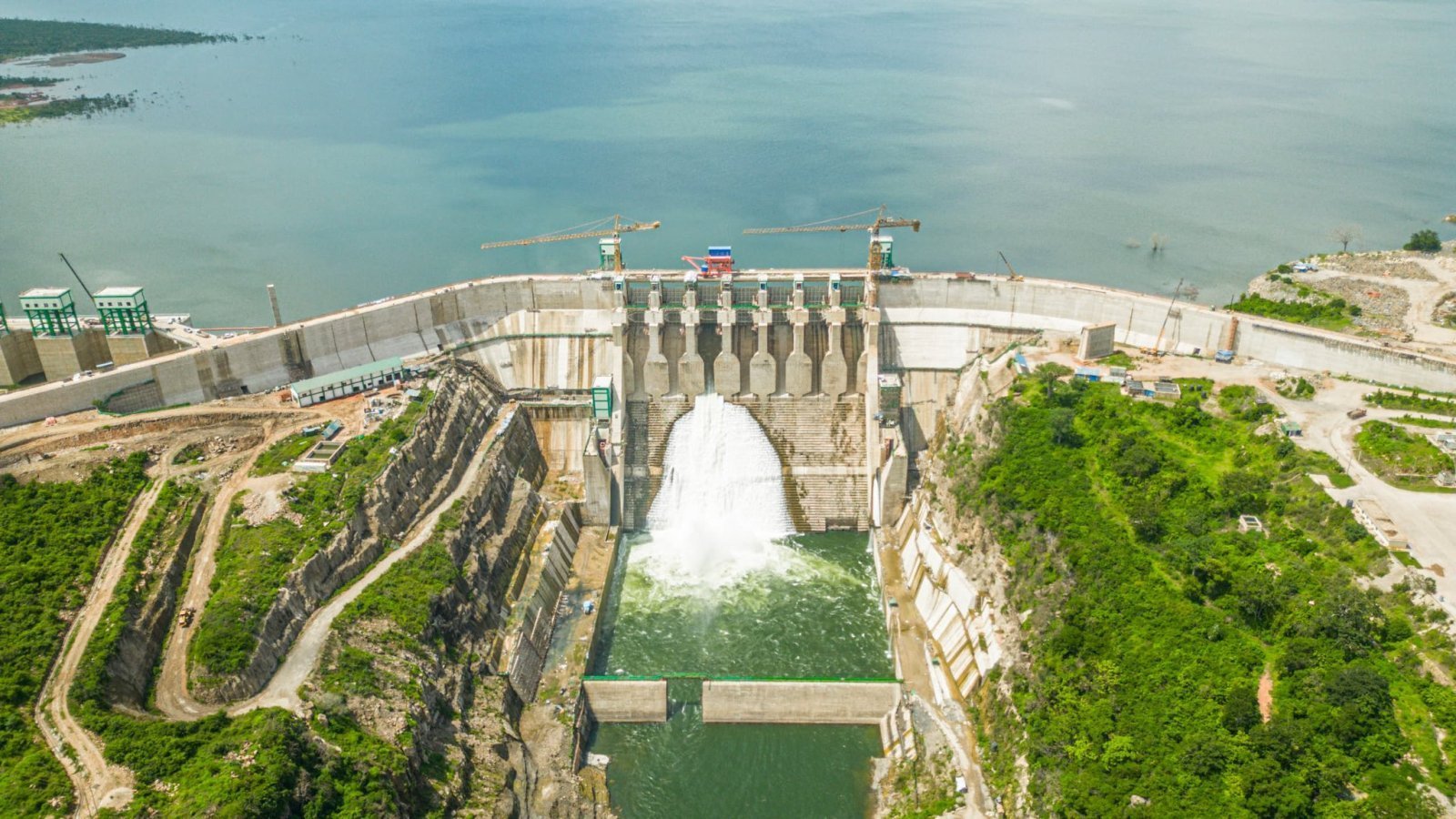
Tanzania's installed electricity generation capacity has crossed approximately 4,000 megawatts, with peak domestic demand remaining significantly below total installed capacity, creating an emerging energy surplus whose industrial significance exceeds its headline number. The Julius Nyerere Hydropower Project alone contributes planned capacity exceeding 2,100 megawatts, according to government energy data, making it among the largest energy infrastructure investments in Sub-Saharan Africa outside South Africa and Ethiopia. Tanzania also holds approximately 57 trillion cubic feet of proven natural gas reserves according to the Tanzania Petroleum Development Corporation, whose domestic industrial applications in fertiliser production, petrochemicals, cement, and steel processing are as strategically significant as the delayed USD 42 billion LNG export project. This article argues that Tanzania is constructing one of East and Central Africa's most strategically important energy foundations, that energy surplus changes the industrial development equation in ways that most public commentary has not fully priced, and that the critical question is not whether Tanzania has solved energy but whether its industrial policy, banking system, and investment framework are aligned to convert energy abundance into productive output before the surplus is absorbed by consumption growth alone. The most important thing to understand about Tanzania's energy surplus is not what it currently powers. It is what it now makes possible for the first time
For most of the past three decades, Tanzania's economic constraints could often be traced back to one variable: insufficient and unreliable energy. Factories could not scale consistently because power interruptions increased operating costs and made industrial planning across multi-year investment horizons commercially irrational. Mining projects depended heavily on expensive captive generation systems whose capital cost and operational complexity raised the threshold for viable investment. Rural industrialisation remained structurally limited. Large-scale manufacturing investment faced uncertainty because electricity supply could not reliably support industrial expansion at the pace required for economic transformation, and the investor calculus consistently reflected that constraint in the form of smaller commitments, shorter payback horizons, and lower capital intensity than Tanzania's natural resource endowment and market position would otherwise justify. That equation is beginning to change, quietly and with far less international attention than the country's railways, ports, or critical minerals, and the significance of that change extends well beyond the sector itself.
According to government energy data and Tanzania Electric Supply Company figures, Tanzania's installed electricity generation capacity has crossed approximately 4,000 megawatts following the commissioning phases of the Julius Nyerere Hydropower Project, expansion in natural gas generation, and continued investment in transmission infrastructure. Peak domestic demand remains significantly below total installed capacity, according to Parliamentary Committee oversight records from February 2026 that Uchumi360 documented in its energy coverage, creating an emerging energy surplus that gives Tanzania something most rapidly growing African economies still lack: room to industrialise without immediately running into power constraints. That distinction matters more than most public discussion currently reflects, because energy sufficiency is the precondition for industrial investment that no amount of tax incentives, special economic zone development, or foreign direct investment promotion can substitute. An investor considering a manufacturing facility with a fifteen-year payback horizon does not respond primarily to incentive frameworks. They respond to the reliability of the power supply that will determine whether their factory operates at planned capacity or at the variable output that characterises power-constrained industrial environments across much of the continent.
Why energy comes first in the industrial sequence
Economic transformation is fundamentally an energy story before it becomes a technology story, a startup story, or even a manufacturing story, and the historical record on this point is consistent enough across different development trajectories that it should be treated as structural rather than coincidental. Britain's industrial revolution was built on coal whose abundance made steam power economically viable at a scale that transformed production economics across textiles, steel, and transportation. America's industrial expansion rested on oil and electrification whose combination powered the factory systems, logistics networks, and consumer goods production that drove GDP growth from the late nineteenth century through the mid-twentieth. According to research published by the Harvard Growth Lab's Economic Complexity Index, energy infrastructure investment precedes manufacturing expansion in every documented case of sustained economic transformation, because factories, logistics systems, mining operations, processing plants, data centres, ports, and railways are ultimately mechanisms for converting energy into productive output, and their economics are fundamentally determined by the cost and reliability of the energy they consume.
China's manufacturing acceleration, which transformed the country from a predominantly agricultural economy into the world's largest manufacturing power across approximately three decades, depended on massive investment in coal, hydropower, and transmission infrastructure that preceded and enabled rather than followed the industrial expansion it supported. According to the National Bureau of Statistics of China, electricity generation capacity expanded by a multiple of ten between 1980 and 2010, providing the energy foundation on which industrial clustering, export manufacturing zones, and supply chain development compounded into the productive complexity that eventually made China globally competitive across hundreds of manufacturing categories. South Korea's industrial acceleration similarly depended on energy infrastructure investment that the government treated as a strategic priority alongside industrial policy, with state-directed financing for power generation preceding and enabling the steel, shipbuilding, and electronics manufacturing expansion that followed. Tanzania is increasingly positioning itself inside that historical sequence, and the positioning is more credible today than at any previous point in its economic history because the energy foundation is being built rather than projected.
The Julius Nyerere Hydropower Project and what it changes
The Julius Nyerere Hydropower Project is the single most significant contributor to Tanzania's energy transformation, and its scale warrants more analytical attention than it typically receives in the development and investment commentary that surrounds the country's broader infrastructure programme. With planned generation capacity exceeding 2,100 megawatts, according to Tanzania Electric Supply Company operational records, the project is among the largest energy infrastructure investments in Sub-Saharan Africa outside South Africa and Ethiopia, a category whose membership reflects the capital intensity and technical complexity of large hydropower development rather than simply its physical scale. Its significance for Tanzania's industrial development trajectory extends beyond the megawatts it adds to the installed base, because hydropower changes the marginal generation economics of the electricity system in ways that thermal and liquid fuel generation cannot replicate at equivalent scale.
Hydropower's marginal cost of generation, once the dam and turbine infrastructure is commissioned and capital cost is being amortised, is among the lowest available from any generation technology, because the fuel, falling water, costs nothing and the operational complexity is substantially lower than thermal plants requiring continuous fuel procurement, combustion management, and emissions handling. Lower marginal generation costs improve industrial competitiveness across every sector that uses electricity as a significant input, which in Tanzania's case includes manufacturing, mining and mineral processing, agro-processing, cold chain logistics, cement production, and the data infrastructure that modern commercial and financial services require. According to the International Energy Agency's analysis of industrial competitiveness across African markets, electricity cost is consistently identified as one of the top three location factors for manufacturing investment decisions, alongside logistics cost and labour productivity, meaning that a genuine reduction in Tanzania's industrial electricity cost translates directly into an improvement in its investment attractiveness relative to regional competitors whose power cost structure has not changed equivalently.
The transmission dimension of the energy transformation is equally important and receives even less analytical attention than generation capacity additions. Generation without transmission delivers power to the points connected to the existing grid and leaves the rest of the economy in the pre-surplus condition. According to TANESCO's infrastructure development programme, transmission expansion toward key industrial corridors including Mkuranga, Chalinze, and the Bagamoyo Special Economic Zone area is being developed alongside generation capacity additions, which is the institutional alignment that prevents the surplus from remaining conceptual rather than becoming operational for the manufacturing and processing investment it is designed to enable.
Natural gas as the industrial energy foundation that the LNG debate obscures
Tanzania's natural gas dimension has been dominated in public and investor discourse by the delayed USD 42 billion LNG export project involving Equinor, ExxonMobil, and Shell, whose negotiations Uchumi360 documented in detail in its analysis of Tanzania's energy transition, and that dominance of the export narrative has systematically underweighted the domestic industrial significance of Tanzania's gas position. According to the Tanzania Petroleum Development Corporation, Tanzania holds approximately 57 trillion cubic feet of proven natural gas reserves, a figure that places the country among Africa's most significant gas economies and that represents an energy resource whose domestic industrial applications are as strategically consequential as its export potential.
Gas-fired generation has already transformed Tanzania's electricity mix over the past decade, reducing dependence on imported liquid fuels whose cost and supply reliability made them structurally unsuitable as the primary generation feedstock for an industrialising economy, while supporting grid stability in ways that single-source generation systems cannot achieve. According to TPDC operational data, gas from the Mnazi Bay and Kiliwani North fields has been supplying the national grid through the Mtwara to Dar es Salaam pipeline, whose construction represented Tanzania's first large-scale domestic gas utilisation infrastructure and whose expansion creates the physical basis for the broader industrial gas applications that the country's development trajectory requires. Industrial gas usage beyond electricity generation creates strategic opportunities in fertiliser production, whose domestic availability would transform the economics of Tanzania's agricultural sector by reducing the import dependency that currently makes fertiliser unaffordable for many smallholder farmers. Petrochemicals, cement manufacturing, ceramics, steel processing, and industrial heating systems all improve their economic viability dramatically when domestic energy inputs become available at scale and at predictable cost structures rather than at the import-price volatility that liquid fuel dependence introduces.
Energy surplus changes investor psychology in ways that policy cannot replicate
The investor psychology dimension of Tanzania's energy transformation is the least discussed but most commercially consequential aspect of what the surplus means for the country's industrial development trajectory. Manufacturing investors evaluating long-term industrial deployment look first at electricity reliability and cost structure before almost every other variable, including tax incentives, land availability, and labour costs, because the other variables can be optimised within a project's financial model while energy reliability determines whether the project's operational assumptions are achievable at all. A manufacturing facility whose planned output is based on eighteen-hour production days cannot produce at that level in an environment where power interruptions force production shutdowns of unpredictable frequency and duration, and the financial model that justified the investment in a reliable power environment becomes unviable in a constrained one.
According to the World Bank's Doing Business indicators and the Tanzania National Business Council's investment climate surveys, energy reliability has consistently ranked among the top constraints cited by both domestic and foreign manufacturers operating in Tanzania, a consistency that reflects structural reality rather than anecdotal complaint. When that constraint changes, as Tanzania's energy surplus position suggests it is beginning to change, the investment calculus for a manufacturing plant, a mineral processing facility, a cold chain logistics operation, or a data centre changes simultaneously, because the risk premium that investors applied to account for energy unreliability reduces in proportion to the evidence that the surplus is genuine, sustained, and accessible to industrial users rather than simply visible in headline capacity figures.
Mining companies assess power availability before scaling processing facilities, and Tanzania's mineral processing opportunity, which Uchumi360 documented in its coverage of the Southern Rukwa Helium Project and the country's broader critical minerals pipeline, depends on energy sufficiency in exactly this way. Processing helium, graphite, nickel, and the other critical minerals whose exploration is advancing across Tanzania's geology requires electricity at industrial reliability standards that captive generation can provide expensively and grid power can provide cheaply, and the economics of domestic processing versus raw export are determined in large part by the cost differential between those two energy supply options. Tanzania's emerging energy surplus reduces that differential in favour of domestic processing, which is precisely the policy outcome that the country's natural resource governance strategy should be designed to exploit.
The regional energy map and Tanzania's emerging position
East Africa's energy map is changing rapidly, and Tanzania is increasingly emerging as one of its most strategically positioned states within a regional context where energy access and cost continue to constrain industrial development across most of the coverage geography. Ethiopia possesses large generation capacity through its Grand Ethiopian Renaissance Dam and other hydropower investments, giving it a generation base that has transformed its electricity economics and enabled the industrial park strategy whose Hawassa and successor facilities have attracted manufacturing investment at a scale no other East African economy has replicated. But Ethiopia faces geographic limitations around export logistics and political economy instability that have disrupted its industrial integration programme in ways that Tanzania's more stable environment does not currently face. According to the International Energy Agency's Africa Energy Outlook 2022, Kenya maintains relatively sophisticated energy markets with higher renewable penetration than most regional peers, but still faces high industrial power costs that constrain its manufacturing competitiveness relative to its labour cost and logistics position. Uganda's energy position is improving but remains constrained by transmission infrastructure and industrial scale limitations that have prevented the country's hydropower potential from translating into broad industrial energy access.
Tanzania combines several advantages simultaneously that no other single East African economy currently holds at equivalent scale: gas reserves whose domestic industrial applications complement hydropower generation, coastal access that reduces logistics costs for both import inputs and export outputs, strategic position at the Central Corridor's origin point, critical minerals whose processing requires the industrial energy that the surplus makes available, and growing domestic demand within a population projected to exceed 100 million within the next two decades according to United Nations Population Division data. That combination creates what development economists describe as industrial gravity, the self-reinforcing attraction of related industrial investment that occurs when energy, logistics, resources, and market access align in a single geography at sufficient scale to make clustering economically rational for manufacturers and processors seeking regional production bases.
The conversion challenge that energy surplus alone cannot solve
Tanzania's energy transformation creates opportunity rather than guaranteeing outcome, and the distinction between those two things is the most important analytical contribution that the country's development trajectory currently requires. Nigeria has possessed enormous hydrocarbon resources for six decades without translating them into broad industrial competitiveness, as Uchumi360 documented in its analysis of the oil system template that Africa's critical minerals strategy risks repeating, demonstrating that resource abundance without industrial strategy produces extraction economies rather than productive economies whose sophistication compounds over time. Resource or energy abundance without the industrial policy, financial system depth, and institutional quality required to convert it into productive manufacturing creates the conditions for higher consumption rather than higher production, which is a materially different development outcome whose fiscal consequences compound negatively rather than positively across the multi-decade horizon that industrial transformation requires.
The banking system must evolve in parallel with the energy foundation, because industrial economies require long-tenor capital capable of financing factories, machinery, and industrial expansion across multi-decade horizons that trade financing alone cannot support. According to the Bank of Tanzania's Financial Sector Surveillance Report 2023, credit to the private sector as a percentage of GDP remains structurally below the levels that East Asian economies maintained during their industrial acceleration phases, constrained by collateral requirements, documentation burdens, and risk pricing models that reflect the shorter payback horizons of commercial and trading activity rather than the longer investment cycles of manufacturing and processing. The Development Bank of Tanzania and the Tanzania Agricultural Development Bank both have institutional mandates that include industrial financing, but neither has deployed capital at the scale or tenor that an industrialising economy's manufacturing sector requires, and the energy surplus's conversion into industrial output depends on closing that financing gap in parallel with the energy gap that is already closing.
Industrial parks, manufacturing zones, mineral processing facilities, fertiliser production, steel capacity, cold chain infrastructure, and export-oriented production systems capable of converting cheap and reliable electricity into productive output at scale require policy alignment, financing availability, logistics infrastructure, and technical skills simultaneously. Tanzania's Special Economic Zone programme, whose development Uchumi360 documented in its April 2026 analysis of the Bagamoyo industrial corridor, provides the spatial framework for that alignment, but the conversion rate from approved investment to active production in Tanzania's SEZ programme remains below targets according to Tanzania Investment Centre data, reflecting the gap between energy availability as a necessary condition and the full complement of enabling conditions whose simultaneous presence is required for industrial clustering to occur.
Transmission losses remain significant across parts of Tanzania's grid. Rural energy quality varies widely enough that rural industrialisation, which would distribute the manufacturing employment that Vision 2050 requires across the country's geography rather than concentrating it in coastal and periurban zones, remains constrained in ways that urban and peri-urban industrial development does not face to the same degree. Manufacturing's contribution to GDP remains below the 20 to 30% that Tanzania's Vision 2050 target implies, according to Bank of Tanzania economic data, and the trajectory of change in that share is still slower than the energy foundation's improvement would allow if the complementary conditions were in place.
But the direction of movement matters as much as the current position, and the direction is increasingly clear. For decades, Tanzania's economic ambition consistently exceeded the infrastructure foundation required to support it, creating a persistent gap between investment aspiration and operational reality that energy unreliability made structural rather than incidental. That imbalance is beginning to narrow. The country is building the energy architecture that industrialisation at scale requires, and it is doing so through a combination of hydropower development, gas infrastructure, and transmission expansion whose integration creates a more robust and flexible energy system than any single generation source would provide independently. Economies rarely transform because of what trends on social media or what gets announced at startup conferences. They transform because they solve energy first, and Tanzania is beginning to do exactly that.
FAQ
How significant is Tanzania's energy capacity milestone? According to government energy data and TANESCO figures, Tanzania's installed electricity generation capacity has crossed approximately 4,000 megawatts, with peak domestic demand remaining significantly below total installed capacity. This is the first time in Tanzania's modern economic history that installed generation has exceeded domestic peak demand at this scale, creating an energy surplus that gives the country room to industrialise without immediately running into power constraints, a condition that most rapidly growing African economies have not yet achieved.
What is the Julius Nyerere Hydropower Project and why does it matter? According to TANESCO operational records, the Julius Nyerere Hydropower Project has planned generation capacity exceeding 2,100 megawatts, making it among the largest energy infrastructure investments in Sub-Saharan Africa outside South Africa and Ethiopia. Its significance extends beyond its capacity contribution because hydropower changes marginal generation economics, reducing the cost of each additional unit of electricity produced once the infrastructure is commissioned and capital cost is being amortised, which improves industrial competitiveness across manufacturing, mining, agro-processing, and cold chain logistics.
How does Tanzania's natural gas position connect to its industrial development? According to the Tanzania Petroleum Development Corporation, Tanzania holds approximately 57 trillion cubic feet of proven natural gas reserves. Domestic gas applications beyond electricity generation include fertiliser production, petrochemicals, cement manufacturing, ceramics, steel processing, and industrial heating systems whose economics improve significantly when domestic energy inputs are available at predictable cost. The Mtwara to Dar es Salaam pipeline provides the physical infrastructure for domestic gas utilisation, and its expansion creates the basis for industrial gas applications that complement the electricity generation from hydropower.
How does Tanzania's energy position compare to other East African economies? According to the IEA's Africa Energy Outlook 2022, Kenya has sophisticated energy markets but high industrial power costs that constrain manufacturing competitiveness. Ethiopia has large hydropower generation but faces geographic logistics limitations and political economy instability. Uganda's energy position is improving but constrained by transmission infrastructure. Tanzania combines gas reserves, hydropower expansion, coastal access, strategic corridor positioning, critical minerals, and growing domestic demand in a combination that no single regional peer currently holds at equivalent scale, creating an industrial gravity whose realisation depends on complementary policy, financing, and institutional alignment.
What must happen for Tanzania to convert energy surplus into industrial transformation? Three parallel developments are required. The banking system must evolve to provide long-tenor industrial financing at the scale and payback horizons that manufacturing investment requires, rather than the shorter commercial and trade financing cycles that currently dominate credit allocation. Industrial parks and special economic zones must accelerate their conversion rate from approved investment to active production, addressing the regulatory, logistics, and skills constraints that have kept that rate below targets according to Tanzania Investment Centre data. And manufacturing zones must be connected to the transmission infrastructure that makes the energy surplus operationally accessible rather than nominally available, with the Mkuranga, Chalinze, and Bagamoyo corridor transmission investments being the most immediately consequential for the industrial clustering that the energy foundation enables.
 Uchumi360
Business Intelligence
Uchumi360
Business Intelligence
Tanzania Electric Supply Company, operational records. Available at tanesco.co.tz.
Parliamentary Committee oversight records, February 2026. Peak demand versus installed capacity figures cited from Uchumi360's prior energy coverage.
Tanzania Petroleum Development Corporation, gas reserve and pipeline operational data. The 57 trillion cubic feet proven reserve figure requires confirmation against TPDC's most recent reserve certification. Available at tpdc.go.tz.
Bank of Tanzania, Financial Sector Surveillance Report 2023. Private sector credit to GDP data. Available at bot.go.tz.
Tanzania Investment Centre, SEZ conversion rate data. Available at tic.go.tz. Specific figures require verification against TIC most recent annual report before publication.
International Energy Agency, Africa Energy Outlook 2022. Kenya industrial power costs and regional energy comparison. Available at iea.org.
International Energy Agency, analysis of industrial competitiveness and electricity cost as location factor.
Harvard Growth Lab, Economic Complexity Index. Energy infrastructure preceding manufacturing expansion in development cases. Available at growthlab.hks.harvard.edu.
National Bureau of Statistics of China, electricity generation capacity data across the reform period. Available at stats.gov.cn.
United Nations Population Division, Tanzania population projections. Available at population.un.org.
World Bank, Doing Business indicators and energy reliability data. Available at worldbank.org.
Tanzania National Business Council, investment climate surveys. Energy reliability as top constraint citation.
Uchumi360 covers business, investment, and economic policy across East, Central, and Southern Africa.
For the serious reader
You read to the end. That places you in a small group.
Uchumi360 is built for readers who demand precision over speed, structure over sentiment, and analysis that holds uncomfortable conclusions rather than softening them. If this work sharpens how you think about Africa's economy, help us keep building the infrastructure behind it.
Institutional Partners
Commission intelligence. Shape the conversation.
Uchumi360 works with development finance institutions, investment firms, sovereign bodies, and strategic organisations across the coverage region. Institutional partnership unlocks:
- Commissioned sector and country intelligence reports
- Branded research series under your institution's authority
- Exclusive data briefings for internal strategy teams
- Speaking and editorial presence at Uchumi360 events
- Co-published investment outlooks for your markets
Support Our Work
Independent analysis has a cost. Help us bear it.
Uchumi360 does not carry advertising. It does not take editorial direction from sponsors. Every article is produced without commercial compromise. Your contribution funds the reporting, research, and editorial infrastructure that keeps this analysis free from influence.
Secure checkout: One-time and monthly support are processed securely.
Stay Connected
Keep up with every new insight.
Follow our latest analysis, policy coverage, and market intelligence as soon as it is published. If you need something specific, reach out directly and we will point you to the right research.
