
Tanzania Signs Sh198.67 Billion and Sh63.19 Billion Power Contracts in September 2026
Ready
Tanzania signed two major electricity transmission contracts within eight days of each other in September 2026: a Sh198.67 billion, 18-month deal with China's TBEA Company to build a 220kV line from Iganjo in Mbeya to Saza in Songwe, and a separate Sh63.19 billion contract with Cotech Engineering Company for a dedicated line connecting Geita Gold Mine to the grid. Neither project exists in isolation. The Iganjo-Saza line draws power from a substation that is itself part of the much larger Tanzania-Zambia Transmission Interconnector, already 89.46% complete and targeting cross-border electricity trade by February 2027. Together, the contracts mark a shift in how Tanzania is building electricity infrastructure: not simply adding generation capacity, but building the specific transmission lines that connect that power to the mines, farms and factories expected to actually consume it.
DODOMA — Tanzania signed two significant electricity transmission contracts within eight days of each other in September 2026, both aimed less at generating more power than at actually delivering the power Tanzania already has to the specific mines and regions where economic activity is expanding fastest.
What Did TANESCO Actually Sign, and When?
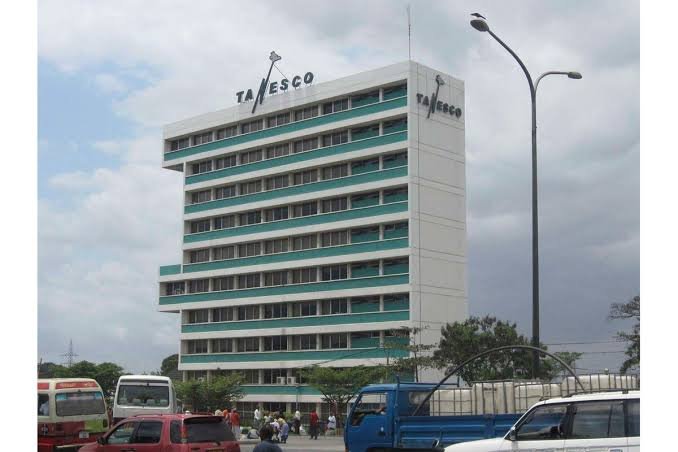
On 3 September 2026, in Dodoma, TANESCO signed a Sh63.19 billion contract with Cotech Engineering Company for a 6.65-kilometre, 220kV high-voltage transmission line and new substation connecting Mpomvu to Geita Gold Mine (GGM). Deputy Minister for Energy Salome Makamba, who witnessed the signing, said reliable electricity was increasingly important as Tanzania seeks to attract more investment in mining and mineral processing, while TANESCO Board Vice-Chairperson Ambassador Zuhura Bundala described the deal as "a strategic step towards building Tanesco's capacity to meet customer demand and unlock investment and employment opportunities."
Eight days later, on Friday, 11 September 2026, at Saza village in Songwe District, TANESCO signed a considerably larger Sh198.67 billion contract with Chinese contractor TBEA Company for an 18-month project building a 220kV transmission line from Iganjo in Mbeya Region to Saza in Songwe Region, alongside a new Saza Power Receiving and Cooling Substation. Makamba again witnessed the signing, framing the project as designed to permanently eliminate persistent electricity shortages across the mineral-rich Songwe and Chunya districts, while Tanzania's Parliamentary Standing Committee on Energy and Minerals formally backed the project the same day, with committee chairperson Subira Mgalu calling reliable electricity "critical to expanding mining, agriculture and business activities in Mbeya and Songwe."
Why Does Geita Gold Mine Need a Dedicated Power Line?
Geita Gold Mine's electricity demand is expected to more than double, making a dedicated connection an industrial necessity rather than a general grid upgrade. TANESCO described GGM as one of its major customers and revenue contributors, and the new line is specifically designed to strengthen supply to the mine while freeing up existing infrastructure to serve surrounding communities and other economic activity in Geita, rather than having the mine and nearby residents compete for capacity on the same shared lines. That distinction matters for how Tanzania is now approaching electricity investment more broadly: rather than treating transmission as a uniform grid expansion exercise, TANESCO is increasingly building specific lines sized and routed around specific, named industrial consumers whose demand is already known and quantified.
How Does the Iganjo-Saza Line Connect to a Much Bigger Regional Project?
This is the piece of context easiest to miss if the Iganjo-Saza contract is read purely as a local Mbeya-Songwe story. The project draws its power from the existing Iganjo substation, and that substation is itself part of the much larger Tanzania-Zambia Transmission Interconnector Project, known as TAZA, a 400kV transmission line running 616 kilometres on the Tanzanian side alone, connecting Iringa, Kisada, Iganjo, Tunduma and Sumbawanga. TAZA was 89.46% complete as of September 2026, with completion targeted for February 2027, ahead of the Iganjo-Saza project's own 18-month timeline. Makamba was explicit about the relationship, telling residents at the signing that they should recognise the Iganjo-Saza line's alignment with TAZA, describing the interconnector as "a cornerstone of national plans to strengthen power infrastructure and promote cross-border electricity trade across East and Southern Africa."
That framing matters because it places a seemingly local transmission contract inside Tanzania's much larger ambition to become an electricity exporter and regional trading hub, not simply a domestic grid operator. Once TAZA is complete, Tanzania gains a direct high-voltage link toward Zambia and, by extension, into the wider Southern African Power Pool, the same kind of cross-border electricity trade architecture this publication has covered in the context of the DRC's Grand Inga hydropower ambitions and East Africa's broader power pool integration.
What's TANESCO Doing About Electricity Shortages While the 18-Month Project Is Built?
Tanzania isn't asking Songwe and Chunya residents to simply wait 18 months for relief. TANESCO Deputy Managing Director for Planning, Research and Investment, Amos Joas, explained that Chunya and Songwe districts, particularly around Mkwajuni, currently rely on an inadequate 33kV line extending from Mbeya over a long distance, and a separate interim project, a new 33kV transmission line from Mwakibete in Mbeya toward Songwe, is expected to be completed by the end of September 2026, well ahead of the larger Iganjo-Saza line's 18-month build. Committee chairperson Mgalu nonetheless urged the Ministry to keep improving electricity reliability in Songwe before the larger project is finished, acknowledging that residents, businesses and miners will still need to rely on interim measures during construction.
Makamba also highlighted a deliberate local-capacity decision embedded in the Iganjo-Saza contract: TANESCO appointed its own internal engineering consultancy unit, TANECU, as the project's technical consultant rather than an external firm, a choice she said would help strengthen domestic expertise in implementing major strategic electricity projects going forward, rather than leaving that technical knowledge permanently outsourced.
How Does This Connect to Tanzania's Ntorya Gas Project?
Tanzania's electricity investments are unfolding alongside a parallel push to expand domestic natural gas production. The Ntorya gas project, located in the Ruvuma licence area and operated by ARA Petroleum Tanzania with London-listed Aminex as a minority partner through its subsidiary Ndovu Resources, is approaching its revised production start after a dispute between the two partners was resolved through Tanzanian government mediation. Following a 26 August 2026 meeting convened by the Ministry of Energy, the parties agreed a schedule targeting first gas from Ntorya's initial wells in December 2026, at an initial rate of 40 to 60 million cubic feet per day, with a later phase expected to raise production to approximately 140 million cubic feet per day. A 35-kilometre pipeline is being developed to connect Ntorya to the existing Madimba gas processing facility, allowing the new supply to enter Tanzania's domestic gas network directly.
That gas expansion connects to the electricity story in a straightforward way: more domestic gas production strengthens Tanzania's ability to supply gas-fired power generation and industrial users directly, while the new transmission infrastructure represented by the Iganjo-Saza and Geita lines provides the network through which that additional electricity, whatever its generation source, actually reaches mines and industrial centres. Neither investment fully delivers its intended value without the other.
Why Does This Represent a Shift in How Tanzania Builds Energy Infrastructure?
The significance here extends beyond the two individual contracts. Tanzania is simultaneously building several distinct pieces of the infrastructure required to convert its natural resources into domestic economic activity: gas fields need pipelines and processing facilities, power generation needs transmission networks to actually move electricity to where it's needed, mines need reliable and adequately sized electricity connections, and industrial plants need both power and gas simultaneously available before they can commit to processing investments rather than exporting raw materials.
That's particularly relevant as Tanzania pushes to expand mineral processing and manufacturing rather than relying primarily on exporting unprocessed resources, a strategy this publication has covered extensively in the context of Tanzania's Mchuchuma-Liganga steel project and its broader industrialisation ambitions. Processing minerals and operating industrial facilities generally consume far more electricity than simply extracting and shipping raw commodities, which means the transmission capacity connecting a mine like Geita to reliable power is, in a real sense, a prerequisite for that mine ever moving up its own value chain rather than an optional infrastructure upgrade.
What Does This Mean for Tanzania's Broader Energy Strategy Going Forward?
Tanzania's energy strategy is entering a more demanding phase precisely because adding generation capacity, however impressive on its own, doesn't automatically translate into industrial output without the transmission and distribution infrastructure to actually deliver that power. The emerging model looks considerably more integrated than Tanzania's historical approach: gas production connected directly to processing infrastructure, electricity investment targeted specifically at named mines and industrial centres rather than distributed as generic grid expansion, and transmission networks like TAZA being built explicitly to enable cross-border electricity trade rather than serving domestic demand alone.
Tanzania is no longer simply building more energy capacity in the abstract. It's building the specific infrastructure that allows that energy to actually become industrial production, mine by mine, region by region, and increasingly, corridor by cross-border corridor.
FAQ
What did TANESCO actually sign in September 2026? Two separate contracts: a Sh63.19 billion deal with Cotech Engineering Company on 3 September for a dedicated transmission line to Geita Gold Mine, and a Sh198.67 billion deal with China's TBEA Company on 11 September for a 220kV line from Iganjo in Mbeya to Saza in Songwe.
Why does Geita Gold Mine need its own dedicated power line? The mine's electricity demand is expected to more than double, and the new connection is designed to meet that specific industrial demand while also freeing up existing shared infrastructure to better serve surrounding communities.
How is the Iganjo-Saza project connected to Zambia? The line draws power from the Iganjo substation, which is part of the larger Tanzania-Zambia Transmission Interconnector (TAZA), a 616-kilometre, 400kV line on Tanzania's side that was 89.46% complete as of September 2026 and is targeted for completion by February 2027 to enable cross-border electricity trade.
Will Songwe and Mbeya residents have to wait 18 months for any relief? Not entirely. An interim 33kV transmission line from Mwakibete in Mbeya toward Songwe is expected to be completed by the end of September 2026, well before the larger Iganjo-Saza project is finished.
How does this connect to Tanzania's Ntorya gas project? Ntorya's revised schedule, agreed in August 2026, targets first gas in December 2026, feeding into Tanzania's existing gas infrastructure via a 35-kilometre pipeline to Madimba. That additional gas supply can support gas-fired power generation, while the new transmission lines carry that electricity to mines and industrial centres.
Why is Tanzania building transmission infrastructure around specific mines rather than just expanding the general grid? Because electricity is one of the largest operating costs for large-scale mineral production, and reliable, adequately sized supply can determine whether a mine expands production and invests in local processing, or remains dependent on more expensive and less reliable alternatives.
 Uchumi360
Business Intelligence
Uchumi360
Business Intelligence
Uchumi360 covers business, investment, and economic policy across East, Central, and Southern Africa.
For the serious reader
You read to the end. That places you in a small group.
Uchumi360 is built for readers who demand precision over speed, structure over sentiment, and analysis that holds uncomfortable conclusions rather than softening them. If this work sharpens how you think about Africa's economy, help us keep building the infrastructure behind it.
Institutional Partners
Commission intelligence. Shape the conversation.
Uchumi360 works with development finance institutions, investment firms, sovereign bodies, and strategic organisations across the coverage region. Institutional partnership unlocks:
- Commissioned sector and country intelligence reports
- Branded research series under your institution's authority
- Exclusive data briefings for internal strategy teams
- Speaking and editorial presence at Uchumi360 events
- Co-published investment outlooks for your markets
Support Our Work
Independent analysis has a cost. Help us bear it.
Uchumi360 does not carry advertising. It does not take editorial direction from sponsors. Every article is produced without commercial compromise. Your contribution funds the reporting, research, and editorial infrastructure that keeps this analysis free from influence.
Secure checkout: One-time and monthly support are processed securely. Add payment credentials to enable checkout here.
Stay Connected
Keep up with every new insight.
Follow our latest analysis, policy coverage, and market intelligence as soon as it is published. If you need something specific, reach out directly and we will point you to the right research.
