
Tanzania’s Solar Market Is Growing Faster Than Official Data Can See
Ready
Tanzania may be installing more solar than official statistics capture while simultaneously emerging as a solar panel manufacturing location. Ember’s latest Africa solar report shows how distributed generation, manufacturing and changing global trade could reshape Tanzania’s electricity market.
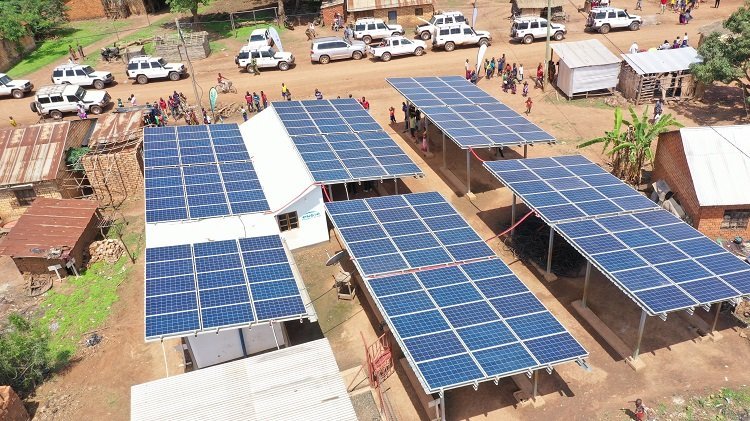
Tanzania may be undergoing a much larger solar expansion than official electricity statistics currently capture. A new report by Ember and the African Tech Futures Lab estimates that distributed solar is driving most of Africa’s recent solar growth, and Tanzania is one of the few countries on the continent that already publishes solar capacity data on a monthly or quarterly basis. Even so, the report suggests that official figures still understate what is happening outside the utility system. Rooftop installations, commercial systems and other customer side solar assets are expanding faster than conventional power statistics can follow, creating a second electricity system that sits alongside TANESCO’s grid and is financed largely by businesses and households rather than government procurement. The Tanzania story is especially important because the country now appears on both sides of Africa’s solar transition. It is not only consuming more solar equipment. It is also emerging as a manufacturing location. Ember estimates that African solar panel manufacturing could rise from around 800 MW in 2025 to about 3.5 GW in 2026, led by new production in Egypt and Tanzania. The report estimates Tanzania could produce around 500 MW of panels this year, although it repeatedly warns that the figure is uncertain because reliable production data are scarce. A plant at Kwala in Kibaha is reported to be operational, with a first phase valued at around $300 million, but neither its confirmed annual output nor precise start date is publicly available.
Tanzania therefore faces a more interesting energy question than whether solar is growing. The evidence suggests it is. The harder question is whether the country can turn that growth into lower electricity costs, stronger energy security, industrial production and better grid planning rather than simply allowing thousands of uncoordinated private systems to expand around weaknesses in the existing electricity network.
How Much Solar Is Tanzania Actually Installing?
The report does not provide a single definitive 2026 Tanzania installation figure that should be treated as an official national number. Its broader finding is that solar installations are rising across almost every African market, with 36 of 54 countries expected to install record amounts of solar in 2026. Tanzania appears among the countries experiencing continued growth, but the most important finding for Tanzania is methodological: actual installations may be materially higher than the official figures because distributed systems are difficult to count.
Ember estimates that Africa installed 26 GW of solar between 2023 and 2025 and that roughly 20 GW, about three quarters, was probably distributed solar. Utility scale projects account for only a minority of the increase, while off grid installations explain relatively little of the remaining gap. Much of the missing capacity therefore appears to be grid connected, customer side solar installed on commercial premises, factories, institutions and rooftops.
This matters for Tanzania because official electricity statistics are much better at counting a large solar farm connected to the transmission system than hundreds or thousands of smaller systems installed by businesses. A factory that places solar panels on its roof can reduce electricity purchases from TANESCO without adding a visible new power station to the national generation register. As those decisions accumulate, electricity demand observed by the utility begins to diverge from the actual amount of electricity being consumed in the economy.
Tanzania may therefore be generating more solar electricity than its conventional power statistics suggest, even though it already performs better than most African countries in publishing solar data.
Why Are Tanzanian Businesses Turning to Solar?
The report finds that commercial and industrial users are the principal drivers of distributed solar across Africa. In many markets, they account for at least 80% of distributed capacity because their daytime electricity demand aligns closely with solar generation and because the investment economics can be attractive, with estimated payback periods sometimes between two and five years.
Tanzania shares many of the conditions that make this model economically attractive. Businesses care about electricity tariffs, reliability and the cost of interruptions. A manufacturer or hotel does not evaluate solar only as a climate investment. It compares the upfront capital cost with years of electricity purchases, backup generation and production losses when supply is interrupted.
Falling global panel prices have lowered that threshold. China’s manufacturing expansion pushed module prices down sharply, while businesses in African markets have increasingly responded to energy security concerns by financing systems directly. Ember describes the distributed solar boom across the continent as largely an organic commercial response rather than the result of generous subsidy programmes.
For Tanzania, this creates an important distinction between solar adoption driven by government energy policy and solar adoption driven by business economics. The latter can move much faster because investment decisions are decentralised. A government does not have to approve a national 500 MW solar programme for hundreds of companies to collectively install the same amount over several years.
Could Tanzania’s Real Solar Capacity Be Larger Than Reported?
Quite possibly, although the report does not provide enough evidence to state by how much. Ember notes that even among the 14 African countries with official 2025 solar statistics, its estimate of recent installations often exceeds reported national capacity. Tanzania is one of only South Africa, Tunisia and Tanzania that publish solar data monthly or quarterly, but the broader statistical problem remains because distributed systems may not pass through a comprehensive national registry.
The gap exists because many customer owned systems are installed informally or under regulatory arrangements that do not require centralised reporting. Across Africa, only about 12 countries report an official or semi official distributed solar figure through net metering registers, captive power licences or utility estimates. Even in those markets, Ember argues that the numbers frequently understate actual installations.
For Tanzania, better data would affect far more than renewable energy reporting. TANESCO and electricity planners need to know how much generation sits behind the meter, where it is located and how much daytime load it removes from the grid. Without that information, demand forecasts can become distorted.
A business installing a 1 MW rooftop system has not stopped using electricity. It has simply stopped buying part of that electricity from the grid.
Why Does Invisible Solar Matter for TANESCO?
Distributed solar changes utility economics because the customers most able to finance self generation are often commercial and industrial users. These customers typically consume large volumes of electricity and can contribute disproportionately to utility revenue.
As businesses install their own generation, TANESCO can lose some electricity sales even while remaining responsible for maintaining the network that those businesses use when solar output falls or electricity demand rises. The report warns that across Africa, this dynamic can weaken utilities because large customers often contribute to tariff structures that help support lower income consumers.
The effect can become circular. Businesses install solar because grid electricity is expensive or insufficiently reliable. The utility loses revenue from valuable customers. Lower revenue makes infrastructure upgrades harder to finance. Service quality or tariffs then deteriorate, making additional self generation more attractive.
The correct response is not to stop businesses from installing solar. Distributed generation can reduce peak demand, free capacity on overloaded transformers and improve reliability for the companies using it. The policy challenge is designing tariffs, grid charges and connection rules that allow TANESCO to recover the cost of maintaining a network increasingly used as backup and balancing infrastructure rather than as the only source of electricity.
Could Tanzania Overbuild Power Generation if Solar Is Undercounted?
Yes. This is one of the most important planning risks identified in the report. Electricity planners forecast future demand and use those forecasts to decide how much generation, transmission and distribution capacity to build. If distributed solar is missing from the data, planners may overestimate how much electricity customers will need from central power stations.
Ember argues that Africa’s planning gap is already large. The African Union’s Continental Power Systems Masterplan forecast only 23 GW of solar installation across the continent by 2040, while Ember estimates that Africa installed 26 GW in just the three years between 2023 and 2025.
For Tanzania, the risk is particularly important because the country is simultaneously expanding conventional generation and transmission infrastructure. Large power projects are financed over decades. If commercial customers increasingly meet daytime demand themselves, the shape of national electricity demand changes even when total electricity consumption keeps increasing.
The danger is not necessarily that Tanzania will have “too much electricity”. The country still has substantial unmet energy demand and expects industrialisation, urbanisation and population growth to increase consumption. The risk is building the wrong combination of assets because planners do not know where generation is already being installed privately.
More distributed solar may reduce the need for some types of daytime generation while increasing the need for batteries, grid flexibility and transmission capable of balancing electricity across different hours.
Could Solar Help Tanzania Avoid More Fuel Imports?
The broader African evidence suggests one of distributed solar’s largest economic gains may come from replacing diesel generation. Businesses, hotels, telecom towers, farms and other users frequently maintain diesel generators because grid electricity is unreliable or unavailable. Solar paired with batteries can replace a substantial share of that fuel consumption.
Ember estimates that Chinese solar panels exported to Africa in the twelve months to June 2026 cost around $2.4 billion. Producing the same quantity of electricity from diesel generators at the assumptions used in the report would require about $2.4 billion of diesel every three months. The calculation is deliberately illustrative rather than a claim that all solar installations are replacing diesel, but it shows the radically different import economics of purchasing a long lived generating asset versus repeatedly purchasing fuel.
For Tanzania, that distinction has macroeconomic value because fuel imports consume foreign exchange. Every commercial user able to replace some diesel generation with solar reduces recurring fuel demand. Solar equipment itself is also imported, but the foreign currency cost is primarily upfront, while the fuel savings can continue for years.
A deeper distributed solar market could therefore contribute to energy security and the external account, particularly during periods of elevated global oil prices.
Could Tanzania Become a Solar Manufacturing Hub?
The Kwala facility makes this one of the report’s more interesting Tanzania specific questions. Ember identifies Tanzol’s factory in Kibaha as the country’s only known large solar panel manufacturing facility and says the first phase is reported to involve around $300 million. Production equipment was reportedly relocated from Vietnam and China, while an official from the special economic zone confirmed in May 2026 that the plant was operating.
What remains unclear is capacity and output. Reports suggest the plant may eventually be capable of producing as much as 2 GW annually, but Ember says this figure is not confirmed. Its own estimate of approximately 500 MW of Tanzanian panel production in 2026 is described as highly uncertain because customs and company production data are incomplete.
Chinese customs data add to the uncertainty. They show exports equivalent to 945 MW of solar cells to Tanzania in the first half of 2026 and 1,481 MW of wafers. Yet the report says no known Tanzanian plant can process wafers into cells, meaning some of the reported shipments may be passing through Tanzania rather than feeding domestic manufacturing.
Tanzania therefore appears to have entered solar manufacturing, but the depth of that industry remains uncertain.
How Much Value Is Tanzania Actually Adding?
The report makes an important distinction between manufacturing and assembly. Tanzania’s facility appears to undertake panel assembly using imported Chinese cells and relocated production lines. Egypt’s emerging industry goes further into the value chain by manufacturing cells and planning additional component production.
For Tanzania, panel assembly still has economic value. It can create employment, industrial skills, exports and demand for logistics and services. But the domestic value retained from the solar industry increases substantially if production eventually extends into frames, glass, cells, batteries, mounting structures, cables and other components.
Africa remains far from that point. Ember estimates that 94% of panels installed on the continent in 2026 are imported from China, while solar glass is not currently manufactured anywhere in Africa and several other important components remain imported.
Tanzania’s industrial policy opportunity is therefore larger than assembling panels. The country can ask whether solar manufacturing becomes another enclave operation dependent on imported inputs and external markets, or the beginning of a domestic energy manufacturing chain.
Why Is Tanzania Manufacturing Panels for Export While Importing Panels for Its Own Market?
This is one of the report’s most striking contradictions. New manufacturing facilities in Tanzania and Egypt were developed largely around exports to the United States because US tariffs on Chinese products created a substantial price premium for panels manufactured elsewhere. At the same time, African solar installations remain overwhelmingly supplied by cheaper Chinese panels.
The economics are rational from the manufacturer’s perspective. A Tanzanian factory will sell into whichever market offers the strongest return. If the United States pays substantially higher prices, there is little commercial reason to prioritise domestic customers.
The situation could change. The report says new US tariffs scheduled from December 2026 may reduce the attractiveness of exports from Tanzania, Egypt and Ethiopia, while China’s removal of its solar export VAT rebate has increased Chinese panel prices by an estimated 4% to 8%. These changes may narrow the difference between selling African manufactured panels abroad and selling them within African markets.
If that happens, Tanzania could move from being a location where solar products are assembled for distant markets to one where domestic manufacturing begins supplying part of the country’s own energy transition.
Could Solar Become Part of Tanzania’s Industrial Strategy?
The strongest economic case would combine domestic electricity demand with industrial production. Tanzania already wants greater manufacturing activity, more exports and improved electricity reliability. Solar potentially touches all three.
A local manufacturing industry can generate exports and industrial employment. Distributed solar can reduce electricity costs for businesses and improve energy security. Domestic demand can provide manufacturers with a market that is less dependent on changes in US trade policy. Battery assembly and other components could deepen the industrial chain further.
But the report also exposes the risks of claiming an industrial breakthrough too early. Production data are uncertain, local value addition remains limited and important inputs still come from China. Tanzania should therefore distinguish between hosting a solar assembly plant and developing a solar manufacturing industry.
The first can happen relatively quickly. The second requires suppliers, technical skills, component production, domestic demand, financing, standards and infrastructure.
What Should Tanzania Do With the Solar Boom?
The first requirement is visibility. Tanzania already performs better than most African countries in publishing solar information, but distributed generation should become much more systematically registered. Regulators and utilities need to know the size, location and technical characteristics of customer owned systems.
Registration does not need to become a barrier to adoption. A digital system can allow installers and customers to report systems quickly while giving TANESCO, EWURA and planners real time information about how electricity supply is changing.
The second requirement is integration. Distributed solar should be incorporated into national demand forecasting, grid investment, tariff design and storage planning rather than treated as a niche technology outside the main electricity system.
The third is industrial policy. Tanzania should determine how much of the solar value chain it realistically wants to capture and which components it can manufacture competitively. Final panel assembly provides a starting point, but the larger economic gains would come from deeper local production and supply chains.
The fourth is financing. Commercial and industrial solar expands fastest among firms that can afford the upfront cost. Making financing cheaper can expand adoption among smaller businesses without requiring large government subsidies. Tanzania’s solar opportunity is therefore larger than renewable electricity.
The country has an emerging manufacturing operation, a growing distributed generation market, relatively strong solar reporting by African standards and a power system that will require substantial new supply as industrialisation and urbanisation continue.
What it lacks is a complete picture of how rapidly those pieces are already moving. The biggest risk is not that Tanzania fails to adopt solar. Businesses may already be doing that without waiting for government. The bigger risk is that the electricity system, industrial strategy and national statistics fail to catch up with what the market has already started building.
Tanzania’s solar transition may already be larger than the numbers suggest. The economic opportunity now is to turn privately installed panels into lower energy costs, stronger industry and a better planned national power system.
FAQ
Is solar growing rapidly in Tanzania? The report shows continuing solar growth across Tanzania and suggests distributed solar installations may be undercounted. Tanzania is one of only three African countries identified as publishing some solar capacity data monthly or quarterly.
Why might Tanzania’s solar capacity be underestimated? Many distributed systems are installed by businesses and households behind the meter and may not appear in conventional utility generation statistics. Across Africa, Ember estimates that about 75% of solar added between 2023 and 2025 was distributed.
Does Tanzania manufacture solar panels? Yes. The report identifies a plant at Kwala in Kibaha that was confirmed as operating in 2026. Ember estimates output of around 500 MW for the year, although it stresses that the figure is highly uncertain.
How large is Tanzania’s solar panel factory? Reports cited by Ember suggest the Tanzol plant could eventually have capacity of up to 2 GW annually, but the report states that this has not been confirmed.
Are Tanzanian made solar panels sold locally? The report says the new manufacturing operations in Tanzania and Egypt were primarily developed for export to the United States. African installations remain dominated by panels imported from China. Report-PDF-The-take-off-in-Afri…
Could solar reduce Tanzania’s fuel imports? Potentially. Solar and batteries can replace part of the electricity currently produced by diesel generators, reducing recurring fuel purchases and foreign currency demand.
Why does TANESCO need better distributed solar data? Accurate information helps forecast grid demand, plan new generation and storage, manage distribution networks and understand how customer self generation will affect future electricity sales and utility revenues.
 Uchumi360
Business Intelligence
Uchumi360
Business Intelligence
Uchumi360 covers business, investment, and economic policy across East, Central, and Southern Africa.
For the serious reader
You read to the end. That places you in a small group.
Uchumi360 is built for readers who demand precision over speed, structure over sentiment, and analysis that holds uncomfortable conclusions rather than softening them. If this work sharpens how you think about Africa's economy, help us keep building the infrastructure behind it.
Institutional Partners
Commission intelligence. Shape the conversation.
Uchumi360 works with development finance institutions, investment firms, sovereign bodies, and strategic organisations across the coverage region. Institutional partnership unlocks:
- Commissioned sector and country intelligence reports
- Branded research series under your institution's authority
- Exclusive data briefings for internal strategy teams
- Speaking and editorial presence at Uchumi360 events
- Co-published investment outlooks for your markets
Support Our Work
Independent analysis has a cost. Help us bear it.
Uchumi360 does not carry advertising. It does not take editorial direction from sponsors. Every article is produced without commercial compromise. Your contribution funds the reporting, research, and editorial infrastructure that keeps this analysis free from influence.
Secure checkout: One-time and monthly support are processed securely. Add payment credentials to enable checkout here.
Stay Connected
Keep up with every new insight.
Follow our latest analysis, policy coverage, and market intelligence as soon as it is published. If you need something specific, reach out directly and we will point you to the right research.
