
Tanzania Steps In to Resolve Aminex-ARA Petroleum Dispute Over Ntorya Gas Project
Ready
London-listed Aminex saw its share price jump 27% on Wednesday after Tanzania's Ministry of Energy rejected a proposal by ARA Petroleum Tanzania to delay development of the Ntorya gas project, confirming instead a revised schedule that keeps first gas on track for December 2026. The dispute was more serious than a routine scheduling disagreement: Aminex's subsidiary Ndovu Resources filed a formal Notice of Dispute against ARA on 21 August 2026, alleging breach of the joint venture's Farmout and Joint Operating Agreements, and warning it could pursue London arbitration and enforce a parent company guarantee against ARA's Omani parent, The Zubair Corporation, if the matter wasn't resolved. The 26 August government meeting appears to have defused that escalation, at least for now, though the underlying tension, between a minority partner protecting its stake and a majority operator that also happens to be Aminex's largest shareholder, hasn't necessarily disappeared.
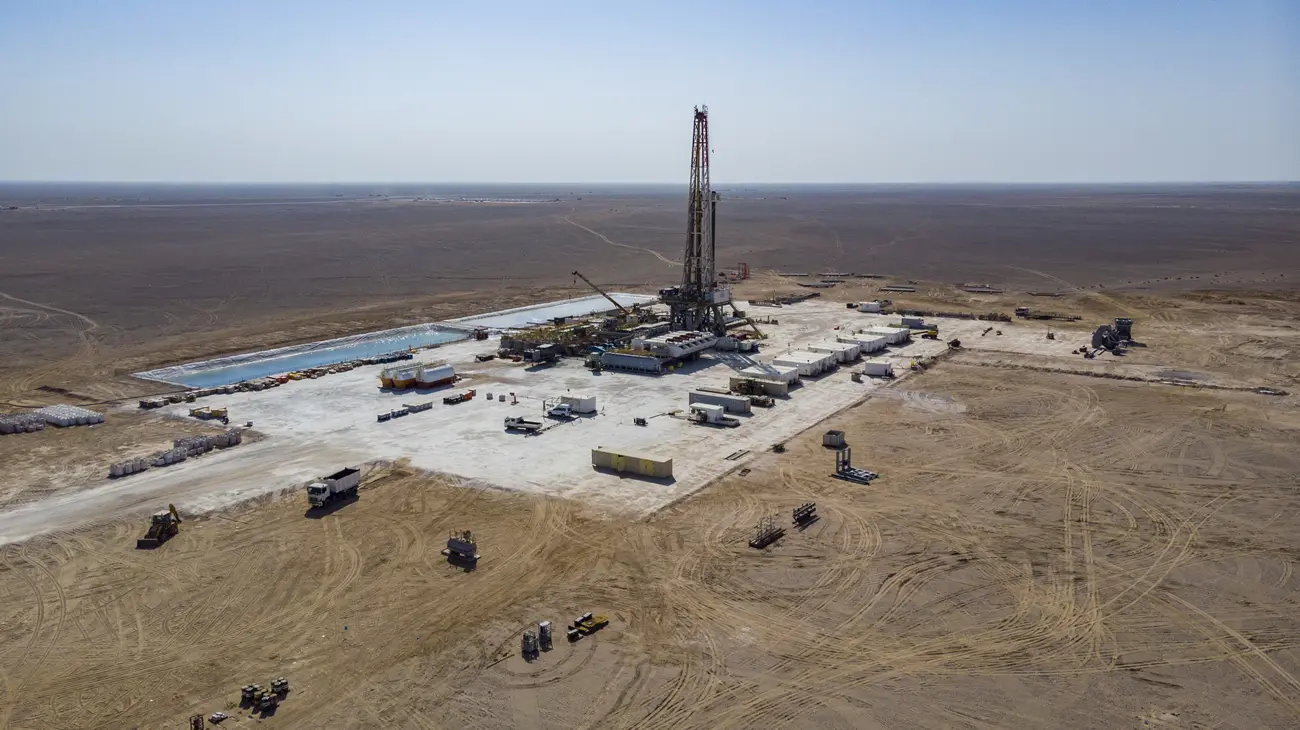
DAR ES SALAAM — Aminex's share price jumped 27% to £0.20 ($0.27) in mid-morning trading on Wednesday, recovering sharply from a crash the London-listed company suffered in July, after Tanzania's government stepped into a dispute over the pace of development at the Ntorya gas field and sided with the minority partner rather than the project's operator.
The relief rally reflects how serious the underlying dispute had become. This wasn't simply a disagreement over scheduling preferences between two commercial partners.
From Delay Proposal to Formal Breach Allegation
Aminex's subsidiary, Ndovu Resources Limited, filed a formal Notice of Dispute against ARA Petroleum Tanzania (APT) on 21 August 2026, alleging breaches of the Farmout Agreement and Joint Operating Agreement governing the Ruvuma Production Sharing Agreement. The specific allegation: APT had tried to replace the already-approved 2026 Work Programme and Budget, which included drilling the Chikumbi-1 obligation well, with an alternative plan that delayed that well and lacked equivalent commitments, without securing approval from joint venture partners or Tanzanian regulators.
That notice was a genuinely consequential legal step, not a routine complaint. Under the joint operating agreement's dispute mechanism, it triggered a 90-day window for Ndovu and APT to seek an amicable resolution. If that failed, Aminex indicated it could refer the matter to the London Court of International Arbitration, and potentially move to enforce a parent company guarantee against The Zubair Corporation, the Omani conglomerate that backs APT, a mechanism that would have escalated a project-level scheduling dispute into a direct claim against APT's parent company's own balance sheet.
What Tanzania's Government Actually Did
The Ministry of Energy convened a meeting on 26 August 2026, bringing together representatives of the ministry itself, the Petroleum Upstream Regulatory Authority (PURA), the state-owned Tanzania Petroleum Development Corporation (TPDC), APT and Ndovu Resources. According to Aminex, the outcome was unambiguous: "The government did not approve a proposal by the operator to extend and delay the project timetable and instead confirmed a revised implementation schedule to which all parties agreed."
That's a notable intervention for a host government to make directly into what is, on paper, a commercial dispute between joint venture partners. Tanzania's Permanent Secretary for Petroleum, Dr James Mataragio, who convened the meeting, was singled out for praise by Aminex's leadership specifically for pushing the parties toward a resolution rather than allowing the dispute to run its full 90-day course, or longer, through arbitration.
The Revised Schedule
| Milestone | Timing |
| Ntorya-1 well workover | October 2026 |
| Ntorya-2 well testing | November 2026 |
| Ntorya-Central well drilling | December 2026 |
| Chikumbi-1 exploration well | After Ntorya-Central completion |
| First gas (Ntorya-1 and Ntorya-2) | December 2026 |
| Madimba pipeline completion | December 2026 (timed to first gas) |
| Target production rate | 140 million cubic feet per day |
Source: Aminex plc company announcement, 26-27 August 2026.
APT confirmed at the meeting that it had "all necessary funds to carry out the revised programme," and the parties agreed APT should execute the schedule "without unnecessary delay." That revised programme still has to pass through the formal joint venture approval process under the Joint Operating Agreement before it becomes fully binding, meaning Wednesday's announcement represents a negotiated understanding rather than a fully executed contractual amendment.
Why the Operator Wanted to Change the Plan
APT's original proposal, before the dispute, involved bringing forward drilling of the newly planned Ntorya-Central well while deferring the Chikumbi-1 exploration well, a sequencing change that followed a change of management at APT and what the company described as a technical reappraisal of the gas field. From APT's perspective, that may have reflected a genuine engineering judgment about which wells to prioritise. From Aminex's perspective, expressed through the formal dispute notice, it looked like an attempt to unilaterally rewrite an already-approved work programme in a way that abandoned a specific drilling obligation without offering equivalent commitments in its place, precisely the kind of change joint operating agreements are designed to require unanimous or majority partner approval for, not one partner's unilateral decision.
A Relationship With an Unusual Amount of Leverage on One Side
The dynamics underlying this dispute are worth understanding clearly, because they help explain both why the disagreement escalated as far as a formal breach notice and why Tanzania's government intervention mattered so much. APT, backed by The Zubair Corporation, holds a 75% operating interest in the Ruvuma PSA joint venture and operates the project directly. Separately, Aminex has identified APT's backer as its own largest shareholder in the London-listed parent company.
That's a genuinely unusual structure: the same corporate group sits as the majority operating partner in the underlying gas project and as the controlling shareholder of the minority partner raising the dispute. In a more conventional joint venture dispute, a minority partner threatening arbitration against an unrelated majority operator is a fairly standard commercial safeguard. When the majority operator's parent is also your largest shareholder, the leverage calculus shifts considerably, which likely explains why Tanzania's direct intervention, rather than the formal 90-day dispute process running its course, became the mechanism that actually resolved this.
Under Aminex's 2018 Ntorya farm-in agreement, analyst David Mirzai of SP Angel noted, APT is obligated to carry Aminex's costs up to a maximum total capital expenditure of $140 million, an amount Aminex expects to cover its net spending through to the start of commercial gas production. That funding arrangement is itself part of what made APT's proposed schedule change so consequential for Aminex specifically: delaying Chikumbi-1 or altering the sequencing of carried costs directly affects how quickly Aminex's own capital exposure under that $140 million cap gets resolved.
The Resource at Stake
Ntorya sits within the broader Ruvuma licence area, adjacent to the supergiant LNG discoveries that extend from offshore Tanzania into Mozambican waters. APT's own estimates put Ntorya's contingent resource at 3.45 trillion cubic feet of gas initially in place, with a mean unrisked potential across the wider Ruvuma joint venture area of 16.4 trillion cubic feet and a risked mean potential of 6.9 trillion cubic feet, figures that sit within a different, broader resource classification than the specific reserve figure sometimes cited for the currently sanctioned development phase. The development licence itself, a 25-year award, was granted on 23 May 2024, with a formal handover ceremony following later that year attended by Tanzania's Deputy Prime Minister Doto Mashaka Biteko.
What This Means Beyond One Company's Share Price
Aminex's Executive Chairman, Charles Santos, framed the resolution in terms that extend well past shareholder returns: "The revised implementation programme establishes clear, near-term operational milestones," he said, adding that Ntorya is expected to deliver large volumes of gas to Tanzanians, "helping alleviate energy poverty, boost industrial development and fuel... economic growth."
That framing is not simply corporate messaging. Ntorya's development sits alongside Tanzania's broader push to convert its substantial natural gas reserves into domestic industrial capacity and energy security, the same strategic logic driving investment in the Julius Nyerere Hydropower Project and Tanzania's electrified rail programme this publication has covered separately. A gas project stalled by an unresolved commercial dispute between international partners doesn't just cost Aminex and APT money; it delays gas that Tanzania has built policy and infrastructure plans around receiving on a specific timeline. Tanzania's willingness to intervene directly and reject a delay proposal from the project's own operator signals how seriously the government now treats keeping strategic energy projects on schedule, rather than leaving international partners to resolve commercial disagreements entirely on their own timeline.
What to Watch Next
The revised schedule still has to clear formal joint venture approval, and the underlying Notice of Dispute, while apparently defused by the government meeting, has not been formally withdrawn according to available disclosures. Aminex said it "will provide further updates on this Notice as appropriate," language that leaves open whether the dispute is fully resolved or simply paused while the revised schedule is executed. The clearest test of whether Wednesday's agreement holds will be whether APT actually meets the October, November and December 2026 milestones now on the table, rather than whether Tanzania's intervention. A missed milestone in this sequence would raise the same underlying question that triggered the dispute in the first place, whether Ntorya's operator is genuinely committed to the agreed schedule or managing it around its own separate priorities.
FAQ
Why did Aminex's share price jump 27%? Because Tanzania's Ministry of Energy rejected a proposal by project operator ARA Petroleum Tanzania to delay the Ntorya gas development, confirming instead a revised schedule that keeps first gas on track for December 2026, resolving uncertainty that had crashed the stock in July.
What exactly was the dispute about? Aminex's subsidiary, Ndovu Resources, formally alleged that ARA Petroleum Tanzania breached the project's Farmout and Joint Operating Agreements by trying to replace the approved 2026 work programme with an alternative plan that delayed the Chikumbi-1 obligation well without equivalent commitments.
How serious was this dispute, legally? Serious enough that Ndovu filed a formal Notice of Dispute on 21 August 2026, triggering a 90-day resolution window, after which the company could have pursued arbitration at the London Court of International Arbitration and sought to enforce a parent company guarantee against ARA's Omani backer, The Zubair Corporation.
What is the revised schedule? Ntorya-1 well workover in October 2026, Ntorya-2 well testing in November, drilling of a new Ntorya-Central well in December, and first gas from the Ntorya-1 and Ntorya-2 wells also targeted for December 2026, alongside completion of the pipeline to the Madimba gas processing plant.
Why does ARA Petroleum Tanzania have so much influence over Aminex? ARA's parent, The Zubair Corporation, holds a 75% operating stake in the Ruvuma joint venture that includes Ntorya, and is separately identified by Aminex as its own largest shareholder, giving the same corporate group significant influence over both the project and Aminex's own governance.
Is the dispute fully resolved? Not necessarily finalised. The revised schedule still requires formal joint venture approval, and Aminex has said it will provide further updates on the Notice of Dispute "as appropriate," language suggesting the underlying dispute may not be formally closed even though the immediate scheduling disagreement has been addressed.
 Uchumi360
Business Intelligence
Uchumi360
Business Intelligence
Uchumi360 covers business, investment, and economic policy across East, Central, and Southern Africa.
For the serious reader
You read to the end. That places you in a small group.
Uchumi360 is built for readers who demand precision over speed, structure over sentiment, and analysis that holds uncomfortable conclusions rather than softening them. If this work sharpens how you think about Africa's economy, help us keep building the infrastructure behind it.
Institutional Partners
Commission intelligence. Shape the conversation.
Uchumi360 works with development finance institutions, investment firms, sovereign bodies, and strategic organisations across the coverage region. Institutional partnership unlocks:
- Commissioned sector and country intelligence reports
- Branded research series under your institution's authority
- Exclusive data briefings for internal strategy teams
- Speaking and editorial presence at Uchumi360 events
- Co-published investment outlooks for your markets
Support Our Work
Independent analysis has a cost. Help us bear it.
Uchumi360 does not carry advertising. It does not take editorial direction from sponsors. Every article is produced without commercial compromise. Your contribution funds the reporting, research, and editorial infrastructure that keeps this analysis free from influence.
Secure checkout: One-time and monthly support are processed securely. Add payment credentials to enable checkout here.
Stay Connected
Keep up with every new insight.
Follow our latest analysis, policy coverage, and market intelligence as soon as it is published. If you need something specific, reach out directly and we will point you to the right research.
