
Tanzania Wants 8,000 MW Of Electricity By 2030
Ready
Tanzania wants to raise electricity generation capacity to about 8,000 MW by 2030. EWURA data indicates that domestic installed capacity stood at about 4,543 MW in March 2026, leaving the country needing roughly another 3,457 MW alongside major transmission, renewable energy and connection investments.
Tanzania wants to almost double its electricity generation capacity to 8,000 megawatts by 2030, setting a target that would require the country to add roughly 3,450 MW of new domestic capacity within four years while simultaneously expanding transmission, distribution, electricity connections and private investment. Finance Minister Khamis Mussa Omar said this week that the government intends to raise generation capacity to approximately 8,000 MW by the end of the decade and wants around 75 percent of the power mix to come from sources it classifies as clean, including hydropower, solar, wind and natural gas. The announcement came as Tanzania also said negotiations over its proposed US$42 billion liquefied natural gas project were nearing completion.
The scale becomes clearer when measured against the country’s current system. EWURA reported that Tanzania had 4,542.66 MW of installed domestic generation capacity as of March 2026, while another 67 MW was available through cross-border imports, taking installed capacity and imports together to 4,609.66 MW. Reaching 8,000 MW from the domestic generation baseline would therefore require Tanzania to add approximately 3,457 MW in less than four years. That is equivalent to adding more than three quarters of the generating capacity Tanzania already has.
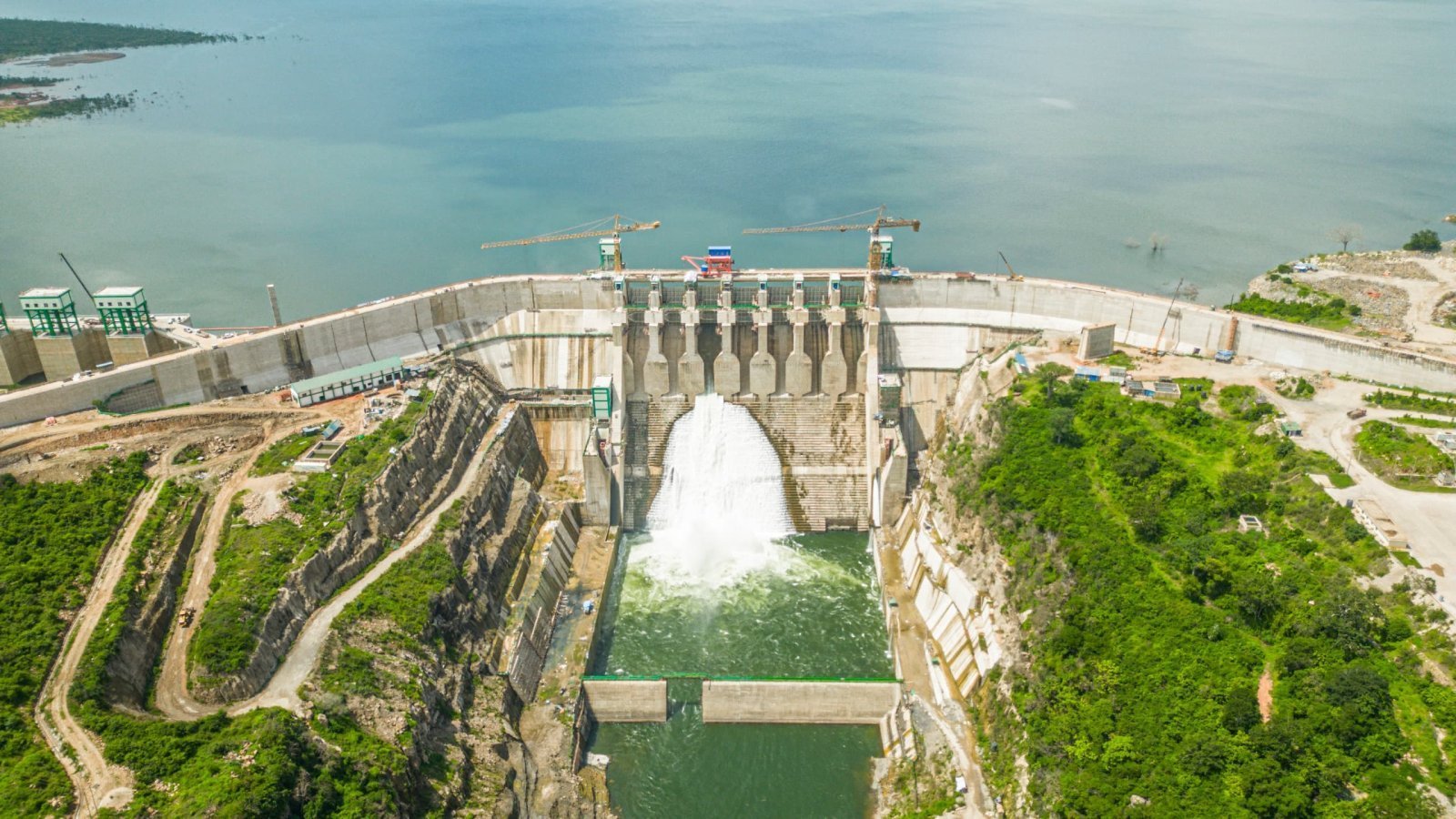
The ambition is not unprecedented in the context of what Tanzania has recently achieved. The completion of the 2,115 MW Julius Nyerere Hydropower Project changed the scale of the national electricity system in a way few individual infrastructure projects have done. But replicating that expansion again will require a more diversified approach because Tanzania is unlikely to reach 8,000 MW through another single megaproject.
Julius Nyerere Has Already Changed Tanzania’s Power Mathematics
The Julius Nyerere Hydropower Project made Tanzania’s current generation ambitions possible by adding 2,115 MW through nine generating units of 235 MW each. TANESCO says the plant has expected annual production of approximately 6,307 GWh. The first generating unit entered service in February 2024, while all nine units had been commissioned and synchronised with the national grid by 28 March 2025.
Its contribution is enormous relative to the system. TANESCO’s own generation portfolio totals about 4,075 MW, with Julius Nyerere alone accounting for more than half of that company-controlled capacity. TANESCO reports approximately 2,719 MW of hydropower and 1,033 MW of grid-connected thermal generation within its portfolio, giving hydro a 67.2 per cent share of TANESCO generation assets. These figures should not be confused with the broader national total reported by EWURA, which also captures generation outside TANESCO and therefore produces a higher system-wide capacity figure.
The completion of Julius Nyerere changed Tanzania’s electricity challenge. For many years, the dominant problem was insufficient generation and recurrent shortages. Tanzania now has considerably more installed capacity, which shifts attention towards whether the grid can transmit that power efficiently, whether consumers can connect to it and whether industrial demand grows fast enough to justify another large round of generation investment.
Tanzania Still Needs Roughly 3,450 MW In Four Years
The arithmetic behind the 2030 target remains demanding even after using the broader EWURA baseline. Moving from approximately 4,543 MW of domestic installed generation to 8,000 MW requires around 3,457 MW of additional capacity. Spread evenly over the four remaining years to 2030, Tanzania would need to commission roughly 860 MW of new generation every year.
For comparison, Kidatu Hydropower Station has an installed capacity of 204 MW. Tanzania would therefore need to add the equivalent of more than four Kidatu stations every year if the target were delivered at an even pace. Julius Nyerere itself took years to build and remains much larger than any other single power station in the country, which means the next phase is more likely to come from multiple projects progressing simultaneously than from another project of comparable scale.
The National Energy Compact gives some indication of the intended mix. It identifies targets including 463 MW of solar, 500 MW of wind, 130 MW of geothermal and 880 MW of additional large hydropower capacity by 2030. The same compact includes the proposed 300 MW Kikonge Multipurpose Hydropower Project and associated 220 kV transmission infrastructure.
These figures also clarify an important distinction in Tanzania’s policy language. The Finance Minister’s latest 75 per cent target refers to sources the government classifies as clean, including natural gas. The National Energy Compact separately targets a 75 per cent renewable share, which does not include natural gas. Those are related ambitions, but they are not identical.
Solar And Wind Will Have To Move From Marginal To Material
Tanzania’s current utility scale generation system remains dominated by hydropower and natural gas, while solar and wind occupy a comparatively small share. That structure will have to change if the country is to add several thousand megawatts without relying excessively on either rainfall-dependent hydropower or gas-fired generation.
The National Energy Compact’s targets of 463 MW of additional solar and 500 MW of wind would represent a major increase from today’s base, while 130 MW of geothermal would begin establishing another source of dependable renewable generation. Diversification matters because hydropower has repeatedly exposed Tanzania to hydrological risk. When water levels fall, available generation can decline quickly, while natural gas plants provide dispatchable power but remain dependent on fuel supply and infrastructure.
Solar and wind can reduce pressure on both water reservoirs and gas consumption during favourable conditions, but large-scale deployment creates a different engineering challenge because output changes with sunlight and wind conditions. Transmission networks, system management, reserve generation and eventually storage will become more important as variable renewables occupy a larger share of the system.
Tanzania is therefore not simply trying to build more power stations. It is trying to operate a more complicated power system.
Natural Gas Could Provide Flexibility While Renewable Capacity Expands
Natural gas occupies an unusual position in Tanzania’s electricity strategy because it is not renewable but it provides generation that can respond flexibly when hydropower, solar or wind output changes. TANESCO currently operates major gas-fired stations including Kinyerezi I at 335 MW, Kinyerezi II at 248.22 MW, Ubungo I at 102 MW, Ubungo II at 129 MW and Ubungo III at 72.5 MW.
The proposed US$42 billion LNG project could eventually make larger quantities of offshore gas commercially available, and the government says part of that gas would be retained for domestic use rather than exported. If sufficient infrastructure is built and domestic pricing remains competitive, additional gas could support electricity generation as well as industries that require substantial thermal energy.
The economic return from domestic gas could therefore extend beyond electricity. Reliable energy can support mining, mineral processing, manufacturing, cold storage, agricultural processing, data centres and other activities whose productivity depends on uninterrupted power. This is why the relationship between the LNG project and the 8,000 MW target matters: one concerns export earnings, while the other concerns the energy platform required for industrial expansion inside Tanzania.
Generation Capacity Is Only Half Of The Problem
An 8,000 MW electricity system becomes economically useful only if consumers can actually receive and pay for the electricity.
Tanzania’s National Energy Compact shows the gap between electricity access and actual household connectivity. Connectivity was estimated at 46 per cent in 2022, while the government wants to raise that figure to 75 per cent by 2030 and achieve universal electricity access. The compact defines access as electricity infrastructure being available within reach of communities, while connectivity measures households that are actually connected and consuming electricity.
Closing that gap requires a distribution expansion considerably larger than anything Tanzania has previously attempted. The compact estimates that approximately 1.6 million new electricity connections will be needed each year between 2025 and 2030 to reach the 75 per cent connectivity target. Only 562,940 new connections were made in 2024, meaning the annual pace would have to rise to almost three times that level.
This may prove as difficult as adding generation because household connections require transformers, distribution lines, meters, service connections, financing and customers with enough income to consume electricity once connected. Tanzania’s electricity challenge is therefore moving progressively downstream from building power plants towards making the electricity economically usable.
The Grid Will Have To Grow With The Power Plants
Transmission investment will become more important as generation expands geographically. Large hydro resources are often far from the biggest demand centres, future solar and wind projects will follow resource availability, and gas fired generation depends partly on pipeline infrastructure. The new generation therefore requires transmission lines capable of moving electricity from where it is produced to where households and industries actually consume it.
The National Energy Compact includes several transmission investments designed for that expansion. The Chalinze to Segera project involves a 181-kilometre 400 kV double-circuit transmission line, while the Segera to Tanga project adds another 64 kilometres of 220 kV transmission. The compact also includes rehabilitation of distribution infrastructure in Dar es Salaam and Pwani.
Tanzania already has a substantial grid. EWURA reported more than 8,300 kilometres of transmission lines and 72 grid substations as of March 2026, including more than 1,500 kilometres of 400 kV infrastructure. But a system approaching 8,000 MW will require greater network capacity, particularly if new generation is located far from Dar es Salaam, mining districts and other centres of industrial demand.
Regional integration creates another possibility. Tanzania sits geographically between the Eastern Africa Power Pool and Southern African electricity markets, meaning stronger interconnections could eventually allow surplus electricity to be exported during periods of abundant supply while imports could supplement domestic generation during shortages. That opportunity depends on interconnector capacity, regional market rules and neighbouring countries having both demand and the ability to pay.
Tanzania Also Needs Demand To Grow Almost As Fast As Supply
The least discussed part of the 8,000 MW target may ultimately determine whether the investment makes economic sense: Tanzania needs customers for the electricity.
Generation capacity creates costs before it creates economic value. Power plants have to be financed, transmission lines constructed and utilities must service those investments regardless of whether the electricity produced is fully consumed. Adding generation much faster than demand grows can therefore leave the system with expensive underused assets.
Industrial electricity demand will need to expand alongside capacity. Mining and mineral processing provide one obvious source because Tanzania wants more value addition to occur domestically rather than exporting raw minerals. Manufacturing can absorb another substantial share if reliable electricity is available at prices that allow Tanzanian factories to compete with imported products and producers elsewhere.
Irrigation, agricultural processing, cold storage, electrified transport, urban development and data centres could also increase demand. What matters is that these sectors convert electrical capacity into productive output.
This changes how the 2030 target should ultimately be judged. Reaching 8,000 MW would demonstrate that Tanzania can build power infrastructure at scale, but a more meaningful measure would be whether that electricity supports higher industrial consumption, more manufacturing output, additional mineral processing, millions of new household connections and declining dependence on diesel backup generators.
Private Capital Will Be Essential
Financing another 3,400 MW to 3,500 MW of generation together with transmission and distribution infrastructure will require capital beyond what government projects alone can provide.
Tanzania’s National Energy Compact aims to increase private capital mobilisation in the electricity sector from a baseline of approximately US$500 million to US$4.039 billion by 2030. That represents an increase of more than eight times the baseline and underlines how dependent the next phase of electricity expansion will be on private developers, financiers and investors.
Attracting that money depends on the economics of the power sector itself. Private investors need confidence that electricity can be sold under bankable arrangements, that utilities will pay counterparties reliably, that tariffs support project economics and that regulatory rules will remain sufficiently predictable over the decades during which power plants recover their investment.
TANESCO’s financial health therefore matters directly to the 8,000 MW ambition. Generation targets can be announced by government, but private capital enters when investors believe the electricity produced can be paid for.
The Economic Target Is Larger Than 8,000 MW
Tanzania’s electricity sector has changed dramatically within a few years. Julius Nyerere added 2,115 MW, EWURA now records more than 4,500 MW of domestic installed generation capacity, and the government wants around 8,000 MW by 2030 while simultaneously increasing renewable generation, domestic natural gas use, household connectivity, transmission infrastructure and private investment.
Installed capacity, however, remains an input into economic development rather than an outcome by itself. A country does not become more productive simply because its power plants are capable of producing thousands of megawatts. The economic return appears when factories run continuously, mines process minerals domestically, farmers refrigerate and process produce, digital businesses gain reliable infrastructure and households consume enough electricity to improve living standards and support new markets.
Tanzania has spent years trying to solve electricity scarcity. If it reaches 8,000 MW by 2030, the next measure of success will be whether the economy has grown enough to use the power productively.
FAQ
How much installed electricity capacity does Tanzania currently have? EWURA reported 4,542.66 MW of domestic installed generation capacity as of March 2026. Including 67 MW of cross border imports, installed capacity and imports together totalled 4,609.66 MW.
What is Tanzania’s electricity target for 2030? The government wants power generation capacity to reach approximately 8,000 MW by 2030.
How much new capacity would Tanzania need? Using EWURA’s March 2026 domestic capacity figure, Tanzania would need approximately 3,457 MW of additional installed generation to reach 8,000 MW.
What is Tanzania’s largest power plant? The Julius Nyerere Hydropower Project is the country’s largest generation facility at 2,115 MW, comprising nine 235 MW units.
How many electricity connections does Tanzania need by 2030? The National Energy Compact estimates that about 1.6 million new connections will be required annually between 2025 and 2030 to reach a 75 percent connectivity rate.
What renewable capacity is Tanzania targeting? The National Energy Compact targets 463 MW of solar, 500 MW of wind, 130 MW of geothermal and 880 MW of additional large hydropower capacity by 2030.
 Uchumi360
Business Intelligence
Uchumi360
Business Intelligence
Uchumi360 covers business, investment, and economic policy across East, Central, and Southern Africa.
For the serious reader
You read to the end. That places you in a small group.
Uchumi360 is built for readers who demand precision over speed, structure over sentiment, and analysis that holds uncomfortable conclusions rather than softening them. If this work sharpens how you think about Africa's economy, help us keep building the infrastructure behind it.
Institutional Partners
Commission intelligence. Shape the conversation.
Uchumi360 works with development finance institutions, investment firms, sovereign bodies, and strategic organisations across the coverage region. Institutional partnership unlocks:
- Commissioned sector and country intelligence reports
- Branded research series under your institution's authority
- Exclusive data briefings for internal strategy teams
- Speaking and editorial presence at Uchumi360 events
- Co-published investment outlooks for your markets
Support Our Work
Independent analysis has a cost. Help us bear it.
Uchumi360 does not carry advertising. It does not take editorial direction from sponsors. Every article is produced without commercial compromise. Your contribution funds the reporting, research, and editorial infrastructure that keeps this analysis free from influence.
Secure checkout: One-time and monthly support are processed securely. Add payment credentials to enable checkout here.
Stay Connected
Keep up with every new insight.
Follow our latest analysis, policy coverage, and market intelligence as soon as it is published. If you need something specific, reach out directly and we will point you to the right research.
