
Tanzania's Bagamoyo SEZ Is the Country's Bid to Join Morocco, Ethiopia, and Vietnam in the Global Manufacturing Race
Ready
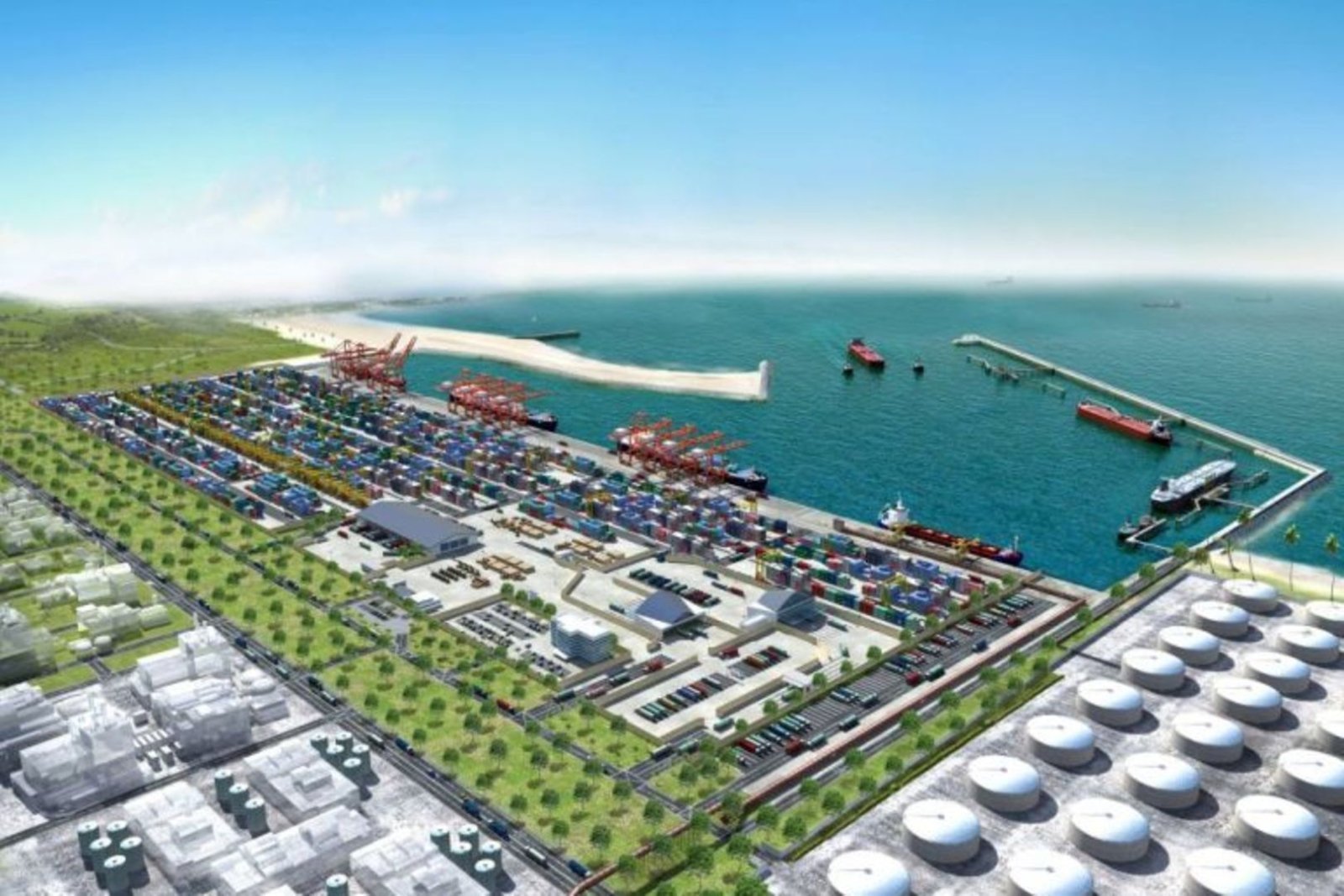
President Samia Suluhu Hassan declared the Bagamoyo Special Economic Zone Tanzania's number one project at SPIEF 2026, framing it not as a port or infrastructure development but as Tanzania's bid to become a manufacturing and industrial economy. Tanzania's geographic endowment is substantial: Indian Ocean coastline, natural gas, graphite, nickel, rare earths, gold, agricultural resources, a domestic market of over 70 million people, and a regional gateway to more than 300 million consumers across East and Central Africa. The challenge has been converting that geography into industrial capability rather than raw material export. Bagamoyo's vision combines logistics infrastructure, manufacturing zones, export processing, warehousing, energy infrastructure, and international shipping access into an ecosystem rather than a standalone facility. Global manufacturing is undergoing its largest reorganisation in decades as rising Asian labour costs, geopolitical tensions, and supply chain diversification strategies are forcing multinationals to reconsider production locations. This creates an entry window for emerging markets with competitive production environments. Tanzania is attempting to enter that competition through Bagamoyo. The decisive factors will be policy consistency, regulatory efficiency, energy availability, logistics performance, and the ability to attract anchor investors capable of creating industrial clusters. The measure of success will not be hectares developed or buildings constructed. It will be whether companies choose to manufacture in Tanzania rather than elsewhere. Tanzania has the geography. It has the resources. It has the market. What Bagamoyo is testing is whether it has the institutional capacity and the policy consistency to convert all three into an industrial economy. That conversion is the hardest part of the bet, and the most important.
DAR ES SALAAM — When President Samia Suluhu Hassan stood before global investors at the 29th St. Petersburg International Economic Forum and declared the Bagamoyo Special Economic Zone Tanzania's number one project, the framing was deliberate. Not Tanzania's largest infrastructure project. Not Tanzania's most important port development. Tanzania's number one project, in its entirety, including everything the project is and everything it is meant to become.
The distinction matters because the conversation about Bagamoyo has for years been dominated by ports, roads, industrial park layouts, and investment commitment figures. Those are components of the project. They are not the project. The project is an attempt to answer the most consequential economic question Tanzania is currently facing: can the country move beyond exporting raw materials and become a major manufacturing and industrial economy? The answer will shape Tanzania's economic trajectory for longer than any single infrastructure investment, any single budget cycle, or any single administration.
The competition Africa is actually running
Most commentary on African economic development focuses on GDP growth rates, foreign investment totals, and infrastructure spending figures. These are useful indicators but they describe the outcome of a more fundamental competition whose nature is rarely stated clearly.
The real competition among African economies is for position within global supply chains. The countries that secure positions as manufacturing locations, logistics hubs, processing centres, and technology production bases will capture the economic compounding that those positions generate over decades. The countries that remain primarily exporters of unprocessed commodities will continue to transfer the value addition that their resources enable to the economies where those resources are processed, manufactured into products, and sold.
Morocco understood this and spent two decades building itself into an automotive manufacturing hub serving European markets. Renault and Stellantis manufacturing plants in Tangier and Kenitra are not the outcome of geographic accident. They are the result of sustained industrial policy, regulatory consistency, infrastructure investment, and the deliberate cultivation of a supplier ecosystem that made Morocco more competitive for automotive production than alternative locations the same companies evaluated. Morocco now exports assembled vehicles to Europe rather than simply providing inputs to vehicles assembled elsewhere.
Ethiopia invested in industrial parks to attract textile and light manufacturing companies at the precise moment when rising Chinese labour costs were creating a relocation wave among manufacturers seeking lower-cost production bases. The Hawassa Industrial Park's anchor tenants, including PVH, Arvind, and other major apparel manufacturers, did not choose Ethiopia because it was the obvious choice. They chose it because Ethiopia made itself competitive through land provision, energy subsidies, logistics infrastructure, and an investment facilitation environment that reduced the cost and friction of establishing manufacturing operations.
Vietnam repositioned itself comprehensively as a global electronics production centre through a combination of workforce development, regulatory liberalisation, infrastructure investment, and sustained foreign investment attraction whose results are visible in the Samsung, Intel, and LG facilities whose output makes Vietnam one of the world's largest electronics exporters. Vietnam's transformation from a rice-exporting agricultural economy to a high-value manufacturing exporter occurred within a generation.
Each of these cases reflects the same underlying principle: manufacturing positions in global supply chains do not fall to countries by default. They are won through sustained and coordinated effort across policy, infrastructure, regulation, and investment facilitation.
Tanzania's endowment and its conversion challenge
Tanzania's geographic and resource endowment is substantial enough to make the manufacturing ambition credible rather than aspirational. The Indian Ocean coastline provides the port access that export-oriented manufacturing requires. Natural gas reserves under negotiation for an LNG development valued at approximately USD 42 billion provide the energy supply whose availability and affordability is a primary determinant of manufacturing location decisions. Graphite deposits in Lindi and Mtwara, among the largest in the world, are the anode material whose demand the global EV battery industry is creating at a pace whose domestic processing would be worth multiples of the raw material export value. Nickel, rare earths, gold, and diverse agricultural resources add to a resource endowment whose processing within Tanzania rather than shipment to external processing facilities is the value addition argument that industrial policy is designed to capture.
The domestic market exceeds 70 million people and is growing. The regional gateway through the SGR Central Corridor, the Dar es Salaam port, and the road network connects Tanzania to more than 300 million consumers across East and Central Africa whose supply by domestically manufactured goods is the market access argument for Bagamoyo's manufacturing zones.
The challenge has never been the endowment. Tanzania has been geographically and resource-endowed for its entire post-independence history without achieving the manufacturing transformation that the endowment would support. The challenge has been converting geography and resources into industrial capability: the factories, the supply chains, the technical workforce, the regulatory environment, the energy infrastructure, and the logistics performance whose combination makes Tanzania a more attractive manufacturing location than the alternatives companies evaluate simultaneously.
This conversion is what Bagamoyo is designed to accelerate and what President Samia's SPIEF declaration was positioning before global capital.
Why ecosystem matters more than individual assets
The framing of Bagamoyo as an ecosystem rather than a port or industrial park is the analytically critical distinction that separates what the project is attempting from what previous East African industrial zone initiatives have typically delivered.
Most developing countries export products. Successful industrial economies export ecosystems: the integrated combination of production capacity, logistics infrastructure, supplier networks, technical workforce, regulatory certainty, and institutional support whose presence in a specific location makes it more competitive for manufacturing investment than locations with individual superior assets but weaker ecosystem integration.
China does not simply export manufactured goods. It exports integrated industrial supply chains whose depth means that a company manufacturing in China has access to suppliers, components, logistics services, technical expertise, and regulatory knowledge at a density that alternative locations cannot replicate. Vietnam does not merely export electronics. It exports production capacity that multinational companies can enter, scale, and operate with confidence because the ecosystem whose development preceded the investment has reduced the operational uncertainty that manufacturing in a new location inevitably creates.
Bagamoyo's vision, as articulated in the project documentation and in President Samia's SPIEF presentation, combines logistics infrastructure whose connection to international shipping routes through the Indian Ocean reduces the cost of export, manufacturing zones whose industrial land provision and infrastructure support reduces the cost of production setup, export processing infrastructure whose efficiency determines the turnaround time between production and shipment, energy infrastructure whose reliability and affordability removes one of the primary constraints on manufacturing competitiveness in East Africa, and warehousing whose availability supports the inventory management that just-in-time supply chains require.
Individually, none of these assets are transformative. Ports exist elsewhere. Industrial parks exist elsewhere. Energy infrastructure is being developed across the region. What the ecosystem combination provides, when it achieves the density and integration that successful industrial zones require, is a production environment whose total competitive proposition exceeds the sum of its individual components. That is what Morocco built over two decades. That is what Ethiopia is building in its industrial parks. That is what Bagamoyo is attempting to build on Tanzania's Indian Ocean coast.
The global manufacturing reorganisation that creates the entry window
Bagamoyo's timing is not accidental. Global manufacturing is undergoing its largest reorganisation in decades, and the reorganisation is creating entry windows for emerging market economies that are competitive on production costs, regulatory stability, and logistics access.
Rising labour costs in coastal Chinese manufacturing centres have been narrowing the cost advantage that made China the dominant global manufacturing location for two decades. Companies that built supply chains around Chinese production at USD 3 to 4 per hour labour costs are reassessing their location strategies as those costs have risen toward USD 8 to 12 per hour in coastal provinces. The reassessment is not a one-time adjustment. It is a structural shift in global manufacturing geography that will continue to create relocation opportunities for alternative production locations over the coming decade.
Geopolitical tensions between the United States and China have accelerated the supply chain diversification strategies that major manufacturers were already beginning to consider on cost grounds alone. The policy frameworks of friend-shoring and near-shoring, directing supply chains toward politically aligned or geographically proximate production locations, are creating institutional pressure for manufacturing diversification that reinforces the commercial logic. Companies that previously had no reason to consider alternative production locations are now actively evaluating them under pressure from their largest customers, their institutional shareholders, and their government relationships.
Supply chain fragility exposed during the COVID-19 pandemic's port congestion and container shortage episode, the 2021 and 2022 freight rate spikes, and the Red Sea security situation that disrupted shipping routes in 2023 and 2024 has made supply chain resilience a strategic priority for manufacturers whose single-source production strategies left them vulnerable to geographic concentration risk. Diversifying production across multiple locations, including locations that provide alternative routing options for export, is now an explicit component of many multinationals' supply chain strategies.
Each of these forces is creating potential demand for new manufacturing locations. Tanzania, with its Indian Ocean access, its resource endowment, its regional market connectivity, and its improving investment environment, is a credible candidate for a share of that demand. Bagamoyo is the infrastructure that would make Tanzania competitive for it.
The infrastructure multiplier argument
Critics of large-scale infrastructure projects in developing economies often apply a current utilisation test: if the infrastructure is not immediately needed to serve existing demand, the investment is premature. This test systematically undervalues the infrastructure multiplier: the economic activity that infrastructure enables, which does not exist before the infrastructure is built and cannot therefore be used to justify it prospectively.
The Standard Gauge Railway was not constructed for Tanzania's cargo volumes as they existed when construction began. It was built for the volumes that would be generated by the manufacturing investment, logistics growth, and regional trade whose facilitation the railway would enable. The Julius Nyerere Hydropower Project was not sized for Tanzania's electricity demand as it existed when planning began. It was sized for the industrial demand that affordable and reliable energy would attract, whose absence was itself a primary reason that manufacturing investment had not previously located in Tanzania at scale.
Bagamoyo follows the same infrastructure multiplier logic. Industrial economies typically appear overbuilt during their early development phases because the investment precedes the activity it is designed to enable. China's ports, highways, and industrial zones looked excessive relative to existing demand when they were first developed. Today many operate at or near capacity because the infrastructure investment created the production environment that attracted the manufacturing activity that generated the demand that filled the infrastructure.
The challenge for Tanzania is not whether Bagamoyo is large relative to current industrial activity. It is whether the country can create enough economic activity around it to justify the scale. That creation requires the policy consistency, regulatory efficiency, energy availability, and investment facilitation quality whose presence determines whether Bagamoyo becomes a functioning industrial ecosystem or a well-built facility with underutilised capacity.
Competing for capital in a world where everyone wants to be a hub
President Samia's invitation to Russian companies at SPIEF is significant not because Russia's industrial investment is the primary target of Bagamoyo's attraction strategy, but because the invitation illustrates the nature of the competition Tanzania has entered. In a world where geopolitical multipolarity is creating multiple competing capital sources and where every country with an industrial ambition is simultaneously trying to attract manufacturing investment, Tanzania is positioning itself across all available channels simultaneously rather than depending on any single bilateral relationship.
The global capital competition for manufacturing location has intensified as the number of credible manufacturing destinations has expanded. Vietnam, Bangladesh, Indonesia, Mexico, Morocco, Ethiopia, India, and multiple other economies are all competing for the same pool of manufacturing investment from the same set of multinational companies evaluating production location decisions. Each offers a different combination of labour costs, logistics access, regulatory environment, political stability, market access, and resource endowment.
Tanzania's competitive proposition in that competition rests on the specific combination of Indian Ocean port access, natural resource endowment, regional market connectivity through the SGR and road network, improving regulatory environment under TISEZA's investment facilitation framework, political stability whose consistency across administrations the transition from President Magufuli to President Samia maintained, and the Bagamoyo ecosystem whose development would add the production infrastructure that the geographic and resource endowments alone cannot supply.
The invitation to Russian companies, alongside engagement with Chinese, European, Gulf, and Asian investors through parallel diplomatic and commercial channels, reflects the multipolar investment attraction strategy that Tanzania's non-aligned foreign policy enables and that the SPIEF platform provides access to.
What success actually looks like
The measure of Bagamoyo's success will not be the number of hectares developed, the number of buildings constructed, or the volume of infrastructure capital deployed. All of those measures describe inputs. The outcome measure is whether companies choose to manufacture in Tanzania rather than in the alternative locations they are simultaneously evaluating.
That choice is made by the procurement managers, the site selection consultants, and the board investment committees of multinational manufacturing companies whose criteria are specific and whose decision processes are rigorous. They will evaluate Bagamoyo against Djibouti's free zone, Ethiopia's industrial parks, Mozambique's Nacala corridor, Kenya's special economic zones, and the established Asian manufacturing locations simultaneously. They will apply their own analysis of energy reliability, logistics costs, regulatory predictability, labour availability, and political risk. Tanzania will win those evaluations when Bagamoyo's total competitive proposition, including the ecosystem depth that surrounds the physical infrastructure, is superior to the alternatives on the dimensions that matter most to the specific industry and the specific production process being located.
The factors that will determine that outcome are largely within Tanzania's control, which is both the encouraging and the demanding aspect of the Bagamoyo ambition. Policy consistency across electoral cycles that protects investor positions established under previous administrations. Regulatory efficiency that processes the permits, approvals, and operational licences that manufacturing companies need without the delays and unpredictability that have historically deterred industrial investment in the region. Energy availability and affordability sufficient to support manufacturing processes that cannot absorb the power interruptions that have constrained industrial competitiveness across East Africa. Logistics performance at Dar es Salaam port and across the SGR network whose improvement reduces the time and cost of moving goods from factory to ship to market. And the attraction of anchor investors, the Renaults and Samsungs of Bagamoyo's industrial ecosystem, whose presence creates the supplier development, workforce training, and industrial cluster formation that makes the zone competitive for the next tier of investors.
Tanzania has the geography. It has the resources. It has the regional market. It has the political stability. What Bagamoyo is testing is whether it has the institutional capacity, the policy consistency, and the execution discipline to convert all three into an industrial economy whose manufactured exports reflect the value addition that the country's endowments have always been capable of generating but have not previously captured at the scale the opportunity warrants.
That conversion is the hardest part of the bet. It is also the most important. And if President Samia's SPIEF declaration signals anything about the current administration's priorities, it signals that Tanzania has decided the time for the bet is now.
FAQ
What is the Bagamoyo Special Economic Zone? The Bagamoyo SEZ is Tanzania's largest planned industrial and logistics development, combining Indian Ocean port access, manufacturing zones, export processing infrastructure, warehousing, energy infrastructure, and industrial land into an integrated ecosystem designed to attract manufacturing investment. President Samia declared it Tanzania's number one project at the St. Petersburg International Economic Forum in June 2026, framing it as Tanzania's bid to become a manufacturing and industrial economy rather than primarily a raw material exporter.
Why is Bagamoyo considered strategically important? Bagamoyo combines Tanzania's most significant geographic and resource advantages: Indian Ocean port access for export-oriented manufacturing, proximity to natural gas and mineral resources whose processing within Tanzania would capture value currently exported as raw materials, connectivity to a regional market of over 300 million consumers through the SGR Central Corridor, and the industrial ecosystem infrastructure whose absence has historically prevented manufacturing investment from locating in Tanzania at scale.
How does Bagamoyo fit into the global manufacturing reorganisation? Global manufacturing is relocating away from high-cost Chinese production centres as labour costs rise, geopolitical tensions create supply chain diversification pressure, and companies seek resilience against geographic concentration risk. This creates entry windows for competitive alternative production locations. Tanzania is attempting to enter that competition through Bagamoyo, positioning itself alongside Morocco, Ethiopia, Vietnam, and other economies that have built manufacturing positions through sustained industrial policy and infrastructure investment.
What will determine Bagamoyo's success? Policy consistency across electoral cycles protecting investor positions, regulatory efficiency processing manufacturing permits without delays, energy availability and affordability supporting industrial production, logistics performance at Dar es Salaam port and the SGR network, and the attraction of anchor investors creating industrial clusters. The measure of success is not hectares developed or buildings constructed but whether companies choose to manufacture in Tanzania rather than in alternative locations they evaluate simultaneously.
How does Bagamoyo relate to Tanzania's broader Vision 2050? Bagamoyo is the physical infrastructure expression of Vision 2050's industrialisation pillar, which targets Tanzania's transition from raw material export to value-added product export. Combined with TISEZA's manufacturing investment acceleration running at over 900 approvals in 2025, the SGR's logistics cost reduction, the Julius Nyerere Hydropower Project's energy provision, and Tanzania's mineral processing ambitions for graphite and nickel, Bagamoyo represents the flagship spatial concentration of the industrial transformation the broader policy framework is attempting to produce across multiple sectors simultaneously.
 Uchumi360
Business Intelligence
Uchumi360
Business Intelligence
- President Samia Suluhu Hassan, St
- Petersburg International Economic Forum 2026 address
- Bagamoyo SEZ as Tanzania's number one project declaration
- State House official documentation
- Tanzania Investment and Special Economic Zones Authority, Bagamoyo SEZ project documentation, manufacturing zone specifications, and investment facilitation framework
- Available at tiseza.go.tz
- Gilead Teri, Director General TISEZA, Divya Briefing podcast, May 2026
- Tanzania manufacturing investment acceleration context
- Tanzania Ministry of Energy, natural gas reserves and LNG development documentation approximately USD 42 billion
- Available at energy.go.tz
- Tanzania Ministry of Minerals, graphite, nickel, rare earth, and gold reserve documentation
- Available at madini.go.tz
- Tanzania Railways Corporation, SGR Central Corridor regional connectivity documentation
- Available at trc.go.tz
- National Bureau of Statistics Tanzania, population approximately 70 million, economic and trade data
- Available at nbs.go.tz
- Renault Morocco, Tangier manufacturing plant documentation for regional comparison
- Available at group.renault.com
- Ethiopia Industrial Parks Development Corporation, Hawassa and other industrial park documentation
- Available at ipdc.gov.et
- Vietnam Ministry of Planning and Investment, foreign manufacturing investment documentation for regional comparison
- Available at mpi.gov.vn
- African Development Bank, East Africa industrialisation and SEZ research
- Available at afdb.org
- World Bank, global manufacturing relocation trends and East Africa industrial development research
- Available at worldbank.org
- UNCTAD, global supply chain reorganisation and friend-shoring trend analysis
- Available at unctad.org
- IMF, East Africa manufacturing development and industrial policy research
- Available at imf.org
Uchumi360 covers business, investment, and economic policy across East, Central, and Southern Africa.
For the serious reader
You read to the end. That places you in a small group.
Uchumi360 is built for readers who demand precision over speed, structure over sentiment, and analysis that holds uncomfortable conclusions rather than softening them. If this work sharpens how you think about Africa's economy, help us keep building the infrastructure behind it.
Institutional Partners
Commission intelligence. Shape the conversation.
Uchumi360 works with development finance institutions, investment firms, sovereign bodies, and strategic organisations across the coverage region. Institutional partnership unlocks:
- Commissioned sector and country intelligence reports
- Branded research series under your institution's authority
- Exclusive data briefings for internal strategy teams
- Speaking and editorial presence at Uchumi360 events
- Co-published investment outlooks for your markets
Support Our Work
Independent analysis has a cost. Help us bear it.
Uchumi360 does not carry advertising. It does not take editorial direction from sponsors. Every article is produced without commercial compromise. Your contribution funds the reporting, research, and editorial infrastructure that keeps this analysis free from influence.
Secure checkout: One-time and monthly support are processed securely. Add payment credentials to enable checkout here.
Stay Connected
Keep up with every new insight.
Follow our latest analysis, policy coverage, and market intelligence as soon as it is published. If you need something specific, reach out directly and we will point you to the right research.
