
Tanzania's GDP Will Never Reach USD 1 Trillion Without Factories. The Development Conversation Is Avoiding the Most Important Variable.
Ready
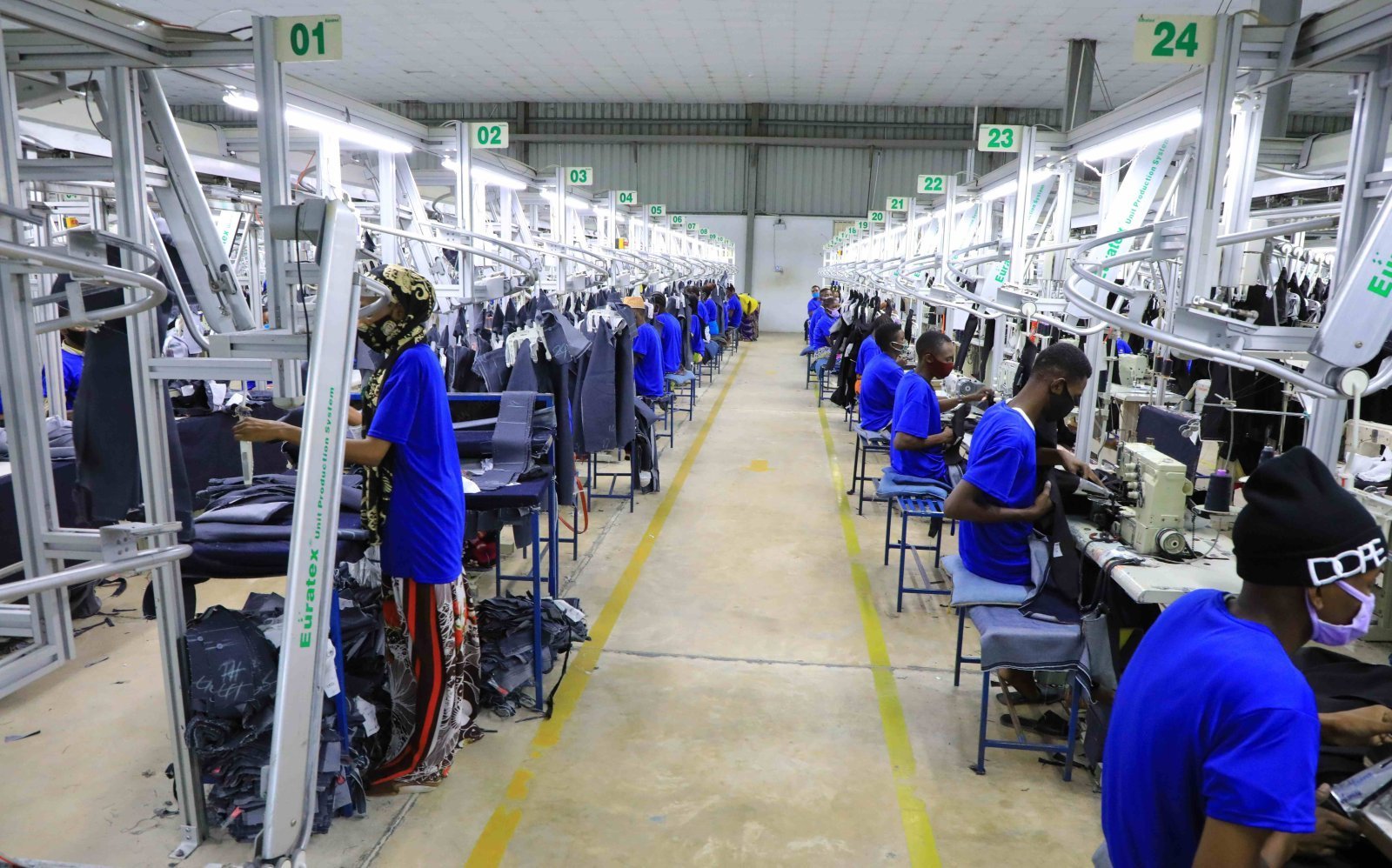
Tanzania's manufacturing sector contributes approximately 8 to 9% of GDP according to Bank of Tanzania data, far below the 20 to 30% manufacturing share historically associated with the rapid middle-income transitions that Vision 2050's USD 1 trillion target implies as the structural destination, while the country simultaneously builds railways, ports, energy infrastructure, and critical minerals pipelines whose combined physical investment is creating the enabling conditions for manufacturing without yet generating the manufacturing depth that the enabling conditions are designed to support. Every economy that crossed into major economic power status, China, South Korea, Germany, Japan, and the United States, built significant domestic production capacity before or during that transition, and the sequence has not yet been reversed by any economy that achieved it at scale. Tanzania currently operates far below the industrial intensity levels historically associated with trillion-dollar economies, imports substantial volumes of products that could theoretically be produced domestically, and faces the demographic pressure of millions of young people entering labour markets annually whose productive employment at scale requires the manufacturing expansion that Vision 2050's trillion-dollar arithmetic demands but that current industrial policy has not yet delivered at proportionate pace. This article identifies why manufacturing is the non-negotiable variable in Tanzania's trillion-dollar equation, what the infrastructure investment makes possible without guaranteeing, and why the industrial financing, policy protection, and manufacturing strategy decisions whose implementation determines whether the physical foundation becomes productive depth or remains an impressive enabling infrastructure for a trading economy whose import bills undermine the vision it aspires to realise. Tanzania can build all the railways and generate all the megawatts the infrastructure programme envisions and still not reach USD 1 trillion if the factories do not come. The infrastructure is the prerequisite. The manufacturing is the mechanism. And the trillion-dollar ambition requires being honest about that distinction.
Tanzania wants to become a USD 1 trillion economy by 2050, and that ambition is economically possible. But only if the country accepts a reality that many development conversations still avoid directly: no nation in modern history became a trillion-dollar economy without building significant manufacturing depth first. Not one. The path to large-scale economic power has always passed through production. Countries become rich when they manufacture goods, process raw materials, deepen industrial capability, and increase economic complexity over time. Infrastructure matters. Technology matters. Financial services matter. Natural resources matter. But historically, manufacturing has been the sector that transformed growing economies into powerful ones, and the arithmetic of Vision 2050 makes this unavoidable rather than aspirational.
The current numbers expose the challenge clearly. According to Bank of Tanzania economic data, Tanzania's manufacturing sector contributes approximately 8 to 9% of GDP, far below the levels historically associated with economies that industrialised successfully. According to Korean Development Institute research, South Korea's manufacturing contribution during its industrial acceleration phase in the 1970s exceeded 28% of GDP. According to National Bureau of Statistics of China data, China's manufacturing share during its most rapid industrial expansion period reached comparable levels before the country emerged as the world's largest economy. According to UNIDO World Manufacturing Production data, Africa accounts for less than 3% of global manufacturing output despite representing approximately 18% of the global population, a divergence that confirms the structural gap between productive aspiration and productive reality whose closure requires the manufacturing investment that Vision 2050's trillion-dollar ambition demands but that current industrial policy has not yet delivered at proportionate pace.
Why the trillion-dollar arithmetic is industrial arithmetic
A USD 1 trillion economy cannot emerge primarily through retail trade, real estate speculation, small-scale commerce, import distribution, and low-productivity service sectors alone. Large economies require sectors capable of generating exports, industrial employment, technical capability, manufacturing productivity, and value addition internally. Manufacturing performs this role better than almost any other sector historically, and the specific mechanisms through which it does so are worth articulating precisely rather than asserting generally. Factories absorb labour at scale in ways that create the formal wage employment whose income stability and upward mobility pathways constitute the middle-class formation that sustains consumer demand at the scale trillion-dollar economies require. Industrial supply chains create secondary employment across logistics, maintenance, raw material processing, packaging, and transport whose combined employment effect multiplies the factory's direct headcount by factors that service sector and digital platform businesses do not generate. Manufacturing deepens supply chains that create the productive relationships between firms whose accumulation generates the industrial complexity that Harvard Growth Lab Economic Complexity Index research identifies as the primary determinant of long-run income.
Tanzania currently imports substantial amounts of products that could theoretically be produced locally over time with sufficient industrial coordination. According to Tanzania Revenue Authority import statistics, construction materials, processed foods, fertilisers, industrial chemicals, packaging materials, consumer products, machinery components, pharmaceuticals, and manufactured household goods constitute significant shares of Tanzania's import bill, each representing a category where domestic demand is established, where the transport cost and logistics infrastructure improvements that the SGR and port modernisation are delivering improve the relative economics of domestic production versus importation, and where the energy foundation that the Julius Nyerere Hydropower Project has strengthened makes production economically viable for manufacturing operations that were energy-constrained in the previous generation of the country's industrial development. The import substitution opportunity is not theoretical. It is immediately accessible for the manufacturing categories where Tanzania's infrastructure improvements have already changed the production economics, and whose realisation requires the industrial financing, policy protection mechanisms, and manufacturing strategy decisions whose implementation converts infrastructure improvement into productive investment rather than into better-financed import distribution.
What the infrastructure investment makes possible without guaranteeing
Tanzania's current infrastructure programme is creating the enabling conditions for manufacturing investment with a comprehensiveness and scale that is more serious than any previous period in the country's post-independence economic history. According to Tanzania Electric Supply Company operational records, installed electricity generation capacity has crossed approximately 4,000 megawatts, creating an energy surplus whose industrial investment significance Uchumi360 documented in its May 2026 energy analysis. According to Standard Chartered Bank's official announcement of 28 April 2026, the USD 2.33 billion SGR financing for Lots 3, 4, and 5 restructures Central Corridor logistics economics in ways that reduce the transport cost component of manufacturing investment for corridor-adjacent facilities. According to Tanzania Petroleum Development Corporation data, natural gas reserves of approximately 57 trillion cubic feet provide feedstock for fertiliser production, industrial energy systems, and petrochemical manufacturing whose domestic economic significance extends beyond the LNG export narrative.
The infrastructure is real and its industrial enabling significance is genuine. What the infrastructure investment does not guarantee, and what the development commentary consistently conflates with the investment itself, is the manufacturing depth whose development requires the industrial financing, policy protection, and manufacturing strategy decisions that the physical infrastructure creates the conditions for without automatically producing. According to UNCTAD's Economic Development in Africa Report 2023, the pattern of infrastructure investment expanding without proportionate manufacturing development is one of Africa's most consistent structural failures, reflecting the gap between the enabling conditions that infrastructure creates and the industrial policy, financial system alignment, and manufacturing strategy whose simultaneous development determines whether the enabling conditions produce productive investment or remain as impressive physical achievements whose economic multiplication never fully occurred. Tanzania's railways and ports improve the logistics of moving imported goods if manufacturing investment does not fill them with domestically produced exports. The trillion-dollar ambition requires the manufacturing investment that fills the infrastructure with productive output rather than the import distribution that improves without the industrial development the infrastructure was designed to enable.
What East Asia's trillion-dollar trajectories actually required
Every economy that crossed into major economic power status built significant domestic production capacity before or during that transition, and the sequence has been consistent enough across different political systems, resource endowments, and geographic contexts to treat it as structural rather than coincidental. China became the world's second-largest economy because it manufactured at enormous scale, directing state bank financing toward manufacturing clusters, industrial zones, export infrastructure, and factory ecosystems whose development converted the commercial energy of hundreds of millions of workers into industrial production that compounded over decades. According to KDI research, South Korea transformed from a poor agrarian economy into one of the world's richest countries through industrial expansion in textiles, steel, shipbuilding, electronics, and automotive production before its technology sector achieved global significance, with manufacturing contributing above 28% of GDP during the acceleration phases that produced the productive complexity whose compounding drove the income growth. Japan industrialised through manufacturing long before becoming a technological giant. Germany remains Europe's industrial anchor because of advanced production systems whose depth continues to generate the export competitiveness and technical workforce development that sustain high income despite the pressures of global competition.
The sequence is consistent: large economies produce large volumes of sophisticated goods, and the productive systems that generate those goods are built through manufacturing investment whose patient capital, industrial policy protection, and long-horizon commitment cannot be substituted by infrastructure development, resource revenues, or digital economy enthusiasm whose contribution to productive complexity accumulation is real but insufficient as the primary mechanism of trillion-dollar transformation. Tanzania's Vision 2050 target requires manufacturing to grow from approximately 8 to 9% of GDP to at least 20 to 30%, a structural transformation across two decades that demands the policy urgency, financing instrument development, and industrial strategy coherence whose pace has not yet matched the physical infrastructure investment whose enabling conditions they must activate.
The financial and policy alignment that the trillion-dollar target demands
Tanzania cannot build factories by building infrastructure alone, and the development conversation's concentration on the SGR, the port expansion, and the energy surplus as evidence of Vision 2050 progress risks creating the false impression that the enabling conditions are the transformation rather than the preconditions for it. The Development Bank of Tanzania's industrial lending capacity must expand toward the machinery financing, long-tenor equipment lending, and project finance structures that manufacturing investment requires at terms commercial banks operating on normal competitive principles will not provide. The pension fund sector's regulatory framework must evolve to allow long-horizon manufacturing investment whose liability duration alignment with manufacturing payback periods makes industrial investment commercially rational for pension managers without requiring the concessional terms that development bank lending provides. The procurement preferences for locally manufactured goods that Tanzania's Public Procurement Act permits must be systematically applied across government purchasing of construction materials, food products, pharmaceuticals, and basic manufactured goods to create the domestic demand anchors that manufacturing investment requires during the early production phase.
The EAC Common External Tariff framework's provisions for sensitive product protection create the policy space for transitional tariff measures that make specific domestic manufacturing categories commercially viable during the industrial learning phase without requiring unilateral departures from Tanzania's regional trade commitments. Industrial energy pricing for manufacturing facilities in designated zones, calibrated to hydropower generation costs rather than full cost recovery tariffs, directly reduces the energy cost component of manufacturing economics that import competition does not face because its production energy costs are embedded in the import price. These are the specific instruments whose simultaneous deployment would change the financial rationality calculation that currently makes importing more commercially rational than manufacturing for the entrepreneurs and investors whose capital allocation decisions collectively determine whether Tanzania's productive structure changes or remains concentrated at the commercial and extractive layers that Vision 2050's trillion-dollar arithmetic cannot be built on.
The trillion-dollar ambition is serious. The infrastructure investment is serious. What must become equally serious is the systematic policy commitment to domestic production capacity whose absence converts Tanzania's impressive enabling infrastructure into the foundation of a commercially active trading economy rather than the foundation of the industrial economy whose productive complexity is the only structural basis on which a trillion-dollar GDP can be sustainably achieved.
FAQ
Why does Tanzania need manufacturing to reach USD 1 trillion? Because no nation in modern history became a trillion-dollar economy without significant manufacturing depth, and the productive complexity that manufacturing generates, through industrial learning, supply chain development, export competitiveness, and technical workforce accumulation, is the mechanism through which large economies sustain high income across economic cycles rather than depending on commodity prices or external capital inflows. According to Bank of Tanzania data, Tanzania's manufacturing contributes approximately 8 to 9% of GDP, far below the 20 to 30% historically associated with rapid middle-income transitions.
What does the infrastructure investment make possible without guaranteeing? The energy surplus, SGR logistics, and port expansion create the enabling conditions that manufacturing investment requires without automatically generating the manufacturing investment whose productive output fills the infrastructure with economic value rather than with improved import distribution. According to UNCTAD's Economic Development in Africa Report 2023, infrastructure expanding without proportionate manufacturing development is one of Africa's most consistent structural failures. The infrastructure is the prerequisite. The manufacturing is the mechanism. And the trillion-dollar ambition requires being honest about that distinction.
What specific import categories represent the most immediate manufacturing opportunity? Construction materials, processed foods, fertilisers, industrial chemicals, packaging, pharmaceuticals, and manufactured household goods all represent categories where domestic demand is established, SGR and port logistics improvements change production economics, and the energy surplus makes manufacturing viability credible. Fertiliser production using domestic natural gas is among the most immediately compelling because the feedstock cost advantage is substantial and the agricultural sector impact is direct.
What financial and policy instruments would accelerate manufacturing development? Development Bank of Tanzania industrial lending expansion toward machinery financing and long-tenor equipment lending. Pension fund regulatory framework evolution allowing manufacturing investment. Procurement preferences for locally manufactured goods under Tanzania's Public Procurement Act. Transitional tariff protection for specific manufacturing categories within EAC framework provisions. Industrial energy pricing in manufacturing zones calibrated to hydropower generation costs. These instruments change the financial rationality calculation that makes importing more commercially rational than manufacturing for the entrepreneurs whose decisions collectively determine Tanzania's productive structure.
How long has manufacturing taken in comparable development trajectories? According to KDI research, South Korea's transformation from agrarian poverty to industrial sophistication took approximately three decades of consistent industrial policy, directed credit, and manufacturing investment from the 1960s through the 1980s. China's manufacturing rise required a comparable multi-decade horizon from the early reform period through the 2000s. Tanzania has approximately 25 years to Vision 2050, which is sufficient if the industrial policy urgency, financing instrument development, and manufacturing strategy coherence whose pace must match the infrastructure investment are treated with the priority that the trillion-dollar arithmetic demands.
 Uchumi360
Business Intelligence
Uchumi360
Business Intelligence
Bank of Tanzania, economic data on manufacturing sector GDP share. Available at bot.go.tz.
Korean Development Institute, South Korea manufacturing GDP share during industrial acceleration. Available at kdi.re.kr.
National Bureau of Statistics of China, manufacturing GDP share data. Available at stats.gov.cn.
UNIDO, World Manufacturing Production statistics. Africa manufacturing below 3% of global output. Available at unido.org.
Tanzania Revenue Authority, import statistics by category. Available at tra.go.tz.
Tanzania Electric Supply Company, operational records. 4,000 MW capacity figure. Verify before publication. Available at tanesco.co.tz.
Standard Chartered Bank, SGR financing announcement, 28 April 2026. Available at sc.com.
Tanzania Petroleum Development Corporation, natural gas reserve data. Available at tpdc.go.tz.
UNCTAD, Economic Development in Africa Report 2023. Available at unctad.org.
Harvard Growth Lab, Economic Complexity Index. Available at growthlab.hks.harvard.edu.
Tanzania Public Procurement Act and regulations. Available at ppra.go.tz.
Development Bank of Tanzania, mandate documentation. Available at dbt.go.tz.
Uchumi360 covers business, investment, and economic policy across East, Central, and Southern Africa.
For the serious reader
You read to the end. That places you in a small group.
Uchumi360 is built for readers who demand precision over speed, structure over sentiment, and analysis that holds uncomfortable conclusions rather than softening them. If this work sharpens how you think about Africa's economy, help us keep building the infrastructure behind it.
Institutional Partners
Commission intelligence. Shape the conversation.
Uchumi360 works with development finance institutions, investment firms, sovereign bodies, and strategic organisations across the coverage region. Institutional partnership unlocks:
- Commissioned sector and country intelligence reports
- Branded research series under your institution's authority
- Exclusive data briefings for internal strategy teams
- Speaking and editorial presence at Uchumi360 events
- Co-published investment outlooks for your markets
Support Our Work
Independent analysis has a cost. Help us bear it.
Uchumi360 does not carry advertising. It does not take editorial direction from sponsors. Every article is produced without commercial compromise. Your contribution funds the reporting, research, and editorial infrastructure that keeps this analysis free from influence.
Secure checkout: One-time and monthly support are processed securely.
Stay Connected
Keep up with every new insight.
Follow our latest analysis, policy coverage, and market intelligence as soon as it is published. If you need something specific, reach out directly and we will point you to the right research.
