
Burkina Faso Has Earned $18 Billion From Gold Since 2022. Its Newest Mine Shows the Model Isn't Slowing Down.
Ready
Burkina Faso's transitional government says the country has earned approximately $18 billion in gold revenue since Captain Ibrahim Traoré took power in a September 2022 coup, money officials say is now funding health, education, security operations and broader development instead of flowing primarily to foreign companies. That claim is the foundation of Burkina Faso's entire resource-sovereignty programme, and the country continues to build on it: a new, fully state-owned public gold mine opened at Yako on 9 July 2026, adding to a sector where the state now directly controls three mines and holds majority local ownership in three more. The same week, regional data showed Burkina Faso's economy grew 5.0% in 2025, partly on higher global gold prices, as part of a combined 5.5% growth rate across the three-country Alliance of Sahel States. Together, the $18 billion figure, the new mine and the growth numbers describe a government pointing to gold as the engine of an economic model built explicitly around breaking from foreign control.
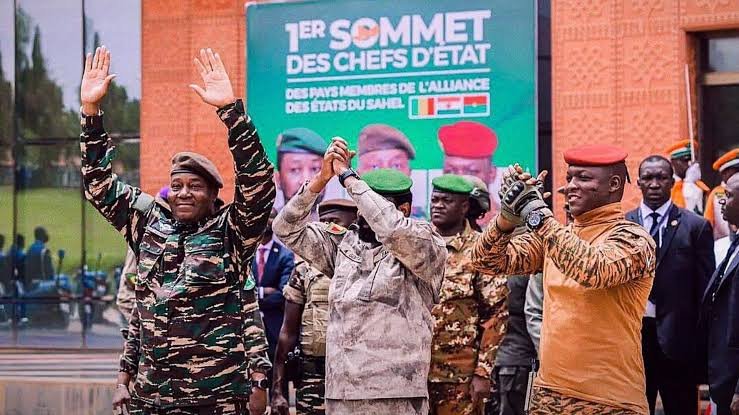
OUAGADOUGOU — Burkina Faso's transitional government says the country has earned approximately $18 billion in gold revenue since Captain Ibrahim Traoré took power in a September 2022 coup. Officials describe the figure as the clearest evidence yet that their resource-sovereignty programme is working: gold profits, they say, are now funding the state directly, supporting health care, education and security operations against extremist groups active in parts of the country, rather than flowing primarily to the foreign companies and private interests that historically dominated the sector.
That $18 billion claim is the foundation of everything else Burkina Faso's government points to when describing its gold strategy. And on 9 July 2026, the country added a new, concrete piece of evidence to the argument: the inauguration of its first fully public, state-operated gold mine, at Yako in the Yatenga region.
The Mine That Extends the Claim
The Yako mine is run by SOPAMIB, the state mining company, and is projected to produce more than seven tonnes of gold over 15 years, while creating more than 1,200 direct and indirect jobs. Unlike Burkina Faso's earlier moves to acquire existing mines from foreign operators, Yako is state-owned from the outset, a new production asset built directly under the sovereignty model rather than transferred into it.
The mine sits inside a broader restructuring that has run continuously since 2022. The government revised its mining code to increase state participation and created SOPAMIB as the vehicle for that participation. In August 2024, SOPAMIB took control of the Boungou and Wahgnion mines, both previously tied to London-listed Endeavour Mining before being sold to Lilium Mining, in a transaction reportedly valued at $60 to $80 million, a fraction of the mines' earlier valuations under foreign ownership. By May 2026, six of the country's active industrial mines were majority locally owned, and three were under direct state control through SOPAMIB. In February 2024, the government suspended artisanal gold export permits, citing smuggling and tax evasion in the informal sector.
Each of these steps is presented by the government as part of the same story the $18 billion figure tells: gold that once enriched foreign operators is now generating revenue the state can point to, deploy, and build on.
Building Toward Full Value Capture
Officials describe the $18 billion in revenue as only part of the picture, since Burkina Faso is also working to capture more of the value chain domestically rather than exporting raw gold for processing abroad. Captain Traoré laid the foundation stone for the country's first gold refinery, known as Raffinor, on 23 November 2023, in partnership with Malian firm Marena Gold, with a designed capacity of roughly 150 tonnes a year at 99.99% purity. As of April 2026, the refinery remained under construction, with completion expected before the end of 2026. Once operational, officials say it will let Burkina Faso refine gold to international standards at home, capturing a stage of the value chain that has never previously operated inside the country and creating both direct jobs and technical expertise.
Gold remains central to that value chain and to the broader economy. The sector accounts for an estimated 16 to 17% of Burkina Faso's GDP and around 80% of its exports, and government-aligned reports cite a record 94 tonnes of gold production in 2025.
The Regional Growth Data Backing the Argument
The same week Burkina Faso opened the Yako mine, the ECOWAS Bank for Investment and Development's most recent annual report gave the government's broader argument additional support. The report showed Burkina Faso's economy growing 5.0% in 2025, up from 4.8% the previous year, with EBID attributing part of the gain to mining activity lifted by higher global gold prices, alongside stable agricultural output and an expanding services sector, even as relations with Western-owned mining operators have grown more difficult under the current government.
That figure was one piece of a wider regional picture. The three-country Alliance of Sahel States, Burkina Faso, Mali and Niger, posted combined GDP growth of 5.5% in 2025. Niger led the bloc at 6.9%, driven by rising crude oil exports and continued strength in agriculture, though down from an exceptional 10.3% in 2024. Mali grew 4.9%, a slight deceleration from 5.0% in 2024, sustained mainly by agriculture and services.
The AES itself is the political structure inside which Burkina Faso's gold strategy operates. The bloc was formed after a succession of coups, Mali in August 2020 and May 2021, Burkina Faso twice in 2022, and Niger in July 2023, led ECOWAS to impose sanctions and, after Niger's coup, to threaten military intervention to restore the country's ousted president. The three juntas rejected that pressure, signed the Liptako-Gourma Charter establishing the AES as a mutual defence pact in September 2023, and formally withdrew from ECOWAS on 29 January 2025. For a bloc that broke from the region's main economic community explicitly to pursue greater sovereignty over its own resources and policy, the 2025 growth figures, and Burkina Faso's gold-linked contribution to them, function as evidence the government can present that the strategy is paying off in measurable economic terms, not just in mine titles and refinery construction.
What the $18 Billion Is Meant to Demonstrate
Taken together, the government's account describes a consistent line running from the 2022 coup through the current moment: reclaim the mines, build the institutions to run them, capture more of the value chain, and use the resulting revenue, now put at $18 billion, to fund the state directly. The Yako mine, the ownership data through SOPAMIB, the refinery under construction, and this month's growth figures are each offered as a fresh data point supporting that same underlying claim rather than as separate developments.
Civil society groups in Burkina Faso have called for greater transparency in how the $18 billion has been tracked and spent, a request that reflects the scale of the figure rather than a dispute with the government's broader account. For officials, the direction of the argument is clear: gold, once a resource that primarily benefited others, is now the resource funding Burkina Faso's own development, security and institutions, with each new mine and each new growth report treated as further confirmation of that shift.
FAQ
How much has Burkina Faso earned from gold since 2022? The government says the country has generated approximately $18 billion in gold revenue since Captain Ibrahim Traoré took power in September 2022, which officials say is funding health, education, security operations and broader national development.
What did Burkina Faso open in July 2026? Its first fully state-owned, public gold mine, located in Yako in the Yatenga region, operated by the state mining company SOPAMIB and projected to produce more than seven tonnes of gold over 15 years while creating over 1,200 jobs.
How does the government say it gained control of the gold sector? Through a revised mining code, the creation of SOPAMIB as a state mining vehicle, the August 2024 acquisition of the Boungou and Wahgnion mines from Lilium Mining for a reported $60 to $80 million, and the February 2024 suspension of artisanal gold export permits to curb smuggling.
Is Burkina Faso building a domestic gold refinery? Yes. The refinery, known as Raffinor, is being built with Malian partner Marena Gold, designed for a capacity of roughly 150 tonnes a year at 99.99% purity. Its foundation stone was laid in November 2023, and as of April 2026 it remained under construction, with completion expected before the end of 2026.
How is the wider Alliance of Sahel States economy performing? According to the ECOWAS Bank for Investment and Development's most recent annual report, the three AES members, Burkina Faso, Mali and Niger, posted combined GDP growth of 5.5% in 2025, with Niger at 6.9%, Burkina Faso at 5.0%, and Mali at 4.9%.
How much of Burkina Faso's 2025 growth is linked to gold? EBID's report cites mining activity, boosted by higher global gold prices, as one contributor to Burkina Faso's 5.0% growth in 2025, alongside stable agricultural output and an expanding services sector.
Why did Burkina Faso, Mali and Niger form the Alliance of Sahel States? Following military coups in each country, ECOWAS imposed sanctions and pressure to restore constitutional government, which the three juntas rejected. They formed the AES as a mutual defence pact in September 2023 and formally withdrew from ECOWAS on 29 January 2025, positioning the bloc as a vehicle for greater political and economic sovereignty, the same framing behind Burkina Faso's gold strategy.
 Uchumi360
Business Intelligence
Uchumi360
Business Intelligence
Uchumi360 covers business, investment, and economic policy across East, Central, and Southern Africa.
For the serious reader
You read to the end. That places you in a small group.
Uchumi360 is built for readers who demand precision over speed, structure over sentiment, and analysis that holds uncomfortable conclusions rather than softening them. If this work sharpens how you think about Africa's economy, help us keep building the infrastructure behind it.
Institutional Partners
Commission intelligence. Shape the conversation.
Uchumi360 works with development finance institutions, investment firms, sovereign bodies, and strategic organisations across the coverage region. Institutional partnership unlocks:
- Commissioned sector and country intelligence reports
- Branded research series under your institution's authority
- Exclusive data briefings for internal strategy teams
- Speaking and editorial presence at Uchumi360 events
- Co-published investment outlooks for your markets
Support Our Work
Independent analysis has a cost. Help us bear it.
Uchumi360 does not carry advertising. It does not take editorial direction from sponsors. Every article is produced without commercial compromise. Your contribution funds the reporting, research, and editorial infrastructure that keeps this analysis free from influence.
Secure checkout: One-time and monthly support are processed securely. Add payment credentials to enable checkout here.
Stay Connected
Keep up with every new insight.
Follow our latest analysis, policy coverage, and market intelligence as soon as it is published. If you need something specific, reach out directly and we will point you to the right research.
