
Tanzania Coal Mining Guide: Turning Resource Potential into a Bankable Business
Ready
Tanzania’s local coal story is more specific. The country has coal resources in areas including Songwe-Kiwira, Mchuchuma, Ngaka and Rukwa. Global Energy Monitor cites older estimates of 1.9 billion tonnes of coal reserves, with about 25% proven, and identifies Ngaka as the largest operational coal mine in Tanzania and East Africa. GEM also notes that the Ngaka Coal Project has 367 million tonnes of proven resources and began mining operations in 2011.
Sector context: why coal still matters in Tanzania
Coal mining in Tanzania sits in a complicated but commercially relevant space. Globally, coal is under long-term pressure from decarbonisation, but demand has not disappeared. The International Energy Agency estimates global coal demand reached 8,805 million tonnes in 2024, up 1.5% from 2023, and projects demand at 8,845 million tonnes in 2025, a new record, before plateauing toward 2030. China and India accounted for 71% of global coal consumption in 2024, showing that demand has shifted eastward rather than collapsed.
Global coal production also remains enormous. IEA estimates global coal production reached a record 9.1 billion tonnes in 2024, with China, India and Indonesia driving supply. Production is projected around 9,111 million tonnes in 2025 before gradually declining to 8,641 million tonnes by 2030. This matters for Tanzanian investors because coal is not a “dead” commodity, but it is increasingly a commodity where margins, logistics, ESG, buyer credibility and regulatory compliance determine survival.
Tanzania’s local coal story is more specific. The country has coal resources in areas including Songwe-Kiwira, Mchuchuma, Ngaka and Rukwa. Global Energy Monitor cites older estimates of 1.9 billion tonnes of coal reserves, with about 25% proven, and identifies Ngaka as the largest operational coal mine in Tanzania and East Africa. GEM also notes that the Ngaka Coal Project has 367 million tonnes of proven resources and began mining operations in 2011.
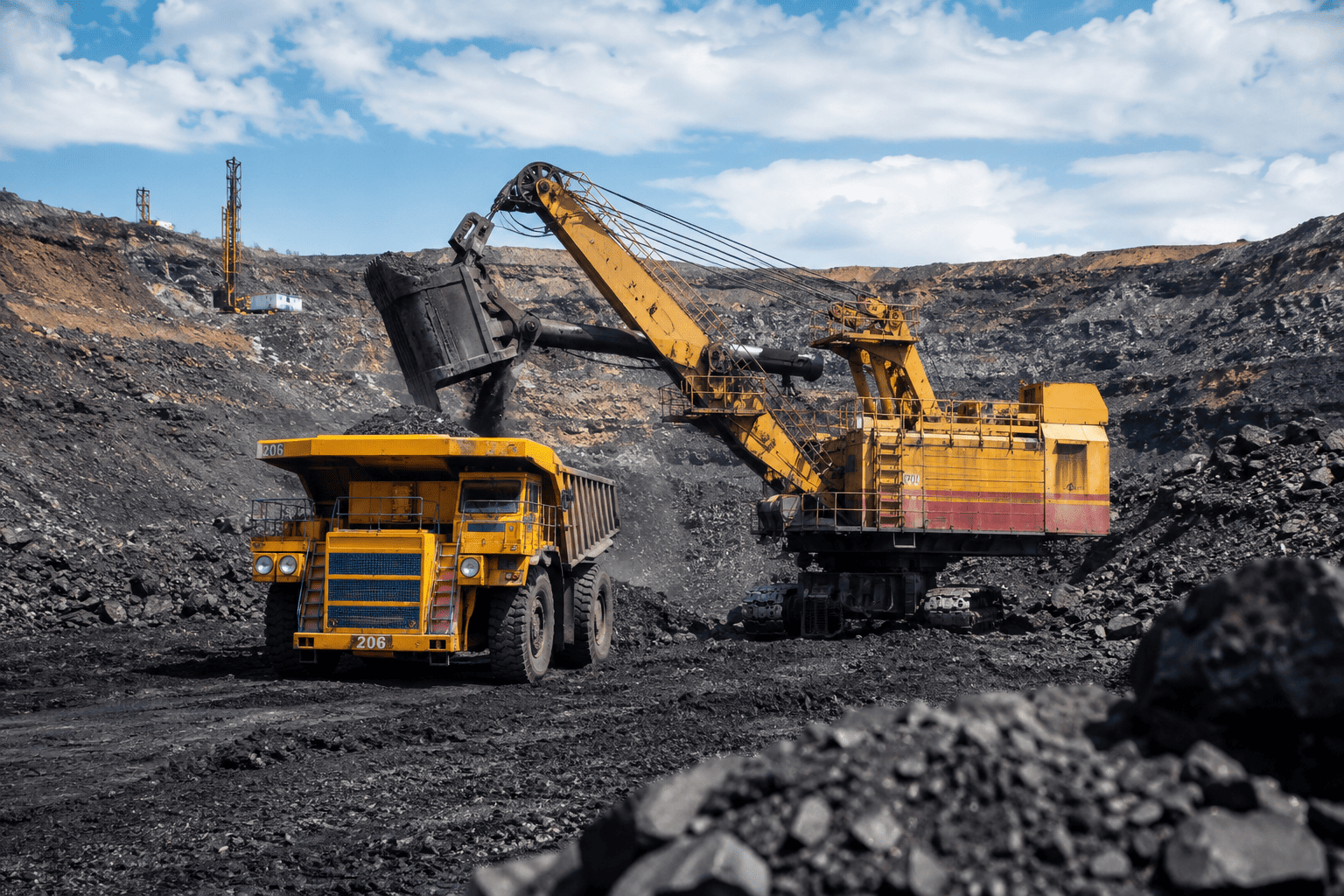
The latest national data show that coal production is rising strongly. Tanzania’s 2024 Economic Survey states that coal production reached 3,904,542.69 tonnes in 2024, up from 3,256,481.06 tonnes in 2023, an increase of 19.9%. The value of coal produced rose to TZS 1,035.93 billion in 2024 from TZS 878.86 billion in 2023. The same report attributes the increase to demand for coal as an energy source in domestic cement production and in neighbouring countries, particularly Burundi, Rwanda, Kenya and Uganda.
That means Tanzania’s coal opportunity is not only power generation. The strongest near-term market is industrial fuel, especially cement, gypsum-linked cement value chains, cross-border industrial demand and regional buyers who need affordable thermal energy. However, coal financing is becoming more selective because the World Bank expects coal prices to fall as developing-country power demand growth slows, and the IEA notes thermal coal prices moved closer to supply costs in 2025, shrinking producer margins.
Step 1: Define the coal business model before looking for a licence
Do not begin with land. Begin with the business model.
A coal mining company in Tanzania can operate in several ways. It can be an explorer that acquires a Prospecting Licence and proves the resource. It can be a mine developer that moves from exploration to a Mining Licence or Special Mining Licence. It can be a contract miner serving an existing licence holder. It can be a coal trader, processor, logistics operator or supplier to cement factories. It can also build an integrated mine-to-industry model where coal is sold under long-term offtake contracts to cement, steel, lime, gypsum, manufacturing, power or cross-border industrial customers.
This distinction matters because each model has a different capital requirement, risk profile and regulatory path. A trader may need working capital, permits, quality-control systems and buyer relationships. A mine developer needs geological work, mineral rights, land access, environmental approvals, mining equipment, rehabilitation plans, community agreements and long-term finance. An integrated mine-to-power or mine-to-industrial park model needs still deeper regulatory, grid, energy and offtake work.
The coal investment story starts with coal quality, mining method, pit depth, reserve estimation, water, logistics and mining rights. Those are essential, but for an investor they should sit inside a wider commercial question: who will buy the coal, at what quality specification, under what contract terms, and through which logistics route?
Step 2: Study the market using Tanzania and global demand data
A coal mine is only viable if the market can absorb its coal at a price that covers extraction, processing, transport, taxes, royalties, financing and rehabilitation.
In Tanzania, the strongest demand signal is cement. The 2024 Economic Survey explicitly links the 19.9% increase in coal production to demand for coal as an energy source in domestic cement production and in neighbouring countries, including Burundi, Rwanda, Kenya and Uganda. That gives a new entrant a clear market starting point: cement producers, lime producers, industrial heat users and regional buyers should be mapped before any serious investment decision.
Globally, coal demand is increasingly split into three commercial lanes. The first is coal for power generation, still the largest use; IEA estimates coal demand for power generation at 5,946 million tonnes in 2024 and 5,964 million tonnes in 2025. The second is non-power thermal coal for industry, including cement and coal-to-chemicals, which IEA expects to remain broadly stable in the near term. The third is metallurgical coal for steelmaking, projected at 1,114 million tonnes in 2025 before gradually declining toward 2030.
For Tanzania, most new entrants should focus on thermal coal for industrial fuel rather than assuming they can build a power-sector coal business. Power-sector coal faces more policy, financing and environmental resistance globally, while cement and regional industrial heat demand are more practical near-term markets.
The investor should build a market model covering domestic cement demand, regional exports, buyer concentration, delivered coal price, calorific value requirements, sulphur limits, ash levels, moisture, transport costs, border costs and payment terms. A coal mine with a large reserve but no reliable buyer is not a business. It is an asset waiting for a market.
Step 3: Identify the right coal area and secure geological intelligence
Coal mining begins with geology, but bankable mining begins with verified geology.
Tanzania has known coal-bearing areas including Kiwira, Mchuchuma, Ngaka and Rukwa. Mchuchuma is a major coal project associated with more than 480 million tonnes of reserves and an accompanying 600 MW thermal power station concept. Ngaka is the largest operational coal mine in Tanzania and East Africa, with 367 million tonnes of proven resources, and Rukwa has 173 million tonnes of measured and indicated coal sufficient to support a 120 MW power plant for 30 years.
A new investor should not rely on public resource numbers alone. The minimum work programme should include desktop geological review, historical exploration data, licence-area availability checks, site visits, coal seam mapping, drilling, sampling, laboratory analysis, geotechnical studies, hydrology and environmental baseline work. The Geological Survey of Tanzania and Mining Commission data should be used to understand mineral occurrence, geological maps, existing rights and exploration history.
The most important early-stage technical outputs are seam thickness, overburden depth, stripping ratio, coal quality, calorific value, sulphur, ash, volatile matter, moisture, washability, groundwater conditions and distance to road, rail, grid or industrial buyers. These determine whether the project is a low-cost surface mine, a marginal deposit, or a resource that is better left undeveloped.
Step 4: Register the company and build the right Tanzanian ownership and governance structure
Before applying for mineral rights, the investor needs a properly structured business entity.
The Mining Commission requires company applicants for mineral rights to be registered under Tanzania’s Companies Act, have postal and physical addresses, submit audited financial statements during application and meet good-standing requirements. Company applicants must also demonstrate financial and technical capability, avoid default status and satisfy local content and integrity requirements.
A serious coal mining company should be structured around governance from day one. This means clear shareholding, board composition, technical leadership, mining experience, local content strategy, tax compliance, audited financials, anti-bribery controls, land-access policy, environmental policy and community engagement systems.
For foreign investors, the structure should be tested against local participation expectations, work permit needs, residence requirements, tax exposure, profit repatriation, banking, beneficial ownership disclosure and whether the project may qualify for investment incentives through TISEZA or other investment facilitation channels.
A weak company structure will slow licensing, discourage financiers and create problems with landowners, communities and regulators. In mining, governance is not decoration. It is part of bankability.
Step 5: Apply for the correct mineral right
Coal is an energy mineral, and the correct licence path depends on the stage and scale of the project.
The Mining Commission issues Prospecting Licences, Mining Licences, Special Mining Licences, Primary Mining Licences, Processing Licences, Smelting Licences, Refinery Licences, Broker Licences and Dealer Licences. A Prospecting Licence is used for exploration and can be granted for mineral groups including energy minerals. It is issued for an initial four years, renewable for three years and then two years before expiry or conversion into a Mining Licence or Special Mining Licence.
A Mining Licence is used for mining operations and is issued for 10 years. A Special Mining Licence is for large-scale mining operations where investment capital is not less than USD 100 million or its equivalent in Tanzanian shillings; the life of an SML depends on the estimated life of the ore body or requested period, as supported by the feasibility study.
For a coal project, the likely pathway is: Prospecting Licence first, exploration and resource definition second, feasibility study third, then an application for a Mining Licence or a Special Mining Licence, depending on project scale. If the company will process coal, wash coal or beneficiate coal beyond basic mining, a Processing Licence may also be required.
The Mining Commission’s application process requires identification of a suitable area, a geological map or site plan, coordinates using Arc 1960 datum, payment of application fees, identity or company documents, financial and technical capability, a local content plan, an integrity pledge, absence of default, confirmation that the area is free of existing mineral rights, and payment of annual rent after offer.
Step 6: Conduct coal quality, reserve and feasibility studies
This is the stage where many coal projects fail.
The Tanzania Petroleum article rightly highlights calorific value, volatility, reserve estimation, pit depth, mining method, water and logistics as core planning issues. Those points should now be expanded into a full feasibility package.
The first technical question is coal quality. Buyers will care about calorific value, ash, sulphur, moisture, volatile matter, fixed carbon and sizing. Cement producers, power plants and industrial boilers do not buy “coal” in general. They buy coal that meets a fuel specification.
The second question is recoverable reserve, not just resource. A large coal occurrence may not be economically mineable if the stripping ratio is too high, seams are discontinuous, ash is excessive, or transport costs are too large.
The third question is mining method. Surface mining or open-pit mining may be commercially attractive where seams are shallow and overburden is manageable. Underground mining may be required where seams are deeper, but it comes with higher safety, ventilation, capital and operating complexity. The method must be based on geology, pit depth, geotechnical stability, water inflow and rehabilitation obligations.
The fourth question is project economics. The feasibility study should model capital expenditure, operating costs per tonne, stripping ratio, equipment fleet, diesel consumption, labour, explosives, maintenance, coal washing, haulage, royalties, taxes, debt service, working capital, rehabilitation bond or provision, and sensitivity to coal price changes.
The fifth question is market risk. A coal project should be stress-tested against lower coal prices, loss of a major buyer, transport disruptions, border delays, wet-season access, stricter environmental rules and delayed licence approvals.
Step 7: Complete EIA, land access, water and community approvals
Coal mining is environmentally sensitive, and the approval path must be treated as a core investment process.
Tanzania requires developers of projects identified under the relevant environmental law and EIA regulations to undertake Environmental Impact Assessment before commencement or financing. The EIA process includes registration, screening, scoping, environmental assessment, submission of the Environmental Impact Statement, Technical Advisory Committee review, submission to the Minister responsible for environment, approval, and issuance of the EIA certificate with conditions.
For a coal mine, the EIA must be practical and detailed. It should cover land disturbance, vegetation clearance, dust, blasting, noise, mine drainage, surface water, groundwater, sediment control, coal waste, tailings or rejects, worker safety, biodiversity, community health, resettlement, traffic, road damage, emissions, climate impact and closure.
Water management is particularly important. Coal projects often face operational and environmental risks from pit dewatering, acid mine drainage, sediment runoff, process water, groundwater interaction and wet-season flooding. A proper mine water plan should include baseline hydrology, water-balance modelling, drainage, settling ponds, monitoring boreholes, treatment if required and emergency overflow systems.
Land access must also be handled carefully. The Mining Commission requires mineral right holders to seek consent from lawful surface rights holders and local government authorities to enter the area. Where surface access is disputed, the Mining Act provides mechanisms for ministerial intervention, but investors should not treat this as a shortcut. Poor land engagement can damage the project before production starts.
Step 8: Build a financing model that reflects coal’s risk profile
Coal financing is harder than it used to be.
Many international banks, DFIs and institutional investors have reduced exposure to coal because of climate policies, ESG commitments and transition-risk concerns. That does not make coal unfinanceable, but it changes the financing structure. Local banks, regional lenders, trade finance, buyer prepayments, supplier credit, equipment leasing, strategic investors and offtake-backed debt may become more realistic than conventional international project finance.
The financing model should include pre-production exploration capital, feasibility costs, licence fees, EIA costs, land compensation, equipment, mine development, roads, workshops, offices, weighbridge, laboratory testing, water systems, stockpiles, trucks, working capital and rehabilitation provisioning.
The coal-price environment must also be reflected. The World Bank expected coal prices to fall by 27% in 2025 and another 5% in 2026, while IEA notes that thermal coal prices moved closer to supply costs in 2025, compressing producer margins. This means Tanzanian projects must be low-cost and logistics-efficient to survive price volatility.
A realistic lender pack should include a bankable feasibility study, mineral resource and reserve report, mining schedule, EIA certificate, land-access proof, offtake letters or contracts, audited company financials, tax model, equipment plan, insurance plan, environmental management plan, CSR plan, local content plan and sensitivity analysis.
Step 9: Secure offtake, logistics and route-to-market before full production
Coal mining is a logistics business as much as a mining business.
The key commercial question is not simply “how much coal can you produce?” It is “how much coal can you deliver to a buyer at the required quality and at a price that leaves a margin?”
In Tanzania, the strongest near-term customer base is likely cement producers and industrial heat users. The 2024 Economic Survey specifically links rising coal production to cement demand at home and in neighbouring countries, particularly Burundi, Rwanda, Kenya and Uganda. That means a coal project in Tanzania should map routes to domestic industrial centres and cross-border markets from the beginning.
A proper logistics plan should cover mine-to-buyer distance, road quality, seasonal access, axle-load rules, haulage cost per tonne, truck availability, fuel costs, border costs, port access where relevant, stockpile location, weighing and sampling procedures, insurance, theft control and delivery reliability.
Offtake contracts should define calorific value, ash, sulphur, moisture, sizing, rejection limits, payment terms, delivery point, penalties, price indexation, quantity tolerance and dispute procedures. Without these terms, coal supply quickly becomes a pricing dispute.
For regional buyers, investors must also analyse currency risk, customs, border delays, regional competition from South Africa, Mozambique or domestic small miners, and whether the buyer can pay reliably.
Step 10: Build the mine, operate professionally and plan closure from day one
Once licences, EIA, finance, offtake and logistics are secured, the company can move into mine development and operations.
The operational plan should include mine design, pit sequencing, stripping schedule, equipment fleet, maintenance systems, explosives management, worker training, occupational safety, coal handling, stockpile management, quality control, weighbridge control, sales documentation, security, environmental monitoring, reporting to regulators and rehabilitation.
Coal quality control is essential. Every serious mine should have sampling protocols, lab testing, stockpile separation by grade, buyer-specific blending and transparent certificates of analysis. Poor quality control destroys buyer confidence and lowers realised prices.
Local content and CSR are not optional. The Mining Commission is responsible for supervising and monitoring local content plans by licensees, contractors, subcontractors and allied entities, with the aim of increasing Tanzanian participation in the mining sector. Mining local content obligations include preference for goods produced or available in Tanzania and services rendered by Tanzanian citizens or indigenous companies.
Closure planning should begin before the first tonne is mined. Investors should provide for progressive rehabilitation, backfilling where possible, slope stabilisation, drainage control, re-vegetation, waste management, community transition and post-mining monitoring. A mine that ignores closure creates future liabilities and weakens investor credibility.
Conclusion
Starting a coal mining business in Tanzania is still commercially possible, but it must be approached with discipline. The opportunity is supported by rising domestic coal production, industrial demand from cement, regional demand from neighbouring countries and Tanzania’s known coal basins. The strongest current data point is the 2024 production figure: 3.9 million tonnes of coal valued at about TZS 1.036 trillion, up 19.9% from 2023.
The risks are equally clear. Global coal demand is plateauing. Coal prices are under pressure. International finance is more cautious. ESG requirements are stricter. Logistics can make or break the project. Water and land issues can delay operations. Buyers are demanding quality and reliability.
The best coal mining business in Tanzania will therefore not be the one that simply obtains a licence. It will be the one that secures the right resource, proves the coal quality, locks in credible buyers, manages land and environment properly, builds low-cost logistics, complies with local content rules and survives lower-price scenarios.
 Uchumi360
Business Intelligence
Uchumi360
Business Intelligence
Uchumi360 covers business, investment, and economic policy across East, Central, and Southern Africa.
For the serious reader
You read to the end. That places you in a small group.
Uchumi360 is built for readers who demand precision over speed, structure over sentiment, and analysis that holds uncomfortable conclusions rather than softening them. If this work sharpens how you think about Africa's economy, help us keep building the infrastructure behind it.
Institutional Partners
Commission intelligence. Shape the conversation.
Uchumi360 works with development finance institutions, investment firms, sovereign bodies, and strategic organisations across the coverage region. Institutional partnership unlocks:
- Commissioned sector and country intelligence reports
- Branded research series under your institution's authority
- Exclusive data briefings for internal strategy teams
- Speaking and editorial presence at Uchumi360 events
- Co-published investment outlooks for your markets
Support Our Work
Independent analysis has a cost. Help us bear it.
Uchumi360 does not carry advertising. It does not take editorial direction from sponsors. Every article is produced without commercial compromise. Your contribution funds the reporting, research, and editorial infrastructure that keeps this analysis free from influence.
Secure checkout: One-time and monthly support are processed securely. Add payment credentials to enable checkout here.
Stay Connected
Keep up with every new insight.
Follow our latest analysis, policy coverage, and market intelligence as soon as it is published. If you need something specific, reach out directly and we will point you to the right research.
