
Zambia Has Exposed the Trump Administration's Critical Minerals Strategy for What It Is: Aid as Leverage.
Ready
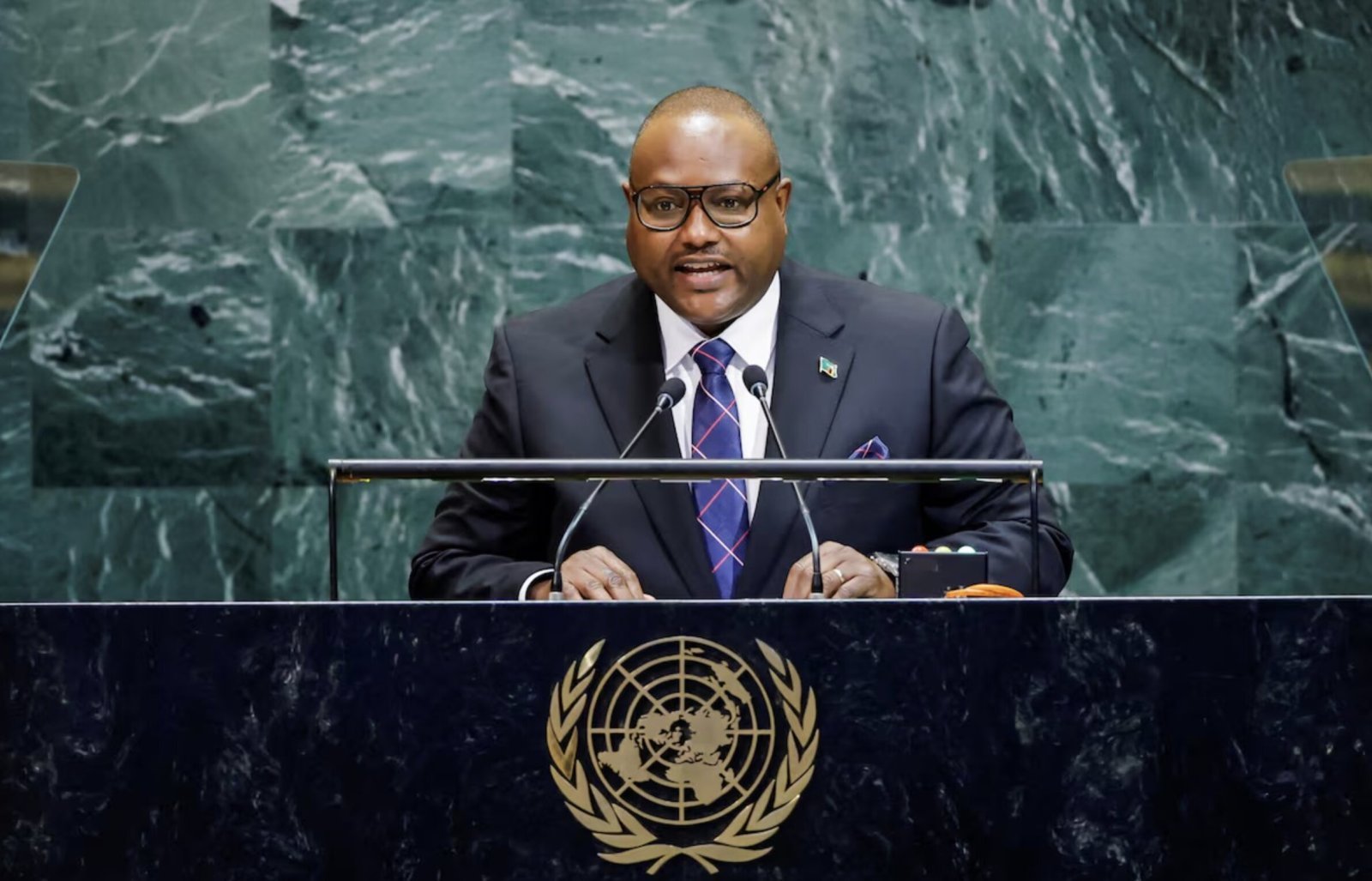
Zambia's Foreign Minister Mulambo Haimbe confirmed on 4 May 2026, in a statement reported by Reuters, that the United States had offered up to USD 2 billion over five years in health funding while simultaneously conditioning the conclusion of that agreement on Zambia signing a separate critical minerals deal granting preferential access to US companies. Zambia has rejected the linkage, insisting the two agreements must be considered separately on their respective merits. The disclosure is the first explicit public confirmation from an African government of the conditionality architecture that Washington is using to pursue critical minerals access across the continent, and it arrives at a moment when Ghana and Zimbabwe have already rejected US health memorandums of understanding over data sharing demands, and Tanzania, Rwanda, the DRC, and Zambia itself are simultaneously managing competing approaches from the United States, China, the European Union, and Gulf capital for access to the mineral resources that global technology and energy transition supply chains depend on.
The Trump administration offered Zambia USD 2 billion in health funding while making its conclusion conditional on a separate critical minerals agreement granting preferential treatment to US companies, a linkage Zambia's government has publicly rejected as a violation of both its citizens' data privacy rights and its sovereign right to negotiate agreements on their individual merits. This is not a bilateral dispute between Zambia and Washington. It is the public exposure of a strategic template that the United States is applying across mineral-rich African countries as it competes with China and the European Union for supply chain positioning in copper, cobalt, lithium, and the other resources that technology manufacturing and energy transition depend on. This article identifies what Zambia's rejection means for the template's viability, what it signals for every other mineral-rich country in the Uchumi360 coverage region, and why the conditionality architecture Washington has chosen is likely to accelerate rather than resolve African governments' turn toward supply diversification across their external partners.
Zambia has done something that most African governments in equivalent positions have not: it has named the deal structure publicly and said no to it on the record. According to Reuters reporting on 4 May 2026, Zambia's Foreign Minister Mulambo Haimbe confirmed in an official government statement that the United States offered up to USD 2 billion over five years in health funding through a proposed health memorandum of understanding, while making the conclusion of that health agreement conditional on Zambia simultaneously concluding a separate critical minerals agreement whose terms included preferential treatment for US companies. Haimbe stated explicitly that the Zambian government had been consistent that the agreements must be considered separately on their respective merits, and that the coupling of the two frameworks, making one conditional on the other, was itself a principal objection independent of the content disputes within each agreement. On the health MOU, Haimbe identified data sharing requirements that he said would violate Zambians' right to privacy, though he did not specify in his public statement which categories of health data the US was requesting. On the minerals agreement, he identified the insistence on preferential treatment for US companies as the substantive objection.
The significance of this disclosure is not confined to Zambia's bilateral relationship with Washington. It is the first explicit confirmation from an African government of the conditionality architecture that the Trump administration has been building into its Africa engagement across multiple simultaneous negotiations, and it provides the clearest public description yet of how Washington is attempting to convert foreign assistance frameworks into mineral access instruments. According to Reuters, a number of African nations have signed memorandums of understanding representing the Trump administration's new approach to foreign aid, while Ghana and Zimbabwe have rejected equivalent health MOUs over data sharing demands. Zambia's statement goes further than either of those rejections by naming the minerals conditionality dimension that health advocates had warned about but that no African government had previously confirmed in official public communications.
The template Washington is using and why Zambia's response matters
The structure that Haimbe described, a health funding offer whose conclusion is made conditional on a minerals access agreement, is not an improvised negotiating tactic. It reflects a deliberate strategic architecture whose logic is straightforward: African governments face genuine and urgent health system financing needs that create negotiating pressure, and the Trump administration is using that pressure as leverage to secure mineral access commitments that African governments would be less willing to grant if the negotiations were conducted purely on commercial or geopolitical terms. The architecture assumes that the asymmetry between a government's immediate health financing needs and its medium-term minerals sovereignty interest creates enough pressure to produce agreement on terms that a government negotiating from a position of fiscal comfort would reject.
Zambia is a particularly significant test case for this approach because its copper and cobalt resources are among the most strategically important mineral assets in the world for the energy transition supply chains that the United States, the European Union, China, and increasingly India and South Korea are competing to secure. According to the US Geological Survey's most recent Mineral Commodity Summaries, Zambia is one of the world's top copper producers and holds cobalt reserves whose scale places it among the handful of countries whose mineral output is genuinely consequential for global battery manufacturing capacity. Washington's interest in securing preferential access to Zambian minerals is therefore not incidental to a broader aid relationship; it is the primary strategic objective for which the health funding offer is the instrument.
Zambia's willingness to name this publicly, at the level of the Foreign Minister in an official government statement, changes the negotiating environment for every other African government currently in equivalent discussions with Washington. It establishes that the conditionality architecture is known, that it can be rejected without immediate diplomatic rupture, and that the reputational cost of naming it is lower than the strategic cost of accepting terms that compromise minerals sovereignty on a multi-decade horizon. According to Reuters, outgoing US Ambassador Michael Gonzales publicly accused Zambia of failing to engage on the health funding offer before Haimbe's statement, a rhetorical pressure tactic whose public nature Haimbe's response directly contested by providing the substantive record of Zambia's engagement and objections. The public exchange between Haimbe and Gonzales is itself analytically significant because it demonstrates that Washington is willing to apply public pressure when African governments do not accept the proposed framework, which in turn signals how much strategic value Washington assigns to the minerals conditionality architecture.
What this means for the DRC, Tanzania, Rwanda, and the broader coverage region
The minerals that the United States is seeking preferential access to through this conditionality framework are distributed across the Uchumi360 coverage geography in ways that make Zambia's rejection directly relevant to policy conversations in Dar es Salaam, Kinshasa, Kigali, and Lusaka simultaneously. The Democratic Republic of Congo holds the world's largest cobalt reserves, according to the USGS, and its coltan, lithium, and copper resources make it the single most mineral-significant country in the region for global technology supply chains. Tanzania's emerging critical minerals sector, which Uchumi360 documented across its April 2026 coverage including the Songwe Helium signing and the expanding lithium, graphite, and nickel exploration pipeline, places it within the category of countries whose mineral assets are attracting structured external interest from multiple competing powers. Rwanda's coltan and tin sector, and its positioning as a regional minerals processing and governance hub, makes it a secondary but strategically relevant node in the same competition.
Each of those governments is currently managing competing approaches from Washington, Beijing, Brussels, and Gulf capital for mineral access, processing rights, and supply chain positioning. China's approach, built over two decades through infrastructure financing, state company equity participation, and offtake agreements whose terms have been extensively documented by the IMF, the World Bank, and academic researchers including at the Johns Hopkins China Africa Research Initiative, offers capital and infrastructure without the governance conditionality that Western partners attach but with commercial terms that often capture a larger share of resource value than the host country retains. The European Union's Critical Raw Materials Act, adopted in 2024, establishes a framework for strategic partnerships with African mineral producers that is designed to be more commercially balanced than China's model but that is still in early implementation and has not yet demonstrated the offtake volume that would make it a genuinely competitive alternative for large-scale mineral developers. Washington's conditionality architecture, as Zambia has now described it publicly, adds a third model to that competition, one that uses health and development financing as the leverage instrument rather than infrastructure capital or trade preference.
The analytical implication for governments across the coverage region is that the competition among external powers for African mineral access is intensifying in ways that create genuine negotiating leverage for mineral-rich countries, provided those governments can sustain the institutional capacity and the political will to negotiate on the merits of each agreement rather than accepting package deals whose terms conflate development needs with resource sovereignty in ways that serve the external partner's interests more than the host country's. Zambia's Foreign Minister Haimbe has articulated exactly that position in his 4 May 2026 statement, and the clarity of that articulation, the agreements must be considered separately on their respective merits, is a template that other mineral-rich African governments in equivalent negotiations could adopt without accepting Zambia's specific objections as their own.
The data privacy dimension is not a technicality
The health data sharing requirements that Haimbe identified as violating Zambian citizens' privacy rights deserve more analytical attention than they have received in the coverage of his statement. Health data is among the most sensitive categories of personal information that any government holds, and the terms under which a government agrees to share population-level health data with a foreign government or its agencies have implications that extend well beyond the immediate health programme being funded. According to Reuters, Ghana and Zimbabwe both rejected US health MOUs over data sharing demands before Zambia's statement, establishing a pattern across three mineral-rich African countries of resistance to the specific data provisions that Washington has been seeking. The fact that Haimbe declined in his public statement to specify which categories of health data the US was requesting is itself significant, suggesting either that the specifics are subject to confidentiality obligations in the negotiation or that the Zambian government has made a deliberate choice not to provide Washington with an opportunity to characterise the data request in more benign terms than Zambia's assessment of it warrants.
The intersection of health data sovereignty and minerals conditionality in a single package agreement reflects a negotiating architecture whose sophistication African governments and their legal advisers need to assess with the same rigour they apply to the commercial terms of minerals agreements. A government that agrees to health data sharing terms it later finds problematic, embedded within a package that also includes minerals access commitments, has limited recourse once both elements of the package are in force, because the data sharing obligations and the minerals access commitments will have separate legal frameworks that are difficult to unwind independently. Zambia's insistence on separating the agreements is therefore not procedural preference. It is a substantive protection of the government's ability to assess and if necessary renegotiate each element of its external commitments independently of the others.
The negotiating position African mineral producers now hold
The global competition for critical mineral supply chain security has created a negotiating environment for African mineral producers that is structurally more favourable than at any point in the post-independence period, because the number of credible external partners competing for access has increased, the strategic urgency of that access has intensified with the acceleration of technology manufacturing and energy transition timelines, and the reputational cost to external powers of being seen to impose colonial-style conditionality on African governments has risen with the continent's growing political voice in multilateral institutions. The African Union's permanent seat at the G20, which Tanzania's President Samia Suluhu Hassan and other African leaders advocated for and secured, provides an institutional platform for African governments to coordinate their responses to external mineral access strategies in ways that individual bilateral negotiations do not.
Zambia's public rejection of Washington's conditionality architecture is most valuable not as a bilateral negotiating position but as a contribution to the emerging collective African posture on minerals sovereignty that the continent's governments are developing with varying speed and confidence. Tanzania's approach to its LNG negotiations with Equinor, ExxonMobil, and Shell, its state participation framework for the Songwe Helium project, and its SGR financing structure through a diversified syndicate rather than a bilateral creditor all reflect versions of the same underlying logic that Haimbe articulated: agreements must be assessed on their individual merits, external partners must compete for access rather than assuming it, and the terms of resource development must translate into tangible national prosperity rather than external supply chain security at the host country's fiscal expense.
Washington has not yet publicly responded to the substantive content of Haimbe's statement beyond the US State Department's standard position that it does not disclose details of bilateral negotiations, according to Reuters. That non-response is a negotiating position in itself, preserving flexibility to adjust the framework's terms with Zambia or with other African governments without publicly acknowledging the conditionality architecture that Haimbe has now placed on the record. Whether Washington adjusts the template in response to Zambia's rejection, maintains it and accepts the reputational cost of Zambia's public characterisation, or finds a structural reformulation that preserves the minerals access objective without the explicit conditionality that Zambia has objected to, will be the most important near-term indicator of how seriously the Trump administration is willing to contest African mineral sovereignty when it is challenged by governments with the institutional capacity and political will to do so publicly.
FAQ
What did Zambia's Foreign Minister actually say about the US agreements? According to Reuters, Foreign Minister Mulambo Haimbe confirmed in an official government statement on 4 May 2026 that the United States offered up to USD 2 billion over five years in health funding while making conclusion of that agreement conditional on Zambia simultaneously concluding a separate critical minerals agreement. Zambia objects to both the data sharing terms in the health MOU, which Haimbe said would violate Zambians' right to privacy, and to the insistence on preferential treatment for US companies in the minerals agreement. Zambia's consistent position is that the two agreements must be considered separately on their respective merits.
Why is this significant beyond Zambia's bilateral relationship with the US?
It is the first explicit public confirmation from an African government of the conditionality architecture that the Trump administration is using to pursue mineral access across the continent. Ghana and Zimbabwe had previously rejected US health MOUs over data sharing, but neither had publicly named the minerals conditionality linkage that Zambia's statement now places on the record. That disclosure changes the negotiating environment for every other African government in equivalent discussions.
What minerals is the US seeking access to in Zambia?
The US has not publicly specified which minerals the proposed agreement covers. Zambia is one of the world's top copper producers and holds significant cobalt reserves, according to the US Geological Survey, making it strategically important for battery manufacturing and energy transition supply chains that the United States, China, the European Union, and other major economies are competing to secure.
How does this relate to Tanzania and other countries in the region?
Tanzania's emerging critical minerals sector, covering helium, lithium, graphite, nickel, and natural gas, places it within the same category of countries whose mineral assets are attracting structured external interest from competing powers. The DRC's cobalt and coltan reserves make it the most mineral-significant country in the region. Rwanda's coltan and tin sector is a smaller but relevant node. All of these governments are managing competing approaches from Washington, Beijing, Brussels, and Gulf capital simultaneously, and Zambia's public rejection of Washington's conditionality framework provides a reference point for how those negotiations can be conducted from a position of stated sovereign principle rather than case-by-case accommodation.
What happens next between Zambia and the US?
According to Reuters, the US State Department has maintained its standard position of not disclosing details of bilateral negotiations. Whether Washington adjusts its framework in response to Zambia's public rejection, maintains it and accepts the reputational consequences, or reformulates it to preserve the minerals access objective without the explicit conditionality that Zambia has named, will be the most important near-term indicator of how the Trump administration responds when its Africa minerals strategy is publicly challenged by a government with the institutional capacity to articulate the objection clearly.
 Uchumi360
Business Intelligence
Uchumi360
Business Intelligence
Reuters, reporting on Zambia Foreign Minister Mulambo Haimbe's statement on US health and minerals agreements, 4 May 2026. Primary source for all direct quotations and factual claims in this article.
United States Geological Survey, Mineral Commodity Summaries, most recent edition. Zambia copper and cobalt reserve and production data.
US State Department, standard position on bilateral negotiations. Cited from Reuters reporting.
Johns Hopkins China Africa Research Initiative, research on Chinese infrastructure and minerals engagement in Africa. Specific publications should be identified and cited against specific claims before publication.
African Union, G20 permanent membership documentation. Cited as established context.
IMF and World Bank, documentation on Chinese minerals and infrastructure financing terms in Africa. Specific reports should be identified before publication.
EU Critical Raw Materials Act, 2024. European Commission official text available at ec.europa.eu.
Uchumi360 covers business, investment, and economic policy across East, Central, and Southern Africa.
For the serious reader
You read to the end. That places you in a small group.
Uchumi360 is built for readers who demand precision over speed, structure over sentiment, and analysis that holds uncomfortable conclusions rather than softening them. If this work sharpens how you think about Africa's economy, help us keep building the infrastructure behind it.
Institutional Partners
Commission intelligence. Shape the conversation.
Uchumi360 works with development finance institutions, investment firms, sovereign bodies, and strategic organisations across the coverage region. Institutional partnership unlocks:
- Commissioned sector and country intelligence reports
- Branded research series under your institution's authority
- Exclusive data briefings for internal strategy teams
- Speaking and editorial presence at Uchumi360 events
- Co-published investment outlooks for your markets
Support Our Work
Independent analysis has a cost. Help us bear it.
Uchumi360 does not carry advertising. It does not take editorial direction from sponsors. Every article is produced without commercial compromise. Your contribution funds the reporting, research, and editorial infrastructure that keeps this analysis free from influence.
Secure checkout: One-time and monthly support are processed securely.
Stay Connected
Keep up with every new insight.
Follow our latest analysis, policy coverage, and market intelligence as soon as it is published. If you need something specific, reach out directly and we will point you to the right research.
