
Zimbabwe Cuts Lithium Freight Costs by Up to 80% With a New 1,000km Rail Route
Ready
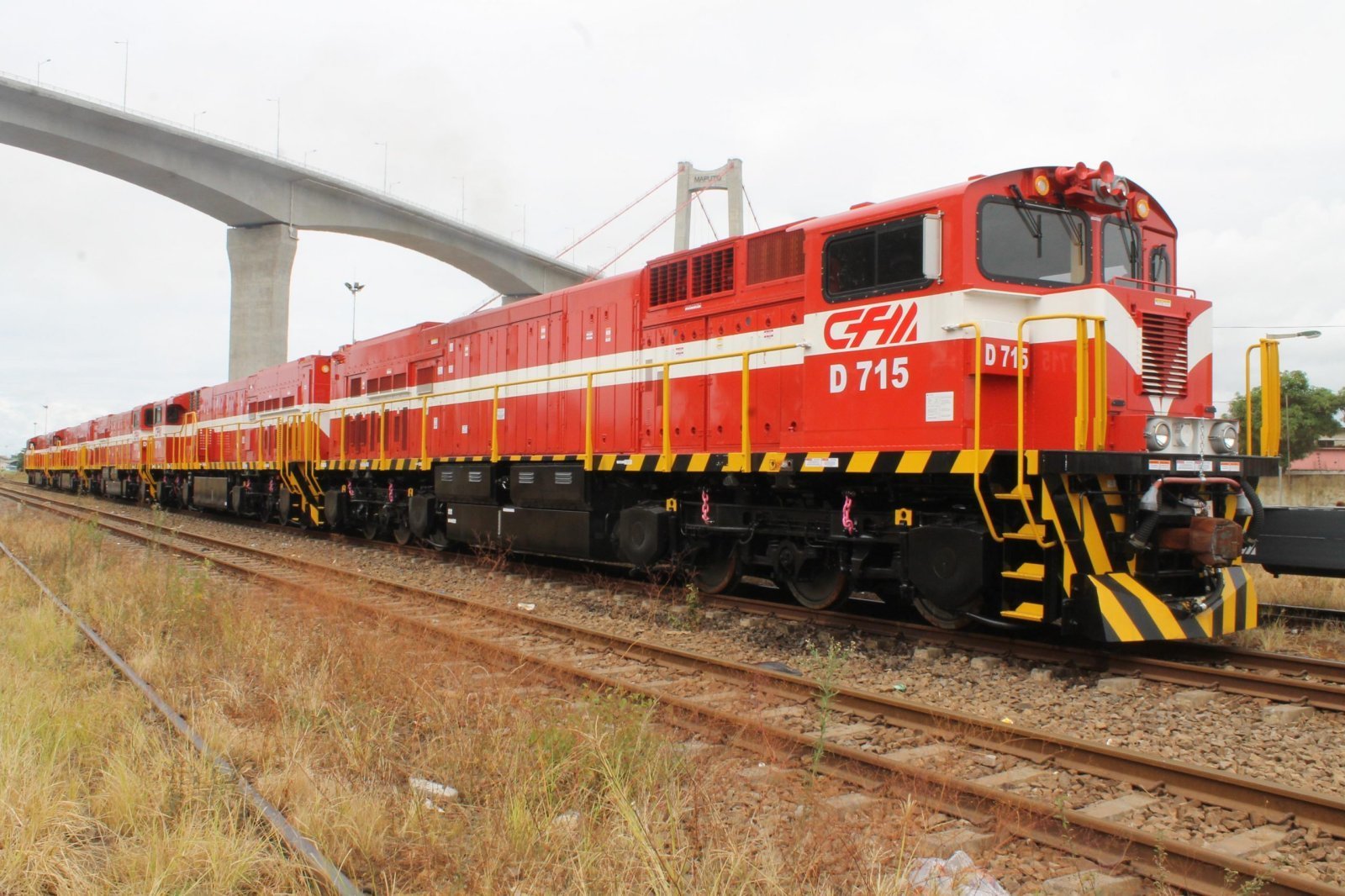
Zimbabwe's state railway operator announced on 21 July 2026 that it had moved the first 1,000 tonnes of lithium concentrate by rail from the Gwanda Lithium Mine to Mozambique's Port of Maputo, opening a roughly 1,000-kilometre corridor that cuts freight costs from $50-60 per tonne by road to an estimated $10-20 per tonne by rail. The corridor, built through a three-way partnership between the National Railways of Zimbabwe, the privately operated Beitbridge Bulawayo Railway and logistics firm Silvergill, gives Africa's largest lithium producer a cheaper, higher-volume export route at the same time the country is preparing to ban raw lithium concentrate exports outright from January 2027. For a railway network whose freight volumes collapsed more than 80% since the 1990s, lithium has become the cargo that could reverse decades of decline.
HARARE — Zimbabwe's National Railways said on Tuesday, 21 July 2026, that it had moved its first trainload of lithium concentrate along a newly opened rail corridor to Mozambique's Port of Maputo, a development the state operator framed as the start of a broader shift in how Africa's largest lithium producer gets its output to global markets.
The shipment, 1,000 metric tonnes from Tsingshan Holding Group's Gwanda Lithium Mine, travelled the corridor's full length in a single, tracked journey rather than the road haulage that has carried the bulk of Zimbabwe's lithium exports until now.
How the Corridor Actually Works
The route runs through three distinct operators across roughly 1,000 kilometres of track.
| Leg | Distance | Operator | Segment |
| Gwanda to Beitbridge | ~180 km | Beitbridge Bulawayo Railway (BBR) | Zimbabwe, Matabeleland South |
| Beitbridge to Chicualacuala | ~300 km | National Railways of Zimbabwe (NRZ) | Zimbabwe to Mozambique border |
| Chicualacuala to Maputo | ~522 km | Mozambique's Limpopo line | Mozambique |
The first leg runs on track operated by the Beitbridge Bulawayo Railway, a subsidiary of South Africa's JSE-listed Grindrod, originally inaugurated in 1999 as a build-operate-transfer project that shortened the rail distance between Bulawayo and the South African border by roughly 200 kilometres compared with the previous routing through Botswana. From Beitbridge, NRZ's own network carries the cargo roughly 300 kilometres to the Chicualacuala border post, where it crosses into Mozambique and continues approximately 522 kilometres along the Limpopo line into Maputo. A newly commissioned $1.5 million rail siding at Gwanda, developed by BBR alongside logistics firm Silvergill and NRZ, was built specifically to load lithium concentrate and other bulk minerals onto this route.
What the Corridor Actually Saves
The economic case for the switch is straightforward. Rail freight for bulk mineral concentrate is estimated to cost between $10 and $20 per tonne, compared with $50 to $60 per tonne by road, a reduction of roughly 60 to 83% depending on which figures in that range are compared. Across Zimbabwe's export volumes, which reached 1.13 million tonnes of spodumene concentrate to China in 2025 alone, that differential represents a substantial improvement in producer economics, savings that flow directly to mine operators' margins in a period when global lithium prices have remained under pressure.
The new Gwanda siding was designed with more than lithium in mind. It is built to also handle chrome, ferrochrome and iron ore, positioning Zimbabwe's Matabeleland South province as a broader logistics hub for bulk mineral exports rather than a single-commodity corridor, a design choice that should help justify the infrastructure investment even if lithium volumes on this specific route fluctuate with global demand.
A Second Life for Zimbabwe's Railways
The corridor matters as much for what it could do for Zimbabwe's rail network as for what it does for lithium exporters specifically. NRZ's freight volumes collapsed from roughly 12 million tonnes annually in the 1990s to about 2 million tonnes in 2025, a decline exceeding 83% over three decades, driven primarily by chronic underinvestment in rolling stock and track maintenance. A steady, high-value cargo stream from an expanding mineral sector gives the railway a commercial reason to attract further private capital and maintenance investment, the same logic that brought BBR, a privately operated, commercially run line, into direct partnership with the state operator on this route.
That partnership structure is itself notable. BBR's involvement introduces performance incentives and capital discipline of the kind state-owned rail networks have often struggled to sustain independently, and its participation alongside NRZ on the same corridor suggests a working model, private operators handling the commercially sharper segments, state infrastructure covering the rest, that other struggling rail networks in the region could study.
Built Around a Deadline
The corridor's timing lines up with a separate policy Zimbabwe has already set in motion. The government intends to prohibit exports of raw lithium concentrate outright from January 2027, requiring producers to export higher-value processed products instead. Zimbabwe is targeting 344,000 tonnes of lithium sulphate exports annually by 2030, a considerably more valuable product than raw concentrate and one that captures more of the value chain domestically before minerals leave the country.
Investing in cheaper concentrate logistics now, ahead of a 2027 ban on the very commodity that logistics investment serves, is not a contradiction. It reflects a phased sequencing: efficient export logistics maximise earnings from concentrate in the period before the ban takes effect, while separate investment in domestic processing capacity builds toward the higher-value lithium sulphate exports the 2027 rule is designed to encourage. Zimbabwe's lithium sector has grown fast enough to make both tracks worth pursuing simultaneously, built substantially on an estimated $2 billion in investment since 2021 from predominantly Chinese companies including Tsingshan, Zhejiang Huayou Cobalt, Sinomine, Chengxin Lithium and Sichuan Yahua, investment that has made Zimbabwe Africa's largest lithium producer and a source of roughly 15% of China's total lithium concentrate imports in 2025.
What It Means for the Region's Ports
The corridor also reinforces Maputo's position among Southern Africa's competing mineral export gateways. The port offers a shorter route out of southern Zimbabwe than alternatives like Durban or Richards Bay, and has benefited from sustained investment in recent years that has improved its capacity to handle bulk mineral cargo specifically. For Mozambique, every additional tonne routed through Maputo generates port revenue and logistics business; for Zimbabwe's mining sector, having a second viable export gateway alongside existing road routes reduces dependence on any single corridor and strengthens the sector's resilience against congestion or disruption on any one route.
For Tanzania and other regional transit economies watching this development, the lesson is a familiar one repeating itself in a new commodity and corridor: as mineral output scales, the export route becomes as commercially consequential as the mine itself, and ports and railways that can offer lower costs and higher reliability capture business that geography alone does not guarantee them.
FAQ
What did Zimbabwe actually announce on 21 July 2026? The National Railways of Zimbabwe confirmed it had successfully railed the first 1,000 tonnes of lithium concentrate from the Gwanda Lithium Mine to Mozambique's Port of Maputo, opening a new rail freight option for the country's lithium exports.
How does the new rail route compare to road transport on cost? Rail freight for bulk mineral concentrate is estimated to cost $10 to $20 per tonne, compared with $50 to $60 per tonne by road, a reduction of roughly 60 to 83%.
Which companies and railways are involved in the corridor? The National Railways of Zimbabwe, the privately operated Beitbridge Bulawayo Railway (a subsidiary of South Africa's Grindrod), and Zimbabwean logistics firm Silvergill jointly operate the roughly 1,000-kilometre route, which also crosses into Mozambique's Limpopo rail line.
Why is Zimbabwe investing in concentrate export logistics if it plans to ban raw concentrate exports in 2027? The two moves are sequential rather than contradictory. Efficient logistics maximise earnings from concentrate exports in the period before the ban takes effect, while the government simultaneously builds toward higher-value lithium sulphate exports, targeted at 344,000 tonnes annually by 2030, that the 2027 rule is designed to encourage.
How significant is Zimbabwe's lithium sector globally? Zimbabwe is Africa's largest lithium producer, exporting 1.13 million tonnes of spodumene concentrate to China in 2025, roughly 15% of China's total lithium concentrate imports, built on an estimated $2 billion in investment since 2021, predominantly from Chinese mining companies.
Why does this matter for Zimbabwe's railway network specifically? NRZ's freight volumes collapsed from roughly 12 million tonnes annually in the 1990s to about 2 million tonnes in 2025, a decline of more than 83% driven by decades of underinvestment. A steady, high-value cargo stream from the lithium sector offers the railway a rare opportunity to rebuild freight volumes and attract further private-sector investment.
 Uchumi360
Business Intelligence
Uchumi360
Business Intelligence
Uchumi360 covers business, investment, and economic policy across East, Central, and Southern Africa.
For the serious reader
You read to the end. That places you in a small group.
Uchumi360 is built for readers who demand precision over speed, structure over sentiment, and analysis that holds uncomfortable conclusions rather than softening them. If this work sharpens how you think about Africa's economy, help us keep building the infrastructure behind it.
Institutional Partners
Commission intelligence. Shape the conversation.
Uchumi360 works with development finance institutions, investment firms, sovereign bodies, and strategic organisations across the coverage region. Institutional partnership unlocks:
- Commissioned sector and country intelligence reports
- Branded research series under your institution's authority
- Exclusive data briefings for internal strategy teams
- Speaking and editorial presence at Uchumi360 events
- Co-published investment outlooks for your markets
Support Our Work
Independent analysis has a cost. Help us bear it.
Uchumi360 does not carry advertising. It does not take editorial direction from sponsors. Every article is produced without commercial compromise. Your contribution funds the reporting, research, and editorial infrastructure that keeps this analysis free from influence.
Secure checkout: One-time and monthly support are processed securely. Add payment credentials to enable checkout here.
Stay Connected
Keep up with every new insight.
Follow our latest analysis, policy coverage, and market intelligence as soon as it is published. If you need something specific, reach out directly and we will point you to the right research.
