
Beyond Connectivity: The Critical Technology Infrastructure Africa Needs to Build
Ready
Africa’s digital economy needs dependable electricity, affordable computing, connected payment systems and stronger institutions. The gap between network coverage and actual internet use shows why expanding connectivity must form part of a broader investment strategy.
Africa’s digital infrastructure challenge is captured by a striking imbalance: hundreds of millions of people live within reach of mobile internet networks but remain outside the digital economy.
GSMA’s Mobile Economy Africa 2025 report puts the continent’s mobile internet users at 416 million, representing 28% of the population. Another 960 million people, or 64% of the population, live in areas with mobile internet coverage but do not use it.
The economic implication is substantial. Networks have extended further than people’s ability to afford devices, purchase data and use digital services productively. Expanding infrastructure will remain necessary, especially in underserved areas, but investment must also address the conditions that turn a connection into a useful economic asset.
A trader needs to receive payments reliably. A manufacturer needs electricity and dependable business software. A hospital needs secure records and systems that remain available during disruptions. A technology company needs affordable computing capacity and engineers who can maintain it.
Africa’s next technology investment agenda must connect these needs. Its success will depend on whether infrastructure lowers operating costs, improves public services and expands productive activity across the economy.
The connectivity figures reveal several different gaps
The International Telecommunication Union (ITU) estimated that 36% of people in its Africa region used the internet in 2025, compared with 74% globally. Within that region, internet use reached 55% in urban areas and 21% in rural areas.
These figures require careful interpretation. ITU measures broader internet use, while GSMA’s figures concern mobile internet. Their geographic coverage also differs: ITU groups several North African countries under its Arab States region. The two datasets cannot be treated as interchangeable measures of continental penetration.
Nevertheless, both show that a large share of the population remains excluded from regular digital participation.
GSMA identifies device affordability and digital skills as important barriers. Its coverage and usage figures suggest that the population living within a network footprint but not using mobile internet is far larger than the population still outside coverage.
That distinction matters for public spending. In an uncovered community, the immediate requirement may be a tower, backhaul connection and power supply. In a covered community, additional infrastructure may achieve limited adoption unless devices, data and useful services become affordable.
A more effective programme would assess these constraints together. Affordable device distribution, transparent financing, repair services and practical digital education should accompany network investment. Schools, health facilities and business centres can also serve as shared access points where individual connections remain unaffordable.
The relevant measure is whether people can use digital services consistently and productively.
Electricity is part of the technology infrastructure budget
The International Energy Agency’s (IEA) 2025 Financing Electricity Access in Africa report estimated that around 600 million Africans lacked electricity. It identified an annual investment requirement of $15 billion to achieve universal electricity access, covering generation, grid networks and decentralised solutions. This is an access estimate, rather than the total cost of modernising the continent’s electricity systems.
Digital infrastructure also requires a quality of supply that a basic electricity connection does not necessarily provide. Servers, mobile towers and payment systems must operate predictably. A business that repeatedly loses power may face interrupted transactions, damaged equipment and additional spending on backup systems.
For this reason, digital infrastructure planning should include electricity distribution, transmission, storage and maintenance. Installing generating capacity is only part of the requirement; electricity must reach the facilities that need it at a dependable quality and price.
The emerging demand from data centres makes this coordination more urgent. In its 2026 analysis, the IEA estimated that global data-centre electricity consumption reached 485 terawatt-hours in 2025 and projected approximately 950 terawatt-hours by 2030. These are global figures, but they illustrate the power requirements associated with expanding computing infrastructure.
For African governments, attracting data centres should therefore involve an assessment of additional electricity supply, network capacity and the effects on other users. Projects need to demonstrate how they will secure power without transferring excessive costs or reliability risks to households and existing industries.
For investors, dependable electricity is a central element of project economics. A favourable land allocation or tax incentive cannot compensate indefinitely for expensive and uncertain power.
Data centres must support a competitive computing market
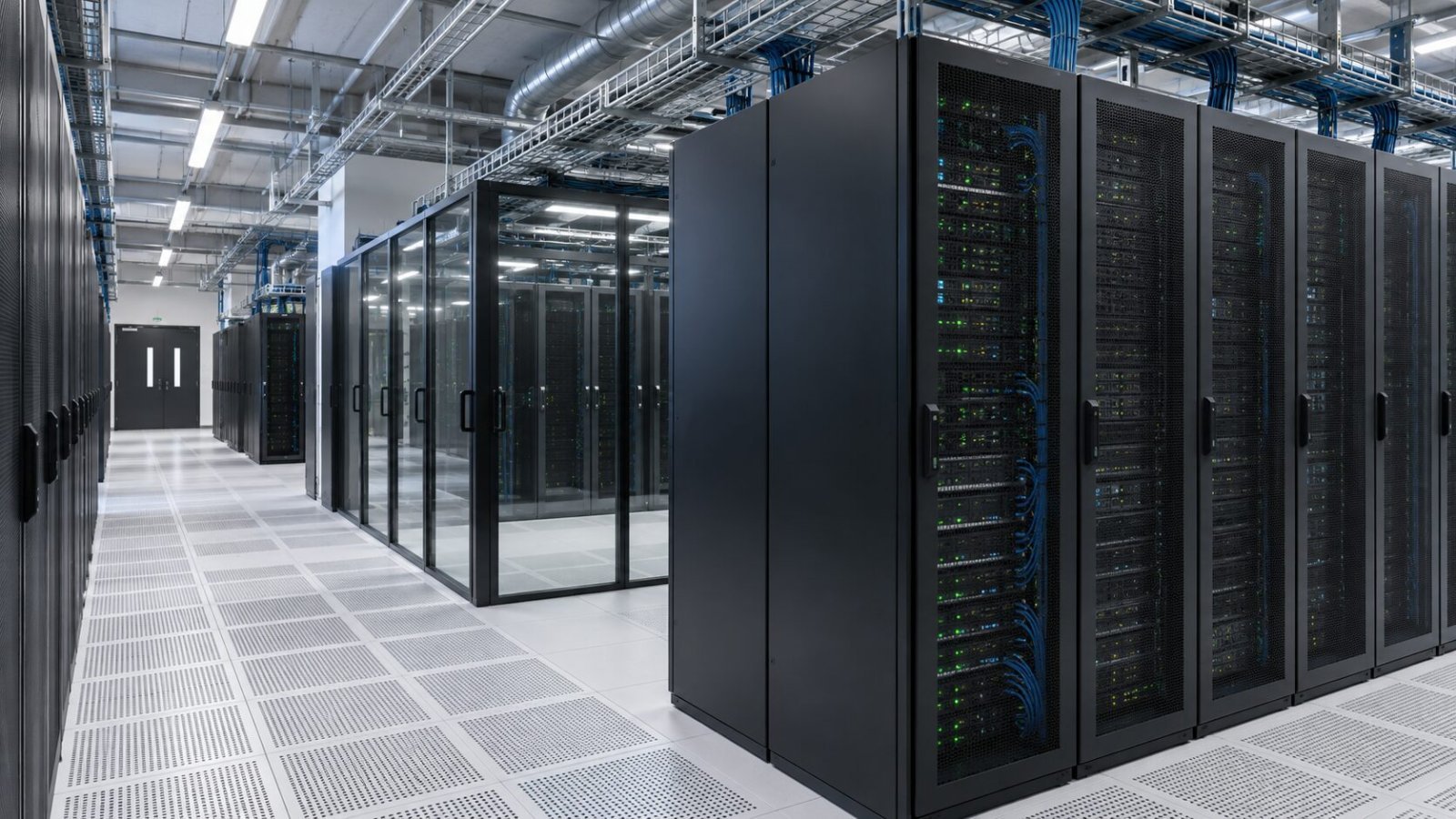
Africa’s limited computing infrastructure is another constraint. An April 2026 brief from the UN Economic Commission for Africa cited an Africa Data Centres Association estimate that the continent accounted for 0.6% of global data-centre capacity. The figure is an industry estimate cited by ECA, rather than a harmonised international census, but it indicates the scale of the imbalance.
The infrastructure need extends beyond buildings containing servers. Businesses require storage, cloud software, backup services, cybersecurity and access to computing resources at prices that make commercial sense.
The World Bank identifies reliable energy, broadband connectivity and an enabling investment environment as important conditions for cloud and data infrastructure markets. It also identifies digital public services as a potential source of demand that can support market development.
The policy implication is to evaluate a facility through its customers and operating model. Before committing public money, governments should establish which institutions will use it, what they will pay, how equipment will be renewed and whether competing providers can participate.
Smaller economies should also assess regional options. Shared infrastructure can aggregate demand across countries, provided that customers have dependable connections and workable arrangements for data access, security and dispute resolution.
Digital sovereignty should be assessed through practical capabilities: protecting sensitive information, enforcing contractual rights, maintaining essential services and changing suppliers when necessary. Domestic hosting can contribute to those capabilities, but location alone does not establish security or operational independence.
Local traffic exchange and resilience need sustained investment
International connectivity must be supported by strong domestic and regional networks. Internet exchange points allow participating networks to exchange traffic directly, while local servers and caches bring frequently used services closer to users.
Nigeria offers a useful illustration. In September 2026, the Internet Society’s tracker listed five active internet exchange points and estimated that 97% of active networks were either exchange members or customers of members. Yet only 11% of the country’s 1,000 most-visited websites could be accessed through an in-country server or cache. This measures the local availability of websites, rather than the proportion of total traffic staying in Nigeria.
The example shows why infrastructure components need to develop together. Exchange points create opportunities for direct traffic exchange, but hosting providers and content services must also participate.
Investment priorities should include terrestrial fibre, regional interconnection, local hosting and physically diverse routes. A second connection provides limited resilience if it passes through the same vulnerable corridor as the first.
Maintenance deserves equal attention. Repair capacity, spare equipment and trained network operators influence how quickly services recover after damage. These operating requirements should be funded throughout an asset’s life.
For landlocked economies, the regional dimension is especially important. Their digital service quality depends partly on infrastructure and commercial arrangements beyond their borders, making cooperation between operators and regulators a practical economic necessity.
Tanzania demonstrates the scale of shared payment infrastructure
Payment systems provide one of the clearest examples of digital infrastructure supporting everyday commerce. The Bank of Tanzania reports that mobile payment transactions reached approximately 7.96 billion in 2025, with a total value of TZS255.13 trillion. Transaction volumes increased 24.1%, while values rose 28.3% from 2024. These are payment flows and should not be interpreted as an equivalent contribution to GDP.
The same report records the completed integration of the Tanzania Instant Payment System (TIPS) with the Government Electronic Payment Gateway (GePG), supporting real-time payment flows for government collections.
The wider economic lesson concerns interoperability: the ability of separate providers and institutions to work together. Shared payment infrastructure can support multiple banks, mobile money services and public institutions, reducing the need for every participant to build separate connections with every other participant.
The next priorities should include affordable merchant acceptance, dependable settlement, clear payment confirmation and effective dispute handling. Businesses need transactions that are easy to reconcile with their records, particularly when they receive payments through several channels.
Payment infrastructure should also connect with the wider administrative systems used by firms. Business registries, tax services and customs processes can become more efficient when authorised information can be verified securely across institutions.
These connections require clear limits on access and use. Errors must be correctable, and people without digital credentials must retain practical routes to essential services.
Regional digital trade needs institutions as well as networks
A business operating across East Africa encounters national systems for payments, identity, customs and data governance. Better connectivity can connect those markets technically, but operational differences can still make expansion costly.
The African Union adopted the AfCFTA Protocol on Digital Trade on 18 February 2024, establishing a continental framework for digital trade cooperation. Adoption is a policy milestone; it does not by itself demonstrate that businesses already experience seamless implementation across markets. African Union
For Tanzania and neighbouring economies, practical priorities include making payment services easier to connect, improving the recognition and verification of business information, and reducing repeated administrative submissions.
The commercial test is concrete: can a small business sell to a customer across the border, receive payment, satisfy the relevant requirements and resolve a problem at a reasonable cost?
Regional infrastructure projects should be evaluated against that experience. Their value will depend on use by firms and institutions, alongside technical completion.
Cybersecurity requires permanent operating capacity
As public services and commerce become digital, their security becomes part of economic infrastructure. INTERPOL’s 2025 Africa Cyberthreat Assessment reported that only 30% of surveyed countries had an incident reporting system, while 29% had a digital evidence repository. These are findings about reported capabilities within that assessment, rather than a complete inventory of all security systems across the continent.
The findings highlight operational needs that require recurring budgets: incident response, evidence preservation, investigation, recovery and cooperation across institutions.
A government platform needs tested backups and a recovery process. A payment provider needs monitoring and procedures for responding to fraud. A small business needs security services that it can afford and understand.
Procurement should account for these requirements from the start. The cost of operating a digital system includes software updates, access management, staff training and recovery exercises. Funding construction or installation while leaving maintenance uncertain creates a long-term service risk.
Data and technical skills determine whether AI becomes economically useful
Computing infrastructure becomes valuable when institutions have suitable data and people capable of using it. The World Bank’s Digital Progress and Trends Report 2025 identifies connectivity, computing resources, locally relevant data and skills as complementary foundations for AI adoption.
For African economies, this creates a practical agenda. Agricultural services need maintained weather, soil and crop information. Transport systems need dependable location and route data. Public institutions need accurate records. Language technologies need resources that reflect the languages people actually use.
Investment should cover data quality, updating, documentation and appropriate access. Digitising an unreliable record does not make the information accurate.
The workforce requirement also extends beyond software developers. Digital facilities need electrical technicians, network engineers, security specialists, database administrators and procurement teams capable of evaluating complex services.
Training programmes should therefore connect to operating facilities and real institutional demand. Apprenticeships, university partnerships and shared research computing can help build the capacity required to maintain infrastructure and develop useful applications.
Financing should follow demand, public value and operating costs
The scale of coordinated investment is already visible in regional programmes. Approved in June 2024, the World Bank’s Inclusive Digitalization in Eastern and Southern Africa programme established a $2.48 billion financing envelope, with an objective of benefiting more than 180 million people by 2032. The announcement addressed infrastructure gaps, affordability, skills and digital identification. These are programme commitments and targets, rather than completed outcomes.
Different infrastructure needs require different financing approaches. Commercial facilities need credible customers and sustainable revenues. Infrastructure serving remote communities may require targeted support. Shared public systems need accountable procurement and dependable operating budgets.
Governments can strengthen investment conditions by making procurement predictable, coordinating permits and avoiding unnecessary duplication between agencies. They should also examine foreign-currency exposure where equipment and financing costs differ from the currency in which services earn revenue.
For investors, the opportunity includes supporting services around major assets: maintenance, cooling, backup power, managed computing, cybersecurity and equipment repair. Their commercial prospects depend on the scale and reliability of demand.
The most useful performance measures are equally specific: service uptime, transaction costs, active users, recovery times and the time businesses spend completing administrative processes.
Africa’s technology infrastructure will create lasting value when these measures improve across the wider economy. That is the standard against which new facilities, platforms and public programmes should be judged.
 Uchumi360
Business Intelligence
Uchumi360
Business Intelligence
Uchumi360 covers business, investment, and economic policy across East, Central, and Southern Africa.
For the serious reader
You read to the end. That places you in a small group.
Uchumi360 is built for readers who demand precision over speed, structure over sentiment, and analysis that holds uncomfortable conclusions rather than softening them. If this work sharpens how you think about Africa's economy, help us keep building the infrastructure behind it.
Institutional Partners
Commission intelligence. Shape the conversation.
Uchumi360 works with development finance institutions, investment firms, sovereign bodies, and strategic organisations across the coverage region. Institutional partnership unlocks:
- Commissioned sector and country intelligence reports
- Branded research series under your institution's authority
- Exclusive data briefings for internal strategy teams
- Speaking and editorial presence at Uchumi360 events
- Co-published investment outlooks for your markets
Support Our Work
Independent analysis has a cost. Help us bear it.
Uchumi360 does not carry advertising. It does not take editorial direction from sponsors. Every article is produced without commercial compromise. Your contribution funds the reporting, research, and editorial infrastructure that keeps this analysis free from influence.
Secure checkout: One-time and monthly support are processed securely. Add payment credentials to enable checkout here.
Stay Connected
Keep up with every new insight.
Follow our latest analysis, policy coverage, and market intelligence as soon as it is published. If you need something specific, reach out directly and we will point you to the right research.
