
Tanzania Has Built the Payment Rail. Now It Needs to Make TIPS the Default
Ready
Tanzania already operates domestic infrastructure capable of moving payments between banks, mobile money providers and merchants without requiring Visa or Mastercard for the underlying transaction. Through TIPS and TANQR, the country has solved much of the technical problem; the remaining challenge is turning interoperability into a cheaper, universal payment experience that consumers and merchants use by default.
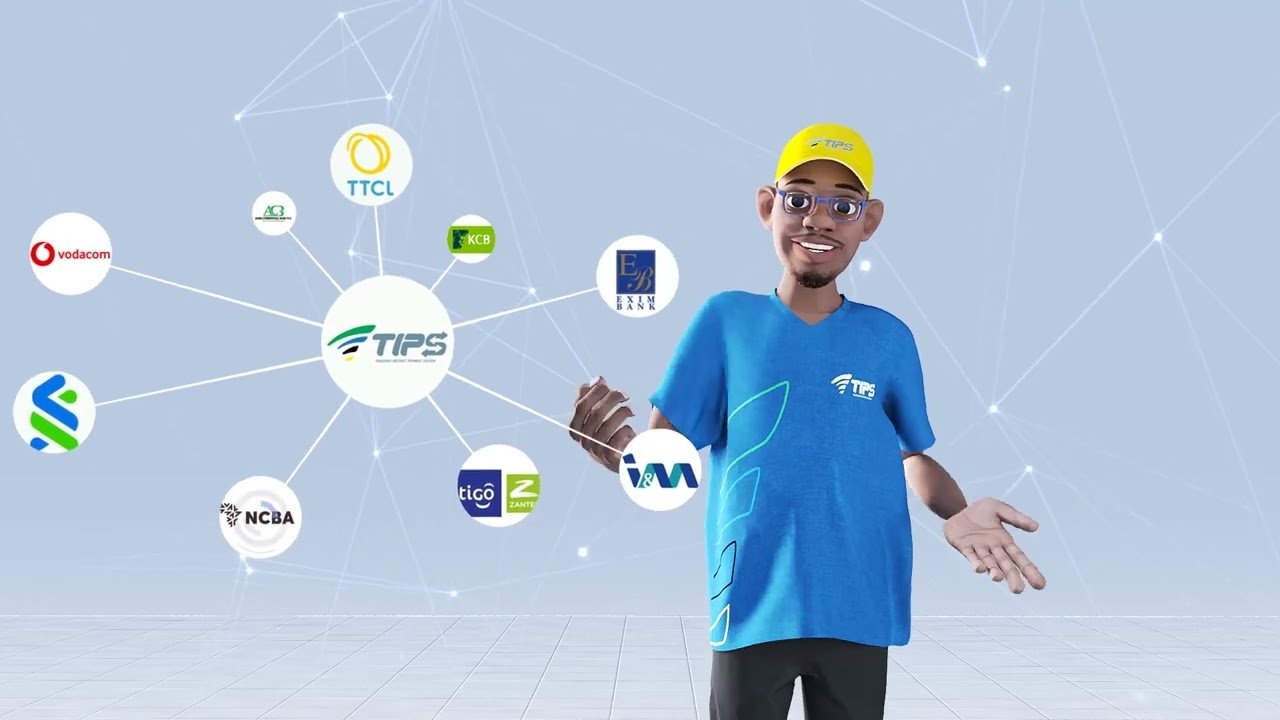
Brazil’s Pix has become one of the most cited examples of how a country can reduce its dependence on Visa and Mastercard for domestic payments, but Tanzania is further along this path than the comparison often suggests. The country already operates the Tanzania Instant Payment System, TIPS, a national real-time retail payment switch developed and operated by the Bank of Tanzania to connect banks and non-bank financial institutions through one interoperable rail. The system was designed to replace fragmented bilateral arrangements, lower the cost of payments, broaden interoperability and provide national digital public infrastructure for low-value retail transactions. By 2024, TIPS was processing more than 490 million interoperable transactions worth TZS15.17 trillion, with around 1.5 million transactions moving through the system each day and 45 digital financial service providers connected.
The more difficult question is why Tanzania still has comparatively expensive digital payments despite having built infrastructure that was explicitly intended to reduce those costs. FSDT’s 2026 to 2030 strategy estimates that the average cost of basic digital financial services on a transaction worth USD28 is about 5.5 percent in Tanzania, compared with 2.9 percent in Uganda and 3.1 percent in Kenya. The same strategy identifies high transaction costs as one of the main barriers preventing women, youth and MSMEs from using financial services more deeply, even though Tanzania’s formal financial inclusion rate has risen to 76 percent.
Tanzania, therefore, has an unusual payment problem. The country has already solved much of the infrastructure challenge, yet the economic benefit has not fully reached the customer. TIPS can move money between institutions without requiring Visa or Mastercard for the underlying domestic transaction, TANQR provides a common merchant QR standard, payment aliases allow users to transact through identifiers such as mobile numbers and wallet IDs, and the system was designed to operate at exceptionally low cost. The unfinished work lies in pricing, merchant acceptance, consumer habit and the incentives of banks, mobile money operators and other providers that continue to shape what customers actually pay.
Tanzania Chose to Build Its Own Payment Infrastructure
The Bank of Tanzania began developing TIPS in 2018 after years of rapid mobile money growth had created a highly digital but fragmented financial system. Mobile money interoperability initially relied on bilateral agreements between individual operators, with each relationship requiring its own contractual arrangements, technical connections, prefunding and messaging standards. As more providers entered the market, the model became increasingly cumbersome and did little to address the high cost of transactions or the continued reliance on cash.
The Bank responded by building a single national switch that could connect banks and non-banks through one multilateral arrangement. TIPS was designed to support instant retail transactions between financial service providers, allowing customers to move money across institutions without remaining inside the closed environment of one network. The Bank described the system as foundational digital public infrastructure and linked it directly to financial inclusion, competition and Tanzania’s wider digital economy strategy.
The design process also involved a deliberate choice between buying an existing commercial platform and building a domestic system. The Bank chose to develop TIPS in house with expertise drawn from the central bank and other government institutions, arguing that local ownership would improve sustainability, reduce operating costs, strengthen technical capacity and give Tanzania greater control over future upgrades and maintenance. The Bank explicitly connected this decision to efficiency, adaptability and sovereignty in the country’s digital financial infrastructure.
That institutional choice places Tanzania in a different position from countries that remain heavily dependent on external commercial payment infrastructure for domestic transactions. Visa and Mastercard retain important roles in international commerce, travel, card-based credit and cross-border acceptance, but Tanzania already has a national rail capable of processing a large share of domestic retail payments without either network sitting inside the underlying transaction.
TIPS Already Has Many of the Features That Made Pix Successful
Brazil’s Pix succeeded because it combined real-time payments, simple addressing, merchant acceptance and mandatory participation within one national system. TIPS already incorporates many of those features.
The system supports person to person, person to business, business to business, business to person, person to government and business to government transactions. It also includes request to pay functionality, transaction reversal, fraud management, directory services and open connection points for participating institutions. TANQR allows merchant payments to be initiated through a common QR standard rather than requiring customers to identify a merchant that accepts only their own provider.
Payment addressing has also been designed around identifiers that Tanzanians already understand. TIPS allows aliases such as mobile numbers, bank account numbers, wallet IDs and merchant IDs to point transactions toward the correct account across different banks and non-bank institutions. This makes it possible for the system to work without forcing customers to remember complicated bank details or remain conscious of the network used by the recipient.
The Bank also resolved to mandate participation for inter-provider transactions as TIPS expanded, rather than leaving every institution to decide independently whether it wanted to participate. The stated objective was to dismantle closed-loop arrangements, reduce market fragmentation and create a more open and interoperable national payment environment.
These characteristics make TIPS much closer to Pix than is often appreciated. The biggest difference today is not the underlying architecture but the extent to which consumers perceive and use the system as a common national payment method.
Tanzania Has Interoperability, but Consumers Still Experience Networks
Most Tanzanians still think about digital payments through the provider that holds their money. A customer paying through M Pesa, Airtel Money, Mixx by Yas, CRDB or NMB is usually conscious of the institution involved, while merchants continue to display multiple numbers, till options and payment channels to accommodate different customers.
The infrastructure underneath those services is increasingly interoperable, but the customer experience remains fragmented. A system can therefore be technically connected while still forcing users to think in network terms.
Brazil approached this differently. Consumers may bank with completely different institutions, but Pix provides a common payment identity that sits above those providers. The financial institution continues to own the account, application and customer relationship, while the payment rail becomes common and familiar to everyone.
Tanzania could move in the same direction without creating a new government wallet or displacing existing mobile money and banking brands. A customer could continue using M Pesa, CRDB or NMB while the payment itself moves through TIPS, and a merchant could accept money through TANQR without needing to maintain separate acceptance arrangements for every provider. The commercial brands would remain intact, while the boundaries between them become less relevant at the moment of payment.
The benefit would be practical rather than cosmetic. A customer buying groceries, fuel, medicine or paying school fees should not need to know which institution the recipient uses before initiating the transaction. TIPS already provides the infrastructure required to make that experience possible.
Tanzania’s Payment Costs Remain High Despite the Infrastructure
The FSDT strategy exposes one of the clearest contradictions in Tanzania’s digital finance market. Formal financial inclusion has increased significantly, mobile money usage is widespread and national payment infrastructure has improved, yet the cost of basic digital financial services remains high compared with neighbouring markets.
FSDT reports that an average USD28 transaction costs about 5.5 percent in Tanzania when cash out and person-to-person fees are considered, compared with 2.9 percent in Uganda and 3.1 percent in Kenya. Tanzania therefore has the highest basic digital payment cost among the three markets examined, even though it has invested heavily in interoperability and national infrastructure.
The source of the problem is broader than the switch itself. Government taxation has added to transaction costs, while mobile money pricing, provider charges and commercial agreements between institutions also influence what customers pay. FSDT notes that Tanzania introduced taxes on mobile money transfers and withdrawals in 2021 on top of existing VAT and excise duties, and although some of those charges were subsequently reduced, the overall cost structure remained above its earlier level. Transaction volumes and values also declined after the taxes were introduced, reducing the economies of scale available to agents and providers.
The problem therefore sits at the intersection of infrastructure, taxation and commercial pricing. Tanzania can build a low-cost switch, but the customer will not necessarily experience a low-cost payment if taxes, provider fees and other charges remain high enough to offset the efficiency gained underneath.
TIPS Was Designed for Zero or Near-Zero Pricing
The Bank of Tanzania’s own design philosophy makes the current cost structure more notable because TIPS was developed specifically to support very low transaction pricing. The case study states that the system operates on a “not for loss” basis and that keeping the switch extremely cheap is necessary if financial institutions are to offer transactions to consumers and merchants at zero or near zero cost. The Bank also expected economies of scale from routing several retail payment use cases through one switch to reduce transaction costs over time.
TIPS therefore creates an unusual policy opportunity. Tanzania has already absorbed much of the cost of building national infrastructure and has chosen not to operate it as a conventional profit maximizing switch, which means the remaining debate should focus on how much of that efficiency is transmitted to consumers and merchants.
The Bank has already recognised the commercial tensions involved. The TIPS case study notes concerns around switch ownership, interchange and end user pricing, with some providers supporting a model in which the Bank operates the technical infrastructure while individual financial institutions retain control over commercial pricing.
This is likely to become the decisive issue in the next stage of Tanzania’s payment development. A technically efficient system will not change consumer behaviour if providers continue pricing transactions in ways that make digital payments expensive relative to cash or cheaper alternatives.
FSDT Is Now Treating Affordability as a Strategic Priority
The new FSDT strategy indicates that payment affordability will receive more attention between 2026 and 2030 because earlier efforts did not reduce costs sufficiently. FSDT identifies the limited availability of affordable financial solutions as a major constraint affecting women, youth and MSMEs, and acknowledges that affordability received too little funding and programmatic attention during the previous strategy period.
The response now includes continued support for TIPS and other shared financial infrastructure to expand use cases and lower the cost of financial services, alongside direct collaboration with the Bank of Tanzania to increase the uptake and usage of digital merchant payments. FSDT also plans to generate evidence on pricing strategies and business models and to engage regulators and providers more directly on affordability.
This creates a more coherent agenda than simply adding more payment technology. Tanzania has already built the core rail; the next interventions need to focus on how it is priced, how merchants adopt it, how users understand it and how the commercial model creates enough value for providers without maintaining unnecessarily high charges.
The opportunity is particularly important for MSMEs because high payment costs are more damaging to businesses operating on thin margins. A large supermarket may absorb a payment fee relatively easily, while a market trader, small restaurant or rural merchant may simply prefer cash if accepting digital payments takes too much from each sale.
Merchant Payments Could Be the Most Important Next Step
TIPS was designed with person to business payments among its priority use cases because the Bank recognised that merchant payments are essential to reducing reliance on cash. TANQR was developed so that consumers can pay businesses through a common QR standard instead of searching for merchants that accept money from their specific financial provider.
The merchant opportunity remains substantial because cash still dominates everyday economic activity. FSDT reports that 82 percent of Tanzanians received their income in cash in 2023, while cash was used for virtually all grocery spending, 99 percent of medical treatment payments, 98 percent of rent and 75 percent of school fees. The strategy also cites older MSME data showing that 99.8 percent of small businesses primarily received payments in cash.
Those figures indicate that Tanzania’s payment challenge has moved beyond access to financial accounts. Millions of people have mobile wallets and formal financial relationships, but much of the real economy still settles transactions in cash.
Merchant payments are where TIPS could have its largest economic effect because a common low cost QR system could make digital acceptance viable for businesses that cannot justify a traditional POS terminal or several separate merchant accounts. A small shop should be able to display one QR code and receive money from customers regardless of whether they bank with CRDB, NMB or another institution, or hold their funds in one of the major mobile wallets.
A national merchant payment habit would also keep more money inside the digital system. Once consumers can receive income, pay merchants, settle bills and transfer money without regularly cashing out, the economic value of interoperability increases and providers benefit from greater transaction volumes even if the fee charged on each individual payment declines.
The Economic Case Goes Beyond Payment Fees
Lower payment costs would affect more than the amount consumers lose to transaction charges. A larger digital payment footprint can improve the information available about businesses and households, which becomes increasingly important for credit, insurance and other financial services.
FSDT’s strategy identifies limited digital footprints and weak credit infrastructure as major reasons why women, youth and MSMEs struggle to obtain productive finance. Only 30 percent of borrowers and 19 percent of MSME borrowers had their credit histories captured in Tanzania’s Credit Reference System in 2023, leaving large numbers of individuals and businesses with thin or nonexistent formal credit records.
More routine merchant payments through TIPS could help create transaction histories that financial institutions use to understand business cash flows, subject to appropriate consent, privacy and data protection. A trader who receives hundreds of digital payments every month creates a financial record that is considerably more useful to a lender than a business whose revenues remain entirely in cash.
FSDT is already moving in this direction through alternative credit scoring, open finance and greater data sharing. The strategy calls for the development of open finance regulations, alternative credit scoring models and improved digital infrastructure that can support more accurate lending decisions.
TIPS therefore has value beyond payments. The rail can become part of a wider financial infrastructure through which transaction data, merchant histories and digital identities support access to productive credit and other services.
Tanzania Does Not Need Another Consumer Wallet
The existence of TIPS changes the policy debate around new payment platforms. Tanzania already has mobile money operators, banks, fintech companies and payment providers competing for customers, and adding another state owned consumer wallet would duplicate functions that private institutions already perform.
The more valuable role for the state is to strengthen the common infrastructure underneath those providers and make participation, pricing and acceptance more efficient. Banks can continue competing on lending, deposits and merchant services, mobile money operators can continue competing on distribution and product innovation, and fintech firms can build new applications, while TIPS remains the shared rail connecting them.
That model preserves commercial competition without forcing every participant to recreate basic payment infrastructure. It also allows the network to become more useful as participation increases because every new institution adds customers and merchants to the same connected system rather than creating another closed loop.
Brazil’s Pix demonstrates how powerful this model can become when the public payment rail itself becomes familiar to consumers. Tanzania already has the infrastructure required to move in that direction, and the policy challenge is now concentrated around visibility, price and adoption rather than another round of system construction.
Tanzania Has Built the Rail, but the Economics Still Need Work
The Bank of Tanzania has already made several of the difficult choices required to create a national payment system. TIPS was built locally, operates under central bank control, connects banks and non banks, supports merchant payments, provides aliases and fraud management, includes a national QR standard and has been structured to operate at very low cost. The system is already processing hundreds of millions of transactions and has considerable unused capacity.
Yet FSDT’s latest strategy shows that Tanzanians still face higher basic digital payment costs than consumers in Kenya and Uganda, while cash continues to dominate a large share of household and small business transactions.
That gap between infrastructure and outcome is where Tanzania’s payments debate now sits. Building the rail was a major institutional achievement, but the economic return will depend on whether lower infrastructure costs eventually translate into cheaper transactions, broader merchant acceptance and a payment experience in which consumers no longer need to think about the network on the other side.
If Tanzania succeeds, TIPS will do more than reduce reliance on Visa and Mastercard for domestic transactions. It can lower the cost of commerce, keep more money inside the digital economy, create better financial records for small businesses, improve the foundations for credit and reduce the fragmentation that still separates banks from mobile money providers in the eyes of consumers.
Brazil needed Pix to create much of this architecture. Tanzania already has TIPS. The next phase is making sure the economics of the system finally match the ambition of the infrastructure.
 Uchumi360
Business Intelligence
Uchumi360 covers business, investment, and economic policy across East, Central, and Southern Africa.
For the serious reader
You read to the end. That places you in a small group.
Uchumi360 is built for readers who demand precision over speed, structure over sentiment, and analysis that holds uncomfortable conclusions rather than softening them. If this work sharpens how you think about Africa's economy, help us keep building the infrastructure behind it.
Institutional Partners
Commission intelligence. Shape the conversation.
Uchumi360 works with development finance institutions, investment firms, sovereign bodies, and strategic organisations across the coverage region. Institutional partnership unlocks:
- Commissioned sector and country intelligence reports
- Branded research series under your institution's authority
- Exclusive data briefings for internal strategy teams
- Speaking and editorial presence at Uchumi360 events
- Co-published investment outlooks for your markets
Support Our Work
Independent analysis has a cost. Help us bear it.
Uchumi360 does not carry advertising. It does not take editorial direction from sponsors. Every article is produced without commercial compromise. Your contribution funds the reporting, research, and editorial infrastructure that keeps this analysis free from influence.
Secure checkout: One-time and monthly support are processed securely. Add payment credentials to enable checkout here.
Stay Connected
Keep up with every new insight.
Follow our latest analysis, policy coverage, and market intelligence as soon as it is published. If you need something specific, reach out directly and we will point you to the right research.
