
The Country That Controls East Africa's Logistics Will Shape Its Economy. Tanzania Is Making a Deliberate Bid for That Position.
Ready
Regional economic power is rarely determined by GDP alone, and the historical record across the economies whose influence has most consistently shaped the regions around them, Singapore through maritime movement, Dubai through logistics and aviation integration, Rotterdam through European trade gateway positioning, and China through the Belt and Road infrastructure strategy, confirms that the economies shaping regions most effectively are usually the ones through which goods, energy, capital, and trade move fastest, cheapest, and most reliably. East Africa is quietly entering a competition far more important than most of the political debates dominating regional headlines, a competition over logistics dominance, and Tanzania is increasingly determined to position itself at the centre of it. The Standard Gauge Railway is not simply a domestic transport project. The Dar es Salaam port expansion is not simply a national maritime infrastructure investment. The energy surplus created by the Julius Nyerere Hydropower Project is not simply a domestic electricity sufficiency achievement. Together, they are the components of a deliberate strategy to reduce the cost of movement across East and Central Africa in ways that create the logistics efficiency advantage through which regional economic gravity is historically established, and the question of whether Tanzania successfully executes that strategy will determine East Africa's economic geography more consequentially than any trade agreement, diplomatic summit, or GDP growth announcement of the current decade.
Regional economic power is rarely determined by GDP alone, and the historical record across the economies whose influence has most consistently shaped the regions around them confirms that the countries shaping regions most effectively are usually the ones through which goods, energy, capital, and trade move fastest, cheapest, and most reliably. Singapore became globally influential far beyond its population size and geographic footprint because it controlled strategic maritime movement between the Indian Ocean and Pacific shipping routes, with the port infrastructure, logistics systems, and commercial services that Singaporean institutional investment built over decades making it the preferred transit point for trade flows whose commercial logic would have been equally served by alternative routes without Singapore's efficiency advantage. Dubai transformed itself from a regional trading post into one of the world's most commercially consequential cities through deliberate investment in port infrastructure, aviation connectivity, and logistics integration that made it the preferred gateway for global capital accessing Middle Eastern and South Asian markets. Rotterdam became Europe's dominant logistics gateway not through geographic inevitability but through the sustained infrastructure investment, institutional efficiency, and commercial service development that made it cheaper and more reliable to route European trade through Rotterdam than through the alternative ports whose geographic proximity to production and consumption centres would otherwise have made them competitive.
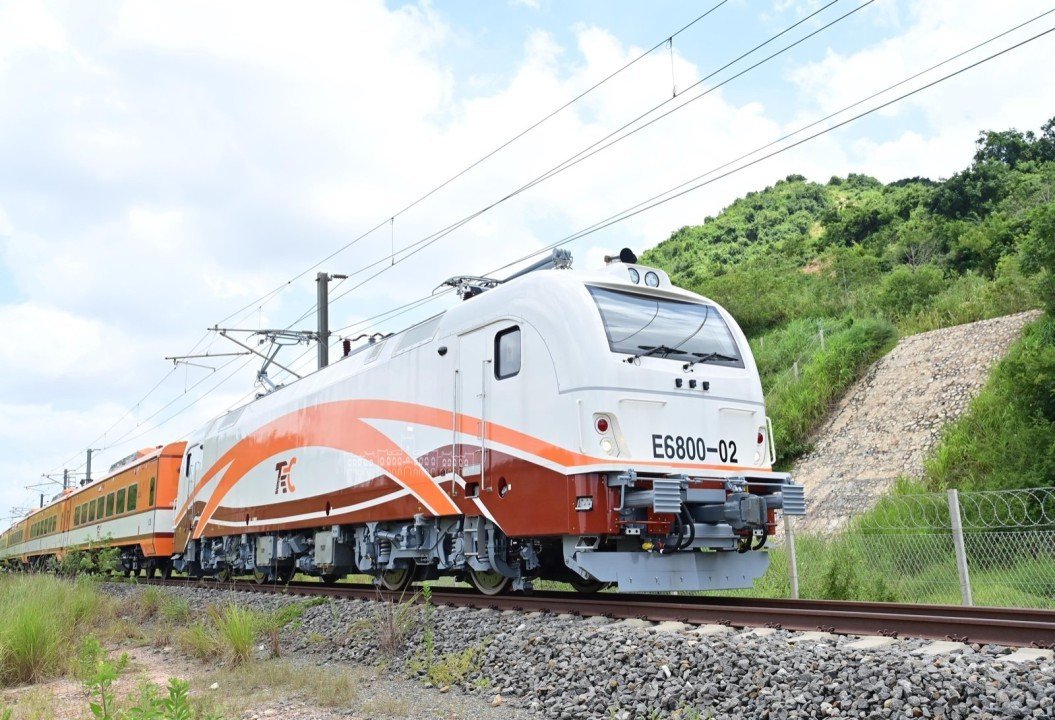
East Africa is quietly entering a competition far more important than most of the political debates dominating regional headlines, a competition over logistics dominance, and Tanzania is increasingly determined to position itself at the centre of it. The Standard Gauge Railway is not simply a domestic transport project. According to Standard Chartered Bank's official announcement of 28 April 2026, the USD 2.33 billion financing for SGR Lots 3, 4, and 5 extends the railway toward Mwanza with a logistics strategy designed to connect Dar es Salaam's Indian Ocean port access to the Central Corridor's inland economies rather than to serve Tanzania's domestic transport demand alone. The Dar es Salaam port expansion is not simply a national maritime infrastructure investment. According to Tanzania Ports Authority development records, the Julius Nyerere Port expansion programme is adding berth capacity and improving container handling infrastructure in ways whose commercial significance for Rwanda, Burundi, DRC, Zambia, and Malawi as landlocked transit economies makes Dar es Salaam's port performance a shared regional infrastructure asset whose efficiency improvements or deficiencies affect the trade costs of multiple economies simultaneously. The energy surplus created by the Julius Nyerere Hydropower Project, which according to Tanzania Electric Supply Company operational records has pushed installed generation above approximately 4,000 megawatts, is not simply a domestic electricity sufficiency achievement. It is the industrial enabling condition that makes the manufacturing and processing investment whose export volume gives the logistics infrastructure its freight demand commercially viable rather than operationally underutilised.
Why logistics costs function as invisible taxes on industrialisation
The economic mechanism through which logistics costs constrain industrialisation is specific enough to deserve analytical precision because the scale of its effect on manufacturing investment viability, agricultural export competitiveness, and regional trade volumes is systematically underestimated in the infrastructure coverage that concentrates on project completion milestones rather than on the competitive economics of the production decisions that infrastructure efficiency determines. High logistics costs function as invisible taxes on every productive sector that moves physical goods through the transport system, raising the effective cost of manufacturing inputs and outputs in ways that reduce the commercial viability of domestic production relative to importing from countries whose integrated logistics systems produce lower delivered costs. According to World Bank corridor performance research on East African transport economics, logistics costs as a share of product value for manufactured and agricultural goods moving through the Central and Northern Corridors have historically been among the highest globally for equivalent distances, reflecting the combination of road transport inefficiency, port congestion, border crossing delays, and customs procedure complexity that together impose a cost burden on East African producers and traders that manufacturers in Asia and Europe do not face at equivalent production volumes.
Manufacturers struggle to compete internationally when moving goods becomes too expensive, and the logistics cost penalty that East African producers face relative to their global competitors explains a significant portion of the manufacturing investment gap that Uchumi360's industrial series has documented as the primary structural constraint on East Africa's productive complexity development. Agricultural exports lose competitiveness when transport costs consume shares of the farm-gate price that make production economically marginal for smallholder farmers whose output represents the majority of the agricultural surplus that East African economies generate for export. Mining operations absorb unnecessary transport costs that reduce the margins available for the processing investment whose domestic implementation would generate more economic value than raw ore export. Regional trade weakens because physical integration remains inefficient, making it cheaper for East African consumers to buy imported manufactured goods from Asian producers than to buy equivalent goods from regional manufacturers whose logistics cost disadvantage is built into their pricing before the first commercial comparison is made.
The Central versus Northern Corridor competition and what it determines
The specific commercial battleground on which Tanzania's logistics dominance strategy will be tested is the competition between the Central Corridor through Dar es Salaam and the Northern Corridor through Mombasa for the transit trade of Rwanda, Burundi, Uganda, and eastern DRC, and the stakes of that competition extend well beyond the transit fees and port revenues that corridor performance directly generates into the manufacturing investment location decisions, industrial zone development, and economic complexity accumulation whose geographic concentration determines regional economic power across multi-decade horizons. According to Central Corridor Transit Transport Facilitation Agency performance data, the Central Corridor has been capturing growing shares of regional transit trade as infrastructure improvements have reduced the cost and reliability differential that historically made the Northern Corridor the default choice for most landlocked East African importers and exporters regardless of the geographic advantage that the Central Corridor holds for origin-destination pairs in southern Uganda, western Rwanda, Burundi, and eastern DRC.
The competition is not zero-sum in the sense that East Africa's landlocked economies generate sufficient trade volume to sustain multiple corridors at commercially viable utilisation levels, but the competition is decisive in the sense that the corridor whose total logistics cost from origin to destination is consistently lower for the largest share of regional trade volumes attracts the manufacturing investment, logistics services development, and commercial infrastructure that accumulate around high-volume trade corridors in ways that reinforce the cost advantage through economies of scale and institutional learning. According to World Bank analysis of corridor competition dynamics in developing regional trade systems, high-volume corridors consistently attract private sector investment in warehousing, customs brokerage, freight forwarding, cold chain logistics, and value-added distribution services that together reduce total logistics costs below what the physical infrastructure investment alone would deliver, creating a commercial ecosystem whose development further advantages the leading corridor relative to the alternative and concentrates the region's logistics industry around a single primary gateway in ways that become self-reinforcing over time.
Kenya's position in the logistics competition is the most directly relevant regional comparison for assessing Tanzania's strategy, because Kenya's Northern Corridor through Mombasa represents the most established alternative to the Central Corridor for the same landlocked market trade flows that the SGR is designed to capture at competitive logistics economics. According to Kenya Ports Authority throughput data, Mombasa handles the majority of Uganda's import cargo and significant shares of the transit trade for Rwanda and Burundi, reflecting the Northern Corridor's historical advantage in infrastructure development, customs efficiency, and commercial logistics ecosystem depth relative to the Central Corridor's earlier stage of development. Kenya's Standard Gauge Railway, which Uchumi360 documented as generating only approximately 5 million tonnes of annual freight against a projection of 22 million tonnes according to Kenya Railways Corporation data, illustrates the risk that logistics infrastructure investment does not automatically attract the freight volumes whose generation makes the investment economically productive rather than a capital commitment whose debt service falls on the sovereign regardless of utilisation.
What Singapore, Dubai, and Rotterdam reveal about the logistics dominance pathway
The historical cases of logistics dominance that most directly inform Tanzania's strategic opportunity are not primarily the large territorial economies whose industrial scale provided the freight volumes that their logistics infrastructure required, but the smaller economies whose deliberate investment in logistics efficiency, port performance, and trade facilitation created the commercial attractiveness that attracted trade flows from larger regional economies through their infrastructure rather than through geographically more proximate alternatives. Singapore's logistics dominance is the most instructive precedent because Singapore's geographic advantages, while real, did not by themselves explain the trade flow concentration that the Port of Singapore Authority's operational performance data documents as one of the highest port utilisation rates globally. Singapore's logistics advantage is the product of deliberate institutional investment in port handling efficiency, customs procedure streamlining, shipping line service development, and logistics services ecosystem building that made Singapore consistently cheaper and more reliable as a transit point than the Indonesian, Malaysian, and Thai alternatives whose geographic proximity to regional production and consumption centres would otherwise have made them competitive.
Tanzania's logistics strategy requires the same deliberate institutional investment alongside the physical infrastructure whose construction the SGR financing and port expansion represent. According to Tanzania Ports Authority operational data, Dar es Salaam's current handling efficiency, measured in vessel turnaround time and cargo dwell time before clearance, lags comparable regional facilities in ways that physical berth capacity expansion alone will not resolve without the customs procedure reform, logistics services industry development, and operational management improvement that port efficiency benchmarks measure independently of physical infrastructure investment. The institutional complement to physical infrastructure is what determined whether Singapore, Rotterdam, and Dubai became logistics dominant or simply logistics capable, and Tanzania's logistics strategy requires equivalent investment in the institutional systems whose performance determines total corridor cost for the shippers whose routing decisions collectively determine whether the Central Corridor becomes East Africa's preferred gateway or remains the secondary alternative to the Northern Corridor's more developed ecosystem.
The industrial production that gives logistics infrastructure its transformational potential
Tanzania's logistics strategy carries the same risk that the Kenya SGR case illustrates most precisely: that logistics infrastructure investment does not automatically attract the freight volumes whose generation makes the investment economically productive, because freight volumes are determined by the industrial production, agricultural commercialisation, and regional trade activity whose scale depends on the broader economic conditions that logistics infrastructure enables but does not itself create. According to the analytical framework that Uchumi360's industrial series has developed across its 2026 coverage, the distinction between a transit economy that moves other economies' goods efficiently and a regional industrial power that produces goods whose export volume fills the logistics infrastructure it has built is the distinction between operational logistics achievement and transformational economic development, and Tanzania's infrastructure investment is creating the enabling conditions for the latter while the industrial policy, financial system alignment, and manufacturing strategy decisions whose implementation determines which trajectory the infrastructure supports remain at an earlier stage than the physical programme whose pace they must match.
The manufacturing investment whose export volume gives the SGR its freight demand, the agricultural processing investment whose output fills the port's container capacity, and the mineral processing investment whose industrial energy requirements justify the electricity generation surplus's commercial pricing all require the simultaneous development of the patient capital instruments, industrial protection mechanisms, and manufacturing policy frameworks that Uchumi360's industrial strategy series has identified as the binding complements to physical infrastructure investment. According to the industrial capital analysis Uchumi360 published in May 2026, Tanzania's financial system remains oriented toward trade financing and commercial lending rather than the long-tenor industrial lending that manufacturing investment requires, and the logistics advantage that the SGR and port expansion are creating will produce its maximum economic return when the financial system alignment whose development the industrial series identified as the binding constraint is achieved alongside the physical infrastructure rather than deferred to a subsequent development phase whose arrival depends on the productive investment that the financial constraint is preventing.
East Africa's economic geography over the next two decades will be shaped not by the country speaking the loudest about regional ambition but by the country through which goods, energy, capital, and industrial production increasingly flow because doing so is consistently cheaper, more reliable, and more commercially rational than the alternatives. Tanzania is building the physical architecture for that position. The question whose answer will determine whether the architecture produces the regional economic power its scale implies is whether the industrial production fills the corridors that the infrastructure creates, and whether the financial system, industrial policy, and institutional quality whose development determines that answer advance at the pace that the infrastructure investment's potential demands rather than at the pace that the absence of those complements would constrain.
FAQ
Why is logistics control described as determining regional economic power rather than simply enabling trade? Because the economies that have most consistently shaped the regions around them, Singapore, Dubai, Rotterdam, and China through Belt and Road, achieved their influence by controlling movement systems that made routing trade through their infrastructure cheaper and more reliable than the alternatives, creating the commercial ecosystem concentration, manufacturing investment attraction, and industrial zone development that accumulate around high-volume trade corridors in ways that reinforce cost advantage over time. According to World Bank corridor competition research, high-volume corridors attract private sector logistics services investment that further reduces total corridor costs, creating self-reinforcing concentration rather than steady-state competition.
What is the Central Corridor and how does it compete with Kenya's Northern Corridor? The Central Corridor connects Dar es Salaam's Indian Ocean port through Tanzania to Rwanda, Burundi, Uganda, and eastern DRC via road and increasingly via the SGR's railway system. According to CCTTFA performance data, it has been capturing growing shares of regional transit trade as infrastructure improvements reduce the cost differential with the Northern Corridor through Mombasa. The competition is decided by total logistics cost from origin to destination, incorporating port handling efficiency, inland transport cost per tonne-kilometre, border crossing efficiency, and corridor reliability, and neither corridor is currently dominant for all origin-destination pairs in the regional hinterland.
What does the Kenya SGR case reveal about Tanzania's logistics risks? Kenya's SGR was projected to carry approximately 22 million tonnes of annual freight and has consistently moved fewer than 5 million tonnes per year according to Kenya Railways Corporation data, demonstrating that logistics infrastructure investment does not automatically attract the freight volumes whose generation makes the investment economically productive. The risk for Tanzania's SGR is identical: freight volumes are determined by the industrial production, agricultural commercialisation, and regional trade activity whose scale depends on the broader economic conditions that logistics infrastructure enables but does not itself create. Converting logistics capability into logistics dominance requires the industrial production that fills the infrastructure.
What institutional development does Tanzania need alongside physical infrastructure? According to the Singapore precedent, logistics dominance requires deliberate investment in port handling efficiency, customs procedure streamlining, shipping line service development, and logistics services ecosystem building alongside physical berth capacity expansion. According to Tanzania Ports Authority operational data, Dar es Salaam's current handling efficiency lags comparable regional facilities in vessel turnaround time and cargo dwell time before clearance, and physical expansion alone will not resolve the institutional performance gap whose closure determines total corridor cost for the shippers whose routing decisions collectively determine corridor market share.
What industrial development is required to convert logistics advantage into regional power? Manufacturing investment whose export volume gives the SGR its freight demand, agricultural processing investment whose output fills port container capacity, and mineral processing investment whose industrial energy requirements justify the electricity generation surplus's commercial pricing. According to Uchumi360's industrial capital analysis, Tanzania's financial system remains oriented toward trade and commercial lending rather than long-tenor industrial lending that manufacturing investment requires. The logistics advantage that the SGR and port expansion are creating produces its maximum economic return when industrial policy, patient capital deployment, and manufacturing strategy advance alongside the physical infrastructure rather than being deferred to a subsequent development phase whose arrival depends on productive investment that financial constraints are preventing.
 Uchumi360
Business Intelligence
Uchumi360
Business Intelligence
- Standard Chartered Bank, SGR financing announcement, 28 April 2026
- Available at sc.com
- Tanzania Ports Authority, Julius Nyerere Port expansion documentation and throughput data
- Available at tanzaniaports.go.tz
- Tanzania Electric Supply Company, operational records
- 4,000 MW capacity figure
- Available at tanesco.co.tz
- Tanzania Petroleum Development Corporation, natural gas reserve data
- Available at tpdc.go.tz
- Central Corridor Transit Transport Facilitation Agency, corridor performance data
- Available at ttfa.org
- World Bank, East African corridor performance research and corridor competition dynamics research
- Available at worldbank.org
- Kenya Ports Authority, Mombasa throughput data
- Available at kpa.co.ke
- Kenya Railways Corporation, SGR freight throughput data
- The approximately 5 million tonne annual freight figure versus 22 million tonne projection cited from Uchumi360's prior SGR analysis
- Port of Singapore Authority, operational performance data
- Cited as logistics dominance precedent
Uchumi360 covers business, investment, and economic policy across East, Central, and Southern Africa.
For the serious reader
You read to the end. That places you in a small group.
Uchumi360 is built for readers who demand precision over speed, structure over sentiment, and analysis that holds uncomfortable conclusions rather than softening them. If this work sharpens how you think about Africa's economy, help us keep building the infrastructure behind it.
Institutional Partners
Commission intelligence. Shape the conversation.
Uchumi360 works with development finance institutions, investment firms, sovereign bodies, and strategic organisations across the coverage region. Institutional partnership unlocks:
- Commissioned sector and country intelligence reports
- Branded research series under your institution's authority
- Exclusive data briefings for internal strategy teams
- Speaking and editorial presence at Uchumi360 events
- Co-published investment outlooks for your markets
Support Our Work
Independent analysis has a cost. Help us bear it.
Uchumi360 does not carry advertising. It does not take editorial direction from sponsors. Every article is produced without commercial compromise. Your contribution funds the reporting, research, and editorial infrastructure that keeps this analysis free from influence.
Secure checkout: One-time and monthly support are processed securely. Add payment credentials to enable checkout here.
Stay Connected
Keep up with every new insight.
Follow our latest analysis, policy coverage, and market intelligence as soon as it is published. If you need something specific, reach out directly and we will point you to the right research.
