
Tanzania Is Quietly Building the Physical Architecture of a Regional Economic Power. The Region Has Not Yet Fully Noticed.
Ready
Tanzania is constructing one of the most ambitious physical infrastructure transformations currently underway in Sub-Saharan Africa, with the Standard Gauge Railway financed at USD 2.33 billion for Lots 3, 4, and 5 according to Standard Chartered Bank's April 2026 announcement redrawing Central Corridor logistics geography, Dar es Salaam port expansion strengthening maritime access for multiple landlocked East and Central African economies, electricity generation crossing approximately 4,000 megawatts per TANESCO records to create Tanzania's first energy surplus in modern economic history, natural gas reserves confirmed at 57 trillion cubic feet by TPDC data providing industrial energy and feedstock advantages, and a population trajectory whose growth toward and beyond 100 million creates the domestic market scale that industrial investment requires alongside the labour force that manufacturing employment demands. The combination of strategic geography, Indian Ocean access, expanding energy capacity, large population scale, regional logistics integration, critical minerals, natural gas, and political stability is a structural convergence that very few regional economies hold simultaneously, and the compounding effect of those advantages is beginning to create the economic mass through which regional influence is historically built. This article identifies the specific mechanism through which infrastructure creates regional power rather than simply national growth, assesses Tanzania's position within East and Central Africa's competitive landscape, and identifies what must be built on the physical foundation to convert infrastructure achievement into industrial transformation. Regional powers are not built through speeches or GDP statistics. They are built when the movement of trade, energy, capital, and industry flows through them at increasing scale. Tanzania is beginning to approach that threshold, and the region has not yet fully noticed.
Power in the modern economy is still physical, and countries become economically influential not because they speak about innovation, attract development forum attention, or build financial centres, but because they control infrastructure systems capable of moving goods, energy, people, capital, and industrial production at scale across the geography that determines where trade flows, where factories locate, and where the commercial and industrial activity of a region gravitates over multi-decade horizons. That process is now becoming increasingly visible in Tanzania, quietly and with far less international attention than many Gulf or Asian megaprojects attract, as railways, ports, hydropower, bridges, roads, logistics corridors, airports, and industrial zones begin to form the early architecture of something much larger than the sum of their individual construction budgets: the physical foundation of a regional economic power whose influence will be measured not in diplomatic statements but in the direction that trade flows, the location that manufacturing investment chooses, and the corridor that landlocked regional economies depend on when they move their goods to and from the world.
For decades, East Africa's structural limitation was not lack of ambition or insufficient policy aspiration. It was the cost of movement. Moving cargo was expensive. Electricity was unreliable. Logistics systems were fragmented. Regional trade corridors were slow and technically constrained. Industrial investors faced transport bottlenecks, energy instability, and weak integration between ports, railways, and inland markets that together imposed a logistics cost burden whose cumulative effect on manufacturing investment viability the World Bank's corridor performance assessments have consistently documented as among the highest in the world for equivalent distances. These frictions acted as invisible taxes on development, making factories harder to sustain by increasing the cost of moving inputs and outputs, weakening export competitiveness by adding to the total delivered cost of Tanzanian-manufactured goods in regional and global markets, and slowing industrialisation by making production more expensive relative to importation across the commercial calculations that private investors make when deciding where to locate capital. Tanzania's current infrastructure cycle is increasingly targeting these exact constraints simultaneously rather than addressing them through isolated project investments whose individual economic impact is limited by the absence of the complementary systems that each investment requires to generate its maximum economic effect.
Why the SGR's significance is regional rather than national
The Standard Gauge Railway is the clearest illustration of the systems logic through which Tanzania's infrastructure investment is beginning to create regional rather than simply national economic impact, and understanding its regional significance requires situating it within the Central Corridor trade geography whose restructuring the railway is designed to accomplish rather than measuring it solely by the passenger and freight volumes it will carry between Dar es Salaam and Mwanza. According to Standard Chartered Bank's official announcement of 28 April 2026, the USD 2.33 billion financing for Lots 3, 4, and 5 extends the railway toward Mwanza with Yapi Merkezi constructing Lots 3 and 4 from Makutupora to Isaka and China Civil Engineering Construction Corporation delivering Lot 5 from Isaka to Mwanza. When the full route is operational, the SGR will connect Tanzania's Indian Ocean port infrastructure to the shore of Lake Victoria and to the waterborne transport network linking Tanzania to Uganda, Rwanda, and Burundi, creating a multimodal Central Corridor logistics system whose freight economics change the commercial calculation for trade between the Indian Ocean and some of Africa's most resource-rich and commercially significant inland economies.
The Central Corridor's competitive position against Kenya's Northern Corridor for the transit trade of Rwanda, Burundi, Uganda, and eastern DRC is determined by the total logistics cost from ocean port to inland destination, which includes port handling time, rail or road transport cost per tonne-kilometre, border crossing efficiency, and the reliability premium that shippers apply to corridors with track records of operational consistency. According to Central Corridor Transit Transport Facilitation Agency performance assessments, the Central Corridor has been making a credible commercial case for growing shares of regional transit trade, but its competitive position has historically been constrained by road transport economics on the inland segments whose costs per tonne-kilometre significantly exceed the costs achievable through modern rail freight. The SGR changes those economics systematically along the corridor's most expensive inland segments, creating the total corridor competitiveness improvement that shifts trade flow decisions from the Northern to the Central Corridor for origin-destination pairs where the combined port, rail, and lake transport costs through Tanzania are lower than the equivalent costs through Mombasa.
How Dar es Salaam port is becoming East and Central Africa's maritime anchor
Dar es Salaam port's evolution from Tanzania's national maritime gateway to East and Central Africa's most strategically significant port is a transformation whose pace the port's construction programme does not fully capture because the commercial and geographic logic driving it extends beyond the physical capacity the port expansion is creating. According to Tanzania Ports Authority development records, the Julius Nyerere Port expansion programme is adding berth capacity, improving container handling infrastructure, and upgrading the operational systems whose efficiency determines dwell time, the variable that global shipping lines and cargo owners use most directly when assessing port competitiveness. The port's strategic significance as the gateway for landlocked economies including Rwanda, Burundi, DRC, Zambia, and Malawi makes its efficiency improvements consequential not only for Tanzania's trade economics but for the trade costs of regional economies whose import and export prices are directly affected by port performance at Dar es Salaam.
According to Tanzania Ports Authority throughput data, the port handled approximately 18 million tonnes of cargo in the 2022/23 financial year, a volume that reflects both the scale of Tanzania's own trade and the transit trade flowing through Dar es Salaam for inland destinations across the regional hinterland. The Julius Nyerere expansion's impact on handling efficiency, measured in turnaround time per vessel, container moves per crane hour, and cargo dwell time before clearance, will determine whether the port can attract the additional transit trade volumes that the SGR's corridor competitiveness improvement creates, because logistics optimisation across the full Central Corridor depends on the port segment's efficiency matching the inland segment's improvement rather than remaining the bottleneck that limits total corridor performance despite the railway investment's cost reduction on the inland leg.
The energy surplus as the industrial foundation's anchor component
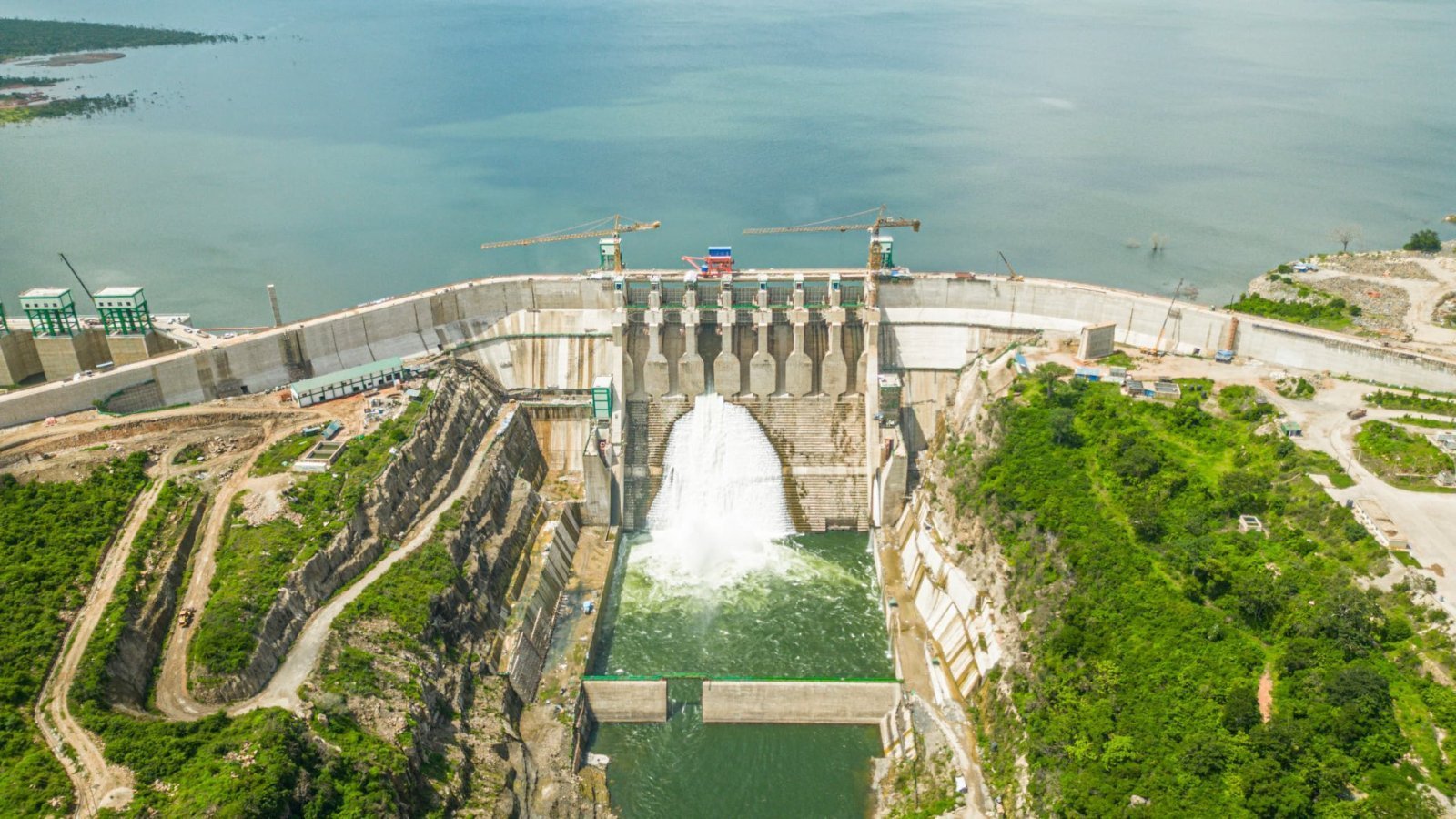
Tanzania's energy expansion is the component of the physical infrastructure programme whose significance for industrial investment attraction is most directly comparable to the role that energy infrastructure played in the industrial transformations whose trajectories Uchumi360's series has consistently referenced as the analytical benchmarks for understanding what Tanzania's current investment cycle makes possible. According to Tanzania Electric Supply Company operational records, installed electricity generation capacity has crossed approximately 4,000 megawatts following the Julius Nyerere Hydropower Project commissioning, creating an energy surplus whose existence changes the commercial calculation for manufacturing investment in Tanzania relative to the energy-constrained environment that characterised the previous generation of the country's industrial development. For the first time in modern Tanzanian economic history, generation capacity is beginning to move ahead of immediate domestic demand, which means manufacturing investment in Tanzania no longer inherits the operating risk premium that energy-constrained environments impose on production planning, capacity utilisation, and export reliability.
According to Tanzania Petroleum Development Corporation data, Tanzania holds approximately 57 trillion cubic feet of proven natural gas reserves whose domestic industrial applications extend beyond electricity generation to fertiliser feedstock, petrochemical processing, industrial heating, and gas-fired power generation whose combined effect on manufacturing investment economics complements the hydropower surplus in ways that together produce a more robust and diversified industrial energy foundation than either source provides independently. The proposed USD 42 billion LNG project involving Equinor, ExxonMobil, and Shell, whose Final Investment Decision Uchumi360 documented as approaching, will if completed connect Tanzania directly into global energy systems at historic scale while also providing the domestic energy infrastructure expansion whose industrial utilisation implications may ultimately matter more for Tanzania's manufacturing development than the export revenues the project generates.
The regional competitive landscape that Tanzania's convergence is beginning to reshape
East Africa's regional competitive landscape for investment, manufacturing, and logistics influence has been relatively stable across the past decade, with Kenya maintaining its advantages in financial depth, private sector sophistication, and regional services economy leadership, Rwanda demonstrating governance quality and institutional discipline whose regional recognition is documented in the Rwanda Development Board's Annual Report 2025, Ethiopia pursuing industrial scale through demographic mass and deliberate industrial park strategy despite political economy disruption, and Uganda advancing toward oil production whose commercial significance the EACOP infrastructure development is enabling. Tanzania's position within that competitive landscape is changing as the infrastructure convergence creates a structural combination that none of those regional economies holds simultaneously.
Kenya's financial and services economy advantages are real and will remain significant for investment categories whose commercial logic depends on financial depth and services sophistication rather than on the energy, logistics, and industrial infrastructure that manufacturing investment requires as its primary enabling conditions. According to Kenya National Bureau of Statistics data, Kenya's manufacturing sector contributing approximately 7 to 8% of GDP despite its infrastructure and financial advantages confirms that those advantages do not automatically translate into industrial depth without the industrial policy, patient capital, and manufacturing strategy that Uchumi360's series has consistently identified as the necessary complement to physical infrastructure. Rwanda's governance quality creates investment attraction advantages for services and light manufacturing that Tanzania's institutional environment cannot match on equivalent terms, but Rwanda's small market, limited energy resources, and landlocked geography constrain its industrial anchor potential in the energy-intensive, logistics-dependent, large-scale manufacturing categories where Tanzania's convergence of advantages creates distinctive competitive positioning.
The DRC's position within the regional competitive landscape is the most consequential for Tanzania's infrastructure narrative because the DRC's mineral wealth, whose cobalt, coltan, lithium, and copper resources make it the most mineral-significant economy in the coverage region for global technology supply chain purposes, creates the inland production activity that Tanzania's Central Corridor logistics infrastructure is specifically designed to serve. If the SGR's regional connectivity and Dar es Salaam's port efficiency combine to reduce the total logistics cost of moving DRC mineral production to the Indian Ocean below the Northern Corridor alternative through Mombasa and the LAPSSET corridor alternative through Lamu, Tanzania becomes the de facto logistics gateway for the world's most strategically important mineral economy, creating the trade flow concentration that translates geographic advantage into economic gravity.
What the convergence requires to produce transformation rather than achievement
Tanzania's physical infrastructure convergence is creating the enabling conditions for regional economic power rather than guaranteeing it, and the distinction between necessary and sufficient conditions is the analytical point whose acknowledgement matters most for the policy and investment community whose decisions will determine which trajectory the convergence supports. Infrastructure alone cannot industrialise an economy, as Uchumi360's series has documented repeatedly through the Nigerian, Mozambican, and Angolan cautionary cases, and the physical foundation whose construction Tanzania is advancing must be complemented by the industrial policy, financial system alignment, manufacturing strategy, and institutional quality whose simultaneous development determines whether the enabling conditions produce productive investment or remain underutilised as prerequisites for industrial development that never fully materialises.
According to UNCTAD's Economic Development in Africa Report 2023, the pattern of infrastructure investment expanding without proportionate manufacturing development is one of Africa's most consistent structural failures, reflecting the gap between the enabling conditions that infrastructure creates and the industrial policy, financial system alignment, and manufacturing strategy whose simultaneous development determines whether the enabling conditions produce productive investment or remain as impressive physical achievements whose economic multiplication never fully occurred. Debt management, maintenance systems, institutional execution quality, and corruption risk management are all real constraints whose failure to meet the standards that infrastructure investment at this scale requires would undermine the economic returns that the physical programme is designed to generate.
But the direction of movement matters enormously in the assessment of long-run economic trajectories, and Tanzania's direction increasingly reflects the systemic ambition of an economy attempting something larger than ordinary growth optimisation. The SGR's regional connectivity, the port's maritime anchor function, the energy surplus whose industrial viability implications extend beyond Tanzania's own manufacturing to the regional manufacturing ecosystem the infrastructure is designed to support, and the natural gas and critical minerals pipeline whose industrial processing potential Uchumi360 has documented across its 2026 coverage together describe a country whose infrastructure investment is beginning to create the physical architecture through which regional powers are historically built: not through speeches, diplomatic positioning, or GDP statistics, but through the gradual construction of the physical systems through which the movement of trade, energy, capital, and industry increasingly flows whether the region notices immediately or not.
FAQ
Why is Tanzania's infrastructure described as building regional power rather than national development? Because the infrastructure systems Tanzania is constructing, the SGR's Central Corridor logistics restructuring, Dar es Salaam port's maritime gateway function for landlocked economies, and the energy surplus whose industrial implications extend to regional manufacturing investment location decisions, create economic effects that extend across East and Central Africa rather than simply improving Tanzania's own domestic economic conditions. Regional powers are built when trade flows, manufacturing investment, and industrial logistics increasingly route through a country's infrastructure because doing so is cheaper and more reliable than the alternatives, and Tanzania's infrastructure convergence is beginning to create the cost structure advantage that produces that routing preference.
What makes the SGR's regional significance different from its transport function? The SGR is not simply a railway that reduces journey times between Dar es Salaam and Mwanza. It is an infrastructure investment whose primary economic significance is restructuring the logistics economics of the Central Corridor connecting Tanzania's Indian Ocean port to Rwanda, Burundi, Uganda, and eastern DRC. According to CCTTFA corridor performance data, the Central Corridor's competitiveness against the Northern Corridor through Mombasa determines whose infrastructure landlocked economies choose for their transit trade, and the SGR's reduction of inland transport costs on the corridor's most expensive segments is the mechanism through which Tanzania's geographic advantage converts into commercial trade flow preference.
How does Tanzania's energy surplus contribute to regional influence? According to TANESCO operational records, Tanzania's installed generation crossing 4,000 megawatts creates an energy surplus that changes manufacturing investment economics by removing the operating risk premium that energy-constrained environments impose. For regional manufacturing investment decisions, the difference between an energy-surplus and an energy-constrained environment can determine factory location choices whose cumulative effect is industrial development concentration. Tanzania's combination of hydropower surplus and 57 trillion cubic feet of natural gas per TPDC data creates a more diversified industrial energy foundation than any regional peer, strengthening its position for manufacturing investment categories that energy reliability and competitive pricing determine.
What combination of advantages does Tanzania hold that regional peers do not? Strategic geography with Indian Ocean access, expanding electricity generation surplus, large-scale natural gas reserves, SGR regional logistics connectivity, Dar es Salaam port as East and Central Africa's maritime anchor, critical minerals pipeline including graphite, nickel, and helium, large and growing population providing labour scale and domestic market demand, and relative political stability. According to the regional comparison, Kenya maintains financial depth advantages, Rwanda governance quality advantages, and Uganda advancing oil production, but none holds the simultaneous convergence of energy, logistics, minerals, population, and stability that Tanzania's current development trajectory is assembling.
What are the risks that could prevent the infrastructure from becoming transformational? Poor debt management, inadequate maintenance systems, institutional execution failures, corruption in project procurement and revenue management, and the absence of the industrial policy, financial system alignment, and manufacturing strategy whose simultaneous development with physical infrastructure determines whether enabling conditions produce productive investment or remain underutilised. According to UNCTAD's Economic Development in Africa Report 2023, the pattern of infrastructure expanding without proportionate manufacturing development is one of Africa's most consistent structural failures. Tanzania's physical foundation is being built at pace. The industrial policy, patient capital deployment, and manufacturing strategy complement must advance proportionately to convert the infrastructure achievement into the regional power whose foundations the physical programme is creating.
 Uchumi360
Business Intelligence
Uchumi360
Business Intelligence
Standard Chartered Bank, SGR financing announcement, 28 April 2026. Available at sc.com.
Tanzania Electric Supply Company, operational records.
Tanzania Petroleum Development Corporation, natural gas reserve data. The 57 trillion cubic feet figure requires confirmation. Available at tpdc.go.tz.
Tanzania Ports Authority, throughput data and Julius Nyerere Port expansion documentation. Available at tanzaniaports.go.tz.
Central Corridor Transit Transport Facilitation Agency, corridor performance assessments. Available at ttfa.org. World Bank, corridor performance data for Northern and Central Corridors. Available at worldbank.org.
UNCTAD, Economic Development in Africa Report 2023. Infrastructure investment without manufacturing development pattern data. Available at unctad.org.
Kenya National Bureau of Statistics, manufacturing GDP share data. Available at knbs.or.ke.
Rwanda Development Board, Annual Report 2025. Available at rdb.rw.
United Nations Population Division, Tanzania population and Dar es Salaam urban growth projections. Available at population.un.org.
Uchumi360 covers business, investment, and economic policy across East, Central, and Southern Africa.
For the serious reader
You read to the end. That places you in a small group.
Uchumi360 is built for readers who demand precision over speed, structure over sentiment, and analysis that holds uncomfortable conclusions rather than softening them. If this work sharpens how you think about Africa's economy, help us keep building the infrastructure behind it.
Institutional Partners
Commission intelligence. Shape the conversation.
Uchumi360 works with development finance institutions, investment firms, sovereign bodies, and strategic organisations across the coverage region. Institutional partnership unlocks:
- Commissioned sector and country intelligence reports
- Branded research series under your institution's authority
- Exclusive data briefings for internal strategy teams
- Speaking and editorial presence at Uchumi360 events
- Co-published investment outlooks for your markets
Support Our Work
Independent analysis has a cost. Help us bear it.
Uchumi360 does not carry advertising. It does not take editorial direction from sponsors. Every article is produced without commercial compromise. Your contribution funds the reporting, research, and editorial infrastructure that keeps this analysis free from influence.
Secure checkout: One-time and monthly support are processed securely.
Stay Connected
Keep up with every new insight.
Follow our latest analysis, policy coverage, and market intelligence as soon as it is published. If you need something specific, reach out directly and we will point you to the right research.
