
While Kenya's Railway Stopped at Naivasha, Tanzania Kept Building Toward Burundi, Rwanda, Uganda, and the DRC. The Central Corridor Is Becoming the Most Consequential Rail Network in African History.
Ready
Tanzania's SGR network encompasses a contracted and under-construction mainline approaching 2,561 km by 2027 connecting Dar es Salaam through Morogoro, Dodoma, Tabora, Isaka, Mwanza, and Kigoma, with a 282-km Burundi extension launched August 2025 under a USD 2.15 billion contract and Tanzania-Burundi-DRC feasibility progress approved in April 2026. The planned national network adds the approximately 1,000-km southern Mtwara to Mbamba Bay corridor, feasibility complete and PPP investors being sought at a USD 5.6 to 12 billion investment, and the 1,108-km northern Tanga through Arusha to Musoma corridor included in the CCM 2025-2030 manifesto at an estimated USD 3.3 billion. The full planned network approaches 4,700 km, connecting three Indian Ocean ports to five landlocked economies across East, Central, and Southern Africa. On 28 April 2026, Standard Chartered finalised a USD 2.33 billion syndicated financing package for Phases 3, 4, and 5. The operational Dar es Salaam to Makutupora section has reduced cargo transit from 36 hours to under 5 hours and is scaling freight from 700 tonnes to 2,000 tonnes per train. By March 2025, operational sections had carried over two million passengers and generated TZS 60.25 billion in revenue. TRC's 2023/24 net losses of TZS 224 billion reflect the capital-intensive construction phase whose completion the operational revenue of an incomplete network must carry until the full network reaches the 17 million tonnes of annual cargo capacity at which the macro-economic returns dwarf the construction phase financing costs.Tanzania is not building a railway. It is building the logistics operating system of East and Central Africa. The track being laid today is the infrastructure whose completion determines which country controls the movement of goods, minerals, and commerce across the region for the next generation. The full network picture confirms that Tanzania intends to be that country.
Tanzania's Standard Gauge Railway is frequently described as a 1,219-kilometre mainline from Dar es Salaam to Mwanza. That description is accurate as far as it goes. It does not go nearly far enough.
The network Tanzania is actually building, through its contracted extensions, its cross-border bilateral agreements with Burundi and the DRC, and its planned PPP corridors in the south and north, approaches 4,700 kilometres of electrified standard gauge rail that will connect three Indian Ocean ports to the landlocked economies of Burundi, Rwanda, Uganda, the DRC, and Malawi through the most comprehensive rail network expansion currently underway anywhere in sub-Saharan Africa. When the full vision is understood, the question changes from whether Tanzania's railway is ambitious to whether the East African continent has ever seen a transport infrastructure programme of comparable strategic scope executed at comparable pace.
The network in full: what is built, what is under construction, and what is planned
The clearest way to understand the SGR's full ambition is to map it across three categories whose distinction separates the achieved from the contracted from the planned, giving each the honest characterisation that its stage of development requires.
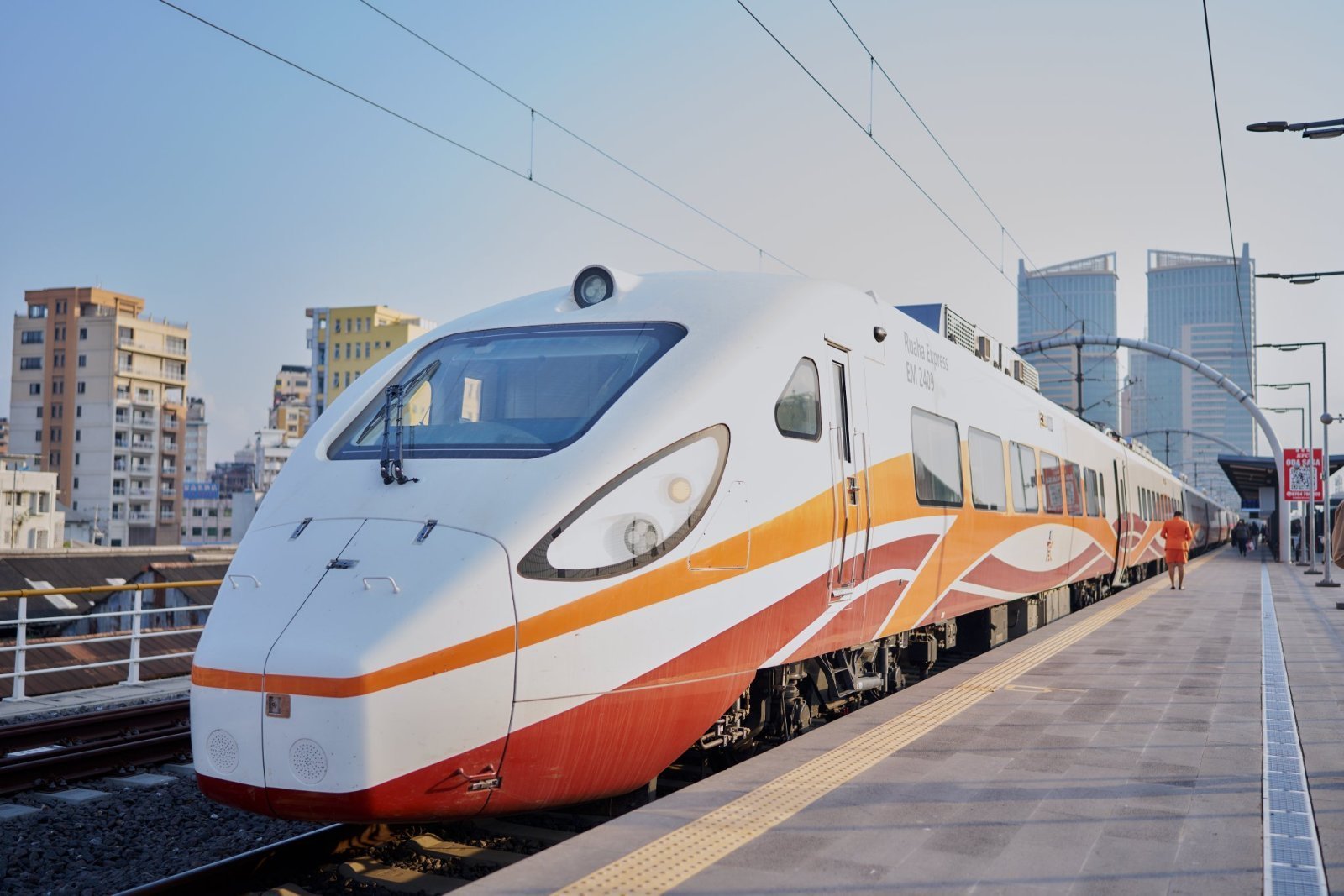
The operational network covers 722 kilometres from Dar es Salaam through Morogoro to Makutupora, running passenger services at 160 kilometres per hour and freight at 120 kilometres per hour. According to Pan African Visions reporting sourced from Tanzania Railways Corporation operational data, by March 2025 the operational sections had already carried over two million passengers and generated TZS 60.25 billion in revenue. The freight service launched in July 2025 is carrying initial hauls of 700 tonnes per run, scaling toward 2,000 tonnes per train, and the completed network is expected to handle 17 million tonnes of cargo per year when all phases reach operational status, reducing freight costs by up to 40% according to TRC operational projections.
The contracted and under-construction network covers the western extensions whose combined length brings the total network toward 2,561 kilometres by 2027. According to Tanzanian Affairs transport sector analysis sourced from TRC construction progress reports dated June 2025, Makutupora to Tabora, 368 kilometres, is 14% complete. Tabora to Isaka, 165 kilometres, is 7% complete with early civil works ongoing. Isaka to Mwanza, 341 kilometres, is 63% complete with freight trials started in June 2025 and full operations expected by late 2026. Tabora to Kigoma, 506 kilometres, is 15% complete under a USD 2.2 billion contract with Chinese construction firms.
The Burundi cross-border extension is now under physical construction. According to China Railway Engineering Group official contract documentation, the extension from Uvinza to Musongati covering 282 kilometres launched construction in August 2025 under a USD 2.15 billion contract, forming the transport corridor that will connect Tanzania's Dar es Salaam Port directly to the Musongati nickel mining area in Burundi. The project is planned for completion within 72 months.
The regional extension into the DRC is progressing beyond the bilateral Tanzania-Burundi agreement into a trilateral institutional process. According to EcoFin Agency reporting dated April 2026, Tanzania, Burundi, and the Democratic Republic of Congo have jointly approved a progress report on the feasibility study for the Musongati-Kindu section of their joint cross-border SGR corridor, meaning the DRC extension is advancing through the institutional stages whose completion precedes construction financing rather than remaining a conceptual discussion.
The planned PPP and manifesto corridors add the network's full continental ambition. According to The Citizen reporting dated May 2025 sourced from a parliamentary statement by Deputy Minister for Transport David Kihenzile, the government has completed a feasibility study and preliminary design for the proposed approximately 1,000-kilometre southern railway from Mtwara to Mbamba Bay, with a branch line to Liganga and Mchuchuma mining areas. The government is identifying a PPP investor to develop the corridor to SGR specifications, describing it as a USD 12 billion initiative. The Respondents, citing project costing documentation, places the projected cost at approximately USD 5.6 billion for the core 1,000-kilometre section.
The northern corridor is equally ambitious in its scope. According to The Citizen's coverage of the CCM 2025-2030 election manifesto, a major new corridor will stretch from Tanga through Arusha to Musoma covering 1,108 kilometres, linking up with the main SGR route. According to Daily News reporting dated January 2025 sourced from the Public-Private Partnership Centre Executive Director David Kafulila, this northern corridor is estimated to cost USD 3.3 billion and seeks to address transport challenges by connecting Mwambani Port in Tanga with Uganda via Lake Victoria, traversing agriculturally rich areas and linking mining hubs. Feasibility studies are underway but confirmed financing has not yet been secured.
The full planned network, combining the contracted mainline approaching 2,561 kilometres, the southern Mtwara corridor at approximately 1,000 kilometres, and the northern Tanga-Arusha-Musoma corridor at 1,108 kilometres, approaches 4,700 kilometres of electrified standard gauge rail connecting three Indian Ocean ports, Dar es Salaam, Mtwara, and Tanga, to five landlocked economies across East, Central, and Southern Africa.
The financial architecture financing the construction
On 28 April 2026, Standard Chartered finalised a USD 2.33 billion syndicated financing package locking in the financial architecture for Phases 3, 4, and 5. The package covers Makutupora to Isaka under Yapi Merkezi's construction, backed by USD 1.32 billion in Export Credit Agency support from Sweden's EKN and SEK, Poland's KUKE, and Italy's SACE alongside USD 462 million in long-term commercial loans. The Isaka to Mwanza section under China Civil Engineering Construction Corporation utilises a USD 559 million Sinosure-covered facility.
According to African Development Bank official documentation, the AfDB Board has approved USD 696.41 million of financing for the Tanzania-Burundi 651-kilometre rail section and has pledged USD 3.05 billion overall for the broader cross-border network, adding multilateral development bank financing alongside the bilateral commercial structures. As Initial Mandate Lead Arranger, the AfDB is structuring and mobilising financing of up to USD 3.2 billion from commercial banks, development financial institutions, export credit agencies, and institutional investors for the Tanzania-Burundi corridor whose total cost is estimated at nearly USD 3.93 billion.
The multi-source financing architecture reflects Tanzania's multipolar engagement strategy rather than dependence on any single capital source. European Export Credit Agencies are financing the Turkish contractor's section. Chinese export financing through Sinosure is financing the Chinese contractor's sections. Commercial bank syndication through Standard Chartered provides the commercial loan component. The African Development Bank provides multilateral concessional support for the cross-border extension. The southern and northern PPP corridors are being advanced through private capital frameworks whose commercial return the mineral traffic, agricultural exports, and regional transit revenues support without the full public debt burden that the mainline's government-led financing imposes.
What the operational network is already delivering
The operational section's performance is the most direct available evidence of what the complete network will produce at continental scale. Transit time from Dar es Salaam port to Dodoma has been reduced from up to 36 hours by road to under 5 hours by electrified SGR. According to Tanzania Railways Corporation data sourced by TanzaniaInvest, President Samia Suluhu Hassan launched the Kwala Dry Port and SGR electric freight services on 31 July 2025, reducing cargo transit times from several days by road to under 12 hours by rail, with trains carrying up to 10,000 tonnes and the Kwala Dry Port serving landlocked countries including Rwanda, DRC, Uganda, and Malawi.
The Kwala Dry Port's 1,000-hectare industrial park, confirmed in TanzaniaInvest's comprehensive SGR documentation, is expected to create over 200,000 jobs and improve trade connectivity for land-linked countries, demonstrating the industrial cluster development whose generation along the SGR corridor the logistics economics improvement creates for manufacturing investors making location decisions.
Logistics historically consumed 20 to 40% of the delivered price for commercial goods in Tanzania according to research published in the International Journal of Innovative Education Research. By moving bulk transport from road to rail, the marginal cost per tonne-kilometre drops significantly, insulating domestic manufacturers from global fuel price spikes and making manufacturing investment along the corridor more competitive than the road-dominated logistics economics previously allowed.
According to TanzaniaInvest's SGR data, bilateral trade between Tanzania and Rwanda reached TZS 644 billion in 2025, while Tanzania-Kenya bilateral trade stood at over USD 720 million in 2024, confirming that the economic relationships whose logistics infrastructure the SGR is improving are already substantial and growing at the pace whose continuation the improved logistics economics will accelerate.
Tanzania is the first fully electrified SGR in East Africa
According to Construction Review Online's February 2026 analysis of the East African SGR network, Tanzania is the first country in East Africa to have a fully electrified Standard Gauge Railway network. This distinction is structurally significant rather than merely symbolic. Electrified traction eliminates the fuel cost volatility that diesel propulsion imposes on operating economics, insulating TRC's cost base from global oil price fluctuations. It enables the higher speeds, greater carrying capacity, and lower per-tonne operating cost that make the SGR's economics superior to the legacy metre gauge and to Kenya's diesel-powered Northern Corridor SGR.
The comparison with Kenya's Northern Corridor reveals the competitive advantage whose widening Tanzania's construction progress is accelerating. Kenya's diesel-powered SGR operates freight at a maximum of 80 kilometres per hour and terminates at Naivasha, requiring a break-of-gauge transfer to legacy tracks for westward cargo movement. Tanzania's electrified network operates freight at 120 kilometres per hour on continuous track from Dar es Salaam, with active construction extending to international borders through contracted agreements rather than the stalled funding processes that have prevented Kenya's westward SGR extension from progressing.
Rwanda and Uganda are not peripheral beneficiaries of Tanzania's SGR ambition. They are central to it. The Central Corridor rail system is designed to serve Kigali and Kampala alongside Bujumbura and Kinshasa, making Tanzania the primary rail gateway for four of East Africa's most strategically consequential landlocked economies simultaneously. The Burundi extension whose USD 2.15 billion construction broke ground in August 2025 is the first physical section of the corridor whose completion connects Dar es Salaam to Rwanda's border through Burundi, while the northern Tanga-Arusha-Musoma corridor whose 1,108-kilometre route links to Uganda via Lake Victoria gives Kampala two separate Tanzanian rail gateways to the Indian Ocean, reducing its century-long dependence on a single transit route through Kenya and delivering the strategic logistics autonomy that the proposed Uganda-Tanzania Railway announced in early 2026 is designed to formalise. According to TanzaniaInvest data, Rwanda's bilateral trade with Tanzania reached TZS 644 billion in 2025, confirming that the economic relationship whose logistics infrastructure the SGR is building to serve is already substantial and growing at the pace whose acceleration a direct rail connection would compound into the regional integration that the EAC's political declarations have promised and the SGR's physical construction is beginning to deliver.
According to Construction Review Online's analysis, the newly proposed Uganda-Tanzania Railway announced in early 2026 represents a critical strategic pivot, establishing a southern export artery from Uganda's mineral-rich western regions directly to the Port of Dar es Salaam and providing Uganda with strategic autonomy by reducing its century-long over-reliance on a single transit route through Kenya. A Uganda connected to Tanzania's Central Corridor through the proposed railway would make Tanzania's logistics network the dominant platform for Uganda's mineral exports whose EACOP pipeline is already using Tanzanian territory for oil export infrastructure.
The three corridors and what each unlocks
Tanzania's SGR vision is most powerfully understood as three distinct economic corridors whose simultaneous development converts Tanzania from a transit country into a multi-corridor regional logistics platform whose geographic completeness no single regional competitor can match.
The Central Corridor serves East and Central Africa. Running from Dar es Salaam through the mainline to Mwanza, Kigoma, Burundi, Rwanda, and the DRC, it is the primary competitive answer to Kenya's Northern Corridor and the infrastructure whose completion makes Tanzania the dominant logistics gateway for landlocked East and Central African economies. The DRC's cobalt, coltan, copper, and lithium exports, the most strategically consequential mineral cargo in the region, are geographically closer to Dar es Salaam through the Central Corridor than to any alternative port, and the joint Tanzania-Burundi-DRC feasibility study whose progress all three governments approved in April 2026 is the institutional process whose completion precedes the construction financing that would make the DRC connection physically real.
The Southern Corridor serves southern Africa and the mineral highlands. The approximately 1,000-kilometre Mtwara to Mbamba Bay corridor, with its Liganga and Mchuchuma mining branch, serves a distinct and equally strategically significant economic geography. According to The Respondents' September 2025 project analysis, the SGR line from Mtwara to Mbamba Bay is projected to serve as a critical transport corridor for goods moving from the Indian Ocean to Lake Malawi, facilitating the transportation of minerals and coal from the Mchuchuma and Liganga mines and boosting the mining and energy value chains. Mtwara port's development as a second Indian Ocean gateway complements Dar es Salaam's position, creating a two-port architecture that improves Tanzania's logistics flexibility while serving Malawi, southern Zambia, northern Mozambique, and Zimbabwe whose proximity to Mtwara makes it a commercially rational alternative to the longer Dar es Salaam routing.
The Northern Corridor serves the agriculturally rich north and tourism circuit. The 1,108-kilometre Tanga through Arusha to Musoma route, included in the CCM 2025-2030 manifesto and estimated at USD 3.3 billion according to Daily News reporting, connects Mwambani Port in Tanga with Uganda via Lake Victoria, traversing the agriculturally productive northern Tanzania and linking the northern tourism circuit, including Kilimanjaro and the Serengeti approaches, to a rail connection whose logistics economics would transform the commercial case for agricultural investment, cold chain development, and tourism infrastructure along the route.
The economic multiplier that justifies the investment
TRC's 2023/24 net losses of TZS 224 billion, a 119% increase from TZS 102 billion the previous year driven by extreme weather disruptions and legacy rolling stock shortages, reflect the capital-intensive construction phase that the operational revenue of an incomplete network must carry before the full network generates the freight and transit volumes whose commercial return justifies the investment. The honest analysis of this financial position requires the macro-economic multiplier framework rather than the standalone operational profitability lens.
The multiplier operates through four specific channels whose combined contribution to Tanzania's economy substantially exceeds the operational entity's direct revenue position. Road maintenance savings represent the first channel, as shifting heavy container traffic from asphalt roads to steel tracks reduces public expenditure on road repair whose annual cost across Tanzania's road network substantially exceeds the SGR's current operating subsidy requirement. Industrial cluster development represents the second channel, as lower transit costs make manufacturing locations along the SGR corridor competitive for the foreign direct investment whose location decisions manufacturing companies make based on logistics cost alongside labour cost and energy cost. According to TISEZA Director General Gilead Teri's confirmed statement in his May 2026 Divya Briefing podcast interview, Tanzania approved over 900 investment projects in 2025, with one new factory per day recorded in 2024, a pace whose partial explanation is the logistics economics improvement that the operational SGR sections have already delivered for industrial investors in the corridor's catchment area.
Foreign exchange accumulation represents the third channel, as Tanzania converts regional trade dependencies into consistent long-term foreign exchange inflows by serving as the logistics gateway for landlocked neighbours. According to TanzaniaInvest's SGR documentation, the Kwala Dry Port is already serving Rwanda, DRC, Uganda, and Malawi, generating the port handling fees, logistics service payments, and transit charge revenues whose accumulation in Tanzania's foreign exchange position improves the balance of payments that domestic infrastructure investment alone cannot produce. The fourth channel is domestic manufacturing cost reduction, whose improvement through SGR freight utilisation changes the competitive economics of Tanzanian manufacturing for every producer whose input logistics currently consume 20 to 40% of delivered value.
At 17 million tonnes of annual cargo capacity, the completed network's economic multiplier contribution across all four channels collectively creates economic value whose magnitude justifies the capital programme at the national level where the returns accumulate. The 2025/26 budget's 29% increase in railway funding to TZS 2.28 trillion, confirmed in Tanzanian Affairs transport sector documentation, reflects the government's sustained commitment to the investment momentum whose continuity the construction timeline requires.
What the completed network produces
When the full network is operational, Tanzania will hold the most strategically positioned railway system in East and Central Africa by every metric that matters for the landlocked economies whose trade routing choices determine the corridor's commercial value. Three Indian Ocean ports, each serving a distinct geographic hinterland, connected by electrified standard gauge rail to five landlocked economies whose combined trade, mineral export, and agricultural production volumes create the freight market whose capture the network is designed to serve.
Tanzania is not building a railway. It is building the logistics operating system of East and Central Africa. The 722 operational kilometres from Dar es Salaam to Makutupora are the proof of concept. The contracted 2,561 kilometres approaching completion by 2027 are the platform. The southern and northern corridors advancing through PPP development and feasibility stages are the completion of the vision. And the cross-border agreements with Burundi, the DRC, and the proposed Uganda connection are the regional architecture whose realisation converts Tanzania from a country with a good railway into the country whose railway is the region's logistics backbone.
The track being laid today is the infrastructure whose completion determines which country controls the movement of goods, minerals, and commerce across East and Central Africa for the next generation. Tanzania is building that country deliberately, at pace, and at a scale whose full ambition the 1,219-kilometre description does not begin to capture.
FAQ
What is the total planned length of Tanzania's SGR network? Tanzania's SGR network approaches 4,700 kilometres when the full vision is counted. The contracted and under-construction mainline covers approximately 2,561 kilometres from Dar es Salaam through Morogoro, Dodoma, Tabora, Isaka, Mwanza, and Kigoma with the 282-kilometre Burundi extension under construction. The planned southern corridor from Mtwara to Mbamba Bay adds approximately 1,000 kilometres through a PPP arrangement. The planned northern corridor from Tanga through Arusha to Musoma adds 1,108 kilometres. The frequently cited 1,219-kilometre figure refers to the Central Corridor mainline alone and significantly understates the full network ambition.
Which sections of the SGR are currently operational? Phases 1 and 2, covering 722 kilometres from Dar es Salaam through Morogoro to Makutupora, are fully operational for passenger service at 160 kilometres per hour and freight at 120 kilometres per hour. According to Tanzania Railways Corporation operational data, by March 2025 these sections had carried over two million passengers and generated TZS 60.25 billion in revenue. The Kwala Dry Port was launched on 31 July 2025 alongside electric freight services, serving Rwanda, DRC, Uganda, and Malawi. Isaka to Mwanza is 63% complete with full operations expected by late 2026.
How does Tanzania's SGR compare to Kenya's Northern Corridor railway? Tanzania's SGR is fully electrified, operates freight at 120 kilometres per hour against Kenya's diesel SGR freight maximum of 80 kilometres per hour, carries up to 120 tonnes per wagon against Kenya's 70 to 80 tonnes, and is actively extending to international borders through contracted agreements. According to Construction Review Online, Tanzania is the first country in East Africa to have a fully electrified SGR network. Kenya's SGR terminates at Naivasha, requiring a break-of-gauge transfer to legacy tracks for westward cargo movement. Tanzania's continuous electrified network eliminates that transfer entirely and is advancing cross-border agreements with Burundi, Rwanda, and the DRC.
What is the southern Mtwara to Mbamba Bay railway and what stage is it at? The southern railway is an approximately 1,000-kilometre corridor from Mtwara Port on the Indian Ocean to Mbamba Bay on Lake Malawi, with a branch line to the Liganga iron ore and Mchuchuma coal mining areas in southern Tanzania. According to The Citizen's May 2025 reporting of a parliamentary statement by Deputy Minister for Transport David Kihenzile, Tanzania Railways Corporation has completed both the feasibility study and preliminary design. The government is identifying a PPP investor to develop the corridor to SGR specifications, describing it as a USD 12 billion initiative. The project will serve Malawi, southern Zambia, northern Mozambique, and the southern highlands' mineral and coal export markets.
What is the northern Tanga-Arusha-Musoma corridor and when might it be built? The northern corridor stretches 1,108 kilometres from Mwambani Port in Tanga through Arusha to Musoma, linking up with the main SGR route and connecting to Uganda via Lake Victoria. According to Daily News reporting from January 2025 citing PPP Centre Executive Director David Kafulila, the corridor is estimated to cost USD 3.3 billion and is being advanced through private sector participation. It was included in the CCM 2025-2030 election manifesto and feasibility studies are underway. The route traverses agriculturally rich northern Tanzania and links mining hubs, serving the northern tourism circuit and providing Uganda with an alternative Indian Ocean access through Tanga. Confirmed financing has not yet been secured.
What is the DRC extension and how far has it progressed? The DRC extension runs from the Burundi connection through Musongati toward Kindu in the DRC. According to EcoFin Agency reporting from April 2026, Tanzania, Burundi, and the DRC have jointly approved a progress report on the feasibility study for the Musongati-Kindu section, advancing the extension through the institutional process whose completion precedes construction financing. The DRC's cobalt, coltan, copper, and lithium deposits, among the world's most strategically significant mineral resources, are geographically closer to Dar es Salaam through the Central Corridor than to any alternative port, providing the commercial rationale for a rail connection that the three-country feasibility approval is formally advancing.
Why is TRC recording losses if the SGR is strategically valuable? TRC's 2023/24 net losses of TZS 224 billion, a 119% increase from TZS 102 billion, reflect the capital-intensive construction phase in which the operational revenue of an incomplete network must carry the debt service of sections not yet generating freight volumes. This is the standard financial profile of large-scale infrastructure investment whose returns accrue after completion rather than during construction. The completed network is projected to handle 17 million tonnes of cargo annually, reducing freight costs by up to 40% according to TRC operational projections. The macro-economic returns through road maintenance savings, industrial cluster development, foreign exchange accumulation from transit trade, and domestic manufacturing cost reduction collectively justify the investment at the national level where those returns accumulate across the economy rather than solely at the operational entity level where the construction phase costs appear.
What is the Kwala Dry Port and why does it matter? The Kwala Dry Port, launched by President Samia on 31 July 2025, is located approximately 80 kilometres west of Dar es Salaam and serves as an inland logistics hub connected to the SGR's freight network. According to TanzaniaInvest's documentation, it reduces cargo transit times from several days by road to under 12 hours by rail, serves landlocked countries including Rwanda, DRC, Uganda, and Malawi, and is accompanied by a 1,000-hectare industrial park expected to create over 200,000 jobs. The Kwala Dry Port is the operational demonstration of how SGR freight economics translate into the industrial cluster development and foreign exchange accumulation whose generation the macro-economic case for the network investment is built on.
 Uchumi360
Business Intelligence
Uchumi360
Business Intelligence
- Standard Chartered Bank, USD 2.33 billion syndicated financing package announcement, 28 April 2026
- ECA support from Sweden EKN and SEK, Poland KUKE, Italy SACE
- Sinosure USD 559 million facility for Phase 5
- Available at sc.com
- Tanzania Railways Corporation, operational data for Phases 1 and 2, Dar es Salaam to Makutupora 722 kilometres, passenger and freight service specifications
- Available at trc.go.tz
- Pan African Visions, Eyes on the Railways: Tanzania's TRC Rolls Out High-tech Rangers to Inspect SGR, May 2026
- Two million passengers, TZS 60.25 billion revenue by March 2025, 17 million tonnes annual cargo capacity, 40% freight cost reduction target, planned expansions to Kaliua-Mpanda-Karema, Mtwara-Mbamba Bay, and Tanga-Arusha-Musoma
- Available at panafricanvisions.com
- Tanzanian Affairs, Transport sector analysis, October 2025
- Construction progress data June 2025: Makutupora to Tabora 14%, Tabora to Isaka 7%, Isaka to Mwanza 63%, Tabora to Kigoma 15%, Burundi extension construction August 2025
- Available at tzaffairs.org
- TanzaniaInvest, Tanzania Standard Gauge Railway comprehensive update June 2024 and 2025
- Kwala Dry Port launch 31 July 2025, Tanzania-Rwanda trade TZS 644 billion 2025, Tanzania-Kenya trade USD 720 million 2024
- Available at tanzaniainvest.com
- China Railway Engineering Group, CREC contract documentation
- Uvinza to Musongati 282 kilometres, USD 2.154 billion contract, sections 7 and 8 of Tanzania SGR Corridor Development Plan, 72-month completion target
- Available at crecg.com
- EcoFin Agency, Tanzania-Burundi-DRC joint SGR corridor feasibility study approval, April 2026, Musongati-Kindu section
- Available at ecofinagency.com
- African Development Bank, Board approval of USD 696.41 million financing for Tanzania-Burundi 651-kilometre rail section, December 2023
- USD 3.05 billion total pledge, USD 3.2 billion mobilisation mandate, USD 3.93 billion total project cost Tanzania-Burundi corridor
- Available at afdb.org
- The Citizen, Tanzania completes initial designs for 1,000-kilometre Mtwara to Mbamba Bay railway, May 2025
- Deputy Minister David Kihenzile parliamentary statement, PPP investor identification, USD 12 billion initiative description
- Available at thecitizen.co.tz
- The Respondents, Mtwara-Mbamba Bay SGR: Tanzania's next USD 5.6 billion mega project, September 2025
- Project scope, cost estimate, Lake Malawi connection, Mchuchuma and Liganga mining service
- Available at therespondents.co.tz
- The Citizen, CCM 2025-2030 manifesto infrastructure blueprint
- Tanga to Arusha to Musoma 1,108-kilometre northern corridor, Itigi to Singida segment, Mtwara to Mbamba Bay with Songea-Ludewa branch
- Available at thecitizen.co.tz
- Daily News Tanzania, SGR expansion to boost connectivity in northern zone, January 2025
- PPP Centre Executive Director David Kafulila statement, northern corridor USD 3.3 billion estimated cost, Mwambani Port Tanga to Uganda via Lake Victoria
- Available at dailynews.co.tz
- Construction Review Online, East Africa's 6,220-kilometre Standard Gauge Railway project, February 2026
- Uganda-Tanzania Railway proposed early 2026, Tanzania first fully electrified SGR in East Africa, Central Corridor competitive positioning
- Available at constructionreviewonline.com
- International Journal of Innovative Education Research, Realising the Benefits of Tanzania's Standard Gauge Railway Flagship Project: A Marketing Mix Perspective
- Logistics costs 20% to 40% of delivered goods value
- Available at scholarsjournal.net
- Gilead Teri, Director General TISEZA, Divya Briefing podcast, May 2026
- Over 900 investment project approvals 2025, one factory per day 2024 confirmation
- African Agenda, African Integrated High Speed Rail Network analysis
- Phase construction details, AIHSRN corridor concept connecting Tanzania-Burundi-Rwanda-DRC
- Available at africanagenda.net
- Rwanda Development Board, Central Corridor logistics and economic data
- Available at rdb.rw
- Uganda Bureau of Statistics, Northern versus Central Corridor transit trade data
- Available at ubos.org
- DRC Institut National de la Statistique, mineral export routing and economic data
- Available at ins-rdc.org
- TANROADS, annual road maintenance cost documentation
- Available at tanroads.go.tz
- Zambia Statistics Agency, southern corridor transit and economic data
- Available at zamstats.gov.zm
- Burundi Institut des Statistiques et des Études Économiques, Central Corridor transit data
- Available at isteebu.bi
- Malawi National Statistical Office, southern corridor regional trade data
- Available at nsomalawi.mw
Uchumi360 covers business, investment, and economic policy across East, Central, and Southern Africa.
For the serious reader
You read to the end. That places you in a small group.
Uchumi360 is built for readers who demand precision over speed, structure over sentiment, and analysis that holds uncomfortable conclusions rather than softening them. If this work sharpens how you think about Africa's economy, help us keep building the infrastructure behind it.
Institutional Partners
Commission intelligence. Shape the conversation.
Uchumi360 works with development finance institutions, investment firms, sovereign bodies, and strategic organisations across the coverage region. Institutional partnership unlocks:
- Commissioned sector and country intelligence reports
- Branded research series under your institution's authority
- Exclusive data briefings for internal strategy teams
- Speaking and editorial presence at Uchumi360 events
- Co-published investment outlooks for your markets
Support Our Work
Independent analysis has a cost. Help us bear it.
Uchumi360 does not carry advertising. It does not take editorial direction from sponsors. Every article is produced without commercial compromise. Your contribution funds the reporting, research, and editorial infrastructure that keeps this analysis free from influence.
Secure checkout: One-time and monthly support are processed securely. Add payment credentials to enable checkout here.
Stay Connected
Keep up with every new insight.
Follow our latest analysis, policy coverage, and market intelligence as soon as it is published. If you need something specific, reach out directly and we will point you to the right research.
