
AFCON 2027: Why Tanzania Secured Three of Six Host Cities
Ready
Tanzania has secured Dar es Salaam, Arusha and Zanzibar as host cities for the 2027 Africa Cup of Nations, compared with Nairobi in Kenya and Kampala and Hoima in Uganda. The allocation gives Tanzania half the tournament's host cities and a distinct opportunity to connect football with tourism, hospitality, infrastructure investment and regional travel. But does it demonstrate greater preparedness, and how much economic value can the country realistically capture?
Tanzania has secured three of the six cities designated to host the 2027 Africa Cup of Nations (AFCON), giving it the largest geographic representation among the three East African countries organising the competition and a potentially valuable advantage in attracting visitors, tourism expenditure and investment associated with Africa's biggest national football tournament.
The six cities announced on November 21 are Dar es Salaam, Arusha and Zanzibar in Tanzania; Nairobi in Kenya; and Kampala and Hoima in Uganda. The tournament is scheduled to run from June 19 to July 17, 2027, with 24 national teams competing across the three countries under the PAMOJA joint hosting arrangement. Host cities reported November 21, 2026. The number of cities does not establish the number of matches, tickets or associated revenue each country will receive.
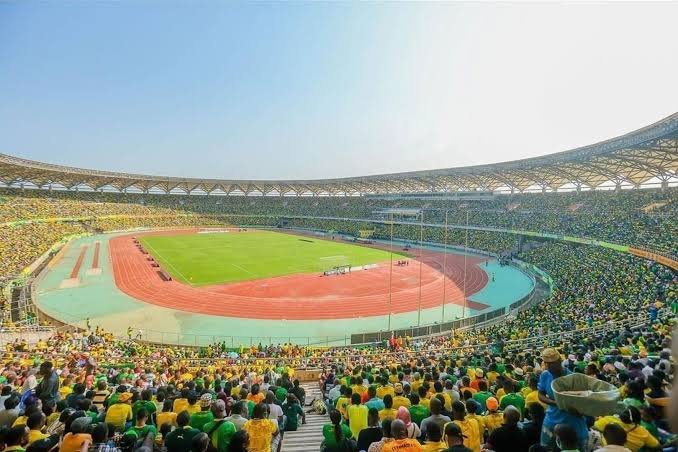
The allocation raises a question about whether Tanzania entered the final stages of preparation with a broader geographic platform for hosting than its partners. Dar es Salaam offers an established national stadium, international airport and large commercial economy. Arusha provides access to northern Tanzania's tourism industry and an international airport serving the wider region, while Zanzibar combines a developing sports infrastructure programme with an established international leisure destination.
This combination provides Tanzania with opportunities beyond matchday ticket sales. Supporters travelling to Arusha could extend their visits to the northern safari circuit, while those attending matches in Zanzibar could combine football with coastal tourism. Dar es Salaam could capture expenditure through hotels, restaurants, transport, entertainment and related services.
Kenya and Uganda also have substantial economic opportunities. Nairobi is East Africa's major aviation and commercial centre with significant accommodation capacity, while Kampala has established hospitality infrastructure and Hoima is receiving new sports investment. Kenya is developing a 60,000 seat stadium and upgrading existing facilities, while Uganda has completed Hoima City Stadium and continues improving facilities in Kampala.
The distribution of host cities therefore provides a useful starting point for examining the three countries' preparations, although it cannot independently establish which country is most ready. Stadium certification, training facilities, accommodation, transport, medical services, security and tournament operations all contribute to CAF's assessment.
For Tanzania, the economic opportunity is clearer than the comparative readiness verdict. Hosting matches across three distinct destinations creates more opportunities to distribute visitor expenditure geographically, build local sports businesses and use AFCON as a marketing platform for tourism that already represents a substantial part of the national economy.
Tanzania's Three Host Cities Offer Different Economic Markets
Dar es Salaam Tanzania's largest commercial centre offers Benjamin Mkapa Stadium, Julius Nyerere International Airport, hotels, restaurants, shopping, entertainment and an extensive service economy. Football visitors can generate spending across established businesses and transport networks.
Arusha
 The new Samia Suluhu Hassan Stadium connects AFCON investment with a city already associated with safari tourism, regional conferences and hospitality. Its proximity to Kilimanjaro International Airport and northern Tanzania's tourism circuit creates opportunities for extended visitor stays.
Zanzibar The developing Fumba sports complex connects tournament hosting to an island tourism economy with international air connections, beach resorts and cultural attractions. Its commercial potential includes accommodation, domestic flights, ferries, excursions and hospitality services.
 The geographic distribution is relevant because international sports tournaments generate expenditure wherever visiting teams, officials, media organisations and supporters need accommodation, food, transport and other services.
A country hosting matches in multiple cities can potentially distribute that demand across different local economies, rather than concentrating it within one metropolitan area.
Tanzania's arrangement could therefore benefit businesses operating in Dar es Salaam, the northern tourism circuit and Zanzibar. However, the distribution also increases organisational costs. Each location requires suitable football facilities, training pitches, hotels, transport arrangements, security, medical services and operational staff.
Three cities may create a larger commercial footprint, but they also create additional financial and logistical obligations.
Tanzania Had Already Begun Investing in Three Different Football Centres
Tanzania's preparations have involved an infrastructure programme covering the mainland and Zanzibar, with construction and upgrading work occurring at several facilities before the latest host city announcement.
In Dar es Salaam, Benjamin Mkapa Stadium provides an established football venue with a nominal capacity of approximately 60,000. The government has undertaken renovation work, including improvements to supporting facilities and training grounds. A September 2026 parliamentary statement reported that renovation work at Benjamin Mkapa Stadium and upgrades to the Gymkhana, Major General Isamuhyo and Law School training grounds had been completed.
In Arusha, construction is continuing on the Samia Suluhu Hassan Stadium, a project originally planned before Tanzania secured AFCON hosting rights. Its design was subsequently expanded to meet tournament requirements, contributing to a major increase in the reported construction cost.
The government has placed the Arusha stadium contract at approximately TSh 338.5 billion, equivalent to around $127 million at an indicative November 2026 exchange rate. This compares with an earlier estimate of approximately TSh 187 billion, with officials attributing the increase to changes in the project's scope and requirements. The government offered further explanations in Parliament on November 4, 2026.
Zanzibar has pursued its own sports infrastructure investment. The first phase of the Zanzibar AFCON Sports Complex has been valued at approximately $150 million, including the Fumba development and supporting facilities. By early November, officials reported that construction of Fumba Stadium had reached 87%, with completion targeted for December 31, 2026.
These developments support an assessment that Tanzania had established a geographically distributed construction and renovation programme before the host cities were announced.
However, work in progress should not be counted as completed infrastructure. Arusha and Fumba still require construction completion, operational testing and any outstanding CAF approvals. The distinction between a stadium being structurally complete and certified to host international matches is particularly important as the tournament approaches.
The Tanzanian Parliament has also approved approximately TSh 516.6 billion, or about $194 million at the same indicative exchange rate, for the wider AFCON preparation programme, which includes stadiums, training facilities and related infrastructure. The available reports do not establish that all this money has been disbursed or spent. Nor should it be added directly to the Arusha and Zanzibar project values without checking for overlapping expenditure categories.
Kenya and Uganda Are Also Making Major Investments
A balanced assessment must recognise that the host city allocation gives only part of the picture. Kenya has concentrated its preparations principally in Nairobi, where it is developing Raila Odinga International Stadium at Talanta Sports City, with approximately 60,000 planned seats, alongside the upgrading of Kasarani and other training facilities.
Kenya's government has described the sports development programme as part of a wider effort to commercialise sports, attract international events and create opportunities in hospitality, broadcasting, creative industries and tourism.
However, Kenya has also faced financing challenges. Parliamentary reporting in 2026 identified outstanding financial requirements for stadium renovations, with officials saying approximately KSh 11.02 billion in additional support was needed for designated facilities at the time of the assessment. That funding gap does not establish the current physical state of every project, but it illustrates the financial pressures involved in meeting tournament deadlines.
Uganda has made substantial progress with Hoima City Stadium, which was commissioned by President Museveni in December 2025. Government reports confirm that the facility was substantially completed before 2026, providing a purpose built venue outside Kampala.
At Mandela National Stadium in Kampala, upgrading work has continued to meet CAF requirements. Uganda has also been developing training facilities, including projects at universities and existing sports grounds.
An October 2026 report by Uganda's Public Procurement and Disposal of Public Assets Authority identified concerns about delays affecting training facilities, despite progress on major stadium construction. These findings demonstrate that completing a main stadium does not necessarily mean an entire host city is operationally ready.
What the documented preparations establish
| Country | Host cities | Established advantage | Outstanding consideration |
| Tanzania | 3 | Established Dar es Salaam venue and investments across Arusha and Zanzibar | Completion and certification of newer venues, coordination across three destinations |
| Uganda | 2 | Hoima Stadium completed; existing Kampala venue | Training facilities, Kampala upgrades and associated services |
| Kenya | 1 | Major Nairobi aviation, hotel and commercial facilities; multiple stadium options | Completion, financing and operational testing of designated venues |
Comparison based on government statements, CAF inspections, parliamentary reports and reporting available through November 21, 2026. It is not an independent CAF readiness rating.
This evidence does not establish that Tanzania was more technically prepared than Kenya or Uganda on every measure. Uganda completed Hoima Stadium well before the tournament, Kenya possesses established international aviation and hospitality infrastructure, and all three countries are still addressing remaining preparation requirements.
CAF President Patrice Motsepe called for greater urgency across the three host nations during his September 2026 visit, while reaffirming confidence that the competition could be delivered successfully.
The stronger conclusion is that Tanzania had invested in a geographically broader hosting arrangement, one that connects sports infrastructure with several distinct tourism and commercial markets.
Tanzania's Tourism Economy Could Capture More Than Matchday Spending
The economic case for Tanzania's three host cities becomes clearer when considered alongside the country's existing tourism performance.
According to the Bank of Tanzania and the National Bureau of Statistics' 2025 tourism survey, Tanzania received approximately 2.29 million international tourist arrivals in 2025, compared with 2.14 million in 2024. International tourism earnings increased to approximately $4.41 billion, up 13% from $3.90 billion.
Tanzania international tourism, 2025
2.29M
International tourist arrivals
$4.41B
Tourism earnings
Official 2025 Tanzania Tourism Sector Survey. These are annual tourism statistics, not an AFCON revenue forecast.
This existing tourism industry provides an economic foundation on which the tournament could build. Arusha already attracts visitors for wildlife tourism, mountain climbing and conferences, while Zanzibar's hospitality industry serves international leisure travellers. Dar es Salaam supports commercial travel, business meetings and domestic transport connections.
AFCON creates an opportunity to convert football visitors into customers for these established services. Supporters travelling to watch a national team may extend their stay to visit other destinations, particularly where tourism experiences are accessible and travel arrangements can be made easily. The opportunity is especially relevant for Arusha and Zanzibar, where additional visitor nights could produce revenue for hotels, tour operators, restaurants, airlines, transport companies and local suppliers.
But the size of the economic benefit will depend on visitor behaviour.
A supporter attending one match and leaving the following day generates substantially less local expenditure than a visitor who stays for a week and purchases tourism services. Likewise, visitors who would have travelled to Tanzania anyway, but simply change their travel dates to coincide with AFCON, do not represent wholly additional tourism demand.
The relevant measure is therefore incremental visitor expenditure, accounting for new arrivals, length of stay, spending patterns and the extent to which tournament activity displaces ordinary tourism.
The allocation of three host cities creates more opportunities to generate this spending. It does not establish how many visitors will arrive or how much additional revenue businesses will earn.
The Sports Economy Will Depend on How Much Spending Remains in Tanzania
The 2027 tournament will involve expenditure by spectators, football federations, media companies, sponsors, suppliers and organisers. Some will be temporary, concentrated around matchdays, while other activity could continue after the tournament through improved infrastructure and increased demand for sports events.
The distribution of that spending matters as much as its total value.
Hotels can benefit from accommodation demand, but their contribution to the domestic economy depends partly on local employment, purchasing arrangements and the ownership of services. Restaurants, transport operators, event production companies, security providers, tourism businesses and retailers can receive direct spending from visitors.
Other opportunities arise through broadcasting, sponsorship activation, merchandise, advertising, ticketing operations, hospitality packages and event management. Tanzania's ability to capture these opportunities will depend on procurement decisions, business preparedness, commercial agreements and the participation of domestic firms.
Government spending must also be considered. Stadium construction can generate employment and demand for building materials during implementation, but the long term public return depends on whether facilities are used regularly after AFCON.
A stadium that costs more than $100 million to construct will require maintenance, staffing, utilities, security and periodic renovation. Its economic performance will therefore depend on the number and type of events it hosts, the revenue those events generate and the extent to which public funding remains necessary.
This is especially relevant for Arusha and Zanzibar. Both cities could use their facilities to pursue international football matches, regional sports competitions, concerts, conferences and other events. However, the commercial viability of those activities needs to be demonstrated rather than assumed.
The tournament also creates an opportunity for regional tourism cooperation. In October 2026, travel industry representatives discussed the potential introduction of a common tourist visa for the three host countries, which could make it easier for supporters to attend matches across borders and visit additional destinations.
Such arrangements could increase the number of visitors travelling between Kenya, Tanzania and Uganda, although the benefits would depend on the final visa rules, airline connectivity and the tournament's match schedule.
CAF's Planned Move to Dar es Salaam Adds Another Dimension
Another development provides context for Tanzania's position in the tournament's preparations. On November 18, Tanzanian and Kenyan media reported that CAF's AFCON 2027 coordination office would be relocated from Nairobi to Dar es Salaam, with a formal launch scheduled for November 25. Tanzania has made office space available in the Posta area of Dar es Salaam, within a building associated with the Ministry of Foreign Affairs and East African Cooperation.
The relocation would place part of the tournament's regional administrative operations in Tanzania, potentially bringing meetings, officials and related organisational activity to Dar es Salaam.
However, it should not be interpreted as evidence that CAF has judged Tanzania to be more prepared than the other hosts. No published CAF decision reviewed here establishes such a comparison, and coordination offices can be located for administrative reasons unrelated to stadium readiness.
The distinction matters because the economic value of hosting is determined by more than symbolic recognition. The location of tournament administration can generate some local spending, but the larger opportunities depend on football operations, visitor movements, commercial contracts and the use of infrastructure after the event.
Three Host Cities Offer Tanzania a Larger Commercial Platform, but Greater Costs
The host city allocation gives Tanzania half of the six destinations selected for AFCON 2027. It also creates the possibility of distributing economic activity across three markets that already attract different categories of visitors.
Yet it would be premature to conclude that Tanzania will receive half the tournament's matches, half its spectators or half its revenue.
CAF has not established a sufficiently detailed public match allocation in the sources reviewed to support those conclusions. The number of matches played in each city, the capacities of the stadiums used, team assignments, ticket demand and the location of knockout matches could all influence the eventual distribution of visitors and expenditure.
Hosting multiple cities can also increase government costs through additional stadium facilities, transport arrangements, security, training pitches and operational coordination. The economic benefit must be measured against those costs, especially where infrastructure has been constructed specifically for the tournament.
Tanzania's opportunity lies in using AFCON to strengthen businesses and infrastructure that have value beyond the competition. Improvements to airports, roads, accommodation, public spaces and sports facilities may continue serving residents and visitors after the final match, provided the investments address genuine demand and are maintained effectively.
Kenya's commercial advantage includes Nairobi's established international aviation network and business travel market. Uganda's investment in Hoima creates an opportunity to bring major sporting events into a city outside its capital. Each country's returns will therefore depend on its ability to convert tournament activity into sustained economic opportunities.
The six city announcement provides evidence that Tanzania has secured a larger geographic role in the competition. Its three host cities also connect naturally with different segments of the country's existing tourism economy.
But a credible assessment of which country was more prepared would require comparable CAF inspection findings, completed infrastructure inventories, hotel capacity, transport assessments, financial commitments and operational readiness indicators for all three hosts.
For now, the strongest economic argument is that Tanzania has secured a broad platform for capturing AFCON related expenditure. Whether that produces greater economic benefits than those realised by Kenya and Uganda will depend on execution, visitor spending, commercial participation and the long term use of the infrastructure being built.
 Uchumi360
Business Intelligence
Uchumi360 covers business, investment, and economic policy across East, Central, and Southern Africa.
For the serious reader
You read to the end. That places you in a small group.
Uchumi360 is built for readers who demand precision over speed, structure over sentiment, and analysis that holds uncomfortable conclusions rather than softening them. If this work sharpens how you think about Africa's economy, help us keep building the infrastructure behind it.
Institutional Partners
Commission intelligence. Shape the conversation.
Uchumi360 works with development finance institutions, investment firms, sovereign bodies, and strategic organisations across the coverage region. Institutional partnership unlocks:
- Commissioned sector and country intelligence reports
- Branded research series under your institution's authority
- Exclusive data briefings for internal strategy teams
- Speaking and editorial presence at Uchumi360 events
- Co-published investment outlooks for your markets
Support Our Work
Independent analysis has a cost. Help us bear it.
Uchumi360 does not carry advertising. It does not take editorial direction from sponsors. Every article is produced without commercial compromise. Your contribution funds the reporting, research, and editorial infrastructure that keeps this analysis free from influence.
Secure checkout: One-time and monthly support are processed securely. Add payment credentials to enable checkout here.
Stay Connected
Keep up with every new insight.
Follow our latest analysis, policy coverage, and market intelligence as soon as it is published. If you need something specific, reach out directly and we will point you to the right research.
