
Dar es Salaam Is No Longer Growing Like a City. It Is Growing Like an Economic System, and Tanzania's Industrial Future Depends on Whether It Can Be Managed at That Scale.
Ready
Dar es Salaam's evolution from Tanzania's largest city into a continental trade platform connecting Indian Ocean maritime routes to East and Central African inland economies through the SGR corridor, natural gas infrastructure, industrial parks, and a port whose modernisation is making it the logistics gateway for multiple landlocked economies creates a set of infrastructure and governance challenges whose management determines not only the city's development trajectory but Tanzania's industrial future and regional economic positioning. The Jangwani Bridge and the broader Msimbazi Valley Development Project, whose integrated approach combining flood mitigation, urban planning, transport systems, environmental rehabilitation, and commercial development reflects the systems-level thinking that megacity management requires, are simultaneously urban productivity investments and national economic necessity, because at Dar es Salaam's scale the productivity losses from urban infrastructure failure, recurring flooding, transport collapse, logistics disruption, compound across the entire economy rather than being confined to the transport sector. This article identifies the specific mechanism through which megacity scale changes the economic stakes of urban infrastructure investment, assesses Dar es Salaam's position within the regional competitive landscape of East African commercial hubs, and identifies the governance threshold whose crossing determines whether Dar es Salaam's scale becomes an economic multiplier or an economic liability. The most consequential infrastructure investment Tanzania can make for its industrial and regional positioning ambitions is not the SGR or the port expansion. It is whether Dar es Salaam can be managed well enough at megacity scale to remain a productive economic system rather than becoming a congestion trap that imposes national productivity losses faster than the railway and port generate regional logistics gains.
Dar es Salaam is often described through the language of urban growth, and that description is now too small for what the city is becoming. With population estimates already exceeding 7 million according to Tanzania National Bureau of Statistics urban population data and long-term projections from the United Nations Population Division placing Dar es Salaam among Africa's largest urban centres before mid-century, the city is no longer simply expanding geographically or demographically in ways that require more of the same planning and infrastructure responses that have characterised its development management across the past three decades. It is evolving into something much more economically significant: a large-scale urban economic system whose size, infrastructure demands, logistics role, labour concentration, and industrial potential are beginning to reshape the trajectory of Tanzania itself. Megacities behave differently from ordinary cities because once urban populations cross certain demographic and economic thresholds, the city stops functioning merely as an administrative or commercial centre and begins functioning as an economic engine powerful enough to influence national productivity, regional trade flows, infrastructure priorities, industrial location decisions, and geopolitical positioning in ways whose consequences for the national economy extend well beyond the municipal boundaries within which urban planning frameworks conventionally confine the analysis.
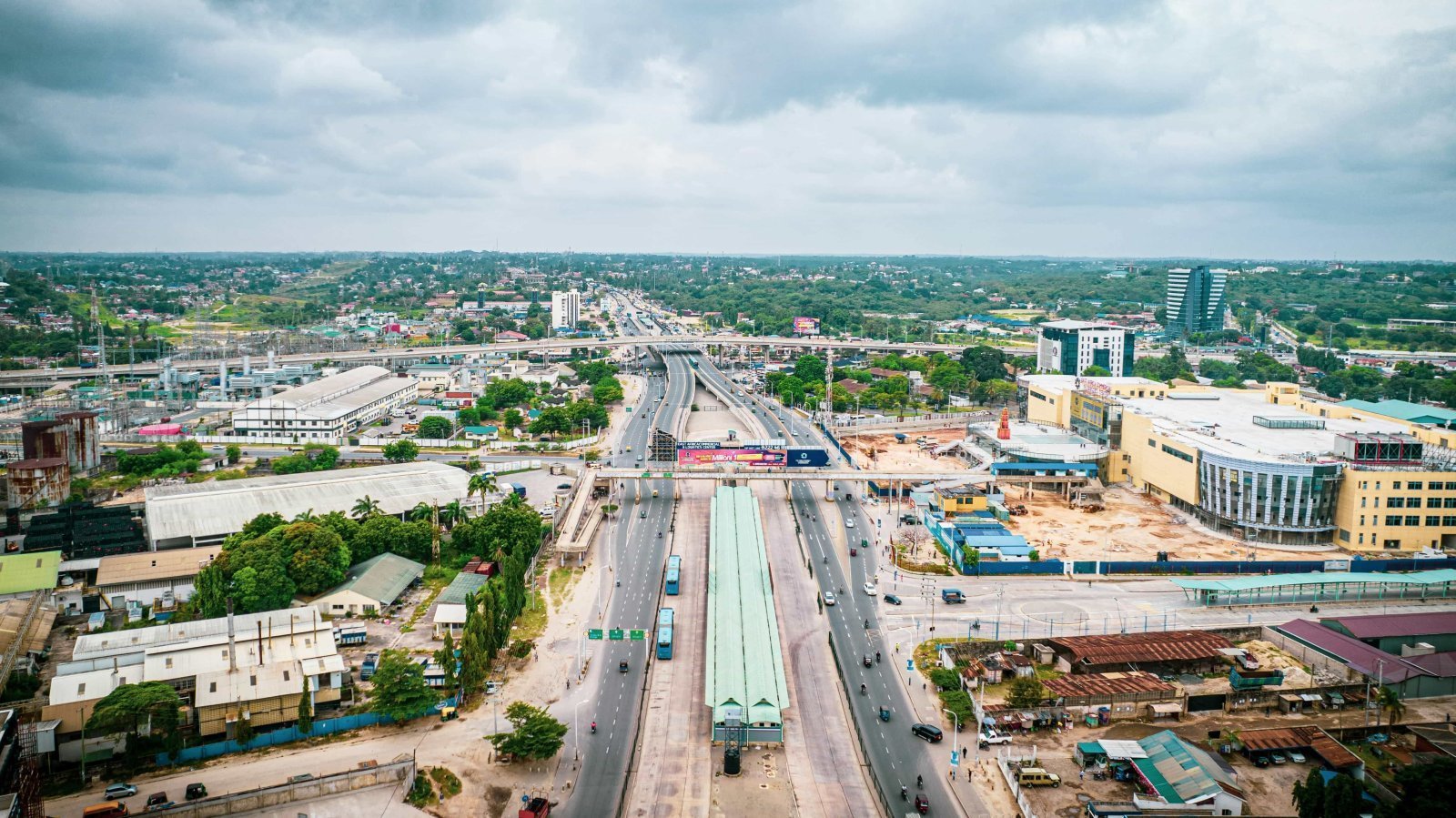
Dar es Salaam is entering that category with an urgency whose implications Tanzania's institutional and infrastructure planning frameworks are beginning to reflect but have not yet fully absorbed. The Jangwani Bridge project, whose construction addresses recurring flooding disruptions in the Msimbazi Valley corridor, illustrates at a specific and practical level what is changing about the economic stakes of urban infrastructure investment in Dar es Salaam. At surface level, the project is a flood mitigation and transport infrastructure investment designed to solve a recurring problem that has historically disconnected sections of the city's movement system during heavy rainfall events. Economically, the project addresses something larger: the protection of the movement systems of a rapidly expanding urban economy whose productivity losses from congestion, flooding, and transport disruption are compounding at a pace that is beginning to impose national economic costs rather than simply local inconvenience. When roads flood repeatedly in Dar es Salaam, workers lose productive hours across the city's entire commercial and industrial economy. Logistics systems slow down in ways that affect the supply chain operations of manufacturers and distributors whose production and distribution schedules depend on transport predictability. Fuel consumption rises for commercial vehicles navigating disrupted routes. Entire sections of the city disconnect temporarily from economic activity during disruption periods. In a city growing at Dar es Salaam's pace, these disruptions compound daily into productivity losses whose cumulative economic cost, according to World Bank urban economics research on comparable rapidly growing African cities, substantially exceeds the capital cost of the infrastructure investments that would prevent them.
Why the Msimbazi Valley Development Project reflects a systems-level understanding
The broader Msimbazi Valley Development Project whose scope extends beyond the Jangwani Bridge to combine flood mitigation, urban planning, transport systems, environmental rehabilitation, public spaces, commercial development, and future urban land use in a single integrated programme reflects an important shift in how Tanzania is approaching Dar es Salaam's infrastructure challenges that distinguishes the current planning from the reactive, project-by-project infrastructure management that characterised earlier phases of the city's development. Modern cities at megacity scale are not simply collections of buildings, roads, and services whose individual deficiencies can be addressed through isolated project investments. They are integrated productivity systems whose economic performance depends on the simultaneous functioning of drainage, transport, energy, logistics, housing, and commercial infrastructure in ways that make the failure of any single system component a constraint on the entire urban economy rather than simply a service delivery problem for the specific sector affected.
The integrated approach of the Msimbazi Valley project acknowledges this systems logic by treating flood mitigation, transport efficiency, environmental quality, and commercial development as components of the same urban economic productivity challenge rather than as separate sectoral interventions whose coordination can be deferred to a subsequent planning phase. According to the project documentation available through Tanzania's urban development ministry, the programme explicitly addresses the connection between Msimbazi valley flooding and urban economic productivity, incorporating drainage infrastructure, road and bridge improvements, riverbank stabilisation, and land use planning changes that together reduce the recurring productivity losses that flooding has historically imposed on the sections of Dar es Salaam's commercial and industrial economy that the Msimbazi corridor serves. That integration of physical infrastructure investment with urban economic productivity objectives is the planning logic that advanced urban economic systems require and that incremental project-by-project infrastructure management cannot deliver.
How Dar es Salaam's role is evolving from city to continental trade platform
The economic significance of Dar es Salaam's infrastructure transformation extends well beyond the city's own urban economy, because the combination of the SGR's regional logistics connectivity, the port's maritime gateway function for multiple landlocked East and Central African economies, and the natural gas and industrial infrastructure whose development is concentrated in the Dar es Salaam metropolitan area together make the city a continental trade platform rather than simply a national commercial capital. According to Standard Chartered Bank's official announcement of 28 April 2026, the USD 2.33 billion SGR financing for Lots 3, 4, and 5 extends the railway toward Mwanza with a logistics system designed to connect Dar es Salaam's Indian Ocean port access to Lake Victoria's northern shore and the waterborne transport network linking Tanzania to Uganda, Rwanda, and Burundi. The port's modernisation under the Julius Nyerere Port expansion programme, documented by Tanzania Ports Authority development records, is adding berth capacity and improving container handling efficiency in ways whose commercial significance for Rwanda, Burundi, DRC, Zambia, and Malawi as landlocked transit economies makes Dar es Salaam's port performance a shared regional infrastructure asset rather than a national service.
Shanghai played this continental trade platform role for China's industrial economy, with the city's logistics infrastructure, financial services, manufacturing clusters, and port connectivity making it the point through which China's export manufacturing economy connected to global markets at the scale that made China's industrial rise possible. Istanbul performs an equivalent function for Turkey's regional economic positioning, combining logistics, financial services, manufacturing, and gateway port access in an urban economic system whose influence extends across Central Asia, the Middle East, and Eastern Europe. Dubai became one of the Gulf's most consequential economic anchors not through resource extraction but through the deliberate construction of logistics, aviation, port, and urban infrastructure integration that made the city the preferred gateway for global capital accessing regional markets. Dar es Salaam is beginning to move in this direction structurally, combining port infrastructure, railway connectivity, natural gas industrial energy, and urban commercial scale into an emerging urban economic system whose regional influence is beginning to extend beyond Tanzania's own borders in the trade flow patterns, logistics cost economics, and investment location decisions of the East and Central African economies whose external commercial activities route through Tanzanian infrastructure.
What Lagos and other African megacity precedents reveal about governance thresholds
Lagos's experience as Nigeria's commercial gravity centre is the most instructive African precedent for understanding both the economic multiplier potential that Dar es Salaam's scale trajectory creates and the governance threshold whose crossing determines whether megacity scale amplifies or undermines national economic development. Lagos functions as Nigeria's dominant commercial hub, concentrating financial services, manufacturing, trade, and logistics in ways that make it disproportionately important for national GDP relative to its geographic share of Nigeria's territory, according to Nigerian Bureau of Statistics economic data. But Lagos also illustrates how rapidly growing megacities can generate productivity losses through housing shortages, transport collapse, flooding, informality, and infrastructure inadequacy whose cumulative economic cost constrains the urban economic system's growth potential and imposes negative spillovers on the national economy even while the city's commercial activity continues expanding.
The governance threshold at which rapidly growing African megacities either begin managing their scale effectively or become congestion traps has historically been determined by the relationship between the pace of population and economic growth on one side and the pace of infrastructure investment, institutional capacity expansion, and urban planning system development on the other. According to United Nations Human Settlements Programme analysis of rapidly growing Sub-Saharan African cities, the cities that have managed their transition to megacity scale most successfully are those where infrastructure investment anticipated population growth rather than responding to it, where land use planning created the commercial and industrial zones that productive urbanisation requires rather than allowing informal settlement to determine urban structure, and where governance systems developed the institutional capacity to coordinate housing, transport, energy, sanitation, and logistics infrastructure as a system rather than managing each as a separate sectoral responsibility. Dar es Salaam's current trajectory, whose infrastructure investment pace and urban development programme reflect a more systematic approach than characterised earlier phases of the city's growth, is more promising than comparable cities at equivalent development stages, but the gap between current infrastructure investment pace and the investment scale that a population of 7 million and growing demands remains substantial.
The regional competitive positioning that Dar es Salaam's scale creates
East Africa's regional competitive landscape for investment, manufacturing, and commercial activity is being gradually reshaped by Dar es Salaam's evolution in ways whose full implications the regional commentary has not yet priced, because the conventional framework for evaluating East African urban competitive positioning concentrates on comparing Dar es Salaam to Nairobi and Kigali as commercial hubs rather than situating Dar es Salaam within the category of African continental trade platforms whose ambition is geographically and commercially larger than regional capital status. Nairobi's financial depth, aviation connectivity, and private sector sophistication create genuine advantages for investment categories whose location decisions depend on service economy density and financial market access rather than on port logistics, railway connectivity, and industrial energy supply. Kigali's governance quality and institutional discipline, documented in the Rwanda Development Board's Annual Report 2025, create strong investment attraction for services, fintech, and logistics hub development, but Kigali's landlocked geography and small domestic market constrain its potential for the port-connected, energy-intensive industrial development categories where Dar es Salaam's convergence of advantages creates distinctive competitive positioning.
According to Kenya National Bureau of Statistics economic data, Nairobi's commercial economy is more sophisticated than Dar es Salaam's across financial services, professional services, and the technology economy categories that East Africa's startup and innovation ecosystem discourse concentrates on. But the industrial economy comparison is different: Dar es Salaam's combination of port access, SGR railway connectivity, natural gas industrial energy, and proximity to Tanzania's critical minerals development creates an industrial location advantage for energy-intensive, logistics-dependent manufacturing investment that Nairobi's inland geography and Kenya's energy cost structure cannot match on equivalent terms. The category competition that matters for Tanzania's industrial ambitions is not whether Dar es Salaam is more commercially sophisticated than Nairobi in financial services, but whether Dar es Salaam can become more industrially competitive than Nairobi for the manufacturing and processing investment whose location decisions determine the industrial geography of East Africa over the next two decades.
What megacity scale requires Tanzania to invest in simultaneously
The infrastructure and governance investment that Dar es Salaam's megacity scale demands is not a sequential programme in which different infrastructure categories are addressed in priority order, but a simultaneous systems investment whose individual components are most valuable when they function together rather than when they are completed in isolation. Drainage systems and flood resilience investment, whose Msimbazi Valley programme addresses the most acute current deficiency, must be complemented by transport network expansion, Bus Rapid Transit system development, and urban road capacity improvements that together enable the labour mobility that manufacturing investment requires and that a city of Dar es Salaam's scale and growth rate demands for its commercial economy to function at productive efficiency. Energy reliability improvements for industrial users within the city's manufacturing and logistics zones must be accompanied by industrial zoning reforms that create the land use structure supporting manufacturing clusters rather than allowing residential expansion to encroach on industrial corridor development potential.
The housing investment dimension of megacity management is the most systematically underinvested component of Dar es Salaam's development programme, and its consequences for manufacturing investment attraction are direct rather than indirect, because manufacturing workers require accessible, affordable housing whose availability within practical commuting distance of industrial zones determines whether the labour force that manufacturing operations require can be assembled at the wage levels that export manufacturing competitiveness demands. According to World Bank housing economics research on rapidly growing Sub-Saharan African cities, the productivity losses from housing inadequacy in cities at Dar es Salaam's scale and growth rate compound across the commercial and industrial economy through longer commute times, higher informal settlement housing costs that consume income shares that might otherwise support consumer market development, and the social instability that housing scarcity generates at the scale where it becomes a political and security variable rather than simply an urban services delivery challenge.
Dar es Salaam is becoming too large for incremental planning and too economically important for infrastructure failure, and the governance threshold whose crossing determines whether the city's scale becomes an economic multiplier for Tanzania's industrial and regional positioning ambitions or a congestion trap that imposes national productivity losses is approaching at a pace that Tanzania's infrastructure programme is beginning to match but has not yet fully overtaken. The city's evolution from urban growth story to economic system is an opportunity whose scale is proportionate to the governance quality that manages it, and the investment in drainage, transport, housing, energy, logistics, and urban planning systems that megacity management requires is simultaneously the most consequential urban development investment Tanzania can make and the most consequential national economic development investment available, because at Dar es Salaam's scale, city management and national economic management have become the same problem.
FAQ
Why is Dar es Salaam described as an economic system rather than simply a city? Because once urban populations cross certain thresholds, cities stop functioning as administrative or commercial centres and begin functioning as economic engines that influence national productivity, regional trade flows, infrastructure priorities, and industrial location decisions. According to United Nations Population Division projections, Dar es Salaam is approaching the scale at which its performance determines Tanzania's national economic trajectory rather than simply reflecting it, with port logistics, SGR connectivity, industrial zone development, and natural gas infrastructure making the city a continental trade platform rather than a national commercial capital.
What is the Jangwani Bridge and why does it matter beyond flood mitigation? The Jangwani Bridge addresses recurring flooding in the Msimbazi Valley corridor that has historically disrupted Dar es Salaam's urban movement system. According to World Bank research on productivity losses from urban infrastructure failure in rapidly growing African cities, the economic cost of recurring infrastructure disruptions in cities at Dar es Salaam's scale substantially exceeds the capital cost of preventing them. The bridge is an urban productivity investment whose primary economic function is removing a recurring disruption from the movement system of a city whose commercial and industrial activity generates a significant share of Tanzania's GDP and tax revenue.
How does Dar es Salaam compare to Nairobi as a regional commercial hub? Nairobi's financial depth, aviation connectivity, and private sector sophistication create genuine advantages for financial services, professional services, and technology economy investment categories. According to Kenya National Bureau of Statistics data, Nairobi's commercial economy is more sophisticated than Dar es Salaam's in those categories. But Dar es Salaam's combination of port access, SGR railway connectivity, natural gas industrial energy, and proximity to Tanzania's critical minerals development creates an industrial location advantage for energy-intensive, logistics-dependent manufacturing investment that Nairobi's inland geography and Kenya's energy cost structure cannot match on equivalent terms.
What governance failures could prevent Dar es Salaam from becoming a productive megacity? Housing shortages that impose long commutes and high informal housing costs on manufacturing workforces, transport collapse from infrastructure inadequacy, flooding from drainage system deficiency, informality from land use planning failures, and infrastructure delays from institutional coordination failures are all recurring challenges for rapidly growing African megacities. According to UN-Habitat analysis, the cities managing megacity transitions most successfully are those where infrastructure investment anticipated population growth rather than responding to it and where governance systems coordinated housing, transport, energy, and logistics as an integrated system rather than separate sectoral responsibilities.
What investment does Dar es Salaam's megacity scale require simultaneously? Drainage and flood resilience investment as the Msimbazi Valley Development Project addresses, transport network expansion and BRT development for labour mobility, energy reliability improvements for industrial users in manufacturing zones, industrial zoning reforms creating land use structures that support manufacturing clusters, and housing investment that enables affordable worker accommodation within practical commuting distance of industrial zones. These are simultaneous requirements rather than sequential priorities, because the city's economic performance depends on all components functioning together rather than on the sequential completion of individual infrastructure categories.
 Uchumi360
Business Intelligence
Uchumi360
Business Intelligence
- Tanzania National Bureau of Statistics, urban population data
- Available at nbs.go.tz
- United Nations Population Division, Dar es Salaam long-term population projections
- Available at population.un.org
- World Bank, urban economics research on productivity losses from inadequate infrastructure in rapidly growing African cities
- Available at worldbank.org
- World Bank, housing economics research on rapidly growing Sub-Saharan African cities
- Available at worldbank.org
- United Nations Human Settlements Programme, analysis of rapidly growing Sub-Saharan African cities and megacity governance
- Specific report requires identification before publication
- Available at unhabitat.org
- Tanzania urban development ministry, Msimbazi Valley Development Project documentation
- Standard Chartered Bank, SGR financing announcement, 28 April 2026
- Available at sc.com
- Tanzania Ports Authority, Julius Nyerere Port expansion documentation and throughput data
- Available at tanzaniaports.go.tz
- Rwanda Development Board, Annual Report 2025
- Available at rdb.rw
- Kenya National Bureau of Statistics, Nairobi economic activity and manufacturing data
- Available at knbs.or.ke
- Nigerian Bureau of Statistics, Lagos economic contribution to national GDP
- Available at nigerianstat.gov.ng
- Tanzania Electric Supply Company, operational records
- Energy reliability for industrial users
- Available at tanesco.co.tz
Uchumi360 covers business, investment, and economic policy across East, Central, and Southern Africa.
For the serious reader
You read to the end. That places you in a small group.
Uchumi360 is built for readers who demand precision over speed, structure over sentiment, and analysis that holds uncomfortable conclusions rather than softening them. If this work sharpens how you think about Africa's economy, help us keep building the infrastructure behind it.
Institutional Partners
Commission intelligence. Shape the conversation.
Uchumi360 works with development finance institutions, investment firms, sovereign bodies, and strategic organisations across the coverage region. Institutional partnership unlocks:
- Commissioned sector and country intelligence reports
- Branded research series under your institution's authority
- Exclusive data briefings for internal strategy teams
- Speaking and editorial presence at Uchumi360 events
- Co-published investment outlooks for your markets
Support Our Work
Independent analysis has a cost. Help us bear it.
Uchumi360 does not carry advertising. It does not take editorial direction from sponsors. Every article is produced without commercial compromise. Your contribution funds the reporting, research, and editorial infrastructure that keeps this analysis free from influence.
Secure checkout: One-time and monthly support are processed securely. Add payment credentials to enable checkout here.
Stay Connected
Keep up with every new insight.
Follow our latest analysis, policy coverage, and market intelligence as soon as it is published. If you need something specific, reach out directly and we will point you to the right research.
