
East Africa's Longest Dual Carriageways: The Roads That Are Reshaping Regional Trade
Ready
East Africa's road-building boom is bigger and more layered than a single flagship project per country. Kenya alone is running at least five major dual carriageway or expressway programmes simultaneously, an operational elevated expressway through Nairobi, a 473km expressway to Mombasa still in PPP development, two completed bypasses and a third pair awaiting dualling, and a 175km PPP corridor toward the Rift Valley. Tanzania already has a completed 8-lane road between Dar es Salaam and Kibaha that predates the much-discussed 42km PPP expressway proposed for the same corridor. This piece profiles 18 of the region's major projects by length, cost and completion status, and flags where the count could reasonably grow toward 30 with further reporting.
NAIROBI — East Africa is entering a different phase of road construction. The region is no longer simply expanding paved networks to connect one town to the next. Kenya, Tanzania, Uganda, Rwanda and the Democratic Republic of Congo are simultaneously developing dual carriageways, expressways, bypasses and high-capacity trade corridors around ports, capitals, industrial zones, dry ports, airports, agricultural regions and international borders. Ethiopia, though outside the East African Community, belongs firmly in the comparison, since its expressway programme is already one of the largest and most mature in the wider region.
A verified count puts the number of major projects across the six countries at more than 30, spanning every stage from fully operational toll roads to projects that only reached financial close in 2026. Understanding which is which, completed, under construction, or still in planning, changes what any ranking actually means.
Kenya's Programme Is the Region's Largest and Most Active
Kenya is running more simultaneous major road programmes than any other country in this comparison. The Nairobi Expressway, the elevated 27.1-kilometre toll road running above Mombasa Road, has been fully operational since May 2022, connecting to the Standard Gauge Railway terminus, Jomo Kenyatta International Airport, and both the Eastern and Southern Bypasses through 11 interchanges. It is operated by Moja Expressway, a subsidiary of China Communications Construction Company, under a 27-year concession to recoup its investment through tolling.
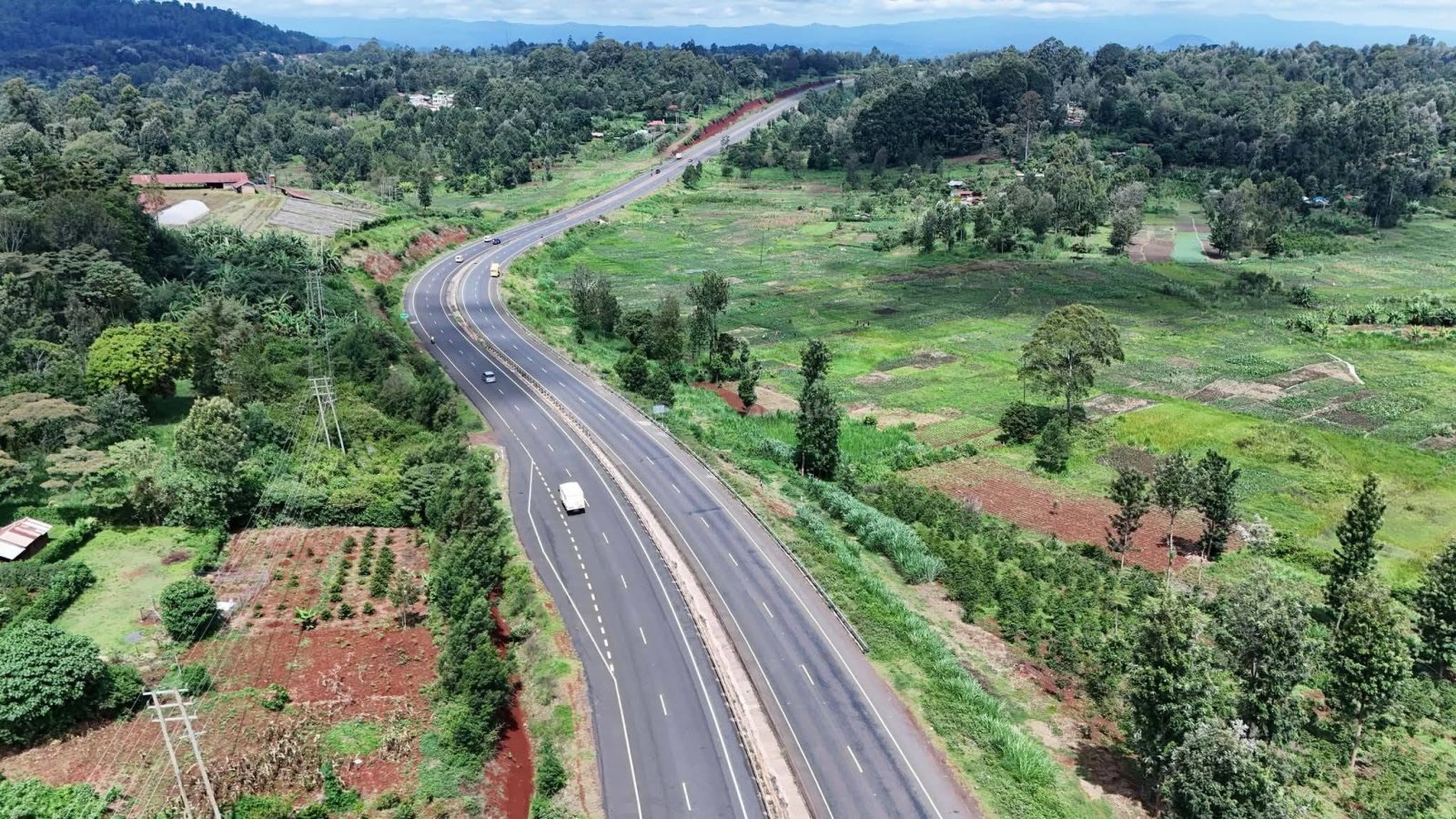
The region's single largest confirmed commitment is Kenya's Rironi-Mau Summit highway, formally launched by President Ruto on 28 November 2025. The project is now confirmed at 233 kilometres, including a 57.8-kilometre branch toward Naivasha, at a cost of roughly Ksh184 billion (approximately $1.4 billion), delivered as a 30-year PPP split between two Chinese concessionaires: China Road and Bridge Corporation, partnered with Kenya's NSSF, handling the 139-kilometre Rironi-Naivasha-Gilgil section, and Shandong Hi-Speed Road and Bridge International handling the 94-kilometre Gilgil-Nakuru-Mau Summit section. The Rironi-Naivasha section is targeted for completion on 30 October 2026, with the full corridor due by June 2027, tolled at roughly Sh8 per kilometre. This is Kenya's flagship contribution to the wider Cairo-to-Cape Trans-African Highway and the Northern Corridor.
Kenya is also, at long last, closing the gap in Nairobi's metropolitan ring road system. The Nairobi Northern Bypass, built between 2009 and 2014 as a two-lane single carriageway linking Ruaka to Ruiru, has remained the only one of Nairobi's bypasses never to be dualled. Kenya's Cabinet approved dualling the 20.2-kilometre stretch into a four-lane carriageway with eight interchanges on 25 June 2025, with tenders expected in early 2026, alongside the already-completed Nairobi Southern Bypass (29.6km, 2016) and Nairobi Western Bypass (15.3km, completed August 2022, financed by a China Exim Bank concessional loan).
The planned Nairobi-Mombasa Expressway, at 473 kilometres, remains Kenya's most ambitious and most delayed megaproject, now estimated at $3.6 billion after American firm Bechtel's 2018 attempt at the considerably lower Sh300 billion stalled over financing structure disputes. The Dongo Kundu Bypass, bypassing Mombasa's congested Likoni ferry crossing, is 96-98% complete and already carrying traffic, including Kenya's longest bridge, the 1,440-metre Mteza Bridge. The James Gichuru-Rironi road, part of the same Nairobi-Nakuru corridor, is about 82% complete after the World Bank withdrew its original 80% financing share in 2019 over delays, leaving the Kenyan government to fund the remainder alone.
Kenya's Full Pipeline
| Project | Length | Estimated Cost | Status |
| Rironi-Mau Summit (incl. Naivasha branch) | 233 km | ~$1.4 billion | Under construction; phased completion 2026-27 |
| Nairobi-Mombasa Expressway | 473 km | ~$3.6 billion | PPP development |
| Nairobi Expressway | 27.1 km | $560m-$668m | Operational since 2022 |
| Dongo Kundu Bypass | 17.5-18 km | Sh30bn-45bn | 96-98% complete |
| Kenol-Sagana-Marua | 84 km | ~Sh16 billion | 93% complete |
| James Gichuru-Rironi | 25.3 km | ~Ksh20.4 billion | 82% complete |
| Nairobi Northern Bypass (dualling) | 20.2 km | Not yet disclosed | Cabinet-approved; tenders early 2026 |
| Nairobi Western Bypass | 15.3 km | Sh17-17.3 billion | Completed, 2022 |
| Nairobi Southern Bypass | 29.6 km | Not separately disclosed | Completed, 2016 |
| Pangani-Muthaiga-Kiambu-Ndumberi Road | 23.5 km | Sh38.7 billion | Cabinet-approved, Nov 2025 |
Sources: KeNHA, KURA, Kenya News Agency, Capital FM Business, The Standard, AidData, Citizen Digital.
Tanzania Is Connecting the Port to the Interior in Stages
Tanzania's Dodoma Outer Ring Road remains one of the country's largest individual dual carriageway projects, financed at $214.69 million with the African Development Bank covering 64%, the government 16%, and the China-linked Africa Growing Together Fund the remainder. TANROADS divides the 112.3-kilometre project into two lots, with the first 52.3-kilometre section now roughly 93% complete and commissioning targeted for October 2026.
Tanzania's larger strategic story is unfolding around Dar es Salaam. The Kimara-Kibaha Road, Tanzania's first eight-lane road, has been carrying traffic since late 2022, its 19.2 kilometres costing 167 billion Tanzanian shillings originally, later rising to 218 billion shillings with additional works. That existing road connects the same general corridor as a separately proposed 42-kilometre Dar es Salaam-Kibaha Expressway, a distinct PPP project confirmed by Works Minister Abdallah Ulega, alongside the 78.9-kilometre Kibaha-Chalinze Expressway, currently being restructured under Tanzania's PPP Centre. Together, this sequence points toward a considerably larger ambition: a continuous high-capacity corridor linking Dar es Salaam's port directly to Morogoro, Dodoma and the interior markets the Central Corridor serves.
Ethiopia Has Built a Genuine Expressway Pipeline
Ethiopia's expressway programme has matured considerably since its 2014 debut. The Addis Ababa-Adama Expressway, 84.7 kilometres and financed 57% by Exim Bank of China, was Ethiopia's first, and the Modjo-Hawassa Expressway, 202 kilometres built across four separately financed lots involving the African Development Bank, Korea Exim Bank, the World Bank and China Exim Bank, is now near completion and expected to cut travel time on the route by up to 40%, connecting Addis Ababa's economic system to the Hawassa Industrial Park and the country's dry port system.
Ethiopia's next phase is considerably larger in scale. The Addis Ababa-Jimma Expressway (345.5 kilometres, estimated at $2.03 billion) and the Addis Ababa-Kombolcha-Dessie Expressway (352.2 kilometres, estimated at $2.32 billion) are both now in planning as PPP toll roads. If both proceed, Ethiopia's expressway network would roughly quadruple in length within a decade, and both roads form part of the Cairo-to-Cape-Town Trans-African Highway system.
Uganda Is Building a Complete Ring Around Kampala
Uganda's completed Kampala-Entebbe Expressway (49.56km, completed 2019) remains the region's clearest early operational example. The Kampala Northern Bypass illustrates how long dualling a single corridor can genuinely take: the original single-carriageway build ran from 2004 to 2009, and the dualling of roughly 17.5 kilometres into a proper four-lane carriageway wasn't completed until January 2022, eighteen years after the corridor first opened.
The Kampala-Jinja Expressway, 77 kilometres of mainline plus the 18-kilometre Kampala Southern Bypass for a combined 95 kilometres, remains Uganda's most consequential unfinished project, central to strengthening the Northern Corridor connection toward Kenya and Mombasa. Cost estimates range from $1.2 billion to $1.55 billion, and as of 2025 the project remained in bid evaluation with only one compliant bidder. The Busega-Mpigi Expressway, a multinational project shared with Rwanda, is confirmed at 23.7 kilometres, with the African Development Bank's additional €217.37 million approval lifting Uganda's total allocation to €424.61 million; works resume in January 2026 with completion targeted for 2030.
Rwanda Is Building a Ring, Not Competing on Length
Rwanda's approach remains concentrated around Kigali rather than pursuing very long national expressways. The Kigali Ring Road, a proposed 95-kilometre orbital toll road connecting to the new Bugesera airport, is backed by a diversified financing package: a $100 million AfDB loan, a €23 million EU grant, and $28 million from the Green Climate Fund. The New Bugesera International Airport Expressway, roughly 14 kilometres, is being built by Mota-Engil as part of the wider $2 billion airport project. The Kagitumba-Kayonza-Rusumo Road, 208 kilometres connecting Rwanda's Uganda and Tanzania borders as part of the Northern-to-Central Corridor link, was completed in December 2023 at a cost of roughly $164-212 million, co-financed by the AfDB, JICA and the Rwandan government.
The DRC Is Building Its First Genuine Modern Highway
The DRC's road-building programme centres on the RN2 project, a 206.5-kilometre section between Mbanga and the Lualaba River designed as a true 2-by-2 autoroute, including a 714-metre bridge over the Lualaba and reserved capacity for future fibre optic and electricity infrastructure. Backed by $440.2 million in World Bank financing and with civil works contracts signed in mid-2026, the project is intended eventually to form part of a much larger east-west connection across central DRC, and represents the country's first genuinely modern dual carriageway. The DRC is separately rehabilitating 622 kilometres of RN1 between Kinshasa and Batshamba and has launched work on a 385-kilometre corridor between Mbuji-Mayi and Kananga connecting toward Angola's Atlantic ports, both important trade routes, though built to a widened two-lane standard rather than as dual carriageways.
What the Full Regional Picture Shows
Across more than 30 projects spanning six countries, the comparison reveals a region moving in a consistent direction. Financing is shifting from the concessional loans and grants that built the previous generation of East African roads toward tolled public-private partnerships: Kenya's Nairobi Expressway and Rironi-Mau Summit, Uganda's Kampala-Jinja, Tanzania's Kibaha-Chalinze, and Ethiopia's newly planned Jimma and Dessie corridors are all structured this way. Chinese contractors, China Road and Bridge Corporation, China Civil Engineering Construction Corporation, Sinohydro, remain dominant across construction in nearly every country studied, even as the financing behind these projects diversifies toward the African Development Bank, World Bank, European Union and Korean development finance.
Kilometres alone remain a poor measure of which of these roads will actually matter most for regional trade. A road becomes economically valuable when it connects production to markets, ports to inland logistics centres, mines to processing facilities, and national economies to their neighbours. Kenya's Rironi-Mau Summit and Nairobi-Mombasa projects extend the Northern Corridor deeper into the country's agricultural and industrial heartland. Tanzania's Dar es Salaam-Kibaha-Chalinze sequence is building, piece by piece, a single high-capacity route from the port to the Central Corridor's interior markets. Uganda's Kampala-Jinja Expressway, if it ever clears procurement, would tighten the connection between Uganda and Mombasa. Ethiopia's expanding expressway network is extending Addis Ababa's economic reach toward Jimma and the northern Dessie corridor. Rwanda's ring road strengthens Kigali's connectivity to the wider region. And the DRC's RN2 project, modest by kilometre count against Kenya's or Ethiopia's biggest projects, may ultimately matter as much as any of them, simply by proving the country can build a genuine modern highway at all.
The next phase of East African road construction will be judged less by how many kilometres of asphalt governments can announce, and more by whether those kilometres form continuous, well-connected corridors capable of actually reshaping where the region's trade moves.
FAQ
Which is East Africa's longest dual carriageway project currently under construction? Kenya's Rironi-Mau Summit highway, at 233 kilometres including its Naivasha branch, is the largest currently under active construction, launched in November 2025 and targeting phased completion between October 2026 and June 2027.
What is the DRC's first genuine modern dual carriageway? The RN2 corridor between Mbanga and the Lualaba River, 206.5 kilometres, backed by $440.2 million in World Bank financing, with civil works contracts signed in mid-2026.
How much does Kenya's planned Nairobi-Mombasa Expressway cost? The 473-kilometre project is currently estimated at $3.6 billion, up from an original Sh300 billion (roughly $2 billion) estimate in 2018, and remains in PPP development after an earlier attempt with contractor Bechtel stalled over financing disputes.
Is Uganda's Kampala-Jinja Expressway under construction yet? Not at full scale. As of 2025, the 95-kilometre combined project remained in bid evaluation with only one compliant bidder, despite cost estimates of $1.2 to $1.55 billion.
What is Ethiopia's next major expressway project after Modjo-Hawassa? Two considerably larger projects are in planning: the 345.5-kilometre Addis Ababa-Jimma Expressway (~$2.03 billion) and the 352.2-kilometre Addis Ababa-Kombolcha-Dessie Expressway (~$2.32 billion).
Does Rwanda have a project comparable to Kenya's or Ethiopia's long expressways? Not in length. Rwanda's largest current project is the 95-kilometre Kigali Ring Road, an orbital route rather than a long-distance corridor, reflecting Rwanda's strategy of building a compact, high-quality network around its capital rather than competing on national road length.
 Uchumi360
Business Intelligence
Uchumi360
Business Intelligence
Uchumi360 covers business, investment, and economic policy across East, Central, and Southern Africa.
For the serious reader
You read to the end. That places you in a small group.
Uchumi360 is built for readers who demand precision over speed, structure over sentiment, and analysis that holds uncomfortable conclusions rather than softening them. If this work sharpens how you think about Africa's economy, help us keep building the infrastructure behind it.
Institutional Partners
Commission intelligence. Shape the conversation.
Uchumi360 works with development finance institutions, investment firms, sovereign bodies, and strategic organisations across the coverage region. Institutional partnership unlocks:
- Commissioned sector and country intelligence reports
- Branded research series under your institution's authority
- Exclusive data briefings for internal strategy teams
- Speaking and editorial presence at Uchumi360 events
- Co-published investment outlooks for your markets
Support Our Work
Independent analysis has a cost. Help us bear it.
Uchumi360 does not carry advertising. It does not take editorial direction from sponsors. Every article is produced without commercial compromise. Your contribution funds the reporting, research, and editorial infrastructure that keeps this analysis free from influence.
Secure checkout: One-time and monthly support are processed securely. Add payment credentials to enable checkout here.
Stay Connected
Keep up with every new insight.
Follow our latest analysis, policy coverage, and market intelligence as soon as it is published. If you need something specific, reach out directly and we will point you to the right research.
