
10 Infrastructure Projects Reshaping Tanzania's Economy
Ready
Tanzania is running ten major infrastructure projects at once, across rail, energy, ports, aviation, roads and industrial zones, worth a combined total that runs well past USD 60 billion once every itemized project is added up. Some, like the Julius Nyerere Hydropower Project, are already delivering power to the grid. Others, like the USD 42 billion Tanzania LNG project, are still years from a final investment decision. This is a consolidated, single-currency look at all ten, what each actually costs, how far along it is, and why the country is betting that building them as one connected system matters more than any single project on its own.
Tanzania's infrastructure strategy is not built around one flagship project. It is built around ten of them, running in parallel across rail, energy, ports, aviation, roads and industrial zones, each designed to remove a different bottleneck standing between the country and its ambition to become East Africa's logistics and manufacturing hub. Individually, each project is a headline. Together, they are a bet that infrastructure built as an interconnected system is worth more than the sum of its parts.
What follows is a consolidated look at the ten largest, ranked by estimated total value where that figure exists, with currency and completion status standardised so the projects can actually be compared against one another.
1. Standard Gauge Railway (SGR)
Estimated total value: Over USD 10 billion (multi-phase)
Sector: Rail transport
Status: Partially operational; under construction
Tanzania's largest transport infrastructure project is designed to connect Dar es Salaam with Dodoma, Mwanza and Kigoma, with onward links planned to Rwanda, Burundi, Uganda and the DRC. Passenger services between Dar es Salaam and Dodoma are already running. Construction continues on the Makutupora-Tabora, Tabora-Isaka and Isaka-Mwanza sections, alongside the newly launched Tabora-Kigoma segment. The Ministry of Transport's 2026/27 budget allocated TZS 1.5 trillion (roughly USD 600 million) to the SGR programme specifically, part of a wider TZS 2.87 trillion transport ministry budget request for the year.
Economic impact: Cuts freight costs by up to 40%; links Lake Victoria to the Indian Ocean; strengthens Tanzania's position as a regional logistics hub; reduces road congestion.
2. East African Crude Oil Pipeline (EACOP)
Estimated total value: Approximately USD 5 billion
Sector: Energy
Status: Approximately 79% complete, with Tanzania and Uganda targeting completion around July 2026
Running roughly 1,443 kilometres from Uganda's oil fields to Tanzania's Port of Tanga, EACOP is one of Africa's largest cross-border energy infrastructure projects. Once commissioned, it will make Tanga a major regional oil export gateway.
Economic impact: Thousands of construction and operational jobs; growth in logistics and engineering services; increased port activity; foreign exchange earnings from transit fees.
3. Julius Nyerere Hydropower Project (JNHPP)
Estimated total value: Approximately USD 2.9 billion
Sector: Energy
Capacity: 2,115 MW
Status: Operational
Built on the Rufiji River, JNHPP is East Africa's largest power station and is already supplying electricity to the national grid, materially increasing Tanzania's generation capacity for industrial parks, mining operations and manufacturing.
Economic impact: Lower electricity costs; industrial expansion; improved energy security; rural electrification.
4. Chalinze-Dodoma 400kV Transmission Line
Estimated total value: Approximately USD 200 million
Sector: Energy transmission
Status: Nearing completion
Generation capacity alone does not power an economy without transmission to match it. This line carries electricity from JNHPP into central Tanzania and its industrial centres, strengthening grid reliability for future manufacturing growth.
Economic impact: Reduces transmission losses; extends reliable power to central Tanzania; supports industrial siting decisions away from the coast.
5. Tanzania LNG Project (Lindi)
Estimated total value: Approximately USD 42 billion (TZS 108 trillion)
Sector: Energy, natural gas
Status: Pre-FID; final investment decision targeted for 2028, first gas projected around 2034
This is Tanzania's single largest planned investment of any kind, drawing on more than 57 trillion cubic feet of offshore natural gas reserves in the Rovuma Basin. The project includes processing facilities, marine infrastructure and export terminals near Lindi, developed with international partners including Shell, Equinor, ExxonMobil and TPDC. Its scale exceeds Tanzania's current annual GDP, making its financing and delivery timeline the single biggest variable in the entire ten-project list.
Potential impact: Positions Tanzania among Africa's largest LNG exporters; major foreign exchange earnings; domestic gas allocation for power, fertiliser and petrochemical industries; large-scale employment in Lindi region.
6. Dar es Salaam Port Modernisation
Estimated total value: Approximately USD 1 billion
Sector: Maritime logistics
Status: Ongoing expansion
The port is being upgraded with deeper berths, wider channels, improved container handling and digitalisation, positioning it to serve Tanzania and landlocked neighbours, including Zambia, Malawi, DRC and Burundi, more efficiently as cargo volumes grow.
Economic impact: Higher cargo throughput; reduced vessel turnaround time; strengthened position as the primary gateway for regional trade.
7. Bus Rapid Transit (DART) Expansion
Estimated total value: US$790–810 million, depending on the exchange rate; funded incrementally by phase
Sector: Urban transport
Status: Phase III nearing completion; Phases IV and V in construction and procurement
Dar es Salaam's BRT network continues expanding beyond its original phase, with additional flyovers planned at Mwenge and Morocco to further ease congestion on the capital's most constrained corridors.
Economic impact: Reduced commuter travel times; lower transport costs for residents; improved labour productivity; reduced urban congestion.
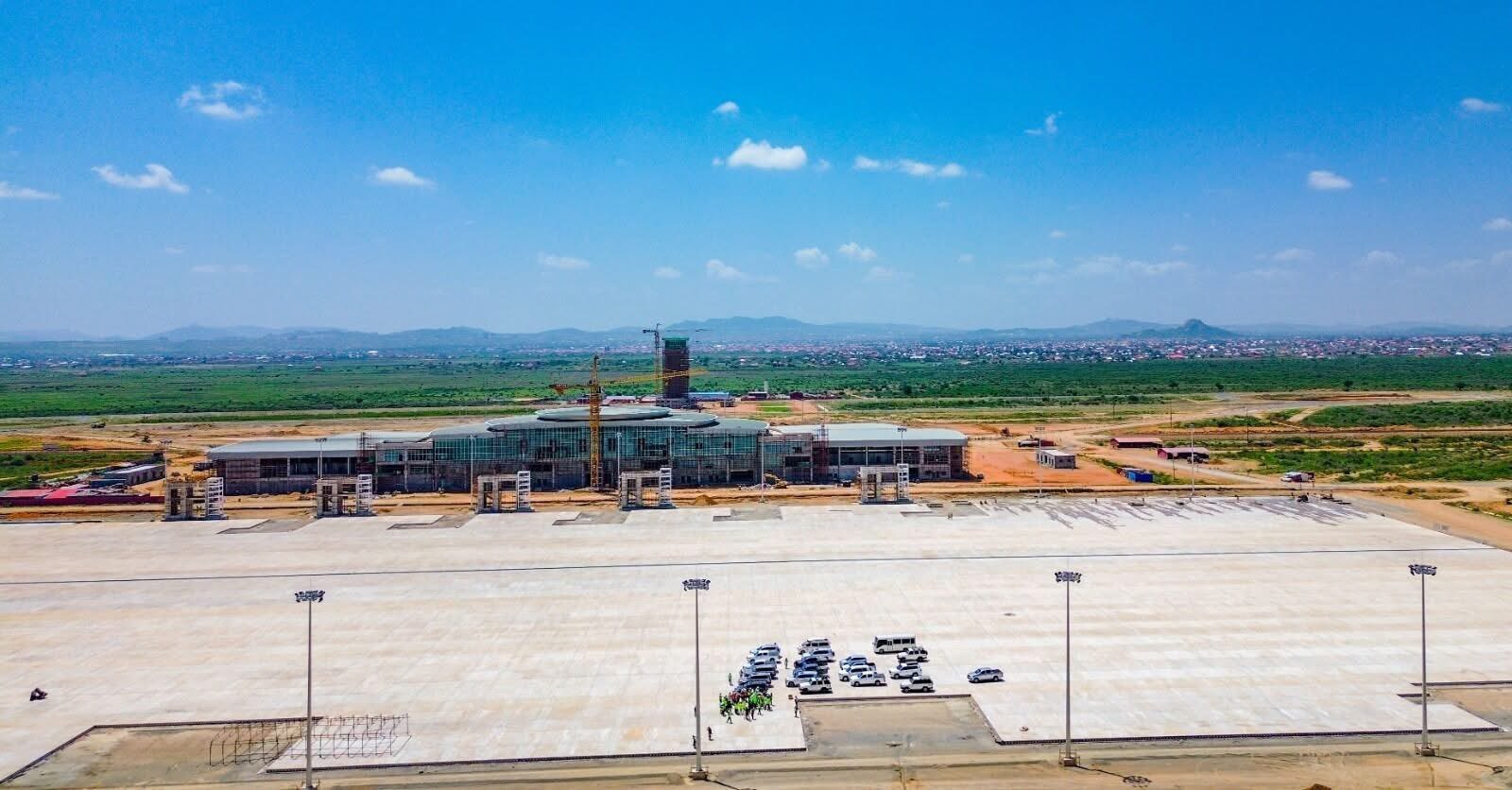
8. Msalato International Airport
Estimated total value: Approximately USD 330 million
Sector: Aviation
Status: Under construction
Location: Dodoma
Msalato will expand Tanzania's aviation capacity and support Dodoma's growth as the country's administrative capital, designed to handle international passenger and cargo traffic and attract investment into central Tanzania.
Economic impact: Direct international access to Dodoma; reduced reliance on Dar es Salaam for central-region air traffic; investment attraction for the new capital.
9. National Roads and Strategic Bridges Programme
Annual allocation (2026/27): Approximately USD 1 billion
Sector: Road transport
Status: Ongoing, multi-year programme
This figure is a single fiscal year's allocation, not the programme's total lifetime value, since the roads and bridges programme runs continuously rather than as a fixed-cost project. Current works include the Dodoma Outer Ring Road, hundreds of kilometres of new paved highways, strategic bridges, urban bypasses and climate-resilient transport infrastructure.
Economic impact: Reduced logistics costs on domestic routes; improved rural market access; climate resilience for a road network increasingly exposed to flooding and extreme weather.
10. Special Economic Zones and Industrial Infrastructure
Estimated total value: Not consolidated into a single public figure; funded across multiple zones and projects
Sector: Industrial infrastructure
Status: Ongoing expansion
Through TISEZA, government investment continues in industrial parks, logistics centres and supporting infrastructure, roads, electricity, water, land servicing and One Stop Facilitation Centres, designed to create integrated industrial ecosystems for manufacturing, export processing and logistics.
Economic impact: Lower entry costs for manufacturers; faster investor onboarding; concentration of infrastructure investment around export-oriented industry.
The Ten Projects at a Glance
| # | Project | Sector | Estimated Value (USD) | Status |
| 1 | Standard Gauge Railway | Rail | 1US $ 0bn+ (multi-phase) | Partially operational |
| 2 | EACOP | Energy (oil) | US $ 5bn | ~79% complete |
| 3 | Julius Nyerere Hydropower Project | Energy (power) | US $ 2.9bn | Operational |
| 4 | Chalinze-Dodoma 400kV Line | Energy (transmission) | US $ 0.2bn | Nearing completion |
| 5 | Tanzania LNG (Lindi) | Energy (gas) | US $42bn | Pre-FID (targeted 2028) |
| 6 | Dar es Salaam Port Modernisation | Maritime | US $ 1bn+ | Ongoing |
| 7 | DART BRT Expansion | Urban transport | US $790–810 mn | Phase III nearing completion |
| 8 | Msalato International Airport | Aviation | US $330m | Under construction |
| 9 | National Roads Programme | Roads | US $ 1bn (annual, 2026/27) | Ongoing |
| 10 | SEZs & Industrial Infrastructure | Industrial | Not consolidated | Ongoing expansion |
The Bigger Picture
Ranked by value alone, the Tanzania LNG project dwarfs everything else on this list by a wide margin, and it is worth being clear-eyed about what that means: it is still pre-FID, with first gas not expected until around 2034, so its USD 42 billion price tag describes an ambition still being negotiated rather than capital currently being deployed. The nine other projects, several already operational or near completion, are where Tanzania's infrastructure transformation is actually happening in real time.
What connects all ten is not their individual size but their dependence on each other. A railway is only as useful as the port it feeds and the power grid that runs its electrified sections. An industrial zone is only as attractive as the roads, electricity and airport access surrounding it. Judged project by project, each of these is a large but ordinary infrastructure investment. Judged as a single, interlocking system, they are Tanzania's clearest bet yet that the country's next decade of growth will be built on logistics and manufacturing rather than commodity exports alone.
 Uchumi360
Business Intelligence
Uchumi360
Business Intelligence
Uchumi360 covers business, investment, and economic policy across East, Central, and Southern Africa.
For the serious reader
You read to the end. That places you in a small group.
Uchumi360 is built for readers who demand precision over speed, structure over sentiment, and analysis that holds uncomfortable conclusions rather than softening them. If this work sharpens how you think about Africa's economy, help us keep building the infrastructure behind it.
Institutional Partners
Commission intelligence. Shape the conversation.
Uchumi360 works with development finance institutions, investment firms, sovereign bodies, and strategic organisations across the coverage region. Institutional partnership unlocks:
- Commissioned sector and country intelligence reports
- Branded research series under your institution's authority
- Exclusive data briefings for internal strategy teams
- Speaking and editorial presence at Uchumi360 events
- Co-published investment outlooks for your markets
Support Our Work
Independent analysis has a cost. Help us bear it.
Uchumi360 does not carry advertising. It does not take editorial direction from sponsors. Every article is produced without commercial compromise. Your contribution funds the reporting, research, and editorial infrastructure that keeps this analysis free from influence.
Secure checkout: One-time and monthly support are processed securely. Add payment credentials to enable checkout here.
Stay Connected
Keep up with every new insight.
Follow our latest analysis, policy coverage, and market intelligence as soon as it is published. If you need something specific, reach out directly and we will point you to the right research.
