
Tanzania Is Building Africa's Largest New Electrified Railway Network
Ready
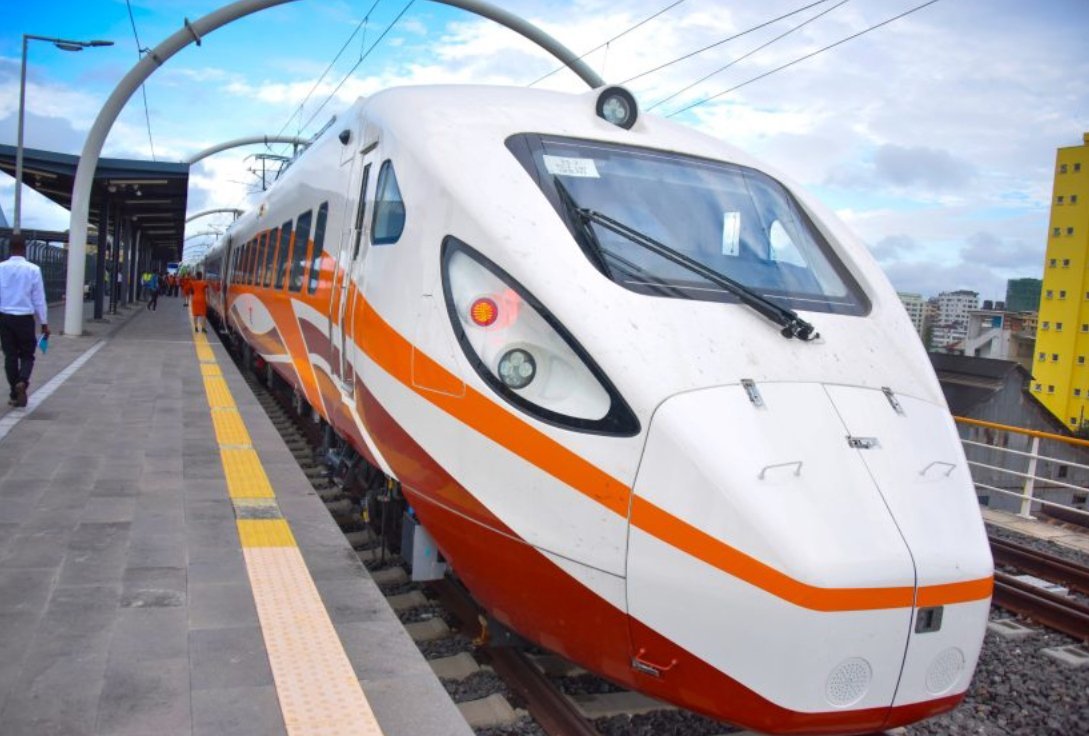
Tanzania is building a modern, electrified standard gauge railway network of 2,561 kilometres, alongside a total investment of roughly USD 10 billion. Standard Chartered arranged more than $2.33 billion in syndicated financing for the Mwanza-bound sections in April 2026. This is the largest new electrified railway programme under construction anywhere on the continent, built as a cross-border trade system rather than a domestic line.
DAR ES SALAAM — Tanzania is building a railway network large enough that most coverage of it has been describing only part of the project. The 1,219-kilometre line between Dar es Salaam and Mwanza has drawn the bulk of international attention. It is also less than half of what Tanzania is actually constructing.
Reuters reported in April 2026 that Tanzania is building a modern railway network of 2,561 kilometres, confirmed the same month by the International Energy Agency's own policy database, which puts total investment in the programme at roughly USD 10 billion, including USD 3.1 billion for the Dar es Salaam-Dodoma section alone. That figure makes the Dar es Salaam-Mwanza corridor the first spine of a much larger system reaching toward Lake Tanganyika, Burundi, Uganda and the Democratic Republic of Congo. No other country on the continent is currently building new electrified rail at this scale. Tanzania is constructing the largest new electrified railway programme under active construction anywhere in Africa.
The Full 2,561km Programme, Section by Section
| Lot | Route | Length | Status |
| 1 & 2 | Dar es Salaam – Morogoro – Makutupora (Dodoma) | 541 km | Operational (passenger since 2024; freight since June 2025) |
| 3 | Makutupora – Tabora | 294 km | Under construction/financed |
| 4 | Tabora – Isaka | 130 km | Under construction/financed |
| 5 | Isaka – Mwanza | 237 km | Under construction/financed |
| Subtotal (Lots 1–5) | Dar es Salaam – Mwanza | 1,219 km | |
| 6 | Tabora – Kigoma (plus 95 km sidings/loops) | 411 km (506 km incl. infrastructure) | Construction launched July 2026 |
| — | Tanzania-Burundi cross-border sections (Uvinza–Malagarasi, Malagarasi–Musongati) | 240 km | Uvinza–Musongati portion under construction since August 2025 |
| — | Isaka–western Uganda–DRC border corridor | 600+ km | Agreement signed March 2026 |
| Total national and cross-border programme | Dar es Salaam to Mwanza, Kigoma, Burundi and the Uganda border | 2,561 km |
Sources: Tanzania Railways Corporation, International Energy Agency, Standard Chartered financing disclosure, April 2026; African Development Bank project documentation.
Tanzania has already moved past construction into commercial operation on the first section of this network. Freight services launched between Dar es Salaam and Dodoma in June 2025 following trial runs, giving the railway a cargo-carrying function alongside its passenger service. Passenger service demonstrates that a railway works. Freight determines whether it changes the cost of doing business, and freight is where a project of this scale earns its return.
Kigoma Changes the Shape of the Network
The July 2026 launch of construction on the 411-kilometre Tabora-to-Kigoma line extends Tanzania's railway to a second inland water interface entirely distinct from the first. Mwanza connects the railway to Lake Victoria and the markets clustered around one of Africa's largest inland lakes. Kigoma connects it to Lake Tanganyika and the western Great Lakes region, reaching toward Burundi and the eastern DRC.
Dar es Salaam sits on the Indian Ocean. Mwanza sits on Lake Victoria. Kigoma sits on Lake Tanganyika. One railway network connects all three to the same maritime gateway. That is a regional logistics system, not a domestic railway line.
The Railway Crosses Tanzania's Borders by Design
Tanzania's programme was built to extend past its own frontier. The African Development Bank approved $696.41 million in financing in 2023 for a Tanzania-Burundi railway covering 651 kilometres across both countries: the 411-kilometre Tabora-to-Kigoma section and 156-kilometre Uvinza-to-Malagarasi section in Tanzania, plus an 84-kilometre Malagarasi-to-Musongati section in Burundi. Construction on the Uvinza-to-Musongati portion launched in August 2025, with China Railway Engineering Group holding the contract for both the Tanzanian and Burundian segments.
The commercial logic is direct. Burundi is landlocked and depends heavily on road transport to reach the coast. A rail connection to Tanzania's network gives Burundian exporters and importers a route to Dar es Salaam that doesn't run entirely on trucks, with particular relevance for bulk minerals, since Musongati sits near major nickel deposits that give the line a freight base well beyond general merchandise.
Uganda has been pulled into the same system. In March 2026, Tanzania and Uganda signed an agreement to develop a cross-border corridor from Isaka through western Uganda toward the DRC border, a route Ugandan officials framed in direct economic terms: shifting cargo from road to rail to cut regional transport costs. Uganda's New Vision reported the planned corridor will exceed 600 kilometres. Landlocked economies benefit from multiple competing corridors, since competition between routes pushes down logistics costs and builds resilience when any single route faces congestion or disruption. The same logic extends to Rwanda and the eastern DRC: more viable routes to the sea puts pressure on every corridor to compete on price and reliability.
The Money Behind the Track
Tanzania's SGR programme is backed by financing at a scale that reflects a project well past political announcement. Standard Chartered announced more than $2.33 billion in syndicated financing in April 2026 for Lots 3, 4 and 5, structured with $1.32 billion in export credit agency financing plus $462 million in long-term commercial and development finance for Lots 3 and 4, and a separate $559 million China Sinosure-backed facility for Lot 5. Export credit agencies from Sweden, Poland, Italy and China are involved, alongside Turkish and Chinese construction firms. The project has drawn construction expertise, financing and industrial supply chains from several major economic powers into a single regional infrastructure programme.
The Real Test Is Cargo, Not Kilometres
A 2,561-kilometre network is an infrastructure achievement. It becomes an economic return only through the freight it carries: whether mining companies route production through it, whether agricultural producers aggregate cargo around its stations, whether manufacturers locate closer to reliable freight routes because of it, and whether neighbouring countries send meaningful cargo volumes through Tanzania's Central Corridor rather than through Mombasa, Djibouti or southern African ports.
When that happens, the railway changes investment decisions directly. A factory that once needed coastal proximity can locate nearer its raw materials. A mining operation can expand production once bulk transport gets cheaper. An inland city can become a genuine distribution hub once it sits on a reliable corridor. That shift happens because businesses change what they produce and where they locate around the railway, and it is the test Tanzania's programme will face over the next decade.
An Electric Railway Is Also an Electricity Bet
This is an electrified network, and its performance is tied directly to Tanzania's power system. Electric trains require reliable generation, transmission and railway substations, and Tanzania has expanded generation capacity substantially, most visibly through the 2,115-megawatt Julius Nyerere Hydropower Project. As electrified rail expands, the railway becomes another large industrial electricity consumer, reinforcing the country's broader push to convert new generation capacity into productive industrial demand.
What's Next
Tanzania's railway programme will be judged by what starts moving along it, not by its kilometre count alone. A 2,561-kilometre network connecting an Indian Ocean port to two inland lake systems and three neighbouring landlocked economies is a major infrastructure achievement, and it is already carrying freight on its first completed section. The next test is commercial: whether mining companies route production through it, whether manufacturers relocate closer to it, and whether Burundi, Uganda and the eastern DRC send meaningful cargo volumes through Dar es Salaam.
That is the test that determines whether this becomes the regional trade corridor Tanzania has built it to be. The freight data over the next several years, not the length of the line, will be the verdict.
FAQ
How long is Tanzania's electrified railway network? 2,561 kilometres, confirmed by Tanzania Railway Corporation spanning the Dar es Salaam-to-Mwanza corridor, the Tabora-to-Kigoma extension, and cross-border sections into Burundi and toward Uganda.
How long is the Dar es Salaam to Mwanza railway specifically? 1,219 kilometres, built across five construction lots running through Morogoro, Dodoma, Tabora and Isaka before reaching Mwanza on Lake Victoria.
Is the whole network already operating? Passenger and freight service is operational between Dar es Salaam and Dodoma (541 km), with freight service launching in June 2025. The remaining lots toward Mwanza, and the Tabora-Kigoma section, are under construction.
Does the railway connect to other countries? Yes. A Tanzania-Burundi railway, backed by $696.41 million in African Development Bank financing, began construction in August 2025, and Tanzania and Uganda signed an agreement in March 2026 for a corridor exceeding 600 kilometres toward the DRC border.
How is the project being financed? Standard Chartered arranged more than $2.33 billion in syndicated financing in April 2026 for the sections toward Mwanza, combining export credit agency financing from Sweden, Poland, Italy and China with commercial bank and development finance institution funding, part of a programme the IEA puts at roughly USD 10 billion in total.
Why does the railway matter beyond its length? It connects Tanzania's Indian Ocean port to two major inland lake systems, Victoria via Mwanza and Tanganyika via Kigoma, and onward to landlocked Burundi and Uganda, giving those economies a competitive alternative to existing trade corridors through Kenya and Djibouti.
 Uchumi360
Business Intelligence
Uchumi360
Business Intelligence
Uchumi360 covers business, investment, and economic policy across East, Central, and Southern Africa.
For the serious reader
You read to the end. That places you in a small group.
Uchumi360 is built for readers who demand precision over speed, structure over sentiment, and analysis that holds uncomfortable conclusions rather than softening them. If this work sharpens how you think about Africa's economy, help us keep building the infrastructure behind it.
Institutional Partners
Commission intelligence. Shape the conversation.
Uchumi360 works with development finance institutions, investment firms, sovereign bodies, and strategic organisations across the coverage region. Institutional partnership unlocks:
- Commissioned sector and country intelligence reports
- Branded research series under your institution's authority
- Exclusive data briefings for internal strategy teams
- Speaking and editorial presence at Uchumi360 events
- Co-published investment outlooks for your markets
Support Our Work
Independent analysis has a cost. Help us bear it.
Uchumi360 does not carry advertising. It does not take editorial direction from sponsors. Every article is produced without commercial compromise. Your contribution funds the reporting, research, and editorial infrastructure that keeps this analysis free from influence.
Secure checkout: One-time and monthly support are processed securely. Add payment credentials to enable checkout here.
Stay Connected
Keep up with every new insight.
Follow our latest analysis, policy coverage, and market intelligence as soon as it is published. If you need something specific, reach out directly and we will point you to the right research.
