
Shift in Regional Transit Patterns at the Port of Dar es Salaam: Implications for Zambia and the DRC
Ready
Cargo flows through the Port of Dar es Salaam are changing. With the DRC overtaking Zambia as the largest transit user, this article examines what the shift reveals about regional trade demand, logistics infrastructure, and corridor competitiveness.
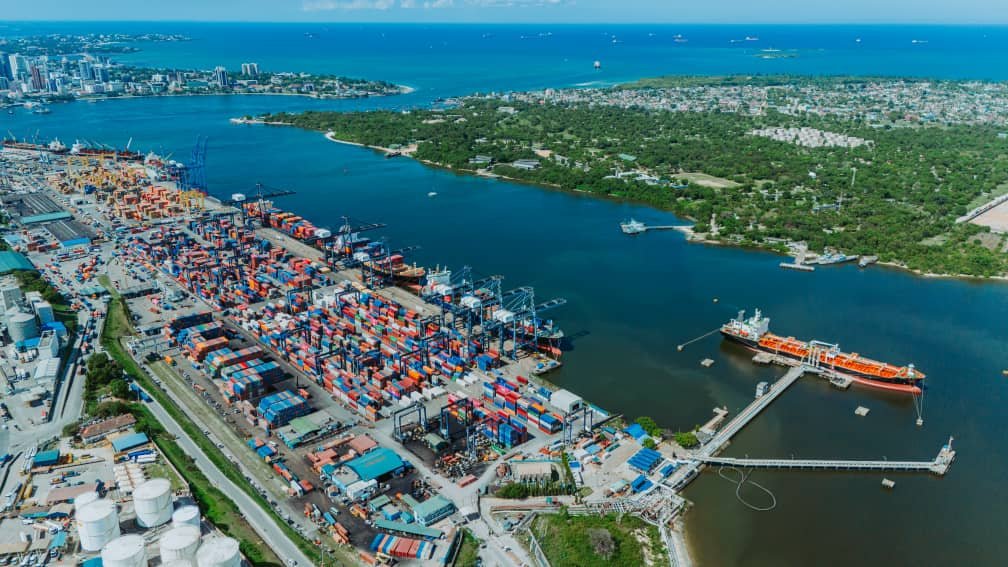
In the fiscal year ending June 2025, the Port of Dar es Salaam recorded a marked shift in regional transit dynamics among its landlocked trading partners. Data from the Tanzania Ports Authority show that the Democratic Republic of Congo has become the port’s largest external transit user, overtaking Zambia in total cargo volumes handled.
In absolute terms, cargo destined for the DRC more than doubled year on year, increasing from approximately 2.95 million tonnes in 2023/24 to nearly 6.0 million tonnes in 2024/25. Over the same period, Zambian-bound cargo also grew, rising from roughly 2.25 million tonnes to about 3.5 million tonnes. While Zambia’s volumes continued to expand, the pace of growth was significantly outstripped by DRC demand.
The divergence reflects underlying differences in trade structure and demand. The DRC’s import profile is heavily influenced by mining activity, construction inputs, fuel, and consumer goods for rapidly growing urban centers. As mining output and associated investment increased, so did demand for reliable, high-capacity logistics routes capable of handling bulk and containerized cargo efficiently. Dar es Salaam has increasingly served this role.
A key enabling factor has been Tanzania’s investment in inland logistics infrastructure. The development of dry ports and inland container depots closer to border points has altered how transit cargo is processed. These facilities shift customs clearance, storage, and consolidation away from the main harbor, reducing congestion at the quay and shortening vessel turnaround times. For cargo bound to the DRC, this has translated into faster onward movement, lower dwell times, and improved cost predictability across the supply chain.
Zambia remains a significant and strategic user of Dar es Salaam, particularly through the Central Corridor, which connects the port to Zambia, Burundi, Rwanda, eastern DRC, and parts of Uganda. Zambia’s formal accession to the corridor framework strengthened institutional coordination around transit procedures, documentation, and infrastructure planning. However, Zambia’s logistics choices are increasingly shaped by comparative cost and reliability across multiple corridors rather than reliance on a single route.
Rail connectivity remains a central variable in this equation. For decades, the Tanzania-Zambia Railway Authority has provided a direct rail link between the two countries and the Indian Ocean. Despite its strategic importance, the railway’s limited capacity, aging infrastructure, and operational constraints have restricted its ability to absorb rising freight volumes. Ongoing discussions around rehabilitation, financing, and potential restructuring underscore regional recognition that rail efficiency is critical to long-term competitiveness, particularly for bulk cargo.
Beyond Tanzania and Zambia, the evolving pattern at Dar es Salaam must be viewed within a broader regional context. Landlocked economies in East and Southern Africa increasingly evaluate multiple corridors, including routes through Mozambique, Angola, and Kenya. Decisions are guided by a combination of transport costs, transit times, infrastructure reliability, border efficiency, and policy stability. Improvements or disruptions along any one corridor can quickly redirect cargo flows.
From an economic logistics perspective, the DRC’s rise as the dominant transit user of Dar es Salaam reflects structural demand growth rather than displacement alone. Zambia’s share of throughput has declined in relative terms, but not in absolute volume, indicating continued reliance on the port alongside diversification into alternative routes.
For Tanzania, the shift reinforces Dar es Salaam’s role as a regional logistics hub rather than a national gateway alone. For Zambia and the DRC, it highlights the importance of corridor competition and infrastructure performance in shaping trade outcomes. For freight operators and policymakers, the lesson is clear. Regional competitiveness increasingly depends on flexible logistics strategies, sustained investment in infrastructure, and continuous improvements in customs and transit efficiency rather than historical corridor dominance.
 Uchumi360
Business Intelligence
Uchumi360
Business Intelligence
Uchumi360 covers business, investment, and economic policy across East, Central, and Southern Africa.
For the serious reader
You read to the end. That places you in a small group.
Uchumi360 is built for readers who demand precision over speed, structure over sentiment, and analysis that holds uncomfortable conclusions rather than softening them. If this work sharpens how you think about Africa's economy, help us keep building the infrastructure behind it.
Institutional Partners
Commission intelligence. Shape the conversation.
Uchumi360 works with development finance institutions, investment firms, sovereign bodies, and strategic organisations across the coverage region. Institutional partnership unlocks:
- Commissioned sector and country intelligence reports
- Branded research series under your institution's authority
- Exclusive data briefings for internal strategy teams
- Speaking and editorial presence at Uchumi360 events
- Co-published investment outlooks for your markets
Support Our Work
Independent analysis has a cost. Help us bear it.
Uchumi360 does not carry advertising. It does not take editorial direction from sponsors. Every article is produced without commercial compromise. Your contribution funds the reporting, research, and editorial infrastructure that keeps this analysis free from influence.
Secure checkout: One-time and monthly support are processed securely.
Stay Connected
Keep up with every new insight.
Follow our latest analysis, policy coverage, and market intelligence as soon as it is published. If you need something specific, reach out directly and we will point you to the right research.
