
Tanzania’s Airport Construction Boom. The Air Gateways Taking Shape Across the Country
Ready
Tanzania is building far more than airports. It is building the infrastructure needed for a larger, more connected economy. From the new Msalato International Airport in Dodoma to major upgrades in Kigoma, Mwanza, Arusha and several regional airports, billions of shillings are being invested to improve connectivity, strengthen tourism, facilitate trade and attract investment. This article examines every major airport and airstrip currently under construction, rehabilitation or expansion, and what these projects could mean for Tanzania's economic future.
Tanzania is quietly undertaking one of the largest airport development programmes in its history.
From the new Msalato International Airport in Dodoma to the rehabilitation of regional airports in Kigoma, Tabora, Shinyanga and Sumbawanga, the government is investing billions of shillings to modernize aviation infrastructure, improve connectivity, support tourism, facilitate trade and prepare the country for future economic growth.
While roads, railways and ports often dominate public attention, airports remain critical infrastructure for a country the size of Tanzania. They connect remote regions to commercial centres, support tourism, facilitate cargo movement and improve access to investment opportunities.
As Tanzania enters the first year of Vision 2050, several airport projects are either under construction, undergoing rehabilitation or moving through advanced planning stages.
Msalato International Airport. Tanzania’s New Capital Gateway
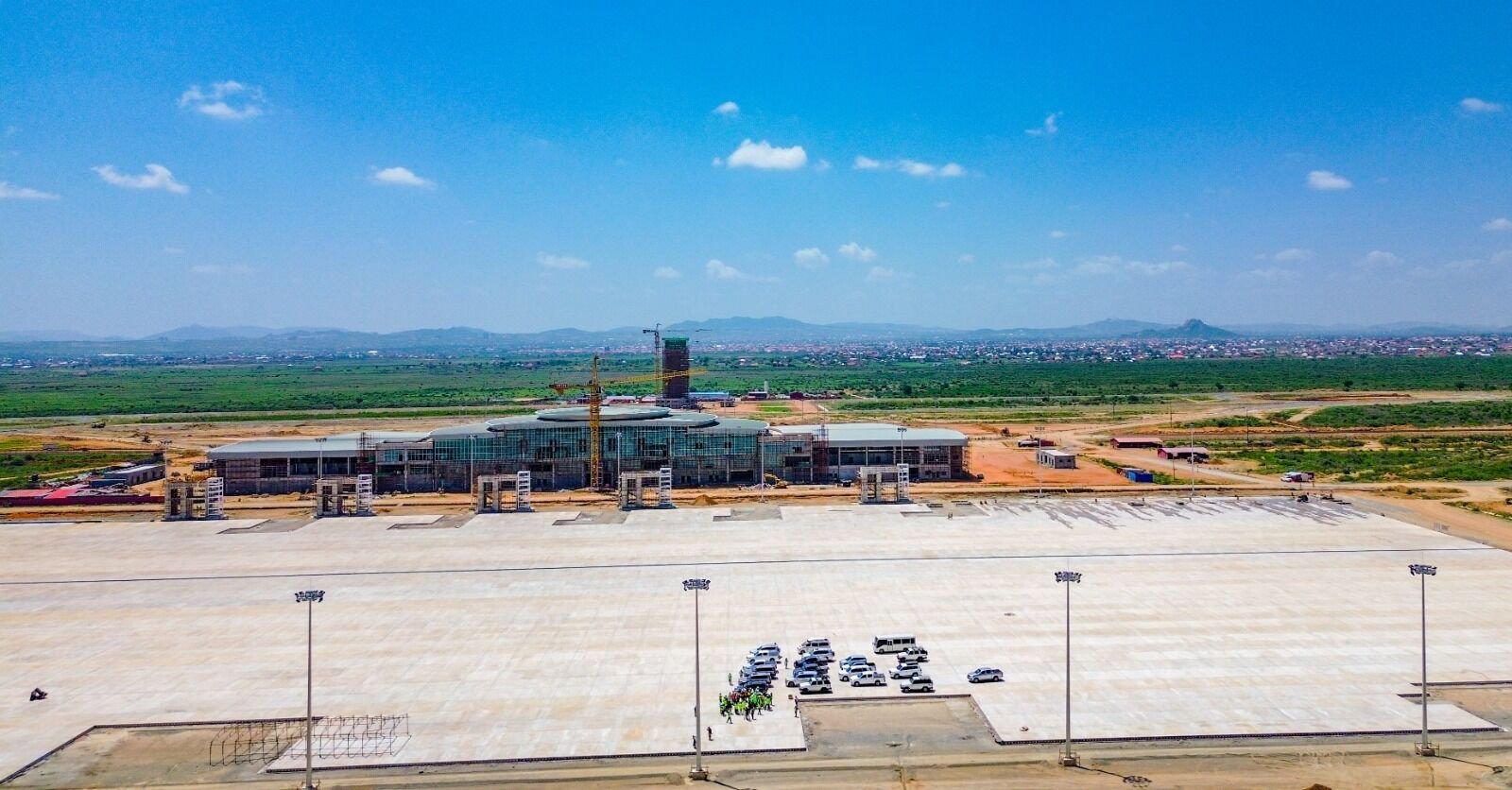
The largest aviation project currently underway is Msalato International Airport in Dodoma.
Located approximately 14 kilometres north of the city centre, the airport is being constructed to replace the limitations of the existing Dodoma Airport and serve the country’s political capital.
The project includes a 3.6 kilometre runway, a modern passenger terminal, aircraft aprons, taxiways, control tower, fire station, fuel facilities, access roads and supporting infrastructure. Once completed, the airport is expected to handle up to 1.5 million passengers annually and accommodate large international aircraft.
Construction has advanced significantly over the past year. The runway has already hosted test landings by Air Tanzania aircraft and government inspections have confirmed substantial progress toward operational readiness.
The airport, set to begin operations in September 2026 is expected to transform Dodoma into a fully connected regional and international aviation hub.
Kigoma Airport. Western Tanzania’s Major Upgrade
Among all ongoing airport rehabilitation projects, Kigoma Airport has received some of the most detailed progress updates.
The project includes rehabilitation of the runway and apron, construction of a modern passenger terminal, expansion of aircraft parking facilities and improvement of access infrastructure.
Recent government updates indicate that construction had reached approximately 60 percent completion by June 2026.
For the Lake Tanganyika corridor, the upgraded airport is expected to strengthen business links with neighbouring countries while supporting tourism, trade and regional integration in western Tanzania.
Mwanza Airport. Preparing for International Status
Mwanza Airport is emerging as one of the country’s most strategic aviation investments.
Government plans aim to upgrade Mwanza into a full international airport capable of handling increased passenger traffic and international operations.
Current works focus on construction of a new passenger terminal and associated infrastructure. The planned terminal will have capacity to serve approximately 2.5 million passengers annually.
The airport is expected to become a key gateway for trade, mining activities, tourism and regional connectivity around Lake Victoria.
Arusha Airport. Strengthening the Tourism Gateway
Arusha remains one of Tanzania’s most important tourism entry points.
Current investments include runway improvements, installation of modern airfield ground lighting systems and construction of facilities to support aviation services.
By early 2026, installation of the airport lighting system had reached approximately 65 percent completion.
The upgrades are expected to improve operational reliability and strengthen access to Tanzania’s northern tourism circuit, including Serengeti National Park and the Ngorongoro Conservation Area.
Kilimanjaro International Airport. Expanding Capacity for Tourism and Cargo
Kilimanjaro International Airport remains one of Tanzania’s busiest gateways.
The government has allocated significant funding for rehabilitation and modernization works designed to improve passenger services, operational efficiency and cargo handling capacity.
The airport plays a critical role in supporting tourism and the export of high value agricultural products from northern Tanzania.
Julius Nyerere International Airport. Continued Modernization
Although Terminal Three transformed Tanzania’s principal airport several years ago, investment continues.
The current programme includes improvements to airport safety systems, airfield lighting, ICT infrastructure, security facilities and operational equipment.
These investments are intended to maintain Dar es Salaam’s position as Tanzania’s primary international aviation gateway.
Regional Airports Receiving Major Upgrades
Beyond the larger airports, the government is continuing improvements at several regional facilities.
Tabora Airport
Tabora Airport has benefited from runway, apron and terminal improvements aimed at increasing operational efficiency and supporting regional economic activity.
Shinyanga Airport
The rehabilitation programme includes runway upgrades, terminal construction, apron improvements and infrastructure capable of supporting larger aircraft operations.
Sumbawanga Airport
Sumbawanga has long been identified as a priority aviation project for western Tanzania. Government investment is focused on improving access and expanding the airport’s operational capabilities.
Tanga Airport
Tanga Airport has undergone expansion and modernization efforts intended to support economic growth along the northern coast and improve regional connectivity.
Lake Manyara Airport
Located within one of Tanzania’s premier tourism zones, improvements at Lake Manyara Airport are designed to enhance visitor access to the northern tourism circuit.
Musoma Airport
Construction and rehabilitation works are progressing at Musoma Airport, where runway and supporting infrastructure improvements are being undertaken. Procurement for a new passenger terminal is also advancing.
The Next Generation of Strategic Airports
Several additional projects are moving through planning, design and procurement stages.
Serengeti International Airport
Perhaps the most ambitious future tourism aviation project is Serengeti International Airport.
The proposed airport is intended to serve international visitors travelling directly to Tanzania’s most famous wildlife destination while reducing pressure on numerous smaller airstrips within protected areas.
Government procurement processes are already underway and preliminary contractor selection activities have been completed.
Kagera Regional Airport
Plans are advancing for a new regional airport in Kagera Region.
The project is intended to strengthen connectivity with neighbouring countries while supporting tourism, trade and future logistics opportunities in north western Tanzania.
Why These Airports Matter
Airport construction is not simply about aviation.
Each upgraded airport increases the speed at which people, goods and investment move across the country. Better connectivity lowers transport costs, expands tourism opportunities, attracts investment and strengthens regional integration.
For a country pursuing industrialization, export growth and a larger role in East African trade, aviation infrastructure is becoming increasingly important.
The story unfolding across Tanzania is larger than individual runways and terminals.
It is the construction of a national transport network designed for a larger economy.
The next decade will reveal whether these airports become gateways for aircraft alone, or gateways for Tanzania’s next stage of development.
 Uchumi360
Business Intelligence
Uchumi360
Business Intelligence
Uchumi360 covers business, investment, and economic policy across East, Central, and Southern Africa.
For the serious reader
You read to the end. That places you in a small group.
Uchumi360 is built for readers who demand precision over speed, structure over sentiment, and analysis that holds uncomfortable conclusions rather than softening them. If this work sharpens how you think about Africa's economy, help us keep building the infrastructure behind it.
Institutional Partners
Commission intelligence. Shape the conversation.
Uchumi360 works with development finance institutions, investment firms, sovereign bodies, and strategic organisations across the coverage region. Institutional partnership unlocks:
- Commissioned sector and country intelligence reports
- Branded research series under your institution's authority
- Exclusive data briefings for internal strategy teams
- Speaking and editorial presence at Uchumi360 events
- Co-published investment outlooks for your markets
Support Our Work
Independent analysis has a cost. Help us bear it.
Uchumi360 does not carry advertising. It does not take editorial direction from sponsors. Every article is produced without commercial compromise. Your contribution funds the reporting, research, and editorial infrastructure that keeps this analysis free from influence.
Secure checkout: One-time and monthly support are processed securely. Add payment credentials to enable checkout here.
Stay Connected
Keep up with every new insight.
Follow our latest analysis, policy coverage, and market intelligence as soon as it is published. If you need something specific, reach out directly and we will point you to the right research.
