
Samia Calls Dar es Salaam's Cleanliness a "Disgrace," Orders Contract Review
Ready
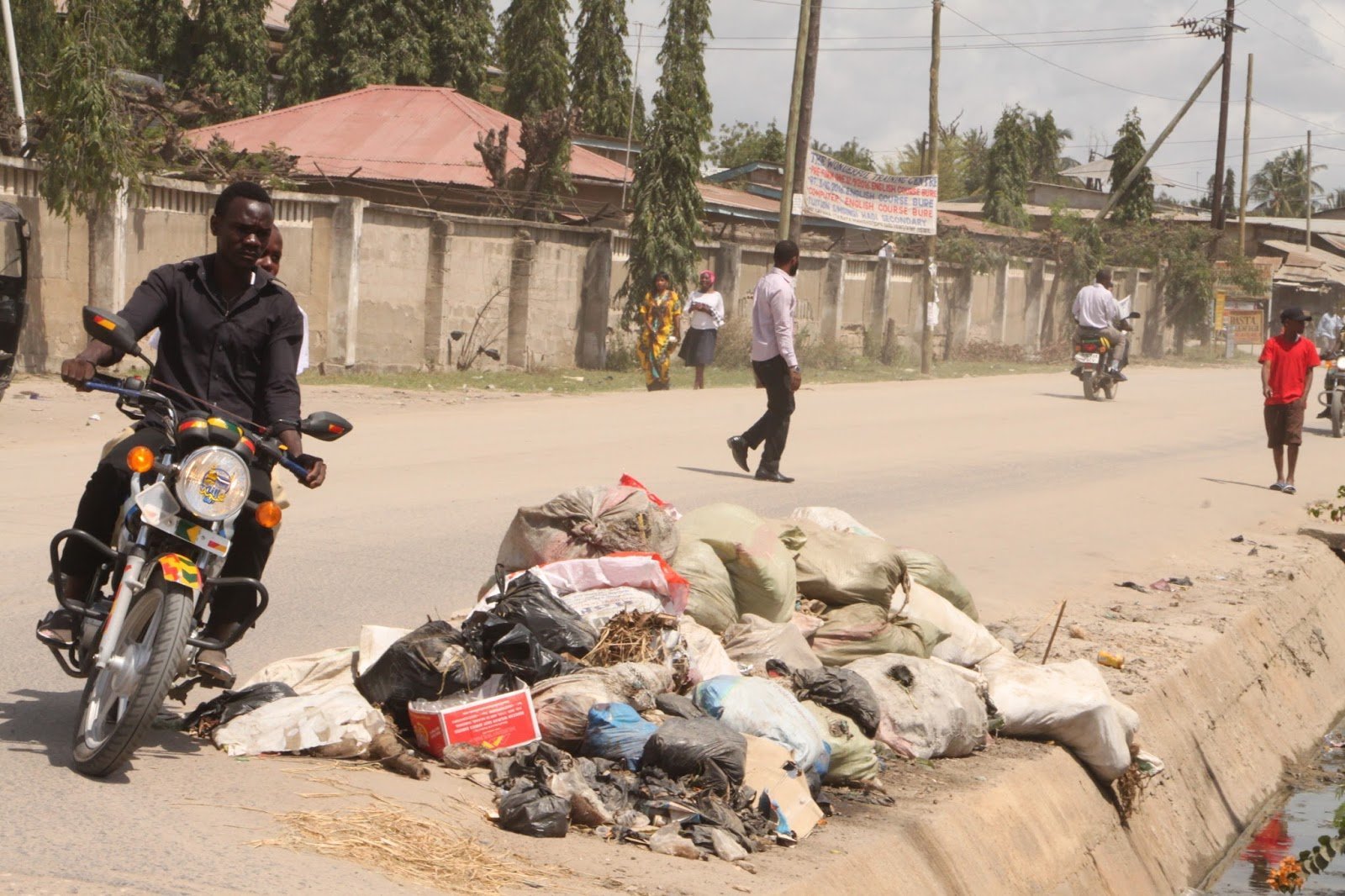
President Samia Suluhu Hassan called Tanzania's cities "extremely dirty" and "a disgrace" on 2 September 2026, singling out Dar es Salaam specifically and ordering local authorities to review waste collection contracts that have gone to councillors lacking the equipment to actually do the work. That statement should be read as economic policy, not just a complaint about appearance. Dar es Salaam is Tanzania's commercial centre, principal port gateway and a major tourism destination; every blocked drain, obstructed road and overflowing market imposes a real cost on the businesses, workers and travellers who depend on the city functioning. Samia herself pointed at part of the underlying problem: proposals from large companies wanting to invest in converting waste into fertiliser or electricity have stalled repeatedly over disputes as small as tax arrangements and electricity pricing.
DAR ES SALAAM — President Samia Suluhu Hassan's description of Tanzania's cities as "a disgrace" deserves to be read as an economic statement, not merely a complaint about appearance.
"Our cities are extremely dirty. A disgrace! Dar es Salaam is dirty," she said on 2 September 2026, speaking at Tunguu State House in Zanzibar during the swearing-in ceremony for newly appointed regional commissioners covering Mbeya, Geita, Pwani and Mwanza. She noted the problem extends well beyond main roads and tourist-facing areas, with litter visible along the entire route from Julius Nyerere International Airport into the city centre, a corridor that functions, in effect, as Tanzania's first impression for every international arrival.
What She Actually Ordered
Samia's remarks weren't limited to criticism. She directly questioned the practice of awarding waste collection contracts to councillors who lack the equipment and operational capacity to deliver the service effectively. "Give the contracts to those who can do the work, contractors who can clean the cities," she said, an instruction that reframes the problem as one of contracting and accountability rather than simply insufficient resources or citizen discipline.
More significant still was her disclosure that proposals from large companies seeking to invest in waste management, including projects designed to convert waste into fertiliser or electricity, have repeatedly stalled. She said authorities sometimes get stuck on minor disagreements, including tax arrangements and electricity pricing, that prevent genuinely useful private investment from moving forward. That's a concrete, named example of exactly the kind of institutional friction that turns a solvable infrastructure problem into a chronic one: capital and technical capacity willing to enter the market, blocked by disputes over terms that a functioning regulatory process should be able to resolve.
The Response Moved Fast
The follow-through arrived within days. Speaker of the National Assembly Mussa Zungu publicly pushed officials under the Prime Minister's Office for Regional Administration and Local Government (PMORALG) to change their approach and stop frustrating public-private partnership initiatives aimed at improving waste management in Dar es Salaam and other cities, directly referencing Samia's contract-review directive from the day before. That's a notably quick institutional response, and it suggests the President's remarks are being treated as a directive requiring action rather than a passing observation.
There's already at least one working example of what private-sector involvement can look like in practice. In March 2026, Tanzania Breweries Limited mobilised more than 100 employees alongside city authorities to clean and restore a key effluent discharge channel in Ilala District, part of a broader effort tied to protecting the Ruvu and Msimbazi river systems that supply the city's water. TBL's Corporate Affairs Director, Neema Temba, framed the effort as evidence that businesses need to move beyond policy statements: "Water is at the centre of our business and our communities." Analysts covering the initiative cautioned that isolated corporate efforts, however welcome, won't substitute for the systemic PPP framework Samia and Zungu are now both publicly pushing for.
Why This Is an Economic Argument, Not Just a Cleanliness One
Dar es Salaam is not simply Tanzania's largest city. It is the country's commercial centre, its principal port gateway, a major tourism destination, and the location through which a substantial share of Tanzania's daily economic activity passes. When the city fails to function properly, that failure carries a real, if often invisible, economic cost.
The clearest cost is time. Millions of journeys happen across Dar es Salaam every day: workers commuting, traders moving goods to market, trucks carrying cargo between the port and inland destinations, students travelling to school. When roads are obstructed by unmanaged waste, when drains are blocked, when flooding becomes routine and markets spill uncontrollably into transport corridors, every one of those journeys takes longer. Time carries economic value, and multiplied across millions of daily trips, the aggregate cost of an avoidably dysfunctional city becomes substantial rather than trivial.
The second cost sits with business productivity. Companies operating in poorly managed areas absorb expenses that never show up neatly in national accounts: cleaning premises more often than should be necessary, managing overflowing drains, protecting goods from dust and flooding, and losing customers when the surrounding streets become unpleasant or hard to access. Restaurants, hotels and retailers all spend more simply to maintain an acceptable operating environment, costs that look small individually but accumulate meaningfully across a city of several million people.
The Property and Tourism Dimensions
Cities function as land markets, and the quality of the surrounding urban environment shapes where people want to live, where companies want to locate, and where investors are willing to put capital. A clean, accessible, well-maintained commercial district can support meaningfully higher property values and stronger commercial activity than an otherwise comparable district surrounded by unmanaged waste and disorder, which means better urban management is itself a form of economic development, achievable without necessarily requiring another large capital project.
Tourism sharpens the point further. Dar es Salaam isn't Tanzania's safari capital, but it functions as an important gateway to the country's tourism economy and a destination in its own right, with beaches, restaurants, cultural attractions and an expanding business community. A visitor doesn't experience Tanzania through GDP growth statistics. They experience the airport, the road from the airport, the streets around their hotel, the markets and the waterfront, all of which become part of the country's brand whether policymakers intend that or not. A country can invest billions in tourism infrastructure and still undermine part of that investment through poor urban management in the city most international visitors actually pass through first.
What a Functioning System Would Actually Look Like
The deeper issue Samia's remarks point toward is institutional capacity. A clean city requires coordination between municipal authorities, utility companies, contractors, businesses, residents, transport operators and law enforcement; predictable collection systems; contracts that are actually enforced; functioning revenue collection; real consequences for illegal dumping; and clear accountability for which street gets cleaned, how often, and by whom. In that sense, urban cleanliness isn't fundamentally a question of citizen discipline. It's a question of whether the city has a functioning operating system, and Samia's own disclosure about stalled waste-to-energy investment proposals suggests that system currently isn't working even when capital and technical solutions are actively trying to enter it.
Telling residents not to throw rubbish into drains means little if waste collection itself is unreliable. Fining businesses for dirty surroundings means little if public waste infrastructure is inadequate to begin with. Periodic cleaning campaigns mean little if the city reverts within weeks. What a functioning city actually needs is systematic measurement and accountability: knowing how much waste it generates daily, how much gets collected, where the gaps sit, which drains are most vulnerable to blockage, which markets generate the most waste, what flooding costs by district, and how much municipal revenue commercial areas generate against how much gets spent maintaining them.
The Number Tanzania Doesn't Yet Have
Tanzania should eventually be able to answer a more fundamental question: how much does poor urban management actually cost Dar es Salaam's economy every year? That figure doesn't currently exist in any published form, but if it runs into the hundreds of billions of shillings, as the scale of the problem Samia described suggests it plausibly could, investment in waste management, drainage, public space maintenance and enforcement stops looking like municipal housekeeping and starts looking like straightforward economic policy with a measurable return.
That reframing matters more as Tanzania continues urbanising. Dar es Salaam will keep growing: more residents, more businesses, more cargo passing through its port, more construction, more vehicles on its roads. If urban management doesn't improve at a matching pace, economic growth itself will keep producing greater congestion, waste and environmental pressure rather than the more productive, higher-value city that growth should theoretically deliver. The objective isn't to clean today's Dar es Salaam once. It's to build a city capable of staying clean as it continues to expand, which requires measured performance, accountable contractors, published municipal standards, and drainage maintained ahead of the rainy season rather than repaired after flooding has already disrupted the economy it was meant to protect.
FAQ
What exactly did President Samia say about Dar es Salaam? Speaking on 2 September 2026 at Tunguu State House in Zanzibar, she said, "Our cities are extremely dirty. A disgrace! Dar es Salaam is dirty," specifically noting that litter remains visible along the route from Julius Nyerere International Airport into the city centre.
What did she order local authorities to do? She directed a review of waste collection contracts, questioning why they had been awarded to councillors lacking adequate equipment and capacity, and instructed that contracts go instead to contractors genuinely able to perform the work.
Why have private companies' waste management proposals stalled? According to President Samia, proposals from large companies seeking to invest in converting waste into fertiliser or electricity have repeatedly stalled over disputes as narrow as tax arrangements and electricity pricing, rather than any lack of interested capital or technical solutions.
How has the government responded since her statement? Within days, Speaker of the National Assembly Mussa Zungu publicly pushed officials under the Prime Minister's Office for Regional Administration and Local Government to stop frustrating public-private partnership initiatives aimed at improving urban waste management.
Why does urban cleanliness matter economically, not just aesthetically? Poor waste management and drainage impose direct costs through lost time in transport delays, reduced business productivity, weaker commercial property values, and diminished tourism appeal, costs that compound as a growing city like Dar es Salaam continues to expand without matching improvements in urban management systems.
Has any private sector initiative already tried to address this? Yes. In March 2026, Tanzania Breweries Limited mobilised more than 100 employees alongside city authorities to clean and restore a key effluent discharge channel in Ilala District, part of a broader effort tied to protecting the Ruvu and Msimbazi river systems, though analysts note isolated corporate initiatives alone won't substitute for a systemic solution.
 Uchumi360
Business Intelligence
Uchumi360
Business Intelligence
Uchumi360 covers business, investment, and economic policy across East, Central, and Southern Africa.
For the serious reader
You read to the end. That places you in a small group.
Uchumi360 is built for readers who demand precision over speed, structure over sentiment, and analysis that holds uncomfortable conclusions rather than softening them. If this work sharpens how you think about Africa's economy, help us keep building the infrastructure behind it.
Institutional Partners
Commission intelligence. Shape the conversation.
Uchumi360 works with development finance institutions, investment firms, sovereign bodies, and strategic organisations across the coverage region. Institutional partnership unlocks:
- Commissioned sector and country intelligence reports
- Branded research series under your institution's authority
- Exclusive data briefings for internal strategy teams
- Speaking and editorial presence at Uchumi360 events
- Co-published investment outlooks for your markets
Support Our Work
Independent analysis has a cost. Help us bear it.
Uchumi360 does not carry advertising. It does not take editorial direction from sponsors. Every article is produced without commercial compromise. Your contribution funds the reporting, research, and editorial infrastructure that keeps this analysis free from influence.
Secure checkout: One-time and monthly support are processed securely. Add payment credentials to enable checkout here.
Stay Connected
Keep up with every new insight.
Follow our latest analysis, policy coverage, and market intelligence as soon as it is published. If you need something specific, reach out directly and we will point you to the right research.
