

Kenya and Uganda Did Not Fail at BRT. They Failed at Governance.
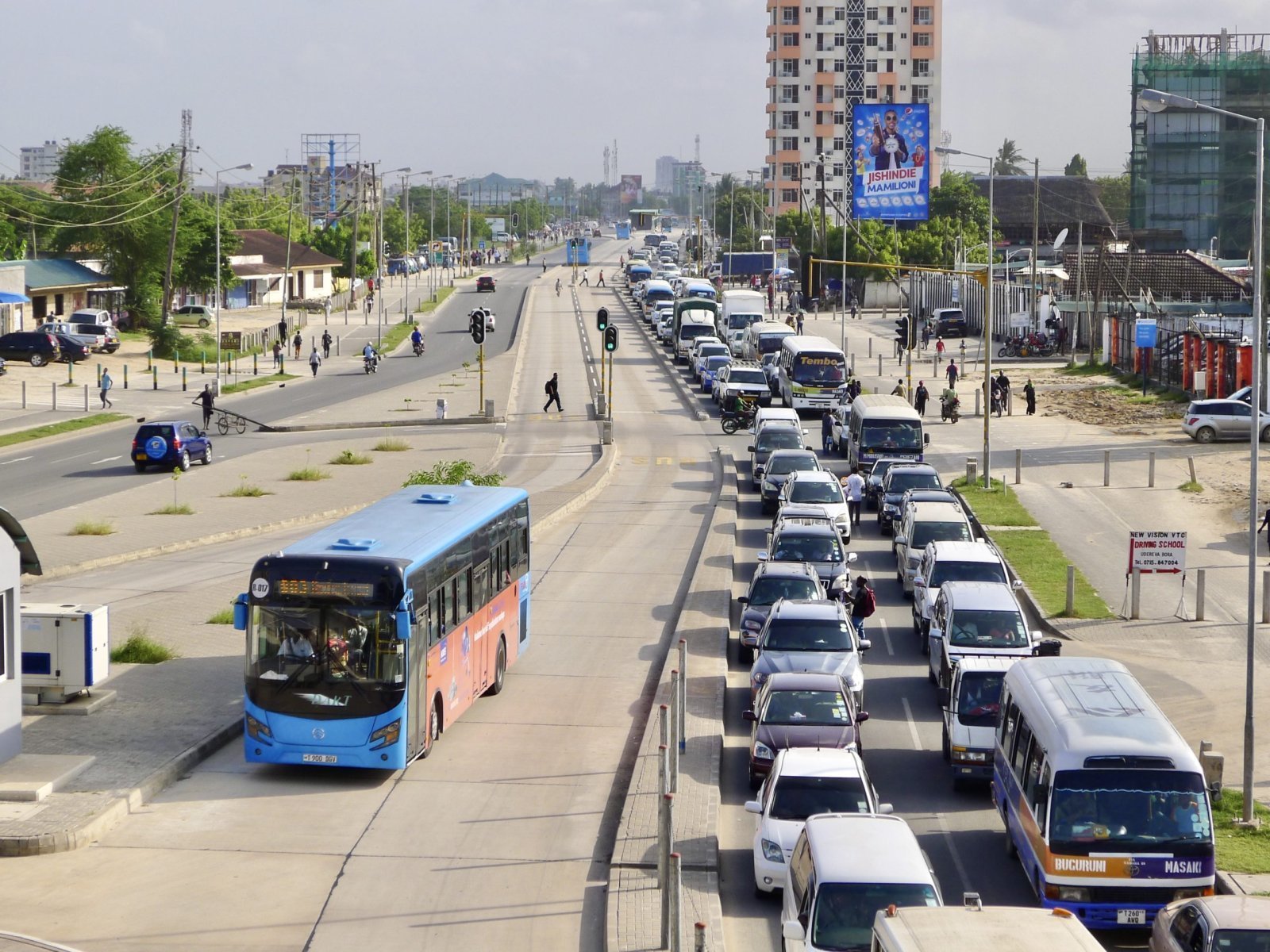
Dar es Salaam’s BRT reveals a hard economic truth for East Africa. Mass transit does not fail because of engineering limits or lack of finance, but because governments refuse to centralise authority and enforce execution. Tanzania built an institution and unlocked productivity. Kenya stalled under fragmented power. Uganda planned endlessly without committing. The result is three cities, one idea, and sharply divergent economic outcomes.
The economic divergence between Dar es Salaam, Nairobi, and Kampala on Bus Rapid Transit is not a mystery of engineering or finance. It is a textbook case of how institutional structure determines economic outcomes. Tanzania internalised congestion as a binding constraint on urban productivity. Kenya and Uganda treated it as a sectoral inconvenience. That difference explains the results.
At its core, BRT is a mechanism for reallocating scarce urban road space toward higher economic yield. A dedicated bus lane carrying 10,000 passengers per hour outperforms mixed traffic carrying a fraction of that number. The economic question is not whether BRT works, but whether a city can overcome the coordination failure required to implement it. Dar es Salaam solved this problem structurally. Nairobi and Kampala did not.
Dar es Salaam’s critical decision was institutional, not technical. By creating a statutory authority with exclusive control over planning, procurement, funding, and operations, Tanzania collapsed what economists would describe as a multi principal problem into a single executing agent. This eliminated veto points. It reduced transaction costs between agencies. It also aligned incentives across the project lifecycle. Once authority was unified, financing discipline followed almost automatically. Funding from institutions such as the World Bank was released in tranches tied to verified progress, constraining political discretion and stabilising contractor cash flow.
This governance structure created a clear causal chain. Predictable funding reduced execution risk. Reduced risk lowered effective project costs. Continuous construction enabled early operations. Operations generated fare revenue and commuter dependence. Dependence, in turn, created political irreversibility. At that point, BRT shifted from a capital project to an economic asset embedded in daily life.
The productivity effects are straightforward to model. BRT corridors in Dar es Salaam operate at commercial speeds more than double those of mixed traffic. If even 80,000 to 100,000 commuters save 45 to 60 minutes per day, the city releases roughly 18 to 25 million labour hours annually. Valued conservatively at average urban wages, this implies a non trivial addition to effective GDP without additional capital deepening or labour force growth. These gains accrue diffusely through higher real wages, lower logistics costs, and improved firm reliability rather than through headline fiscal revenues, which is precisely why they are often underestimated.
Nairobi’s outcome reflects a failure to resolve the same coordination problem. The Nairobi Metropolitan Area Transport Authority was established without statutory supremacy over roads, counties, or the treasury. Economically, this preserved multiple veto players across the project. Procurement decisions, funding releases, and design changes became bargaining processes rather than execution steps. The result was predictable liquidity stress. When treasury disbursements lagged, contractors bore the financing burden. Once arrears accumulated, construction stopped.
From a macro perspective, this was not merely a stalled project but a negative sum outcome. Nairobi incurred sunk costs in partially built infrastructure while continuing to absorb congestion losses. Congestion acts as a persistent drag on urban output by compressing labour markets, increasing transport costs, and raising uncertainty. Unlike a one off fiscal loss, these costs compound annually. In effect, Nairobi paid to freeze capital while allowing an ongoing productivity leak to persist.
Kampala represents a different equilibrium, one characterised by extreme risk aversion. Uganda invested heavily in planning capital but avoided the political costs of commitment. Multiple technically credible master plans were produced, yet no autonomous executing authority was created and no protected budget line established. The city downgraded ambitions from full BRT to partial systems to minimise confrontation with incumbents and road agencies.
Economically, Kampala opted to preserve optionality. While this reduced short term political risk, it maximised long run opportunity cost. Congestion remained untreated. Informal transport retained dominance at low capacity. The urban labour market remained spatially constrained. Kampala did not experience a visible failure because it never entered the execution phase. But the absence of failure should not be mistaken for success. The cost is embedded in foregone productivity rather than abandoned infrastructure.
For investors and development financiers, the signal is clear. Dar es Salaam demonstrates that execution risk in African cities is endogenous to governance design, not income level. Predictable authority reduces risk premiums and attracts long horizon capital. For firms, especially small and medium enterprises, reliable transport increases effective market size and reduces buffer costs. For households, time savings function as an implicit income transfer, raising real wages without fiscal intervention.
The analytical conclusion is uncomfortable for Kenya and Uganda. The constraint is no longer knowledge, finance, or technology. It is political willingness to centralise authority and absorb short term distributional conflict. Dar es Salaam accepted that trade off. Nairobi deferred it and stalled. Kampala avoided it entirely.
In urban economics, delay is not neutral. Each year without mass transit locks in inefficient spatial patterns, higher operating costs, and suppressed productivity. Dar es Salaam’s BRT is therefore not simply a success story. It is a comparative benchmark that exposes how institutional fragmentation, not scarcity, is the binding constraint on urban growth in East Africa.
