

TANESCO, TANROADS and TARURA Need To Talk To Each Other. Dar es Salaam Is Paying The Price
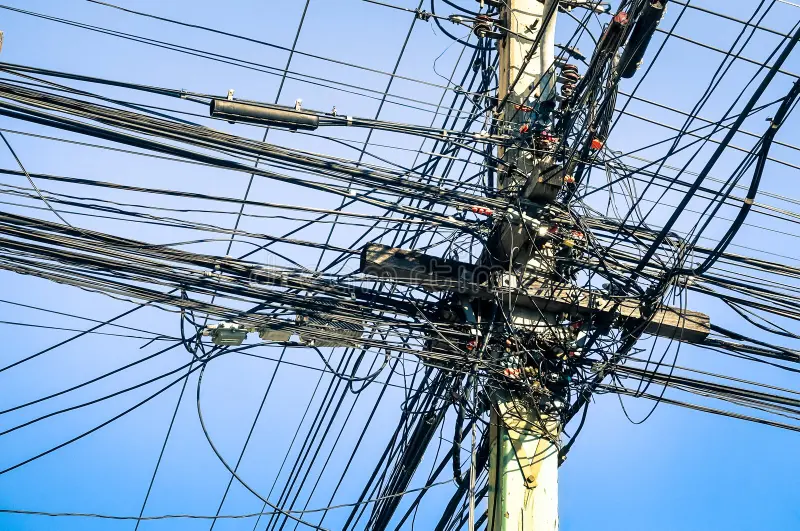
Dar es Salaam is quietly being damaged by infrastructure built without coordination. Trenches across new roads, overloaded power poles and endless “temporary” repairs are making the city look chaotic, costly and unsafe. If TANESCO, TANROADS and TARURA planned together, Dar could be cleaner, cheaper to run and far more livable.
Dar es Salaam is becoming a laboratory for bad coordination. You can see it in the trenches sliced across new roads, the spaghetti of hanging cables, and the dusty piles left after “temporary” repairs that never really get finished. Fiber ducts, electrical lines and repeated road works are leaving the city looking chaotic, unsafe and unnecessarily expensive to maintain.
The tragedy is simple. None of this is inevitable. It’s mostly the cost of institutions that work in silos.
TANESCO builds and maintains power infrastructure, the power poles are also used as transmission poles for fiber. TANROADS manages trunk and regional roads. TARURA handles urban and rural roads under local governments. Each has its own plans, budgets and timelines. What the public sees is the overlap. A road is resurfaced. Months later it is cut open for power. A year later, fiber companies dig again. The result is broken pavements, weak culverts, flooding points, traffic delays and an urban environment that feels improvised instead of designed.
This isn’t only an aesthetic problem. It is an economic leak that never stops dripping.
Every cut across a new road shortens its designed lifespan by years. That means taxpayers pay twice: once for the original construction, then again for premature maintenance. What looks like a cheap patch today quietly becomes a long-term liability on the national budget, squeezing out money that should be going to schools, hospitals and real development.
And the ripple effects are brutal. When roads are constantly under repair, traffic slows, logistics costs rise, fuel consumption climbs and delivery times stretch. Businesses lose productive hours sitting in congestion. Public transport becomes slower and more unreliable. Dust and poor drainage increase respiratory illness and flooding risks, which the health system then pays for later.
Cities that ignore this accumulate what urban economists call “maintenance debt”, the bill grows silently in the background until it becomes impossible to ignore. Kigali, Singapore, Dubai and other well-organized cities understood early that order is cheaper than chaos. Building once, coordinating once and protecting what you have is the most cost-effective infrastructure policy any city can adopt.
Other countries solved this decades ago with what they call “dig once” policies. Before roads are built or rehabilitated, utility agencies sit at the same table. They share five to ten-year plans. They map corridors. Conduits and ducts are installed once. Anyone who needs to add fiber later rents space in those ducts instead of opening the road again. Power, water and ICT follow a single corridor plan instead of improvising on top of each other.
Tanzania can do the same, and probably better, because we are still building fast. Coordination now prevents massive waste later.
Three practical shifts can change the game.
First, require joint planning as law, not as a polite recommendation. A road contract should not be signed before TANESCO, water authorities and licensed fiber providers have submitted and synchronized plans.
Second, create shared underground duct systems in urban areas. Government owns. Utilities lease space. Roads stay intact. The city looks cleaner. Maintenance becomes predictable.
Third, introduce penalties for any agency or company that damages roads without restoring them to original engineering standards. Cheap patches should become expensive mistakes, not a normal way of doing business.
This is not about blaming institutions. It is about building a city that respects taxpayers and future generations. Dar es Salaam is on its way to becoming a megacity. Megacities cannot be stitched together by afterthoughts. They require discipline, coordination and the humility to plan together.
When infrastructure agencies coordinate, everything becomes cheaper, safer and more beautiful. And beauty matters. A clean, well-planned city attracts investors, raises land values, improves tourism, protects health and builds civic pride.
The cables hanging across streets and the trenches cutting our roads are quiet signals. They tell us our systems are growing faster than our planning. Fixing that is less about money, and more about governance.
Because the real test of development is not how much we build, but how intelligently the pieces fit together. When agencies fail to coordinate, the country is not just losing beauty. It is losing money, time, trust and future competitiveness.