

Tanzania's 200,000 Housing Deficit Is Not a Housing Problem. It Is a Structural Failure of Its Urban Economy
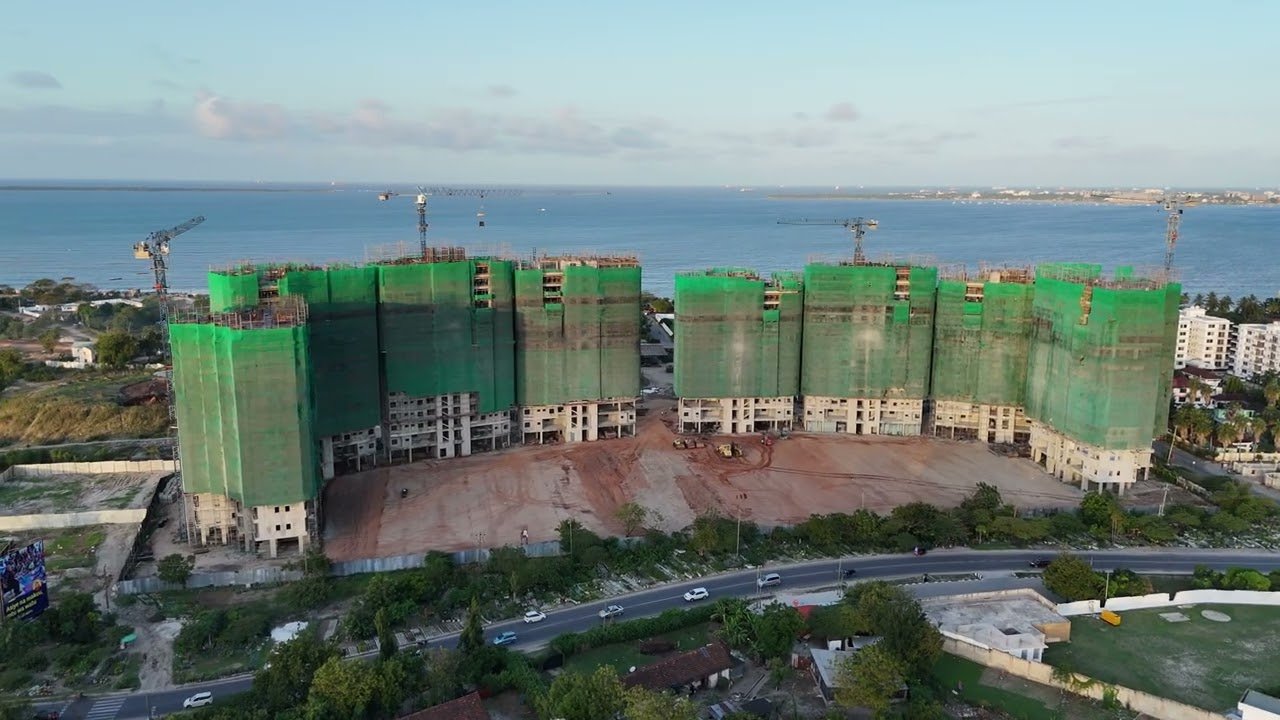
Every year, Tanzania falls short of its formal housing target by approximately 200,000 units. More than 70 percent of urban housing is informal. More than 90 percent of housing nationwide is self-built outside the formal system. The standard response is to call this a construction deficit and propose more supply. That response misses the actual story. Tanzania is not failing to build houses. It is building enormous numbers of them in a parallel economy that the formal financial system, the tax system, the planning system, and the industrial strategy have collectively failed to integrate. That failure is not a housing sector problem. It is one of the most precise indicators available of the structural gap between Tanzania's economic ambitions and the systems depth required to realise them.
The Number That Changes the Diagnosis
Tanzania's annual housing deficit of approximately 200,000 units is a figure that appears regularly in policy documents, development bank assessments, and housing sector analyses. It is typically framed as a supply problem, the gap between housing demand generated by population growth and urbanisation and the housing units that the construction industry delivers each year. The policy prescription that follows from this framing is supply-side: build more houses, train more construction workers, develop more land, attract more developer investment.
That framing is analytically incomplete, and the incompleteness matters because it leads to interventions that address the symptom while leaving the structural condition unchanged.
The figure that changes the diagnosis is not the 200,000 unit deficit. It is the 90 percent. More than 90 percent of housing in Tanzania is self-built, constructed by households using personal savings, informal labour, and unregulated supply chains outside any formal development, finance, or planning framework. In urban areas, more than 70 percent of housing stock is informal. These are not marginal numbers describing a periphery of the housing market. They describe the dominant system. Tanzania does not primarily have a formal housing sector with an informal fringe. It has an informal housing sector with a formal fringe that is economically irrelevant to the majority of the country's urban population.
The implication of this reality is precise and consequential. Tanzania is not failing to build houses. Enormous quantities of housing are being produced every year, built incrementally by households pooling savings, purchasing materials from unregulated suppliers, hiring informal labour, and expanding structures over years or decades as resources permit. The building is happening. What is not happening is the integration of that building activity into the formal economic systems, the financial markets, the tax base, the industrial supply chains, and the urban planning frameworks, that would allow it to generate the economic multipliers that housing investment produces in economies where the sector functions formally.
This distinction, between a country that is not building enough and a country that is building extensively but outside its formal economy, is the analytical pivot on which a serious housing policy needs to turn. And it is the same distinction that illuminates a structural feature of Tanzania's economy that extends well beyond the housing sector.
Housing as Shadow Economy: The Scale of What Is Not Being Counted
When 90 percent of a country's housing is self-built outside formal systems, housing becomes one of the largest shadow economies in that country's economic structure. Capital flows into this shadow economy in enormous volumes. Land is acquired through informal or semi-formal transactions. Construction materials are purchased from both formal and informal suppliers. Labour is hired through personal networks and informal contracting arrangements. Financing comes from household savings, remittances, rotating savings and credit associations, and informal money lenders.
The aggregate capital flowing through this system annually is substantial by any measure. If the average self-built housing unit in Tanzania's urban areas represents a capital investment of even TZS 15 to 20 million, which is a conservative estimate for the incremental construction of a basic permanent structure in Dar es Salaam's peri-urban zones, then the 200,000 or more units produced each year represent an aggregate investment of TZS 3 to 4 trillion annually in housing construction alone, before accounting for land acquisition costs, materials, and the labour value embedded in the construction process.
This capital is being invested in housing. It is not, for the most part, being intermediated by the formal financial system, generating tax revenue at anything close to its economic scale, processed through formal construction supply chains that would generate industrial multiplier effects, or integrated into urban planning frameworks that would optimise its contribution to urban productivity. It is circulating through the parallel economy that Tanzanian households have built to solve the housing problem that the formal economy has failed to address, and in doing so it is generating economic activity that the formal system can neither see clearly nor build upon effectively.
This is the sense in which Tanzania's housing crisis is not a housing problem. It is a structural economic problem. The country is investing heavily in housing as a society. It is not yet capturing that investment within the formal economic architecture that would allow it to generate the industrial development, financial deepening, and urban productivity gains that housing investment produces in more formally integrated economies.
The Finance Structure That Filters Out the Majority
Formal housing systems are built on finance. Mortgages allow households to access housing whose value exceeds their current savings, distributing the cost over time and enabling the construction industry to operate at scale in advance of household income accumulation. Developer finance allows construction companies to build speculatively, producing housing inventory that buyers can purchase with mortgage products. Long-term institutional capital, from pension funds, insurance companies, and development finance institutions, provides the patient debt that long-duration housing assets require.
Tanzania has versions of all of these financial instruments. CRDB Bank and NMB Bank, whose divergent financial models Uchumi360 documented in detail using their FY2025 results, both have mortgage products. The Tanzania Mortgage Refinance Company provides liquidity to mortgage lenders. Several microfinance institutions offer housing finance products. The architecture of formal housing finance exists.
The problem is not absence. It is accessibility. Interest rates on mortgage products in Tanzania, reflecting the monetary policy environment and the risk premium that lenders apply to long-duration housing assets, are at levels that make mortgage payments unaffordable for the majority of urban households at current income levels. Collateral requirements exclude households whose land tenure is informal or whose income is irregular, which describes a substantial proportion of urban Tanzania's working population. The loan-to-value ratios and income documentation requirements that formal mortgage products demand are calibrated for the formally employed, formally housed, formally documented minority of the urban population rather than for the majority whose economic lives are substantially informal.
The result is a financial system that filters out precisely the households generating the most housing demand. The urban migrant who has accumulated TZS 5 million in savings and wants to build a house on a plot in Kinondoni or Temeke cannot access a mortgage to supplement that capital and build a completed structure rather than an incremental one. The small trader whose income is real but irregular cannot document it in the format that a formal loan application requires. The household whose land tenure is a customary right rather than a registered title cannot offer the collateral that a mortgage lender requires.
These households do not stop building. They build anyway, more slowly, more expensively in per-unit-of-value terms, and without the quality, scale, and planning integration that formal financing would enable. The 90 percent self-built figure is the aggregate outcome of millions of individual encounters between households with genuine housing demand and a financial system that cannot or will not serve them.
The Policy Fragmentation That Produces Institutional Paralysis
Tanzania's housing sector touches multiple government ministries, regulatory agencies, local government authorities, and financial institutions whose mandates overlap without producing coordinated outcomes. Land administration sits with one ministry. Urban planning sits with another. Housing finance regulation involves the central bank, the housing finance company, and multiple sector-specific agencies. Local government authorities control planning approvals and infrastructure provision within urban boundaries. The Tanzania Building Agency manages government housing assets. The National Housing Corporation has a mandate for housing development that its capital base has historically been insufficient to fulfil.
This fragmentation is not unusual in developing economies, where housing policy has historically evolved through the accretion of institutional responses to specific problems rather than through the design of an integrated system. But in Tanzania's case it produces a specific and measurable failure: no single institution is accountable for the alignment of land supply, infrastructure provision, housing finance, and construction market development that a functioning formal housing sector requires. Each institution optimises for its own mandate, and the interactions between them produce delays, inconsistencies, and costs that make formal housing development uncompetitive relative to informal alternatives.
A developer who wants to build a formal housing estate in Dar es Salaam's peri-urban zone needs a land allocation from one agency, a planning approval from a second, an environmental impact assessment from a third, infrastructure connection approvals from a fourth and fifth, and construction permits from a sixth. Each approval process has its own timeline, its own documentation requirements, and its own interface with a bureaucratic system that is under-resourced and overloaded relative to the volume of development activity it is supposed to regulate. The cumulative cost of this approval process, in time, professional fees, and uncertainty, adds substantially to the cost of formal housing development and contributes directly to the price premium that formal housing commands over self-built alternatives.
The household that builds informally bypasses most of this system. It acquires land through informal channels, builds without planning approval, connects to infrastructure informally where possible and does without where not, and produces a dwelling that may be structurally adequate, locationally convenient, and affordable in a way that formal alternatives are not. The informal system's efficiency is not a demonstration of superior construction economics. It is a demonstration of the transaction cost advantage that operating outside a fragmented and under-resourced regulatory system provides.
Urbanisation Without the Economic Base to Absorb It
The housing deficit is the most visible symptom of a deeper structural imbalance in Tanzania's urban economy. Tanzania is urbanising rapidly. Its cities are growing as internal migration brings rural populations into urban centres in search of economic opportunity. Dar es Salaam's population is growing at a pace that makes it one of the fastest-growing cities in Africa, with projections that suggest it will house several million more people within the next decade than it houses today. Secondary cities including Mwanza, Arusha, Dodoma, and Mbeya are experiencing comparable growth dynamics at smaller absolute scale.
This urbanisation is happening faster than the economic transformation required to make it productive. Tanzania's urban economy is not generating formal employment, wage income, and productivity growth at the pace that would give the growing urban population the income required to access formal housing markets. The majority of urban employment is in the informal sector, self-employment in trade, transport, construction, and services that generates real income but not the documented, formal, insurable income stream that formal housing finance requires.
This is the structural dynamic that makes the housing problem resistant to supply-side solutions alone. Building more formal housing does not solve the affordability problem for households whose income is informal and whose savings are insufficient to bridge the gap between what they can accumulate and what formal housing costs. The housing deficit and the income informality deficit are two expressions of the same structural condition: an urbanising economy that has not yet built the formal sector depth to absorb its own growth.
The Uchumi360 analysis of Tanzania's investment surge documented USD 10.95 billion in approved investment capital in 2025, primarily in mining, energy, manufacturing, and infrastructure. That capital is building the physical infrastructure of a more formal, more productive economy. But the timeline between investment approval and the employment, wage income, and formal sector absorption that would expand the market for formal housing is measured in years and decades, not months. In the interim, the urban population continues to grow, the housing deficit continues to compound, and the informal sector continues to be the primary mechanism through which both housing and livelihoods are produced.
Housing as an Industrial Sector: The Reframe That Changes the Policy
The most consequential shift in how Tanzania's housing challenge should be understood is the recognition that housing is not downstream of economic development. It is one of its primary engines, when the sector is structured to generate industrial and financial multipliers rather than simply to produce units of shelter.
A formal, finance-integrated housing sector stimulates demand for construction materials at scales that justify industrial production rather than artisanal manufacture. Cement, steel, glass, ceramics, timber, paint, electrical fittings, plumbing materials, and the dozens of other inputs that a housing unit requires are all manufactured goods whose production generates employment, skills development, and supply chain depth. When housing construction operates at scale through formal channels, it creates the sustained demand that makes manufacturing investment in these sectors commercially viable. Tanzania's construction materials sector, like its housing sector, is characterised by significant informal production and limited industrial scale precisely because the formal housing demand that would justify industrial production has not materialised.
A mortgage-based housing finance system deepens financial markets in ways that extend well beyond housing. The long-duration assets that mortgages create on bank balance sheets create demand for the matching long-duration liabilities, pension fund assets, insurance reserves, and capital market instruments that a deep financial system requires. Tanzania's capital markets are shallow relative to its economic size partly because the long-duration asset classes that anchor deep capital markets are underdeveloped, and housing finance is one of the most important of those asset classes in any economy.
The employment generated by formal housing construction at scale spans skill levels from unskilled labour through semi-skilled trades to professional engineering, architecture, and project management. It is one of the few economic sectors that can absorb large numbers of workers across the full skill distribution simultaneously, making it uniquely valuable in an economy with significant youth unemployment and a skills development challenge of the kind Tanzania faces.
None of these multiplier effects are available while 90 percent of housing is produced through informal self-build processes that operate outside the formal system. The economic investment is happening. The multipliers are being lost.
What a Different Approach Actually Requires
The policy response that the structural diagnosis suggests is different from the conventional housing policy conversation in several important ways.
It starts not with construction targets but with system integration. The question is not how many units Tanzania needs to build through formal channels. It is how the formal economic system can be restructured to integrate the housing investment that is already happening rather than trying to replace it with a new formal supply stream. Formalising the land tenure of self-built housing, bringing it into the tax base and the financial system, is more economically impactful per unit of policy effort than building new formal housing that most of the urban population cannot afford.
It requires housing finance innovation that reaches the majority rather than the formally employed minority. Housing microfinance products calibrated for irregular income streams, cooperative financing models that pool household savings into construction finance, and rent-to-own structures that allow households to accumulate equity in housing without the upfront capital that mortgage deposit requirements demand are all proven instruments in other emerging markets that Tanzania has not yet deployed at scale.
It requires treating construction materials manufacturing as an industrial priority rather than a consequence of housing supply. The demand for cement, steel, and building materials that a scaled formal housing sector would generate is large enough to anchor manufacturing investment across multiple product categories. Coordinating housing policy with industrial strategy to create the demand certainty that manufacturing investment requires is the kind of cross-sectoral alignment that fragmented institutional mandates currently prevent.
And it requires a single institutional accountability framework that aligns land, planning, finance, and construction market development under a coherent economic objective rather than distributing responsibility across agencies whose coordination failures are currently the primary barrier to a functioning formal housing market.
The Signal in the Data
Tanzania's 200,000-unit annual housing deficit is not primarily a message about how many houses the country needs to build. It is a message about the structural depth of its formal economy.
A country where 90 percent of housing is self-built is a country where the formal economy has failed to organise one of the most fundamental and most economically significant markets in the domestic economy. That failure is visible in the housing data. It is also visible in the financing constraints that Mrembo Naturals described, in the SME technology adoption gap that Neurotech Africa is navigating, in the manufacturing delivery gap between approved investment and operational factories, and in the happiness data showing that Tanzania's strong GDP growth is not translating proportionally into household welfare improvement.
These are all expressions of the same structural condition: an economy that is growing at the macro level without yet building the formal sector depth, the financial system accessibility, the institutional coordination, and the regulatory efficiency that would allow that growth to reach and organise the majority of economic activity happening within its borders.
Housing is where this structural condition is most visible because it is where the majority of Tanzanian households make their largest economic decisions, and where the failure of the formal system to serve them is most directly and most consequentially experienced. Tanzania is not short of houses. It is short of the economic infrastructure that would make house-building a formal, financeable, industrially integrated, and economically multiplying activity rather than the shadow economy it currently is.
Closing that gap is not a housing policy challenge. It is one of the most important structural economic challenges Tanzania faces as it attempts to convert its investment surge into the broad-based economic transformation that its development agenda requires.
_____________________________________________________________________________________
Sources: Tanzania National Housing Corporation Sector Assessment. World Bank Tanzania Urbanisation Review 2024. African Development Bank Tanzania Urban Development Programme Documentation. Tanzania National Bureau of Statistics Housing and Population Census Data. Tanzania Mortgage Refinance Company Annual Report 2024. UN-Habitat Tanzania Country Programme Documents. Tanzania Ministry of Lands Housing and Human Settlements Development Policy Framework. IMF Tanzania Article IV Consultation 2024. Dar es Salaam City Council Urban Development Data. Data points reflect information available to August 2025.
______________________________________________________________________________________
Uchumi360 covers business, investment, and economic policy across East, Central, and Southern Africa.
