

Cities Grow Faster Than Politics: Why Tanzania Needs Independent Development Boards
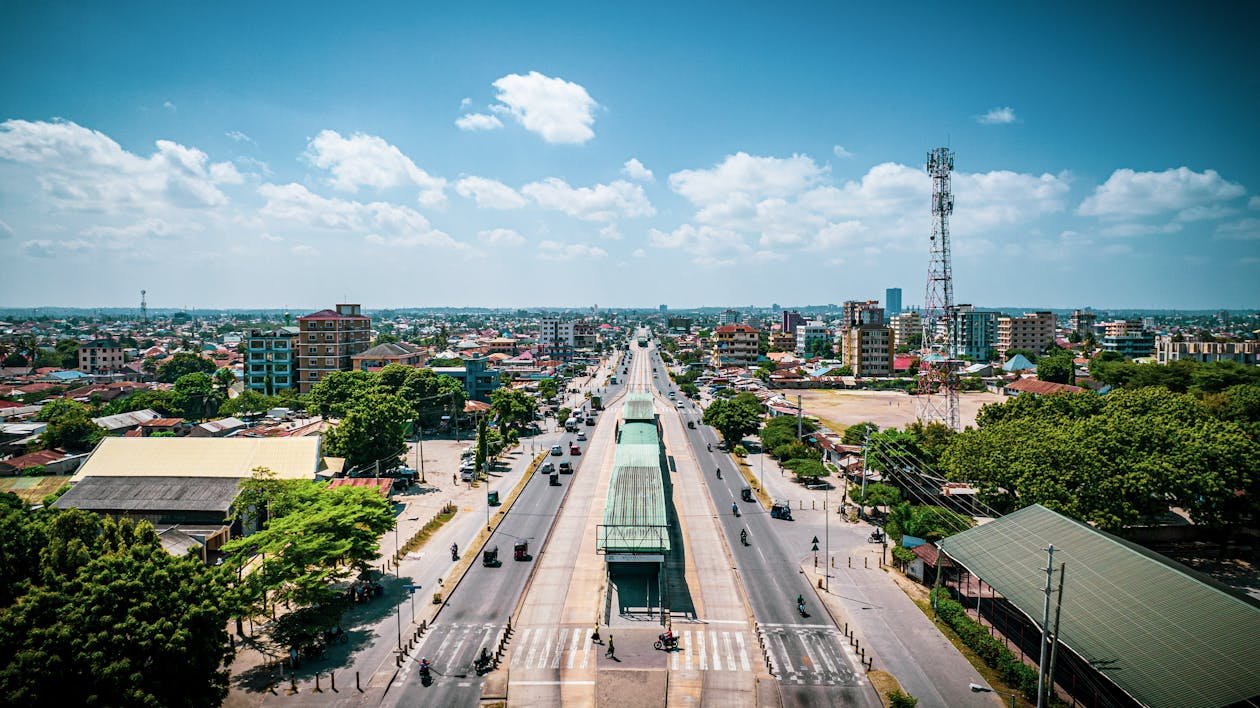
Tanzania’s cities are expanding faster than politics can plan. Urban growth moves daily, while leadership shifts every five years. This article argues for independent City Development Boards; long-term, technical institutions that think 20 to 50 years ahead, shield cities from short-term politics, and redesign Dar es Salaam, Arusha, Mwanza, Tanga and Dodoma with clearer zoning, better mobility, climate resilience and stronger economic direction.
Tanzania’s cities are expanding faster than the institutions meant to plan, manage and finance them. Political cycles reset every five years. Urban growth does not. Buildings rise daily, populations shift, land markets move, infrastructure strains, and services get overwhelmed. The mismatch between political timelines and urban realities is widening.
This is not simply a problem of congestion or informal settlements. It is a structural governance problem. Cities are operating without long-term direction, without the courage to enforce unpopular but necessary decisions, and without institutions designed to think beyond the next election.
A different model is necessary.
A proposal: independent City Development Boards
Tanzania already has city councils and semi-autonomous agencies. They are important. But they are also deeply tied to political rhythms, resource constraints and short-term incentives.
The proposal is to introduce a new layer of governance: City Development Boards. These would not replace councils. They would not be councils with new titles. They would serve a different function entirely.
City Development Boards would be:
- Independent from day-to-day political control
- Technical rather than political in composition
- Mandated to plan 20, 30 or 50 years ahead
- Focused on land use, infrastructure, economy and resilience
- Held accountable to measurable urban outcomes
They would be staffed by urban planners, economists, architects, engineers, environmental scientists and technologists, sourced locally and internationally. Their central question would be simple:
What should this city become? Not who should win the next election?
And because reform needs experimentation, Tanzania could begin with five pilot cities.
Five cities, five strategic missions
1. Dar es Salaam: from chaotic expansion to regional trading hub
Dar es Salaam is the economic heart of the country. It is also congested, sprawling and under-planned. A Development Board for Dar would rethink the city from first principles.
Its strategic questions include:
- How does Dar fully leverage the port as a regional trade hub for Malawi, Zambia, Burundi, Rwanda and Uganda?
- How do we integrate logistics, warehousing, finance and trade services around that role?
- How do we reorganize housing, pedestrian spaces, public transit and green areas so the city remains livable?
Models exist. Barcelona transformed its waterfront from industrial backyards into public space and economic magnet. Dar’s coastline and port could anchor a similar transformation, combining trade efficiency, tourism, recreation and higher-value services.
2. Arusha: protecting identity while modernising
Arusha is diplomacy, tourism and environment. Yet its expansion threatens the very landscape that makes it unique.
A Development Board here would shape:
- Building typologies
- Landscape and mountain view conservation
- Pedestrian-friendly streets instead of car-dominated planning
Kigali offers lessons. Disciplined planning, urban cleanliness and order did not come from luxury spending. They came from clear rules, consistent enforcement and long-term orientation.
3. Mwanza: turning the lake into the city’s economic engine
Lake Victoria is Mwanza’s greatest asset. The city has not fully integrated itself with the water economically or spatially.
A Board would rethink Mwanza as a true lake city:
- Waterfront development
- Small-scale tourism
- Fish processing and value-addition industries
- Water transport
- Public recreational spaces
Other cities have done this successfully. Entebbe built identity around its water. Cape Town leveraged oceanfront planning into tourism, real estate and culture. Mwanza can build a diversified economy around its lake rather than simply growing around it.
4. Tanga: history, ports and the blue economy
Tanga has heritage, coastline and an underutilized port. Growth has stalled not because of lack of assets, but lack of strategic coordination.
A Development Board would integrate:
- Heritage conservation
- Light manufacturing
- Logistics
- Marine economy
- Cultural tourism
Penang in Malaysia demonstrated how history plus industry can co-exist when managed strategically. Tanga could follow a similar path.
5. Dodoma: building a capital city deliberately
Dodoma is still emerging as the administrative center. That presents a rare opportunity: building deliberately rather than correcting mistakes later.
A Board would guide:
- Institutional clusters
- Knowledge economy infrastructure
- Conference, diplomacy and governance facilities
- High-quality residential areas and public amenities
Brasilia was designed with a vision from the start. Dodoma can apply newer, more human-centered lessons to design a capital built for governance and livability rather than administrative presence alone.
What Development Boards would actually do
The Boards would not be talk shops. Their mandate must be technical, operational and investment-oriented.
1. Re-planning cities around future realities
Re-zoning land, reorganizing residential densities, protecting critical corridors, and aligning industry, commerce and services with projected growth rather than historical layouts.
2. City beautification as economic strategy
Urban beauty drives investment confidence, tourism, mental health and civic pride. Beautification here means parks, lighting, public art, walkways, waterfronts and urban greenery.
3. Urban mobility as productivity infrastructure
Integrated public transport, cycling, walking infrastructure and reduced dependence on private cars. Transport is not cosmetic. It determines access to jobs, time lost in traffic and overall economic efficiency.
4. Economic zoning and clustering
Each city needs clear identity. Where are commercial zones? Where are industrial clusters? Where is tourism concentrated? Disorder is costly.
5. Climate resilience as core planning
Floods, heat and extreme weather are already here. Infrastructure, drainage, materials and zoning must reflect a climate-risk reality, not a theoretical future.
The budget question: money must follow strategy
If Development Boards exist only to hold meetings, they will fail.
They must have budgets for:
- Land acquisition for public use
- Parks, trees and public spaces
- Bus lanes and transit systems
- Urban redesign and redevelopmen
- Demolitions where planning failure requires reset
- Infrastructure that shapes long-term growth
Administrative allowances, travel and ceremonial events should not define them. Investment should.
Why this matters for economic development
Countries grow through productive cities. Cities concentrate talent, capital, knowledge and infrastructure. When they work well, they multiply economic output. When they fail, they lock populations into low-productivity traps of congestion, informality and inadequate services.
Urban governance, therefore, is not a cosmetic issue. It is economic strategy.
Strong city planning lowers logistics costs. Good public spaces improve property values and tourism. Efficient transport increases labor productivity. Clear zoning attracts businesses with confidence.Climate resilience prevents future disaster spending.
Tanzania’s economic ambitions; industrialization, logistics, services growth will only succeed if the cities hosting that growth are intentional, not accidental.
National progress rarely begins with speeches. It begins with cities that work. And those cities need institutions designed not for five years, but for generations.
