

How Tanzania Just Built Africa’s Biggest Solar Manufacturing Hub
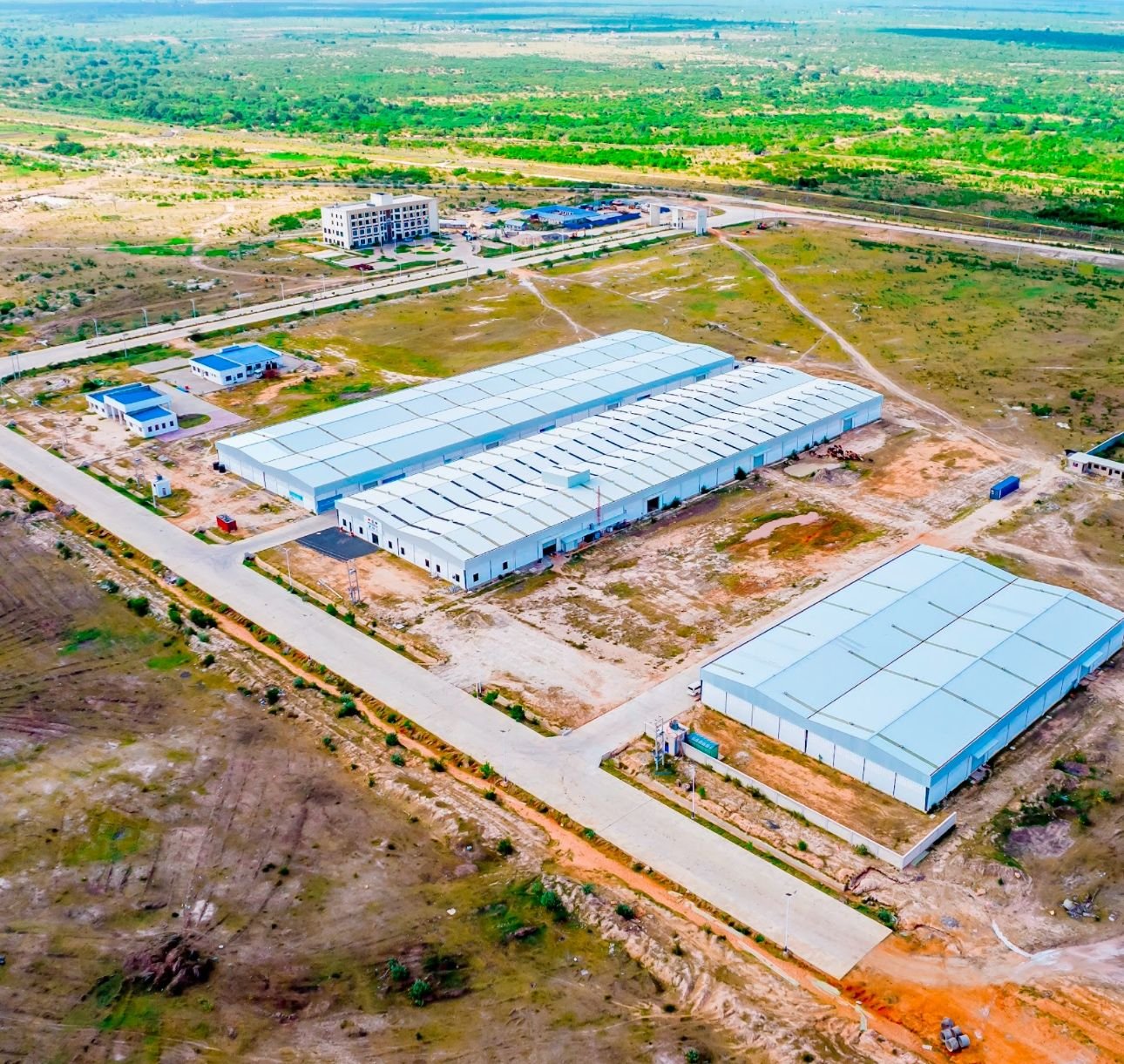
Tanzania has built the largest solar manufacturing operation in Africa, signaling a major shift in the continent’s industrial landscape. With multibillion shilling investments rising in Kwala and export volumes set to triple, the country is positioning itself as a new hub for clean energy manufacturing and global supply chains.
Tanzania has entered a new chapter in its industrial story, and the evidence is rising from the ground in Kwala, Kibaha. The country is now home to what is being described as the largest solar manufacturing operation in Africa, a multi-hundred-million-dollar industrial complex that positions Tanzania at the center of the continent’s clean-energy transition.
At the heart of this shift is Tanzol, a company that has completed a solar manufacturing plant with production lines designed for the American market. The facility represents an initial investment of 300 million dollars, with an additional 500 million dollars scheduled for expansion next year. Once the second phase begins, the total investment will reach roughly 2 trillion shillings in a single industrial zone.
The numbers reveal how significant this is. Tanzol expects to ship 300 million dollars’ worth of solar equipment in its first year of operation, growing to 600 million dollars in the second year. For context, Tanzania’s total annual exports to the United States in 2024 stood between 200 and 211 million dollars. This means one factory alone could triple the country’s export footprint in the US market. Very few African economies can point to a single industrial asset capable of such a shift.
What is happening in Kwala is more than the success of one company. It represents a structural reordering of Africa’s manufacturing geography. Solar manufacturing has long been dominated by Asia, particularly China, which accounts for more than 80 percent of global output. Africa has struggled to break into the market due to high capital requirements, weak industrial infrastructure and limited export pipelines. Tanzania’s entry into large-scale solar production breaks that pattern.
The Kwala factory is equipped with high-automation machinery and large-volume production lines that match global standards. It is designed not just for domestic consumption, but for export into competitive international markets where certification, quality assurance and supply-chain transparency determine success. This level of ambition sets Tanzania apart from many African countries whose renewable energy sectors are focused on installation rather than manufacturing.
The ripple effects of this investment are already visible. Demand for power, water and logistics in the industrial park has surged. The solar plant alone requires at least 50 megawatts of dedicated electricity and more than 5,000 cubic meters of water per day. These requirements are forcing rapid upgrades in utilities and transport networks, pulling the country’s infrastructure forward.
Alongside the solar factory, Kwala is also attracting heavy industry. A new steel processing plant, the first of its kind in Tanzania, is being established with a 50 million dollar investment. When operational, it will reduce the country’s reliance on imported steel and support mega projects such as the Standard Gauge Railway. This complements the solar industry, as steel is essential in panel mounting systems, transmission lines and industrial construction.
The economic implications are broad. Tanzania is positioning itself as a manufacturing and export base for clean-energy technologies at a moment when global demand is exploding. The US, EU and other markets are actively diversifying their supply chains for solar hardware. Tanzania’s geographic stability, political predictability and improving logistics create a compelling alternative.
There is also a geopolitical dimension. As major powers restructure supply chains away from Asia, countries like Tanzania become strategic partners rather than peripheral players. A solar manufacturing hub in East Africa expands global production capacity while strengthening energy independence across the region.
The job creation potential is equally significant. Kwala’s industrial zone projects 100,000 direct jobs and 500,000 indirect ones once fully operational. Even if those numbers eventually settle lower, the magnitude indicates the scale of industrialization underway.
Challenges remain. Power demand is rising faster than supply, logistics still need streamlining and manufacturers will need to meet strict international quality certifications. But these are the growing pains of an economy undergoing real industrial expansion, not the stagnation of past decades.
The core truth is simple: Tanzania is no longer talking about industrialization as an aspiration. It is building it. The emergence of the largest solar manufacturing operation in Africa is both a symbol and a catalyst. It proves Tanzania can attract, host and scale complex, high-value industries that plug directly into global markets.
In a continent often described as “full of potential,” Tanzania has moved into the rarer category of countries showing measurable industrial progress. The Kwala solar industry marks the moment the country stepped confidently into Africa’s clean-energy manufacturing future.
