

Tanzania’s Investment Surge Is No Longer a Promise. It Is a Statement
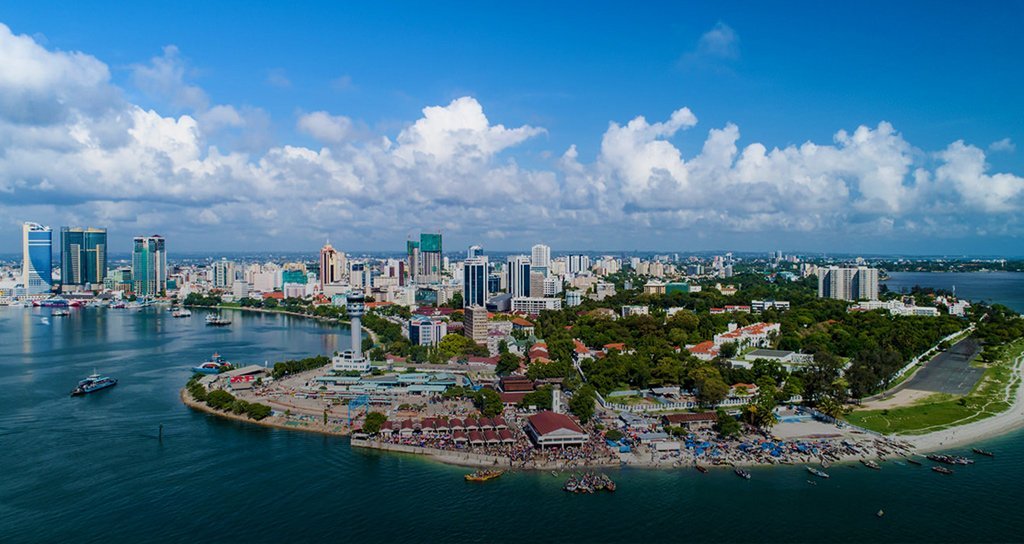
Tanzania’s investment landscape is undergoing a structural shift. New data from TISEZA shows investment projects and approved capital have nearly tripled in five years, with recent growth driven by fewer but larger, more capital-intensive investments that signal rising long-term investor confidence.
Tanzania is no longer selling potential. It is attracting capital.
New figures from the Tanzania Investment and Special Economic Zones Authority (TISEZA) show a decisive shift in the country’s investment trajectory, one that signals rising investor confidence, increasing deal size, and a transition toward more serious, long-horizon capital.
Between 2021 and 2025, registered investment projects in Tanzania more than tripled, rising from 252 to 915. Over the same period, approved investment capital nearly tripled, climbing from $3.7 billion to $10.95 billion. This is not gradual growth. It is acceleration.
The inflection point came in 2023. After a modest rise in 2022, project approvals jumped sharply to 526, while capital inflows surged to $5.7 billion. Momentum intensified in 2024, the strongest year in the dataset, with 901 projects approved and total capital value reaching $9.3 billion. That single year marked the largest increase in both project volume and investment value across the five-year period.
What makes the 2025 data especially compelling is not the number of projects, which rose only marginally, but the size of capital committed. Approved investment value increased by $1.65 billion in a single year. Fewer projects. More money. Bigger bets.
For investors, this shift matters. It suggests Tanzania is moving beyond small, fragmented entries toward larger, more capital-intensive ventures. This is the kind of capital that builds factories, power plants, processing facilities, and logistics networks. It reflects confidence not just in short-term returns, but in regulatory stability, execution capacity, and long-term market fundamentals.
This trend mirrors policy direction. In recent years, Tanzania has pursued targeted regulatory reforms, expanded special economic zones, and streamlined investment approvals. Manufacturing, energy, mining, and agribusiness have emerged as priority sectors, each capable of absorbing large-scale capital and anchoring industrial growth. The data indicates investors are responding.
The growing gap between project count and capital value is a classic signal of market maturation. Early-stage markets attract many small, cautious projects. More mature markets attract fewer but larger commitments. Tanzania appears to be crossing that threshold.
Execution, however, will determine whether this moment becomes a milestone or a missed opportunity. Approved capital must translate into operational assets, employment, exports, and productivity gains. Investors will be watching implementation timelines, policy consistency, contract enforcement, and infrastructure readiness. Confidence compounds when promises turn into performance.
TISEZA has not yet released a sectoral breakdown of 2025 investments, but when it does, it will offer deeper insight into the structure of this capital surge and the ecosystems forming around it. For serious investors, that breakdown will matter as much as the headline numbers.
The broader context cannot be ignored. Global capital is cautious. Interest rates remain high. Geopolitical risk is reshaping supply chains and investment decisions. In this environment, sustained growth in approved investments is not accidental. It suggests Tanzania is increasingly viewed as a credible, competitive destination for long-term capital in East Africa.
The signal is clear. Tanzania is no longer asking to be noticed. It is being chosen.
For investors looking for scale, direction, and momentum, the numbers now speak louder than the pitch.
