
East Africa Already Has a Regional Development Bank. The Real Question Is Why It Is Not Central to the Region's Industrial Strategy.
Ready
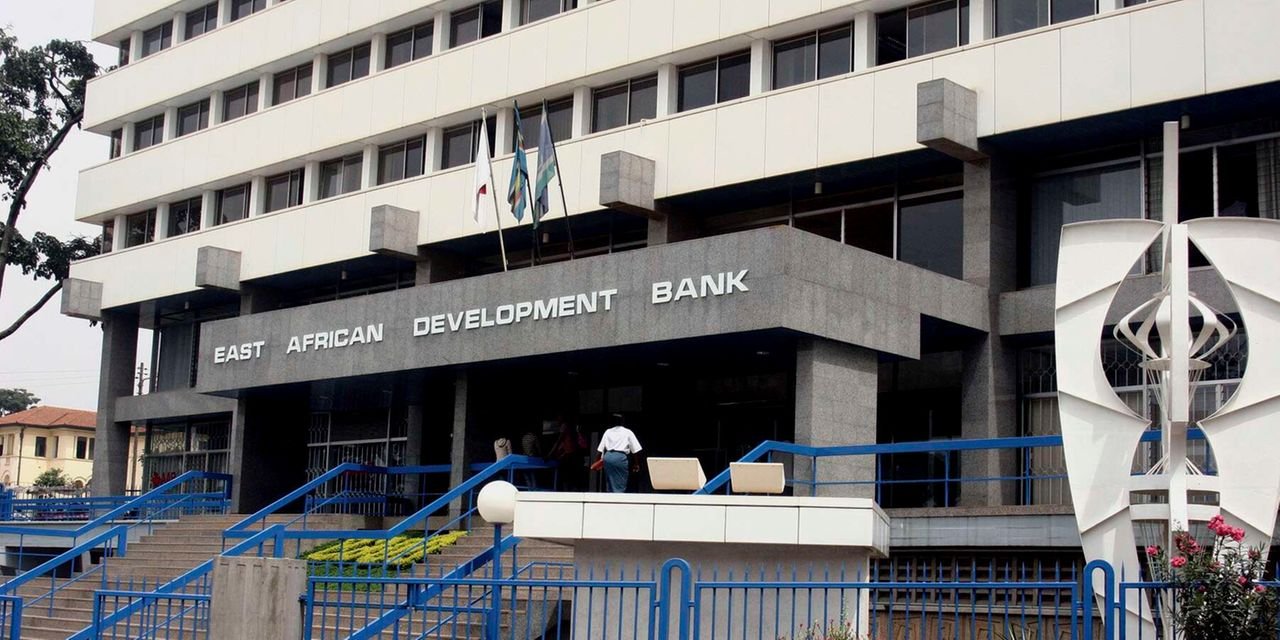
The East African Development Bank was established in 1967 under the treaty of the then East African Cooperation, re-established under a new Charter in 1980 with an expanded mandate covering a broad range of financial services and an overriding objective of strengthening socio-economic development and regional integration, and today owned 92% by Kenya, Uganda, Tanzania, and Rwanda as Class A member state shareholders with 8% held by Class B institutional shareholders including the African Development Bank, Standard Chartered Bank, Barclays Bank PLC, SBIC Africa Holdings, and Commercial Bank of Africa. Rwanda joined as the fourth Class A member state shareholder in 2008. As an EAC organ, EADB has an established platform for catalysing regional integration through development finance. East Africa is now entering its most capital-intensive development phase simultaneously across all four member states, with Tanzania advancing SGR, LNG, and port modernisation, Kenya reinforcing the Northern Corridor through KSh 130 billion highway and airport investments, Uganda approaching commercial oil production alongside the EACOP pipeline, and Rwanda positioning as a financial and logistics services hub. Commercial banks cannot fund this transformation alone because their structural preferences for shorter cycles, lower risk, and faster returns are incompatible with the long-tenor, high-upfront-capital, delayed-return financing that industrial infrastructure requires. China, South Korea, Japan, and post-war Europe all relied on development finance institutions to fund comparable transformation phases. East Africa's EADB is already capitalised, mandated, and positioned as an EAC organ to serve precisely this role. The question is why it is not being used with the strategic seriousness the moment demands.East Africa is building railways, ports, refineries, and industrial corridors. The institution established in 1967, re-chartered in 1980, and owned 92% by the four member states has existed for 57 years to finance exactly this. The question is why it remains peripheral to the strategy rather than central to it.
East Africa may not need to create a new regional development bank. It may need to finally take seriously the one it already has.
The East African Development Bank was established in 1967 under the treaty of the then East African Cooperation with a mandate to provide financial and related assistance to enterprises in the member states which, by their activities, were expected to make a positive contribution to socio-economic development in the region. The Bank was re-established under a new Charter in 1980, whose review of the Bank's role and mandate expanded its operational scope to include a broad range of financial services in the member states with an overriding objective of strengthening socio-economic development and regional integration.
Today, the EADB is owned 92% by its four Class A member state shareholders: Kenya, Uganda, Tanzania, and Rwanda, with Rwanda joining as the fourth Class A shareholder in 2008. The remaining 8% is held by Class B institutional shareholders including the African Development Bank, SBIC Africa Holdings, Commercial Bank of Africa Nairobi, Standard Chartered Bank London, Barclays Bank PLC London, Nordea Bank Sweden, and a Consortium of Yugoslav Institutions. As an organ of the East African Community, its partnership with EAC institutions has accorded it a platform to play a catalysing role in regional integration through the provision of development finance.
That mandate has never been more directly relevant to the regional economic moment than it is now.
Yet despite the region entering one of the most infrastructure-intensive and industrially ambitious periods in its history, the EADB still occupies a relatively modest position within the region's economic architecture compared to the scale of the transformation underway. That raises a more important question than whether East Africa should build new institutions. Why is the institution already designed for regional development financing, owned by the four member states themselves, and positioned as an EAC organ not sitting at the centre of East Africa's industrial strategy?
East Africa is entering its capital-intensive phase simultaneously across all four member states
The financing challenge whose scale makes the EADB's marginalisation most analytically significant is not a single country's infrastructure deficit but the simultaneous capital-intensive transformation underway across Tanzania, Kenya, Uganda, and Rwanda, all four of the EADB's own Class A member state shareholders, whose combined financing requirement creates the regional-scale demand that a regional development institution is structurally better positioned to serve than the bilateral and multilateral financing arrangements whose coordination costs and conditionality structures add time and complexity to each individual transaction.
Tanzania is positioning itself as East Africa's regional logistics and energy hub through the Standard Gauge Railway extension whose USD 2.33 billion financing for Lots 3, 4, and 5 Standard Chartered arranged in April 2026 according to the bank's official announcement, the USD 42 billion LNG project negotiations with Equinor, ExxonMobil, and Shell, the Dar es Salaam and Tanga port modernisation, and the electricity generation expansion that has pushed installed capacity above 4,000 megawatts per Tanzania Electric Supply Company operational records. Kenya is reinforcing the Northern Corridor through the KSh 130 billion Mau Summit to Malaba highway whose feasibility phase President Ruto has confirmed is funded, the Kakamega Airport expansion at approximately 70% completion, and the Rironi to Mau Summit carriageway targeting April 2026 commissioning. Uganda is approaching commercial oil production from its Lake Albert Albertine Graben fields, with the East African Crude Oil Pipeline at approximately 82% completion per official EACOP project updates and first oil targeted for the July to October 2026 window. Rwanda is advancing logistics hub positioning through Kigali International Airport expansion, road connectivity improvement, and financial services deepening whose combination is making Kigali the region's most institutionally sophisticated services economy gateway.
This is not normal public spending across four countries making routine infrastructure investments. It is state-scale economic restructuring across the EADB's own four member states whose combined financing requirements are being served by a patchwork of bilateral arrangements, multilateral development bank project finance, commercial bank lending, and export credit facilities whose coordination is less efficient than the regional development institution whose mandate was designed for precisely this configuration of simultaneous cross-border infrastructure ambition.
Why commercial banks cannot industrialise East Africa alone
One of the most persistent misconceptions in African economic discourse is the assumption that ordinary commercial finance structures can independently fund industrial transformation at the scale and terms that railway construction, port modernisation, refinery development, industrial park financing, and manufacturing ecosystem investment require. The misconception is understandable because commercial banking is the most visible and accessible form of financial intermediation in most East African economies, but its structural characteristics make it systematically unsuitable as the primary financing mechanism for the industrial investments whose execution the region's development ambitions require.
Commercial banks generally prefer shorter loan cycles whose repayment timelines match the deposit liability structures their balance sheets must manage, lower risk assets whose collateral value and cash flow predictability make credit risk assessment straightforward, faster returns whose generation allows capital recycling into new lending without the extended exposure periods that industrial project finance creates, consumer lending whose retail scale and diversification reduce individual transaction risk, trade finance whose self-liquidating character limits credit exposure duration, and real estate whose tangible collateral values support lending at terms commercial depositors find acceptable.
Industrialisation operates according to a fundamentally different financial logic. Factories, railways, power systems, ports, industrial corridors, and logistics infrastructure require long-tenor financing whose repayment periods of 10 to 25 years exceed the comfort zone of commercial deposit-funded lending, high upfront capital whose concentration in pre-revenue construction phases creates the negative cash flow periods that commercial credit risk frameworks penalise most severely, delayed returns whose emergence only after construction completion and operational ramp-up creates the cash flow gap that patient capital must bridge, policy coordination whose cross-border and multi-sectoral character requires institutional relationships that commercial banks do not maintain as a core function, and cross-border integration whose legal, regulatory, and sovereign risk complexity adds the transaction costs that commercial financing structures are not designed to absorb efficiently.
According to African Development Bank industrial financing research, the primary financing gap for manufacturing and industrial investment across Sub-Saharan Africa is not in the availability of capital at the continental level but in the availability of capital structured at the terms industrial investment requires, specifically long tenor, patient returns, and risk-sharing arrangements that allow early-phase industrial operations to absorb the learning curve costs that precede stable profitability. This is the financing gap the EADB's 1980 Charter mandate was designed to close, and its persistence despite 57 years of the institution's existence reflects the underutilisation rather than the inadequacy of the institutional solution.
What history reveals about development banks and industrial transformation
Every successful industrial economy in modern history whose transformation occurred within a compressed timeframe rather than across centuries of gradual accumulation relied heavily on development finance institutions whose patient capital, directed credit, and industrial policy coordination provided the enabling financial conditions that commercial banking systems operating on normal competitive principles would not have generated independently. China used state-directed development banking aggressively across the Bank of China, China Development Bank, and Export-Import Bank of China whose combined industrial lending financed the manufacturing clusters, export infrastructure, and industrial zones that produced the world's largest manufacturing economy across four decades. South Korea used the Korea Development Bank to direct long-tenor credit toward manufacturing sectors whose payback horizons commercial venture capital would not have accommodated, with export performance requirements ensuring the competitive discipline that prevented directed credit from becoming permanent inefficiency insulation. Japan used the Japan Development Bank and Industrial Bank of Japan to accelerate industrial expansion after World War II at a pace whose achievement without patient institutional capital would have required decades rather than years. Even Europe rebuilt itself partly through development financing structures, with the European Investment Bank established in 1958 to finance the infrastructure and industrial investment whose combination produced the economic integration that the Treaty of Rome's commercial provisions alone could not have achieved.
The pattern across all successful industrial transformation cases is consistent: development finance institutions providing patient capital at the terms and tenors that commercial banking cannot match are a necessary component of the institutional infrastructure that industrial transformation demands. East Africa is approaching a comparable stage of infrastructure and industrial expansion. The EADB's 1980 Charter mandate, which expanded the institution's operational scope to include a broad range of financial services with an overriding objective of strengthening socio-economic development and regional integration, is the regional expression of exactly the institutional logic that every comparable industrial transformation employed. The difference is that East Africa still treats the institution as peripheral to its economic strategy rather than central to it.
What the EADB's ownership structure reveals about its untapped potential
The EADB's Class A and Class B shareholding structure contains the most direct available evidence that the institution's underutilisation reflects strategic choice rather than institutional incapacity. The four Class A member state shareholders, Kenya, Uganda, Tanzania, and Rwanda, own 92% of the institution whose development finance mandate they are simultaneously pursuing through bilateral and multilateral financing arrangements that are more expensive, more conditional, and less regionally coordinated than the development finance the institution they 92% own was designed to provide.
The Class B institutional shareholder roster adds a further dimension to the untapped potential argument. The African Development Bank's participation as a Class B shareholder creates the institutional link between the EADB and the continent's primary multilateral development finance institution whose AAA credit rating, technical assistance capabilities, and project preparation resources the EADB could leverage more systematically than current operational practice reflects. Standard Chartered Bank London and Barclays Bank PLC London as Class B shareholders create the commercial banking relationships whose co-financing arrangements could blend EADB development finance with commercial bank lending at terms that neither institution could offer independently, extending the reach of EADB patient capital through the leverage that blended finance structures provide. SBIC Africa Holdings and Commercial Bank of Africa Nairobi as Class B shareholders create the African commercial banking relationships whose domestic market knowledge and borrower relationships complement the EADB's regional institutional capacity in ways that improve the institution's ability to reach the small and medium-sized manufacturing and industrial enterprises whose financing needs the 1967 founding mandate specifically identified as the primary target of regional development finance assistance.
The institution's EAC organ status adds the governance legitimacy and political authority whose exercise could make EADB financing terms and industrial policy coordination binding on member state behaviour in ways that multilateral development bank conditionality imposed from outside the region cannot match. An EAC organ whose four member state shareholders own 92% of its capital has the institutional foundations for the kind of developmentally-oriented risk assessment, industrial policy alignment, and long-horizon investment coordination that external development finance institutions cannot provide because their governance structures, shareholder priorities, and risk management frameworks reflect the interests of economies beyond the East African region.
What a strategically deployed EADB could deliver
The opportunity now is scale and strategic deployment rather than institutional construction. East Africa's ambitions are becoming larger than individual national financing systems alone can comfortably support, and the regional financing logic that cross-border infrastructure requires is what a strengthened and strategically deployed EADB could provide through mechanisms whose development would extend rather than replace the institution's existing operational framework.
Cross-border infrastructure financing that evaluates projects on their regional economic returns across all the economies they serve rather than solely on individual country risk profiles would change the financing economics of the SGR's Central Corridor integration, the Northern Corridor's Kenya-Uganda-Rwanda-Burundi transit trade facilitation, the EACOP pipeline's Uganda-Tanzania cross-border energy infrastructure, and the refinery partnership discussions that President Samia's meeting with Dangote has placed on the regional investment agenda. Industrial corridor support that finances the manufacturing ecosystems developing along the SGR Central Corridor, the Northern Corridor highway, and the EACOP pipeline route creates the productive complexity that infrastructure alone does not generate. Regional infrastructure bond structuring that creates the capital market instruments whose development deepens East African financial integration and reduces dependence on bilateral and multilateral external financing would build the domestic capital market depth that the AfDB's 40% Western ownership problem, which Uchumi360 documented in its analysis of the institution's governance structure, illustrates as the region's most consequential financial sovereignty deficit.
The integration argument that development finance makes concrete
The East African Community discusses integration primarily through political and trade policy frameworks whose implementation timeline and compliance record reflect the institutional limitations that financial integration has not yet overcome. Economic integration is ultimately financed into existence rather than negotiated into existence. Railways create integration. Road corridors create integration. Energy systems create integration. Ports create integration. Trade finance creates integration. Industrial ecosystems create integration. And institutions capable of financing those systems at regional scale become strategically important to the future shape of the region in ways that political declarations cannot replicate.
The EADB's founding mandate explicitly identified this connection between development finance and regional integration, with the 1980 Charter's overriding objective of strengthening socio-economic development and regional integration making the institution's dual purpose, development financing and integration catalysis, the original design rather than a later addition. That design is more relevant now than at any previous point in the institution's 57-year existence because the infrastructure systems whose financing the EADB was designed to support are now genuinely cross-border rather than nationally contained, creating the regional financing logic that the institution's multi-country mandate is structurally suited to serve.
The deeper strategic question East Africa must answer
The real strategic question is not whether East Africa can continue borrowing externally to finance its industrial transformation. It can, and the external capital whose availability the region's improving strategic asset position is attracting will remain an important component of the financing mix whose diversity reduces dependence on any single capital source. The question is whether East Africa wants to permanently finance its industrial future primarily through external systems whose priorities, risk models, and investment horizons are designed elsewhere, when the region owns 92% of an institution specifically designed to provide the alternative.
Every serious economic bloc eventually develops institutions reflecting its own developmental priorities rather than remaining permanently dependent on external institutions whose governance structures reflect the interests of the economies that capitalised them. Europe built the European Investment Bank. China built the China Development Bank and Asian Infrastructure Investment Bank. The Gulf states built sovereign wealth funds and Islamic development banking institutions. East Africa built the EADB in 1967, re-chartered it in 1980, expanded its membership to include Rwanda in 2008, and brought in the African Development Bank and leading commercial banks as institutional shareholders. The institution exists. The mandate is clear. The ownership is regional. The EAC organ status provides the governance authority. The question worth asking in 2026, as the four member states simultaneously pursue the most ambitious infrastructure and industrial investment programmes in East African economic history, is why the institution they 92% own is not being deployed with the strategic urgency that the moment demands.
Because regions do not industrialise through infrastructure alone. They industrialise through financial systems capable of sustaining infrastructure investment over generations at terms that reflect regional development priorities. The EADB was built to be that system. East Africa built it. The task now is to use it.
Visual element opportunities
EADB ownership structure diagram showing the 92% Class A member state shareholding split across Kenya, Uganda, Tanzania, and Rwanda, and the 8% Class B institutional shareholder portfolio including the African Development Bank, Standard Chartered Bank, Barclays Bank PLC, SBIC Africa Holdings, Commercial Bank of Africa, Nordea Bank Sweden, and the Consortium of Yugoslav Institutions, to make the institution's ownership architecture visually concrete and to illustrate the strategic paradox of four member states owning 92% of a development institution they are underutilising.
EADB institutional timeline showing the 1967 founding, 1980 re-chartering, 2008 Rwanda accession as fourth Class A shareholder, and the current 2026 regional infrastructure investment context, to situate the institution's 57-year development within the regional economic trajectory whose current phase is its most relevant.
East Africa regional infrastructure financing gap chart showing the combined infrastructure investment requirement across Tanzania, Kenya, Uganda, and Rwanda for the 2026 to 2030 period against the EADB's current annual lending capacity, sourced from national budget data and EADB annual reports, to quantify the scale gap between the institution's current deployment and the regional financing demand its mandate was designed to serve.
Development finance institution comparison showing the Korea Development Bank, Japan Development Bank, China Development Bank, European Investment Bank, and EADB across capitalisation, annual lending volume, tenor range, and industrial project share at comparable development phase stages, to situate EADB's potential within the historical context of development finance institutions that successfully supported industrial transformation.
FAQ
When was the EADB established and what is its mandate? The East African Development Bank was established in 1967 under the treaty of the then East African Cooperation with a mandate to provide financial and related assistance to enterprises in the member states whose activities were expected to make a positive contribution to socio-economic development in the region. The Bank was re-established under a new Charter in 1980 whose expanded scope included a broad range of financial services with an overriding objective of strengthening socio-economic development and regional integration. It operates as an organ of the East African Community.
Who owns the EADB? The EADB is owned 92% by its four Class A member state shareholders: Kenya, Uganda, Tanzania, and Rwanda. Rwanda joined as the fourth Class A shareholder in 2008. The remaining 8% is held by Class B institutional shareholders including the African Development Bank, SBIC Africa Holdings, Commercial Bank of Africa Nairobi, Standard Chartered Bank London, Barclays Bank PLC London, Nordea Bank Sweden, and a Consortium of Yugoslav Institutions.
Why is the EADB's EAC organ status significant? Because EAC organ status gives the EADB the governance legitimacy and political authority whose exercise could make its financing terms and industrial policy coordination binding on member state behaviour in ways that multilateral development bank conditionality imposed from outside the region cannot match. An EAC organ whose four member state shareholders own 92% of its capital has the institutional foundations for developmentally-oriented risk assessment, industrial policy alignment, and long-horizon investment coordination that external development finance institutions cannot provide because their governance structures reflect the interests of economies beyond the East African region.
Why cannot commercial banks fund East Africa's industrialisation alone? Because commercial banks structurally prefer shorter loan cycles, lower risk assets, faster returns, consumer lending, trade finance, and real estate, all characteristics incompatible with the long-tenor financing, high upfront capital, delayed returns, and cross-border policy coordination that railway, port, refinery, and manufacturing investment requires. According to African Development Bank research, the primary financing gap for industrial investment across Sub-Saharan Africa is in the availability of capital structured at long-tenor, patient-return terms rather than in the absolute volume of capital available. This is the financing gap the EADB's 1980 Charter mandate was designed to close.
What is the strategic paradox at the centre of East Africa's development finance architecture? The four Class A member states of the EADB, Kenya, Uganda, Tanzania, and Rwanda, own 92% of an institution specifically designed to provide the regional development finance that they are simultaneously pursuing through bilateral and multilateral financing arrangements that are more expensive, more conditional, and less regionally coordinated than the development finance the institution they 92% own was established to provide. The institution exists. The mandate is clear. The ownership is regional. The EAC organ status provides governance authority. The question is why the institution is being underutilised at the precise moment when its mandate is most directly relevant to the regional economic transformation underway across all four of its member states simultaneously.
 Uchumi360
Business Intelligence
Uchumi360
Business Intelligence
East African Development Bank, founding charter 1967, re-establishment charter 1980, and institutional structure documentation. Class A and Class B shareholding structure, Rwanda 2008 accession, and EAC organ status. Available at eadb.org.
East African Development Bank, Class B shareholder roster. African Development Bank, SBIC Africa Holdings, Commercial Bank of Africa Nairobi, Standard Chartered Bank London, Barclays Bank PLC London, Nordea Bank Sweden, Consortium of Yugoslav Institutions. Available at eadb.org.
Standard Chartered Bank, SGR financing announcement, 28 April 2026. Available at sc.com.
Tanzania Electric Supply Company, operational records. 4,000 MW capacity figure. Verify before publication. Available at tanesco.co.tz.
EACOP official project updates, May 2026. Approximately 82% completion, first oil July to October 2026. Available at eacop.com.
African Development Bank, industrial financing gap research. Specific report requires identification before publication. Available at afdb.org.
Korean Development Institute, Korea Development Bank directed credit research. Available at kdi.re.kr.
Japan Development Bank, institutional history and post-war industrial financing. Available at dbj.jp.
European Investment Bank, founding 1958 and regional infrastructure financing history. Available at eib.org.
China Development Bank, industrial lending and infrastructure financing documentation. Available at cdb.com.cn.
East African Community Secretariat, regional integration framework and EADB organ status documentation. Available at eac.int.
Rwanda Development Board, Rwanda EADB Class A membership and financial services positioning data. Available at rdb.rw.
Uganda Bureau of Statistics, oil production and infrastructure investment data. Available at ubos.org.
Kenya National Treasury, Northern Corridor KSh 130 billion highway financing confirmation. Available at treasury.go.ke.
Tanzania Petroleum Development Corporation, LNG project and gas reserve data. Available at tpdc.go.tz.
State House United Republic of Tanzania, Dangote-Samia meeting confirmation and USD 17 billion refinery partnership discussions. 16 May 2026.
AfCFTA Secretariat, regional integration financing framework. Available at au-afcfta.org.
Zambia Statistics Agency, regional development finance comparative data. Available at zamstats.gov.zm.
DRC Institut National de la Statistique, regional infrastructure financing data. Available at ins-rdc.org.
Mozambique Banco de Moçambique, development finance data. Available at bancomoc.mz.
Malawi Reserve Bank, regional development finance data. Available at rbm.mw.
Uchumi360 covers business, investment, and economic policy across East, Central, and Southern Africa.
For the serious reader
You read to the end. That places you in a small group.
Uchumi360 is built for readers who demand precision over speed, structure over sentiment, and analysis that holds uncomfortable conclusions rather than softening them. If this work sharpens how you think about Africa's economy, help us keep building the infrastructure behind it.
Institutional Partners
Commission intelligence. Shape the conversation.
Uchumi360 works with development finance institutions, investment firms, sovereign bodies, and strategic organisations across the coverage region. Institutional partnership unlocks:
- Commissioned sector and country intelligence reports
- Branded research series under your institution's authority
- Exclusive data briefings for internal strategy teams
- Speaking and editorial presence at Uchumi360 events
- Co-published investment outlooks for your markets
Support Our Work
Independent analysis has a cost. Help us bear it.
Uchumi360 does not carry advertising. It does not take editorial direction from sponsors. Every article is produced without commercial compromise. Your contribution funds the reporting, research, and editorial infrastructure that keeps this analysis free from influence.
Secure checkout: One-time and monthly support are processed securely.
Stay Connected
Keep up with every new insight.
Follow our latest analysis, policy coverage, and market intelligence as soon as it is published. If you need something specific, reach out directly and we will point you to the right research.
