
Dar es Salaam Stock Exchange Loses TZS 418 Billion in Market Value as Foreign Investors Extend Selling Streak
Ready
The Dar es Salaam Stock Exchange recorded a 3.76% decline in weekly equity turnover to TZS 36.02 billion during November 9 to 13, 2026, as foreign investors extended their net selling streak to four consecutive weeks. Total market capitalisation declined by TZS 418.38 billion to TZS 37.72 trillion, while domestic market capitalisation fell 1.86%. The Banks, Finance and Investment Index lost 3.14%, with NMB and CRDB recording weekly share price declines despite strong recent banking sector profitability. Vodacom Tanzania accounted for approximately 37.7% of equity turnover, while government bond trading reached TZS 158.70 billion, more than four times the value of shares traded.
Equity turnover at the Dar es Salaam Stock Exchange declined 3.76% to TZS 36.02 billion during the trading week ending November 13, 2026, while total market capitalisation fell 1.10% to TZS 37.72 trillion. Foreign investors recorded approximately $5.08 million in net sales for the fourth consecutive week of outflows, with banking stocks contributing to the market's decline. Despite weaker equity trading, government bonds continued attracting substantially larger trading volumes by value.
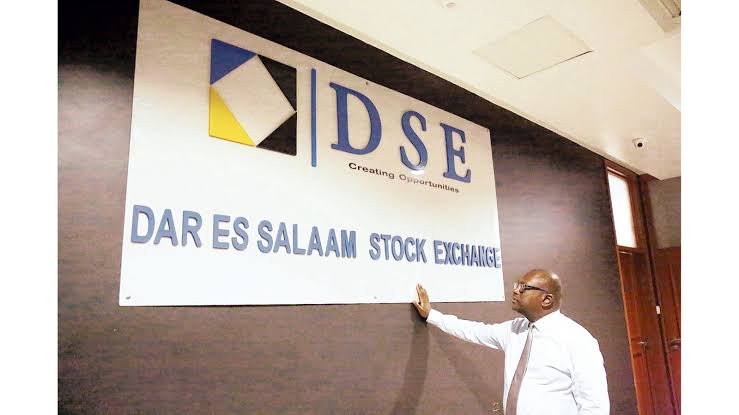
The Dar es Salaam Stock Exchange (DSE) recorded a decline in both equity trading activity and market valuation during the week ending November 13, 2026, as foreign investors continued selling Tanzanian shares and banking stocks weakened for a fourth consecutive week. Equity turnover fell 3.76% to TZS 36.02 billion from TZS 37.43 billion in the preceding week, while the value of all listed equities declined by TZS 418.38 billion to TZS 37.72 trillion, according to the latest weekly market assessment published by TanzaniaInvest using exchange trading data.
The decline occurred despite substantial activity in a small number of counters, particularly Vodacom Tanzania, which accounted for TZS 13.57 billion in turnover and more than half the shares traded during the week. Across the market, 17.80 million shares changed hands through 14,213 deals, representing a 10.21% reduction in share volume from the preceding week's 19.82 million shares. The difference between the decline in turnover and the sharper contraction in trading volume indicates that the value of transactions held up better than the number of shares exchanged, although the figures do not independently establish a marketwide improvement in prices.
The more consequential development was the continued imbalance between foreign purchases and sales. Domestic investors accounted for 79.82% of equity purchases during the week, while foreign investors represented 57.48% of sales, producing net foreign selling estimated at $5.08 million. The figures marked the fourth consecutive week of net foreign outflows, raising questions about the near term demand for Tanzanian equities and the capacity of domestic investors to absorb shares being sold by international participants. The weekly data establish the direction and value of trading flows but do not identify the motivations of individual foreign investors, which may include portfolio rebalancing, profit taking, liquidity requirements or changing assessments of individual securities.
The market's weakness was concentrated partly in financial stocks. The DSE All Share Index fell 1.10% to 4,327.13 points, while the Tanzania Share Index declined 1.86% to 9,518.80 points. The Banks, Finance and Investment Index recorded the largest sector decline, falling 3.14% to 20,521.80 points. In contrast, the Industrial and Allied Index increased slightly by 0.14%, and Commercial Services advanced 1.29%, demonstrating that the week's decline was not uniform across all sectors.
The distinction between trading turnover and market capitalisation is essential to interpreting the results. The TZS 36.02 billion turnover figure measures the value of shares actually exchanged during the five trading sessions from November 9 to November 13, excluding exchange traded fund transactions. The TZS 418.38 billion reduction in market capitalisation reflects the change in the estimated aggregate market value of listed companies, principally as share prices moved between the two weekly closing dates. It does not mean that TZS 418.38 billion was withdrawn from the exchange or that investors collectively realised losses of that amount through sales.
Foreign Selling and Banking Stocks Drive Market Weakness
Dar es Salaam Stock Exchange, Week 46 performance
| Indicator | Week ending Nov 13 | Weekly change |
| Equity turnover | TZS 36.02B | −3.76% |
| Shares traded | 17.80M | −10.21% |
| Total market capitalisation | TZS 37.72T | −1.10% |
| Domestic market capitalisation | TZS 25.88T | −1.86% |
| DSE All Share Index | 4,327.13 | −1.10% |
| Tanzania Share Index | 9,518.80 | −1.86% |
| Banks, Finance & Investment Index | 20,521.80 | −3.14% |
| Industrial & Allied Index | 5,169.38 | +0.14% |
| Commercial Services Index | 3,551.57 | +1.29% |
| Bond turnover | TZS 158.70B | −2.86% |
Source: TanzaniaInvest, November 14, 2026, based on DSE trading data. Closing index levels and market capitalisation are also reported in the DSE's November 13 official market report.
The selloff in financial stocks is notable because the Tanzanian banking sector has recently reported strong growth in lending and profitability. Commercial banks generated a combined TZS 2.11 trillion in profits during the first nine months of 2026, while private sector credit expanded substantially. Nevertheless, higher corporate earnings do not guarantee rising share prices, particularly when investors consider valuations, dividend expectations, liquidity requirements and the returns available from alternative investments.
Among the major listed banks, NMB declined 4.47% during the week, with its share price falling from TZS 1,790 to TZS 1,710. CRDB Bank declined 1.42% from TZS 2,820 to TZS 2,780. Both banks had experienced declines for at least three consecutive weeks, while the broader financial sector index recorded its fourth consecutive weekly loss. DCB Commercial Bank fell 6.58% to TZS 355, while Mkombozi Commercial Bank declined 5.71% to TZS 330.
The weaker share prices contrast with the expansion of the banking industry, suggesting that investors are reassessing valuations even as the underlying institutions continue reporting increased business activity. However, one week of trading cannot establish a lasting deterioration in investor confidence or the financial performance of the banks concerned. More information about earnings expectations, institutional trading and liquidity conditions would be required to determine why individual investors have reduced their exposure.
Foreign selling nevertheless introduces additional pressure because the DSE operates within a relatively concentrated equity market. A sustained imbalance between foreign sellers and domestic buyers can affect prices where the available demand is insufficient to absorb larger transactions without discounts. This is particularly relevant for institutional investors considering the ease with which substantial positions can be bought or sold.
The market's domestic capitalisation declined more sharply than total capitalisation, falling 1.86% to TZS 25.88 trillion from TZS 26.37 trillion. Total capitalisation includes the value of domestically listed shares and qualifying cross listed securities, while domestic capitalisation provides a narrower measure of the valuation of Tanzanian listed companies. The larger percentage decline in domestic capitalisation indicates that locally listed equities experienced relatively greater weakness during the week.
Vodacom Dominates Trading as Smaller Counters Record Sharp Price Movements
Vodacom Tanzania was the most actively traded security during the week, with 10.48 million shares changing hands for TZS 13.57 billion. The counter represented approximately 59% of total shares traded and 37.7% of equity turnover, underscoring the concentration of activity in a limited number of listed companies. Its share price increased 1.59% to TZS 1,280, making it one of the counters that recorded gains despite the broader market decline.
Concentration of turnover matters because it can make aggregate weekly trading figures appear stronger than the liquidity available across most listed securities. A single large transaction or a series of institutional trades can account for a substantial proportion of turnover without demonstrating that investors can readily trade shares in smaller companies. For a developing capital market, liquidity depends on the frequency of transactions, the number of active participants and the ability to execute orders without materially affecting prices.
Among individual stocks, MBP and MUCOBA recorded the largest percentage increases, each gaining 5.26%. MBP rose from TZS 1,900 to TZS 2,000, while MUCOBA advanced from TZS 380 to TZS 400. Nation Media Group gained 1.75% to TZS 290, extending its positive performance to at least three consecutive weeks, while Tanzania Breweries increased 1.55% to TZS 9,850.
The largest losses were recorded by Tanzania Tea Packers, whose shares declined 17.57% from TZS 370 to TZS 305, followed by JATU with a 12.50% decline and PAL with a 10% decrease. NICO fell 9.73% to TZS 3,340 after recording gains in the previous week, while TOL declined 7.14% to TZS 1,300.
Selected share price changes, November 6 to 13
DSE Weekly Stock Performance
Percentage change in closing share price, November 6 to November 13, 2026.

The contrast between the largest gainers and losers illustrates how weekly percentage movements can be substantial in individual securities even when the overall exchange index moves relatively modestly. However, large percentage movements in smaller counters should be interpreted alongside the number of shares traded and prevailing liquidity conditions. A limited number of transactions may produce a considerable change in a quoted closing price without indicating that large quantities of shares could be traded at that valuation.
Government Bonds Attract More Than Four Times the Value of Equity Trading
Trading in debt securities continued to exceed equity activity by a considerable margin. Bond turnover reached TZS 158.70 billion across 103 transactions during the week, compared with TZS 36.02 billion in equity turnover. Although bond trading declined 2.86% from TZS 163.38 billion in the preceding week, the value of transactions remained approximately 4.4 times the amount traded in listed company shares.
Most of the reported bond activity was concentrated in longer-dated government securities. Twenty-year bonds accounted for approximately TZS 75.02 billion in face value across 35 transactions, while 25-year bonds represented TZS 61.94 billion across 54 transactions. Together, these maturities accounted for the overwhelming majority of the reported face value traded in the bond market.
The pattern is relevant to Tanzania's capital market development because government securities provide investment opportunities for pension funds, insurance companies, commercial banks and other institutions seeking income and instruments with defined contractual payments. A functioning secondary bond market also supports the government's ability to finance expenditure through domestic capital markets and provides reference yields used when pricing other debt instruments.
However, larger bond turnover does not necessarily establish a general preference for bonds over equities among all investors. Government securities and listed shares serve different investment purposes, and transaction values may be influenced by portfolio size, institutional mandates, maturity schedules and the availability of securities. The weekly figures indicate where trading activity was concentrated, rather than establishing the motivation of each market participant.
Reported yields also changed across several maturities. The weighted average yield for five year bonds declined by 125.7 basis points to 10.0584%, while the 15 year yield fell to 10.0387%. Twenty year bonds recorded a weighted yield of 10.3363%, whereas the 25 year yield increased slightly to 10.5420%. These observations are based on the securities traded during the respective weeks, and changes may reflect differences in the particular bonds transacted as well as market pricing. The report recorded no transactions in the ten year category, meaning no comparable traded yield was available for that maturity.
The continuing importance of government debt also raises a longer term development question for Tanzania's capital markets. Although public securities provide investment opportunities and contribute to domestic financing, a broader capital market would also enable private companies to raise substantial funds through equity and corporate bonds. The distribution of trading between government debt and company shares suggests that developing deeper secondary market liquidity and expanding the range of investable corporate securities remain relevant objectives.
Exchange Traded Funds Gain Activity Despite the Broader Decline
One area of the market recorded stronger trading during the week. Turnover across the DSE's three listed exchange traded funds increased 47.84% to TZS 1.25 billion, compared with TZS 842.20 million in the previous week. Approximately 6.64 million fund units changed hands, indicating growing trading activity within this relatively new segment of Tanzania's capital market.
The IEACLC ETF closed unchanged at TZS 1,360 per unit, while ZAN TIMIZA remained at TZS 120. VERTEX ETF declined 1.64% from TZS 305 to TZS 300. Total ETF market capitalisation decreased slightly to TZS 233.76 billion, compared with TZS 234.03 billion a week earlier.
The growth in ETF turnover is commercially relevant because these instruments can provide investors with exposure to baskets of securities rather than requiring them to purchase individual companies separately. Depending on the structure of the fund, this can support portfolio diversification and introduce additional channels through which retail and institutional investors participate in capital markets.
However, the increase in turnover occurred from a relatively small base. At TZS 1.25 billion, ETF transactions remained considerably below equity and bond trading, and one week of increased activity is insufficient to establish a sustained expansion of investor participation. Longer term assessment would require data on outstanding units, investor accounts, fund inflows and the liquidity of individual ETFs.
Tanzania's Capital Market Faces a Liquidity Test Despite Stronger Financial Sector Growth
The latest DSE figures come during a period of considerable expansion in Tanzania's formal financial sector. Commercial banks have reported rising deposits, substantial growth in credit and increasing profitability, while new investment products and financial market reforms have sought to encourage broader participation in securities markets. Nevertheless, the development of the stock exchange depends on more than the financial performance of individual listed institutions.
A liquid equity market requires sufficient buyers and sellers, reliable financial disclosures, competitive transaction costs, institutional participation and an adequate supply of listed securities. Where trading is concentrated in a small number of counters, investors may encounter difficulties entering or exiting positions in less actively traded companies. These constraints can increase the returns investors require and influence the attractiveness of raising capital through public listings.
The fourth consecutive week of foreign net selling adds another consideration. Domestic investors absorbed a substantial share of the week's available securities, accounting for nearly 80% of purchases, but the continued outflows coincided with declining market valuations. Whether this pattern persists will depend on domestic demand, corporate financial results, valuations and international portfolio decisions. The available weekly figures do not establish that foreign investors are withdrawing permanently from Tanzanian equities.
The contrast between the bond and equity markets also illustrates the need for a wider range of financing instruments. Government securities account for substantial market activity, while equity trading offers companies access to ownership capital that does not involve fixed contractual interest payments. A more developed market for corporate bonds could provide another financing option for businesses seeking longer term capital without relying exclusively on commercial bank loans.
For Tanzania's ambition to expand industrial investment and domestic financial intermediation under Vision 2050, the stock exchange can support businesses seeking capital for expansion. However, its capacity to perform that role will depend on attracting additional issuers and investors, improving secondary market liquidity and ensuring that companies can access financing on commercially viable terms.
The week ending November 13 demonstrates these challenges in measurable terms. Equity turnover decreased to TZS 36.02 billion, foreign investors remained net sellers, banking stocks weighed on the market indices and total market capitalisation declined by TZS 418.38 billion. At the same time, government bonds continued supporting much larger transaction values, while exchange traded funds recorded stronger activity.
The next trading sessions will establish whether the equity market's decline continues or whether investor demand stabilises following four consecutive weeks of weakness in the All Share and banking indices. For now, the data describe a market experiencing concentrated trading, weaker financial sector valuations and sustained foreign selling, even as other segments of Tanzania's capital markets remain active.
 Uchumi360
Business Intelligence
Uchumi360 covers business, investment, and economic policy across East, Central, and Southern Africa.
For the serious reader
You read to the end. That places you in a small group.
Uchumi360 is built for readers who demand precision over speed, structure over sentiment, and analysis that holds uncomfortable conclusions rather than softening them. If this work sharpens how you think about Africa's economy, help us keep building the infrastructure behind it.
Institutional Partners
Commission intelligence. Shape the conversation.
Uchumi360 works with development finance institutions, investment firms, sovereign bodies, and strategic organisations across the coverage region. Institutional partnership unlocks:
- Commissioned sector and country intelligence reports
- Branded research series under your institution's authority
- Exclusive data briefings for internal strategy teams
- Speaking and editorial presence at Uchumi360 events
- Co-published investment outlooks for your markets
Support Our Work
Independent analysis has a cost. Help us bear it.
Uchumi360 does not carry advertising. It does not take editorial direction from sponsors. Every article is produced without commercial compromise. Your contribution funds the reporting, research, and editorial infrastructure that keeps this analysis free from influence.
Secure checkout: One-time and monthly support are processed securely. Add payment credentials to enable checkout here.
Stay Connected
Keep up with every new insight.
Follow our latest analysis, policy coverage, and market intelligence as soon as it is published. If you need something specific, reach out directly and we will point you to the right research.
