
Tanzania Ranks Eighth in African Crypto Adoption as Regulation Trails the Market
Ready
Tanzania’s ranking reveals a growing difference between actual market behaviour and the country’s formal regulatory position. Individuals and businesses are accessing digital assets even as the Bank of Tanzania continues to state that cryptocurrencies are not legal tender and are not authorised substitutes for the Tanzanian shilling. The result does not establish how many Tanzanians own crypto-assets or the total value of the country’s digital-asset market. The OECD ranking measures penetration, and its accompanying text does not provide a current Tanzania-specific transaction value.
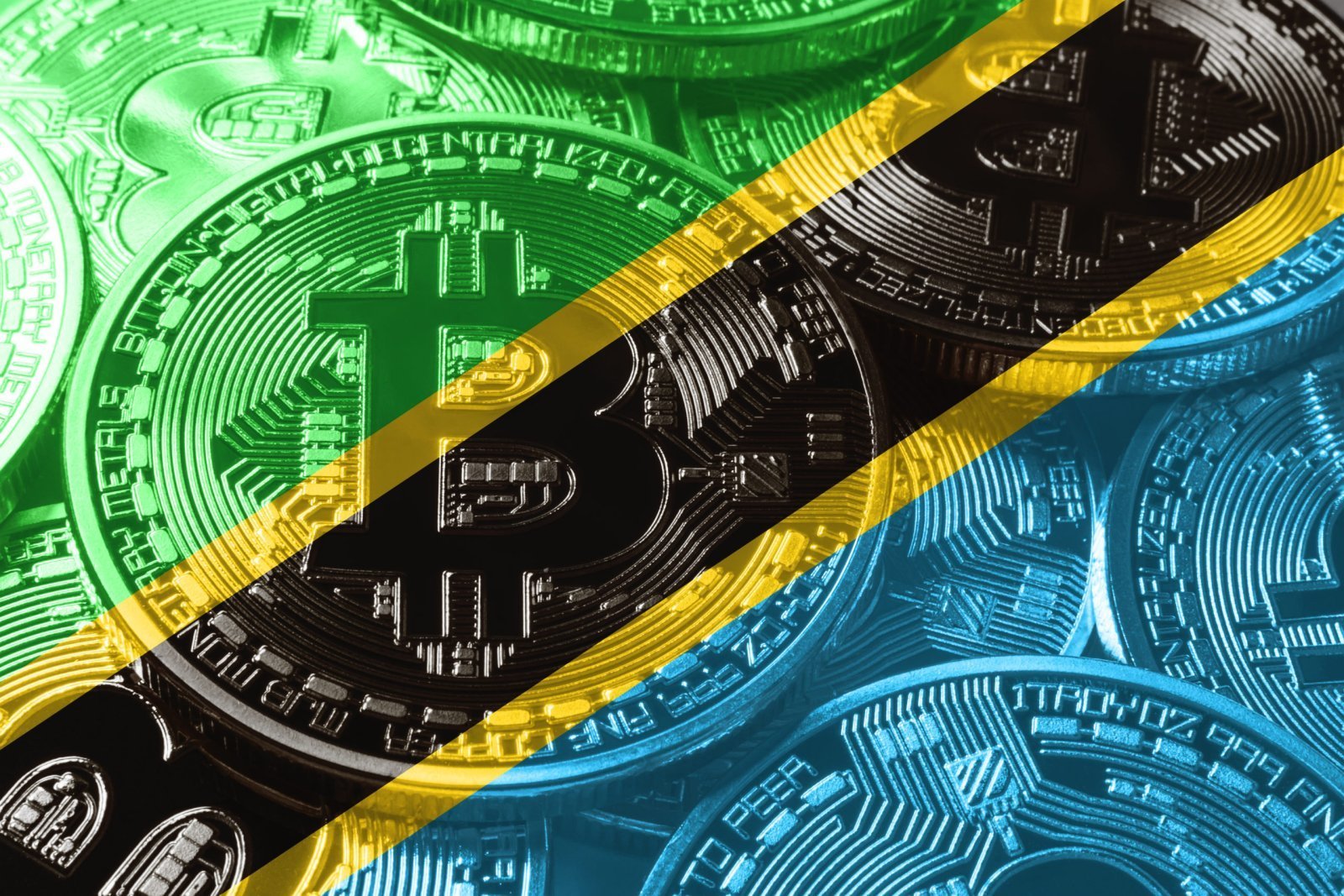
Tanzania has emerged as Africa’s eighth-highest adopter of crypto-assets even though the country maintains a restrictive legal position and has not established a dedicated licensing framework for cryptocurrency exchanges, custodians, brokers or stablecoin providers.
The finding appears in the OECD’s Africa Capital Markets Report 2026, published on November 6 and highlighted in regional reporting on November 14. Kenya placed third on the continent, while Rwanda occupied ninth position.
Nigeria recorded the highest crypto-asset penetration, followed by Morocco, Kenya, Egypt and South Africa.
Tanzania’s ranking reveals a growing difference between actual market behaviour and the country’s formal regulatory position. Individuals and businesses are accessing digital assets even as the Bank of Tanzania continues to state that cryptocurrencies are not legal tender and are not authorised substitutes for the Tanzanian shilling.
The result does not establish how many Tanzanians own crypto-assets or the total value of the country’s digital-asset market. The OECD ranking measures penetration, and its accompanying text does not provide a current Tanzania-specific transaction value.
It nevertheless demonstrates that restrictive rules have not eliminated demand.
Crypto adoption across sub-Saharan Africa has more than doubled
Aggregate crypto-asset adoption across sub-Saharan Africa more than doubled between 2021 and 2025, according to data cited by the OECD.
The organisation identifies currency volatility, limited access to traditional financial services, foreign-exchange constraints and the cost of correspondent banking as important drivers of demand.
These factors are relevant to East African traders, importers, exporters, technology companies, freelancers and households receiving money from relatives abroad.
A conventional international payment can pass through several banks before reaching its recipient. Each intermediary may impose processing charges, foreign-exchange spreads and compliance requirements.
Small companies can face disproportionately high costs because they lack the transaction volumes and negotiating power needed to obtain institutional rates. Delays can also disrupt inventory purchases, supplier payments and working-capital planning.
Digital assets appeal to some users because they can be transferred directly across borders without relying on the full chain of conventional correspondent banks.
That convenience does not remove legal, operational or financial risk.
The stablecoin case is strongest in cross-border settlement
Stablecoins are digital tokens designed to track the value of another asset, most commonly the US dollar.
Their relatively stable value makes them potentially more useful for payments than cryptocurrencies whose prices can rise or fall sharply within hours.
The OECD says the average cost of sending remittances to sub-Saharan Africa stood at 6.4 per cent in 2025. Under appropriate conditions, stablecoin-based transfers could provide a faster and less expensive alternative.
That is an assessment of potential rather than proof that every stablecoin transfer is cheaper. A user may still pay blockchain network charges, exchange fees, conversion spreads and the cost of changing the stablecoin into a national currency.
Stablecoins also introduce counterparty risk. Their value depends on the assets and reserves held by private issuers.
A token marketed as being worth one US dollar can lose that value if investors doubt the existence, accessibility or quality of the reserves supporting it.
Businesses must therefore assess not only transaction speed and cost but also the legal status of the token, the jurisdiction of the issuer, custody arrangements, redemption terms and the reliability of the platform through which it is purchased.
Most stablecoin activity is still connected to trading
The OECD cautions against assuming that crypto-assets have already become mainstream payment infrastructure.
Globally, approximately 89 per cent of identified stablecoin activity by value in 2024 was connected to crypto trading. Payments accounted for only about 2 per cent.
The data indicate that stablecoins are developing a role in payments and settlement, but their dominant measured use remains trading in digital-asset markets.
This distinction matters for policymakers. A speculative trading market presents different risks from a system used by businesses to settle invoices or by households to receive remittances.
Trading raises concerns about investor losses, leverage, market manipulation and misleading promotions. Payment use creates additional questions involving monetary sovereignty, foreign-exchange controls, financial reporting and the stability of settlement systems.
The scale of crypto-linked business lending remains unclear
The OECD reports that Bitcoin-linked financing products for micro, small and medium-sized enterprises have appeared in Tanzania, Kenya, Uganda and Nigeria through arrangements connected to conventional bank accounts.
The report does not quantify the value of this lending, the number of participating businesses or the extent to which the products remain available. Its supporting evidence also predates the current report.
The finding should therefore not be treated as evidence that crypto-backed credit has become an important source of Tanzanian business finance.
Bitcoin’s volatility also creates a fundamental financing risk. A loan whose value or collateral is linked to a rapidly changing asset can become more expensive or under-collateralised even when the borrower’s underlying business has not changed.
For small enterprises already exposed to unpredictable revenues and limited working capital, additional digital-asset volatility may increase rather than reduce financial risk.
Tanzania’s legal position remains restrictive
In a 2019 public notice, the Bank of Tanzania said the country’s foreign-exchange framework did not recognise the trading or usage of virtual currencies.
The central bank advised the public to refrain from trading, marketing or using cryptocurrencies and reiterated that the Tanzanian shilling is the country’s legal tender.
The Bank of Tanzania’s more recent position shows interest in the technology underlying digital assets without recognising cryptocurrencies as legal tender.
Its 2026 annual report states that distributed-ledger technology could potentially improve efficiency, transparency and traceability in specific financial-market infrastructure.
The central bank continues to examine virtual assets because of their implications for payment systems, cross-border transfers, consumer protection, money laundering, cybersecurity and financial stability.
This is not the same as authorising cryptocurrency trading or stablecoin payments.
Businesses should not interpret the central bank’s technological interest as approval to receive, hold, promote or facilitate crypto-assets.
The regulatory sandbox does not provide general approval
Tanzania introduced a fintech regulatory sandbox in 2024. It allows eligible financial-service providers and technology companies to test selected innovations in a controlled environment.
The sandbox is intended for products that are not fully covered by existing regulatory requirements. Participation is limited, supervised and subject to specific testing conditions.
It does not provide a general licence to operate a cryptocurrency exchange, offer digital-asset custody or process stablecoin payments for the public.
The OECD found no official confirmation that stablecoins had been admitted, approved or broadly authorised through Tanzania’s sandbox.
Banks, mobile-money operators and fintech companies must therefore obtain specific regulatory approval before introducing any product involving virtual assets.
They would also need to comply with foreign-exchange rules, payment-system requirements, anti-money-laundering controls, data-protection obligations, consumer-protection standards and tax law.
East Africa is developing different regulatory models
Kenya regulates virtual-asset providers under legislation enacted in 2025 and implementing regulations adopted in 2026.
The Kenyan framework covers exchanges, custodial-wallet companies, brokers, advisers and crypto-asset payment processors.
A Kenyan virtual-asset exchange cannot list a stablecoin unless it has been approved by the Central Bank of Kenya and issued by an appropriately licensed provider.
Rwanda also introduced a framework in 2026. Its Capital Market Authority supervises crypto-asset service providers in cooperation with the National Bank of Rwanda. The use of digital assets for payments requires central-bank authorisation.
Tanzania retains a restrictive position without a comparable licensing pathway.
The difference creates compliance difficulties for regional fintech companies. A service that can be licensed in Kenya may remain unauthorised in Tanzania.
Businesses operating across the East African Community require systems capable of identifying customers’ locations, restricting services where necessary and preventing products from being marketed as approved in jurisdictions where no authorisation exists.
Regulatory differences can also encourage arbitrage, where users and service providers route activities through the country with the least restrictive rules while continuing to serve customers elsewhere.
Consumers remain exposed to custody and fraud risks
Crypto-assets are not protected by conventional deposit-insurance arrangements.
If a bank fails, eligible depositors may receive compensation through a formal protection system. If a cryptocurrency exchange collapses or a wallet holder loses a private key, equivalent protection may not exist.
Users can lose access to assets through compromised passwords, fraudulent applications, platform failures, cyberattacks or deceptive investment schemes.
The OECD says crypto-related scams are becoming more sophisticated, including through generative artificial intelligence and other digital technologies.
It cites a 2025 enforcement operation in Zambia involving fraudulent online crypto-investment schemes estimated to have affected 65,000 people and caused losses of approximately US$100 million.
The absence of a licensing framework can make it difficult for Tanzanian users to determine whether a platform is financially sound, where customer assets are held and which authority can intervene if funds disappear.
Tanzania must decide what it is regulating
The policy question is broader than whether Bitcoin or another cryptocurrency should be permitted.
Authorities must determine whether different digital instruments should be treated as currencies, securities, commodities, payment instruments or a separate class of virtual assets.
They must also decide which institutions should license exchanges, custodians, token issuers, brokers, advisers and payment providers.
Effective regulation would need to address the separation of customer assets, cybersecurity, reserve verification, risk disclosure, suspicious-transaction reporting, taxation, consumer complaints and cross-border transfers.
A formal licensing system could improve visibility by bringing providers within a supervised structure. It could also help authorities distinguish legitimate technological innovation from fraud.
Poorly designed regulation, however, could give risky products an appearance of official legitimacy without providing meaningful protection.
Authorities must also consider the consequences for monetary sovereignty. Wider use of dollar-linked stablecoins could make regional trade and payments easier, but it could also encourage currency substitution and move transactions outside established banking and foreign-exchange reporting systems.
What comes next
The next developments to watch are the outcome of Tanzania’s virtual-asset risk assessments, any revision of the Bank of Tanzania’s public guidance and the products admitted into future fintech regulatory-sandbox cohorts.
Businesses should also monitor whether the government proposes legislation for virtual-asset service providers and whether East African regulators move towards common standards for digital-asset activities.
Tanzania’s high adoption ranking demonstrates that restrictive rules have not eliminated demand.
The question is whether policy will evolve to manage that activity transparently or whether the country’s digital-asset market will continue growing faster than the institutions responsible for supervising it.
 Uchumi360
Business Intelligence
Uchumi360 covers business, investment, and economic policy across East, Central, and Southern Africa.
For the serious reader
You read to the end. That places you in a small group.
Uchumi360 is built for readers who demand precision over speed, structure over sentiment, and analysis that holds uncomfortable conclusions rather than softening them. If this work sharpens how you think about Africa's economy, help us keep building the infrastructure behind it.
Institutional Partners
Commission intelligence. Shape the conversation.
Uchumi360 works with development finance institutions, investment firms, sovereign bodies, and strategic organisations across the coverage region. Institutional partnership unlocks:
- Commissioned sector and country intelligence reports
- Branded research series under your institution's authority
- Exclusive data briefings for internal strategy teams
- Speaking and editorial presence at Uchumi360 events
- Co-published investment outlooks for your markets
Support Our Work
Independent analysis has a cost. Help us bear it.
Uchumi360 does not carry advertising. It does not take editorial direction from sponsors. Every article is produced without commercial compromise. Your contribution funds the reporting, research, and editorial infrastructure that keeps this analysis free from influence.
Secure checkout: One-time and monthly support are processed securely. Add payment credentials to enable checkout here.
Stay Connected
Keep up with every new insight.
Follow our latest analysis, policy coverage, and market intelligence as soon as it is published. If you need something specific, reach out directly and we will point you to the right research.
